
Cycle a new saltwater tank without fish: establish the filter and biological surfaces, add an appropriate non-fish ammonia source according to its label, and test ammonia, nitrite, and nitrate. Add livestock only after ammonia and nitrite reach zero, then stock gradually while the biofilter adapts.
What cycling does in a saltwater aquarium
Fish waste, uneaten food, and other decomposing material release ammonia. Nitrifying bacteria convert ammonia into nitrite, then other nitrifying bacteria convert nitrite into nitrate. Ammonia and nitrite can harm fish; nitrate is less toxic but accumulates and must be managed through ongoing maintenance, including water changes and filtration.
As an Amazon Associate I earn from qualifying purchases.
The bacteria grow on surfaces such as rock, sand, and filter media. Cycling means establishing enough biological capacity to process a waste load—not creating a filter that never needs to adjust again. A newly cycled tank continues maturing, and its biofilter must adapt as livestock increases the waste load.
Free tools Windows power users keep installed
One-click scans. No signup required.
How to cycle a saltwater tank without fish
- Set up the tank and filtration. Establish the marine aquarium, run its filtration, and provide biological surfaces such as rock, sand, or filter media. The University of Florida IFAS marine aquarium project book covers the nitrogen cycle as part of setting up a marine aquarium.
- Choose one ammonia source. Aquarium ammonium chloride provides a measured source when dosed according to its product label. Fish food or raw seafood can also release ammonia as they decompose, but these approaches are slower and less precise and may add more nutrients. Do not copy a dose from another product or tank: follow the directions for the ammonia source you chose.
- Decide whether to seed bacteria. You can use a marine aquarium bacteria starter or established live rock or live sand. These are optional ways to introduce bacteria; neither proves that the tank is ready, so continue testing. Live rock may also introduce unwanted organisms. Dry rock is not the same as established live rock.
- Test ammonia, nitrite, and nitrate as the cycle develops. Use a saltwater aquarium test kit that measures all three. Ammonia often appears first, nitrite during its conversion, and nitrate as the process proceeds. With established live rock or other seeded material, the stages may be less obvious in test readings. Let the measurements—not a calendar—guide the decision.
- Wait for zero ammonia and zero nitrite before adding livestock. Nitrate can indicate that nitrogen conversion is occurring, but it still needs management and does not by itself show that every broader water condition is suitable for every animal.
- Add livestock gradually and keep monitoring. The biofilter needs time to adjust to a larger waste load. Recheck water quality after additions rather than assuming the original cycle will automatically support any amount of livestock.
Choosing an ammonia source or bacterial seed
| Option | What it contributes | Tradeoff |
|---|---|---|
| Aquarium ammonium chloride | A measured ammonia source | Requires careful dosing and reliable testing; follow the product label. |
| Fish food or raw seafood | Ammonia as the material decomposes | Slower and less precise; can add nutrient buildup. |
| Marine bacteria starter | A bacterial seed | Optional, and not proof on its own that the aquarium is cycled. |
| Established live rock or live sand | Biological surfaces that may carry established bacteria | Live rock can introduce pests; availability and shipping conditions vary. |
Bulk Reef Supply names Dr. Tim’s One and Only and Fritz Aquatics TurboStart as examples of bacterial starters, but those mentions are not independent product tests or endorsements. The available guidance does not establish that one starter or combination is best for every aquarium, or that combining multiple bacterial sources is better than using one.
#1 Best Overall
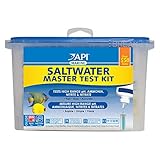
- Contains one (1) API SALTWATER MASTER TEST KIT 550-Test Saltwater Aquarium Water Test Kit, including 6 bottles of testing solution, 1 color card and 4 test tubes with cap
- Helps prevent invisible water problems that can be harmful to fish and cause fish loss
- Accurately monitors 4 most vital water parameters levels in saltwater aquariums: high range pH, ammonia, nitrite and nitrate
- Designed for use in saltwater aquariums
- Use for weekly monitoring and when water or fish problems appear
How long does a saltwater tank take to cycle?
Allow several weeks, but treat timing as an estimate rather than a readiness test. The University of Florida IFAS guide says a marine tank may take three to four weeks to complete its nitrogen cycle. Bulk Reef Supply advises giving most aquariums at least four weeks while noting that times vary and faster outcomes are possible. Neither estimate guarantees that an individual tank is ready on a particular day.
Use test results to decide: ammonia and nitrite should both read zero before livestock is added. Nitrate is part of the conversion process, but it must be managed as the aquarium continues operating.
Rank #2

- Professional Quality Testing Kit: The AAwipes Aquarium test kit (50 strips) is developed by experts for fish enthusiasts. It offers 8-in-1 testing capabilities, made with high-quality fiber paper and non-bleeding colors. The kit measures key parameters like Free Chlorine, Nitrate, Nitrite, Hardness, Sodium Chloride, Total Alkalinity, pH and Ammonia nitrogen. By identifying potential issues, our fish tank testing kit helps prevent hidden water problems and ensures the safety and well-being of your fish.
- Versatile Use for Freshwater and Ponds: This aquarium water test kit is versatile and suitable for both freshwater and saltwater environments. It can be used in various aquariums, fish tanks, ponds, pools, and shrimp tanks, making it easy to monitor water quality and ensure your filter functions properly. Experts recommend testing your aquarium water at least twice a week to maintain optimal water quality.
- Fast and Accurate Results: Get accurate results in minutes with just 3 steps: 1) Dip the test strip into water for 2 seconds for pads 1-7; dip pad 8 (Ammonia nitrogen) separately for 5 seconds. 2) Remove the strip without shaking off excess water. Hold horizontally for 30 seconds for pads 1-7, wait 180 seconds to read Pad 8 (Ammonia nitrogen). 3) Compare the colors to the chart for up to 99% accuracy and take necessary action.
- Extended Shelf Life: The test strips are packaged in a well-sealed bottle to ensure they remain effective over time. This protects the strips from moisture and other environmental factors, ensuring you have reliable testing materials on hand when needed.
- Convenient Use: With this kit, you can test your aquarium water at home without the need to send samples to a lab, saving you both time and money. Enjoy peace of mind knowing your aquarium water is balanced and safe without the stress or extra expense.
Why a fish-in cycle is not the default
A fish-in cycle deliberately relies on a live fish’s waste to produce ammonia, exposing the animal to ammonia and nitrite while the biofilter develops. Bulk Reef Supply warns that the first 7–10 days can be very stressful or fatal if ammonia is not controlled; OASE also warns that uncontrolled cycling risks significant fish loss. A fishless cycle avoids using an animal as the ammonia source.
Recommended Free Tools
Quick Recap
Best Value
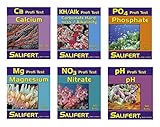
- Six Salifert Professional Test Kits
- Includes Calcium, Nitrate, Phosphate, pH, Alkalinity & Magnesium
- Includes all the Core parameters of any Saltwater Aquarium/Marine Reef Tank
Rank #4

- Patience is key. Each aquarium is different. It may take approximately 7 to 30 days to completely cycle the aquariu (ammonia and nitrite are both 0ppm)
- Best Method to cycle a new tank is Fishless cycle.
- You would need Ammonia test kit and Nitrite Test Kit.
Rank #3

- Patience is key. Each aquarium is different. It may take approximately 7 to 30 days to completely cycle the aquariu (ammonia and nitrite are both 0ppm)
- Best Method to cycle a new tank is Fishless cycle.
- You would need Ammonia test kit and Nitrite Test Kit.
What to have on hand
- Saltwater ammonia, nitrite, and nitrate test kit: Testing is central to tracking progress and checking readiness.
- Aquarium ammonium chloride: A fishless-cycle option that requires measured dosing and close monitoring.
- Marine aquarium bacteria starter: An optional seed, not a substitute for testing.
- Established live rock or live sand: An alternative source of biological surfaces and potentially established bacteria; consider pest risk with live rock.
Product prices and availability are accurate as of the date/time indicated and are subject to change. Any price and availability information displayed on Amazon at the time of purchase will apply.





Leave a Reply