
The Tool Desk
Outbyte Driver Updater FREEScan for outdated or missing drivers - takes under a minuteDriver Scan →Outbyte PC Repair FREEClear out junk files and repair common Windows errorsFree Scan →Some links on this page are affiliate links: if you buy through them we may earn a commission, at no extra cost to you.
Start with a quiet search of the house and immediate property, then work outward while reporting the disappearance immediately. Do not assume an older dog will stay nearby or come when called: fear, pain, hearing loss, vision changes, or cognitive confusion can alter normal behavior. If you see the dog and cannot approach safely, contact animal control or police rather than chasing.
This guide covers the first hours, safe capture, shelter and veterinary reporting, microchip checks, health triage, and the legal steps for returning a senior dog—whether you are searching for your own dog or have found one wandering.
As an Amazon Associate I earn from qualifying purchases.
What to do in the first 15 minutes
- Confirm when and where the dog was last seen. Ask everyone in the household, check doors and gates, and note the exact time, direction, collar, harness, and leash status. Save a recent photograph and write down distinctive markings.
- Search the property methodically. Check every room, closet, garage, shed, crawl space, under porches, behind structures, vehicles, dense shrubs, and fence gaps. A disoriented senior dog may be silent or unable to respond to its name.
- Secure exit points. Close gates and doors, move vehicles carefully, and ask family members not to leave openings unsecured while the search continues.
- Take essential gear. Bring high-value food, water, a leash or slip lead, a flashlight, waste bags, a phone, and a printed photograph. If the dog is sighted, one calm person should approach while another remains available to call for help.
- Begin a quiet outward search. Walk or drive slowly around the last-seen area. Ask neighbors, mail carriers, delivery workers, and passersby whether they saw the dog. Obtain permission before entering a yard, garage, or shed.
Do not turn the first search into a noisy pursuit. Running, shouting, repeated calling, or sending a crowd toward a frightened dog can push it farther away or into traffic.
How far to search and where to look
The Humane Society of Charlotte reports that lost dogs may travel 1–5 miles or more. That is a planning observation, not a prediction for every senior dog. Terrain, fences, weather, health, traffic, and the dog’s fear level all affect movement. Expand the search in rings rather than assuming a fixed radius.
Popular on Amazon

- Engineered for Ultimate Strength: Constructed from 1/2 inch diameter rock climbing rope, this heavy duty dog leash is distinctively durable and strong. It is designed to withstand the strongest pulls from large and energetic dogs, giving you peace of mind that your pup won't break free during walks
- Comfortable Padded Handle: Say goodbye to rope burn. Our soft, cushioned foam handle provides an amazing grip and protects your hands from sudden tugs. Enjoy longer walks and extended training sessions with total comfort, even if your dog is a puller
- Maximum Nighttime Visibility: Highly reflective threads are woven through the entire length of the rope (not just painted on), keeping you and your fur baby visible to passing cars and cyclists during early morning jogs or late-night strolls. Perfect for urban streets and low-light environments
- Tangle-Free 360° Swivel: Featuring a heavy-duty metal clasp that rotates 360 degrees, this ensures the rope never gets twisted or tangled, no matter how much your dog moves around. The zinc alloy hook is rust-proof and easy to clip onto any dog collar or harness in seconds
- Versatile for Any Activity: Park walks, trail hikes, or yard training. Offers ideal balance of freedom and control. Comes in 4ft, 5ft, 6ft lengths and 12 colors. 3/8" diameter suits small to medium dogs – lightweight and non-bulky. For medium and large dogs, choose 1/2" diameter
Search in practical rings
| Ring | Where to check | What to do |
|---|---|---|
| Immediate property | Rooms, outbuildings, porches, vehicles, fence lines, and nearby hiding places | Search quietly with a flashlight; inspect spaces where a weak or confused dog could become stuck. |
| Last-seen block | Neighboring yards, alleys, parks, drainage areas, and quiet streets | Ask permission, show a clear photo, and ask people to check cameras, garages, and sheds. |
| Nearby routes | Paths toward food, water, familiar homes, former walking routes, and sheltering vegetation | Drive slowly with hazard lights where legal; stop to listen and look rather than calling continuously. |
| Wider area | Road shoulders, fields, commercial lots, waterways, and locations reported by residents | Coordinate sightings on a shared map and notify authorities when the dog is near a hazard. |
Ask each witness for the time, exact location, direction of travel, gait, and whether the dog appeared injured. A report from several hours ago is still useful, but do not treat it as the dog’s current position.
Make home a safe, recognizable point
If the dog can return without crossing a dangerous road, place an open crate or another sheltered resting area near the usual entrance. A recently worn shirt or familiar blanket can provide a recognizable scent. Use food only where it will not attract wildlife, loose dogs, or other hazards, and remove it if it creates conflict.
Do these 3 things before closing this tab:
1Fix the driver behind crashes, sound loss and screen glitches2Repair Windows errors before they cause bigger problems3Scan for outdated or missing drivers - takes under a minuteKeep the area quiet. Ask household members to watch from inside rather than standing around the entrance. If a camera is available, aim it at the resting area so you can see whether the dog returns without startling it.
Report the loss immediately and repeatedly
Reporting is not a final step; it is part of the initial search. Different channels reach different people, and shelters may receive a dog before a public post is seen.
Also popular on Amazon

- 【Professional Retractable Dog Leash】 The ultimate combination: 16 ft strong nylon reflective tape, impact-resistant ABS housing, and a stainless steel anti-chew cable. This design greatly reduces the risk of being bitten through, extending the leash’s lifespan. Augwind’s retractable leash is specifically designed for small to medium dogs under 50 lbs, offering the best value on the market
- 【Safe & Effective】16 ft Strong Reflective nylon webbing; Over 100,000 retraction times; Max anti-jerk tensile strength: 350 lbs; . Whether day or night, on the street or lawn, the Augwind retractable leash makes every walk safe and easy
- 【Quick Lock System】 Operate the pause, lock, and unlock buttons with a single thumb. Enjoy smooth braking and instant response. The Augwind retractable dog leash ensures the safety of both you and your pet on every outing
- 【2026 Equipment Upgrades】1. Reflective webbing 2. Chrome-plated, rust-proof 360° rotating clasp 3. Ergonomic soft silicone handle 4. Reserved slot for poop bag holder 5. Stainless steel anti-chew cable
- 【2-Year Warranty】 We are a professional pet products company committed to bringing the safest, most practical, and affordable pet products to pets and their owners. We promise to solve any quality issues within 2 years. We provide 24/7 after-sales service. If you have any questions, please feel free to contact us
Local authorities and shelters
- File a lost-animal report with municipal animal control and every local shelter that accepts stray dogs.
- Ask how to update the report, what identification they need, and how often new intakes are posted.
- Check shelter listings daily and visit in person when possible. Photos and descriptions can be incomplete, and an older dog may look different after roaming.
- Ask nearby jurisdictions as well as your own, especially if the dog was last seen near a city or county boundary.
Neighborhood and online alerts
Post a recent, well-lit photograph with the dog’s name only if you want finders to test whether it responds; do not assume it will. Include the last-seen location, date and time, coat color, size, sex, age range, collar or harness, microchip status if known, and one reliable contact method. Ask people to report sightings without chasing.
Use local lost-and-found groups and Petco Love Lost where it serves your area. Keep one person responsible for monitoring messages so potential sightings are not missed, and beware of requests for money or verification codes from people who cannot provide a credible location or photograph.
Quick wins for a faster PC:
Repair Windows errors before they cause bigger problemsFix Now →Fix the driver behind crashes, sound loss and screen glitchesFind Drivers →What to do when you see a frightened senior dog
A sighting is not a command to catch the dog immediately. First assess the dog’s behavior and the surroundings.
| Situation | Best response | Do not do |
|---|---|---|
| Calm, stationary, and away from hazards | Turn your body sideways, avoid direct staring, speak softly, and place food on the ground. Let the dog choose the distance. | Do not rush forward, loom over the dog, or reach over its head. |
| Moving away but not aggressive | Stop, lower your posture if safe, and keep a wide distance. Ask bystanders to remain still and call animal control if the dog will not settle. | Do not run after it, form a semicircle, or repeatedly call its name. |
| Near traffic, water, ice, steep ground, or another immediate hazard | Call animal control or police and give the exact location, travel direction, and hazard. Keep people and vehicles from pressuring the dog if you can do so safely. | Do not step into traffic or attempt a risky grab. |
| Growling, snapping, lunging, or visibly panicked | Back away, clear the area, and request professional assistance. Nashville Metro Animal Care and Control advises: “For your safety, do not attempt to approach an aggressive and/or scared animal.” | Do not corner, trap, yell at, or try to muzzle the dog. |
Fear can suppress normal recall behavior. A dog that normally comes when called may ignore its name, hide, or continue moving when its guardian appears. Treat calm distance as a safety tool, not a sign that the dog is refusing to return.
Also popular on Amazon
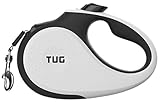
- Small Retractable Dog Leash is Suitable for Dogs Under 35 lbs; Medium For Dogs Under 55 lbs; Large For Dogs Under 110 lbs; Retractable Leashes Not Suitable For Chewing
- 16 ft Tape Retractable Dog Leash With Easy-Adjust Retraction; 360 Degree Tangle-Free Inlet
- Quick Lock And Unlock Feature - Easy Roll-On and Roll-Off With Your Thumb
- Super Comfortable Grip For Those Long Walks! Ergonomic Anti-Slip Handle
- Heavy Duty Internal Coil For Consistent Retraction and Recoil
How to contain the dog without causing a flight
Containment is appropriate only when the dog is calm enough and the location is safe. A leash, fenced area, kennel, garage, carrier, or other secure enclosure may work; American Humane lists a leash, fenced area, or carrier as options when feasible.
For an approachable dog
- Close gates or block escape routes before moving closer, while leaving the dog a clear path away from you.
- Stand sideways and keep your hands low. Toss small pieces of food rather than advancing with food in your hand.
- Allow the dog to sniff and approach. Move in short pauses, not a continuous advance.
- When the dog is relaxed, attach a leash to a secure collar or harness. A slip lead can help if you have been trained to use one, but do not jerk or tighten it around the neck.
- Move slowly into a fenced area, garage, kennel, or carrier. Close the barrier before examining tags.
For a dog that will not permit handling
Stop trying to catch it and call animal control. Professionals may have equipment and procedures for a fearful or injured animal. Tell them whether the dog is in traffic, near water, inside a confined space, or showing aggression. If the dog keeps running, provide updated sightings rather than following closely.
Never use sedatives, improvised traps, ropes, or food laced with medication. These can cause poisoning, choking, injury, or legal problems.
Found a wandering senior dog? Follow this sequence
- Make the scene safe. Move yourself out of traffic and ask authorities to manage a roadway or other dangerous location.
- Observe before touching. Note posture, breathing, limping, bleeding, confusion, and whether the dog can stand.
- Approach only if safe. Turn sideways, avoid staring, speak softly, and let the dog close the distance.
- Contain separately. Use a fenced yard, garage, kennel, carrier, or leash. Keep the dog away from resident pets and children until a veterinarian or animal-control professional advises otherwise.
- Check visible identification. Look for a collar, license, and rabies tag once the dog is secured and calm.
- Arrange a microchip scan. A veterinary clinic, shelter, or animal-control facility can scan the dog at the earliest safe opportunity.
- Report the found dog. Notify local animal control and shelters, post on appropriate local lost-and-found channels, and check for matching lost reports.
DEFRA guidance published 22 September 2026 states: “Scan for a microchip and check any collar tag at the earliest safe opportunity.” A tag can be lost or unreadable, so a scan remains important even when the dog has no visible injury.
Also popular on Amazon

- ENHANCED NIGHT VISIBILITY: Keep your dog safe during early morning or evening walks. The upgraded double-sided reflective stitching catches streetlights and car headlights brightly, ensuring you both remain highly visible to traffic in low-light conditions
- CUSHIONED ANTI-BURN HANDLE: A savior for hands when walking active dogs that pull. The soft, thick interior padding prevents painful rope burn and strain, providing a secure, comfortable grip for better control when your furry friend lunges. Includes a sturdy metal D-ring for clipping poop bag dispensers
- PERFECT 6FT BALANCE: The ideal length for urban walks, offering your dog enough freedom to sniff around while keeping them close enough for easy command in busy areas. Choose the 3/4'' width for small breeds, or the robust 1.0'' width for powerful medium to large dogs
- HEAVY-DUTY TANGLE-FREE CLASP: Features a strong metal spinning snap that allows 360° movement, preventing frustrating leash tangles so your dog can move freely around you. Built with high-density nylon webbing for reliable daily strength. NOTE: While tough for pulling, this nylon material is NOT chew-proof. Don't leave unattended with chewers
- COMPLETE THE LOOK: Available in vibrant colors tailored to match your dog's style. For the ultimate coordinated walking set, pair this leash with our matching Joytale reflective nylon collar
Microchip scanning: what it tells you and what it does not
A scanner detects a chip’s identification number; it does not by itself prove that the person presenting the dog is the legal owner or that the registration details are current. Ask the scanning facility to contact the registered organization or owner and record the scan result.
If no chip is found
- Ask whether the scanner was tested and whether the entire body was scanned.
- Have a second facility scan if local professionals recommend it; chips can migrate or be missed.
- Continue checking tags, licenses, shelter reports, and local lost-dog posts.
- Do not assume the dog is unowned or abandoned because the first scan is negative.
If a chip match is found
Let the shelter, clinic, or animal-control professional make the initial contact when possible. Confirm identifying details, request proof of ownership through the appropriate authority, and arrange a public handoff rather than inviting an unknown claimant to your home.
What’s actually slowing this PC down?
Pick the symptom - the matching free tool is one click away.
Health triage for an older dog
Senior dogs may need prompt evaluation for dehydration, injury, pain, heat or cold exposure, vision or hearing impairment, or cognitive confusion. There is no validated senior-dog-specific recovery statistic or universal handling protocol that can predict how an individual dog will respond.
Seek emergency veterinary help for
- Collapse, inability to stand, severe weakness, uncontrolled bleeding, breathing difficulty, repeated vomiting, seizures, or suspected poisoning.
- Heat-stress signs such as heavy panting with weakness, confusion, or collapse.
- Cold exposure with profound lethargy, pale or blue gums, uncontrolled shivering, or unresponsiveness.
- Road-traffic injuries, obvious fractures, deep wounds, or severe pain.
For a stable dog, offer water in small amounts and provide a quiet, temperature-controlled space. Do not force food or water, give human medication, bathe an injured dog, or remove embedded objects. A veterinary examination is especially important when the dog is confused, unable to walk normally, markedly thin, or has been exposed to extreme weather.
Also popular on Amazon

- Upgrade: The product has been modified to use nylon thread directly sewing, very strong.All handles was sewn onto the leash instead of the cord ties.Package includes: frosted zipper bag,two handles dog leash.
- MAXIMUM TOUGHNESS AND DURABILITY: Nearly 2X thicker and stronger than standard dog leashes. 3mm thick and 1” wide with tightly webbed nylon for enhanced rugged construction.
- DUAL HANDLES FOR TOTAL CONTROL: Soft Neoprene and padded handle, comfortable than ever ;Equipped with an extra traffic handle for amazing control. Use the standard handle for those casual dog walks or quickly grab the built in traffic handle to guide your pup through crowded areas with ease.
- 360° Rotating Clasp: Swivel clasp prevents the leash from twisting and dog getting tangled. Heavy-duty metal clasp makes our training leashes last longer than most ones. Premium components for maximum strength
- BE SAFE AND VISIBLE AT NIGHT: Luminous reflective threading keeps you both safe and visible on your late-evening walks. Enjoy a large 2” heavy duty clip for added safety and thick D-ring to attach your favorite dog training clicker or dog poop bag holder.Packaging details:Frosted zipper bag,Dog leash with D ring
Reuniting the dog safely
Before releasing a found dog, compare several identifying details: photographs, unusual markings, sex, approximate age, collar information, veterinary records, and the microchip contact. A claimant’s confidence or knowledge of the dog’s name is not enough on its own.
Use a controlled handoff
- Meet at a veterinary clinic, shelter, police station, or other public location with staff present.
- Keep the dog leashed or contained until identity is confirmed and the handoff is complete.
- Ask the receiving professional to document the transfer, especially if the dog was injured or treated.
- Share the dog’s medical observations and any expenses or treatment records with the authority handling the case.
Follow local stray-hold and reporting rules. Holding periods and ownership procedures vary by jurisdiction. For example, a Charlotte page describes 72 hours in a shelter and 14 days for an in-home hold in North Carolina; those examples must not be generalized to another city or state. Do not rehome, sell, or claim ownership before the applicable authority confirms that the legal process is complete.
Free tools Windows power users keep installed
One-click scans. No signup required.
Common mistakes that make recovery harder
- Chasing a sighted dog: pursuit can drive it into traffic or farther away.
- Assuming an old dog cannot travel: the 1–5-mile-or-more observation shows why the search should expand, but it is not a guarantee of distance.
- Searching only online: shelters and animal-control records may be updated separately from social media.
- Entering private property: always obtain permission before checking yards, sheds, garages, or cameras.
- Using a crowd: multiple people, vehicles, and loud voices can increase fear.
- Mixing animals immediately: a found dog may carry illness, be painful, or react defensively around pets.
- Assuming a negative microchip scan settles ownership: chips can be absent, unreadable, migrated, or registered with outdated information.
- Ignoring legal deadlines: stray-hold periods and transfer rules are local, not universal.
A decision guide for the next action
| What you observe | Next action |
|---|---|
| Dog is inside the home or property | Secure exits, use a calm voice, and guide it into a safe room or fenced area. |
| Dog is visible and calm, away from hazards | Use sideways posture, food, and patience; contain with a leash or enclosure when relaxed. |
| Dog is fearful and moving away | Stop pursuit, record the exact location and direction, and call animal control. |
| Dog is aggressive, injured, trapped, or in traffic | Keep people back and call animal control or police immediately. |
| Found dog is contained and stable | Check tags, arrange a microchip scan, report to authorities, and separate from household animals. |
| Found dog is collapsed, severely injured, or dangerously ill | Contact an emergency veterinarian and animal control; transport only if professionals say it is safe. |
After the dog comes home
Keep the returning dog in a quiet room and observe appetite, drinking, urination, gait, breathing, and behavior. Arrange a veterinary check if there was any injury, prolonged exposure, confusion, or change from normal behavior. Continue supervision around doors and gates until you understand how the dog escaped.
Update the microchip registration, license, and contact numbers; replace missing tags; inspect fencing and gate latches; and consider a visible identification tag with a secondary phone number. For dogs with hearing, vision, mobility, or cognitive changes, discuss home modifications and identification options with your veterinarian.
Quick Recap
Key facts to remember
- Search the home and immediate property quietly before expanding outward.
- Report the loss or find to animal control and shelters immediately, then check back regularly.
- Never chase a frightened dog; use distance and professional help.
- Scan every safely contained found dog for a microchip and check tags.
- Separate a found dog from children and resident pets until professionals advise otherwise.
- Let local law determine stray-hold periods, ownership, and transfer.





Leave a Reply