What’s actually slowing this PC down?
Pick the symptom - the matching free tool is one click away.
A leaking aquarium is not always a failed seam, and a seam reseal is not always the right fix. Confirm where the water is coming from first. If the tank is a glass tank with a failed silicone bead, the usual repair is to drain and clean the tank, remove the old sealant, apply aquarium-safe silicone, and let it cure before refilling or returning fish. A cracked pane, a separated structural joint, or a leaking filter or hose needs a different response.
Find out where the water is actually coming from
The puddle is often not under the leak. Water runs along the stand, the cabinet floor, and the underside of the tank before it shows, so the wet patch can point you in the wrong direction. Start by drying the outside of the tank, the stand, and any equipment with towels. Then watch where moisture reappears as it returns.
Check each of these possible sources:
- Glass corners and interior silicone seams. Beading or seepage along a corner or seam points to the tank itself.
- Glass panes and panel joints. Any visible crack, or a joint that has pulled apart, is a structural problem.
- Filter, pump, and heater housings. Check the lids, seals, and fittings on each unit.
- Hoses, valves, and connectors. External filters and plumbing often leak at the couplings rather than the tank.
- The stand or cabinet. Water that pools under the tank while the seams stay dry is coming from somewhere else.
Keep power strips and cords out of the wet area and clear of your workspace while you investigate.
Decide whether a seam reseal is the right fix
Resealing applies to a suitable glass tank with a failed silicone bead. It does not apply to cracked glass, damaged structural joints, or leaking equipment. Use the table below to match what you found with the correct response.
Quick wins for a faster PC:
Clear out junk files and repair common Windows errorsFree Scan →Fix the driver behind crashes, sound loss and screen glitchesFind Drivers →Repair Windows errors before they cause bigger problemsFix Now →#1 Best Overall

- SAFE FOR THE FISH: Selsil Aquarium Silicone is a silicone sealant used in glass bonding work. It does not contain chemicals or solvents that are not friendly to your fish or other organisms in the aquarium. This product is made from 100% silicone polymer, is used in aquarium manufacturing, and conforms with the ISO 11600 –F&G–25 LM standards.
- ADHESIVE FOR VARIOUS NON-POROUS SURFACES: This transparent silicone sealant offers an excellent grip on the glass without using an additional primer. It adheres well to acetoxy system curing glass and many non-porous surfaces. This is a silicone adhesive that also offers insulation for many kinds of materials like aluminum, glazed ceramic tiles, and glass. You may use this product for freshwater and saltwater aquariums.
- STRONG BOND: Highly elastic and flexible, this adhesive putty offers a quality adhesion effect. It is also resistant to ozone, ultra-violet radiation, and extreme temperatures. It does not lose its elasticity at high and low temperatures and it will not crack, pull, or discolor.
- FAST CURING: This aquarium glue offers quick curing time. Apply the aquarium silicone on the surfaces you need to work on and wait only a few hours for it to cure. It is, however, best to wait up to 24 hours if you want it to completely cure. Its application temperature should be between + 5 ° C and +40 ° C (41.0 ° F and 104 ° F). This product conforms to ISO 11600–F & G – 25 LM.
- MULTI-PURPOSE: This is not just a sealant for your making or repairing aquariums. You may also use this silicone glue for other applications like sealing seams, stopping leaks, or securing decorations in the aquarium. As long as the surface you will work on is non-porous, this clear silicone caulk will do its job well.
| What you see | Most likely source | Right response |
|---|---|---|
| Seepage or beading at a corner or along an interior seam of a glass tank | Failed silicone bead | Reseal the seam using the steps below |
| A crack in a glass pane, or a panel joint that has separated | Structural glass or joint failure | Do not reseal over it. Contact the tank maker or a qualified glass repairer, and move the fish to a safe temporary setup |
| Drips from a filter, hose, valve, or fitting | Equipment or plumbing | Repair or replace the faulty part. Resealing the tank will not fix it |
| Water under the tank while the seams stay dry | Stand, floor, or an outside source | Dry the area, then check the stand and base before doing anything to the tank |
| Leak on a recently bought tank | Possible manufacturer defect | Check the warranty and service route before opening any seam |
Check the warranty and service route before repairing
If the tank is new or recently purchased, check the paperwork first. Aquael’s manual states that its joints are guaranteed for 24 months from purchase, and that defects during that period should be taken to the point of sale or a service center. That is Aquael’s own term and does not describe a general rule for other brands. Read your tank maker’s manual and warranty terms before you start work.
Reseal a glass seam, step by step
The steps below follow the sequence in the iFixit repair guide. Work in a well-ventilated area and wear gloves throughout.
Rank #2
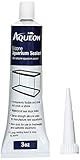
- Waterproof seal stops leaks
- Permanently flexible; does not crack or shrink
- Easy to apply long-lasting bond
- 100% Non-toxic silicone for use on freshwater or saltwater aquariums
- Clear silicone color - also available in black silicone
- Move the livestock and drain the tank. Relocate the fish to a temporary setup first, as described in the section on protecting fish. Drain the tank completely. Do not lift an empty tank by its edge, and do not move a tank that still holds water. Aquael’s manual warns against both.
- Mark and inspect the affected area. Outline the failed section with masking tape or a pencil so you can find it again. Confirm that the glass itself is intact. If you see a crack in the glass, stop here and follow the structural guidance above.
- Remove the old sealant. Use a plastic scraper or a silicone-removal tool. Do not push a razor blade between the glass panels, because that can separate the panes and cause cuts. Remove the old sealant completely, because new silicone will not adhere to old silicone and a new bead placed over it is not the procedure the guide recommends.
- Clean the surface. Remove every trace of old sealant and residue. The iFixit guide uses acetone for this step. Do not use acetone around livestock or in a tank that holds fish. Follow the safety label on any cleaner, and let the surface dry completely before you apply sealant.
- Apply a continuous interior bead. Run one unbroken bead along the seam from the inside. Use an even bead and avoid gaps at corners.
- Allow the sealant to cure. The iFixit guide gives a minimum drying period of 48 hours. Follow the manufacturer’s cure time on the product label as well. If the label calls for longer, follow the label. Keep the tank empty and keep the fish out until the cure is complete.
Choose the right sealant and tools
The sealant must be labeled as non-toxic or fish-safe and suitable for constant submersion in fresh or salt water. Check the label for both claims. A product that does not state them is not suitable for an aquarium. Cure times and handling instructions differ between brands, so read the label of the product you actually buy.
- Aquarium-safe silicone: the core material. Choose it for the claims above, not for the brand name.
- Plastic scraper or silicone-removal tool: the preferred way to remove old sealant.
- Razor blade: a secondary tool only for cutting free old sealant at the outer edge of the seam. Never place it between the glass panels.
- Gloves and ventilation: required when working with silicone and cleaning solvents.
Refill and check the seam
Do not refill until the cure time on the label and the 48-hour minimum in the guide have both passed. The guide does not give a pressure-test procedure, and no reliable test duration is established for a repaired seam. After refilling, watch the seam and the surrounding area closely. If water reappears, drain the tank and reassess the source rather than adding more sealant over the same bead. Repairs can fail, so keep the fish in a temporary setup until you are confident the seam is holding.
Rank #3

- 【Novique Aquarium Silicone Sealant】: Have you ever felt extremely frustrated when your beloved aquarium started leaking and you had to throw it away? Novique Aquarium Sealant is specifically designed to save your aquarium. It is safe, durable, and provides strong sealing to prevent water leakage. It cures quickly and is widely applicable. You don't need to replace aquarium, simply apply it on the leakage area and a durable and stable waterproof barrier will be formed.
- 【Safe & Durable】: Aquarium sealant is made of 100% silicone polymer and contains no chemicals that are harmful to fish or other aquatic life. Once cured, it remains stable and does not release any harmful substances, ensuring water quality safety. It has been strictly tested by engineers in laboratory and can withstand high and low temperatures without cracking or shrinking, fraying or discoloring. From materials to craftsmanship, it provides reliable protection for fish and aquatic landscapes.
- 【Strong Sealing & Prevent Water Leakage】:Fish tank sealant is formulated with a highly viscous formula, featuring excellent elasticity and toughness. It can firmly bond various materials such as glass and acrylic, deeply fill gaps, and form a dense and stable waterproof barrier. After curing, it has outstanding continuous water immersion resistance. Even when immersed in freshwater and seawater for a long time, it still maintains a stable sealing effect, completely eliminating worry of leakage.
- 【Quick Curing】: Novique aquarium silicone cures rapidly. The surface dries in less than half an hour, and deep curing takes approximately 24 hours to achieve desired strength. This significantly reduces waiting time. This significantly reduces waiting time and complies with VOC, ISO 11600 and ASTM C920 professional standards. During solidification process, a small amount of acetic acid will be released. Therefore, when using it, ensure good ventilation and avoid contact with eyes and skin.
- 【Widely Applicable & Excellent Service】: Novique clear silicone sealant is not only suitable for patching and sealing the corners and joints of fish tanks, turtle tanks, and coral tanks, but also can be used for decoration fixation, water tank leak prevention, and repairing car lights, etc. Novique is equipped with a 24-hour professional customer service team, ready to help you solve any problems during usage process, ensuring your shopping experience is worry-free!
Protect the fish during the repair
Move the livestock to a temporary setup that suits their species, and keep the water stable while they are there. The sources behind this guide do not cover fish medical care or temporary housing specifics. If a fish is injured, ill, or stressed, contact a veterinarian or an aquatic specialist rather than relying on general advice.
Level, base, and setup
Aquael’s English manual says: “Aquarium should be located on a flat, even surface.” The manual adds that the cabinet and aquarium should be properly levelled, and that a dedicated base or a correctly sized special mat should be used. These are Aquael instructions. If your tank came with a different manual, follow that manual instead.
Rank #4
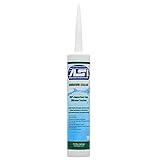
- This high modulus component RTV Silicone Sealant forms strong cohesive bonds to glass without the need of primers
- The bonds are unaffected by continuous immersion in water and, when fully cured, is non-toxic to fish
- ASI Aquarium Silicone Sealant is a non-slump sealant and can be applied to vertical surfaces without flowing or sagging
- Can be applied to surface temperatures from -18°C to +50°C (0°F to +120°F) and after curing, withstands constant operating temperatures from -57°C to +233°C (-70° F to 450°F)
- Formulated for use with fresh and salt-water aquariums or a Vivarium. This product does not have an expiry date printed on it, only batch id is there on the product.
An uneven stand is a setup problem to correct, but there is no evidence that it caused your leak unless the seams are wet from an uneven load. Check the level once the seam is dry and the tank is refilled.
Independent reader supportYour contribution helps us test, update, and keep practical guides available for everyone.What the sources do and do not establish
There is no reliable published statistic on how often aquarium leaks come from seams compared with equipment or stands. This guide therefore ranks causes by inspection, not by frequency. The sealant and cure guidance applies to aquarium-safe silicone on a glass tank, and the 48-hour figure is the minimum in the iFixit guide, not a universal cure time.
Best Value

- Fish Safety:Aquarium sealant clear is a non-toxic, solvent-free acid cured silicone sealant, 100% Silicone, which is friendly to underwater organisms, protects fish safety, and is your best repair choice.
- Quick Curing: This waterproof silicone sealant can cure quickly. Aquarium silicone sealant onto the surface that needs to be treated, and the surface will dry within 30 minutes. However, if you want to fully solidify, it's best to wait for 48 hours. Cure time will increase with lower temperature, humidity, and large bead size. The optimal surface temperature for application is+41 ° F -+104 ° F (+5 ° C -+40 ° C).
- Strong Adhesion: Aquarium silicone solidifies under the action of atmospheric moisture, forming a permanently soft silicone rubber with characteristics such as fast curing, high strength, good toughness, and compatibility with most building materials. Cured silicone rubber can maintain excellent performance within the temperature range of -50 ° C to 100 ° C.
- All Day Elasticity: Aquarium silicone sealant maintains its integrity, does not shrink, crack, or discolor, whether in tropical warm or cold water environments, ensuring that the waterproof seal can withstand temperature.
- Multipurpose: This aquarium silicone can be used not only for aquariums, but also for other purposes such as windows, door frames, kitchen sinks, bathrooms, cars, boats, pipes, etc.
Repair advice for a cracked or structurally damaged tank is outside what the guides here establish. Contact the tank manufacturer or a qualified glass repairer for those cases.
Quick Recap
Product prices and availability are accurate as of the date/time indicated and are subject to change. Any price and availability information displayed on Amazon at the time of purchase will apply.




