What’s actually slowing this PC down?
Pick the symptom - the matching free tool is one click away.
If “fish flies” are the long-tailed insects that swarm around lakes and lights, they are probably mayflies. Reduce outdoor lighting, repair screens and door seals, and vacuum or sweep up the adults. Do not spray the nearby water or rely on broad yard insecticides—mayflies are temporary, harmless insects emerging from an aquatic ecosystem.
If “fish flies” are the long-tailed insects that swarm around lakes and lights, they are probably mayflies. The safest and most effective response is to reduce outdoor lighting, keep them out with intact screens and weatherstripping, and vacuum or sweep up the adults that remain. Do not spray a lake, river, pond, or yard indiscriminately: mayflies develop in water, and pesticides can harm fish, aquatic insects, pets, wildlife, and people.
As an Amazon Associate I earn from qualifying purchases.
Mayflies are harmless to people and pets. They do not bite, infest homes, eat wood, or damage furniture. Their adult stage is brief, so a large emergence usually subsides after the local cohort mates and dies. The goal is to reduce the swarm’s attraction to your home and manage the nuisance—not eradicate insects from the nearby ecosystem.
First, make sure “fish flies” are actually mayflies
“Fish fly” is a regional household term rather than one precise pest name. Around the Great Lakes and other substantial bodies of water, people often use it for mass mayfly emergences. Entomologists may also use “fishfly” for a different group of aquatic insects in the subfamily Chauliodinae. Identifying the insect matters because drain flies, midges, mosquitoes, and true fishflies require different advice.
#1 Best Overall

- REPELS MOSQUITOES: Repels mosquitoes, including those that may transmit the Zika, West Nile, Dengue and Chikungunya viruses.
- CONTAINS 98.11% DEET: Formulated for protection in severe insect conditions.
- PROTECTS FOR UP TO 10 HOURS: Provides long-lasting protection, so you don't have to limit your family’s adventure because of mosquitoes.
- ALSO REPELS TICKS, GNATS, BITING FLIES, CHIGGERS & FLEAS: Repel these annoying bugs that can spoil the outdoors.
- PUMP SPRAY: Perfect for outdoor travel – the compact size stores perfectly with whatever adventure gear you're taking that day.
| What you see | Most likely explanation | What to do |
|---|---|---|
| Delicate body, clear triangular wings, two or three long tail filaments; concentrated near a lake, river, or pond and around lights | Mayflies—the usual “fish fly” swarm | Reduce lighting, exclude them, and remove adults mechanically |
| Small, fuzzy, mothlike flies near sinks, showers, or floor drains | Drain flies | Clean the organic film inside the drain and investigate moisture; this is not a lake emergence |
| Tiny mosquito-like insects swarming near water and lights but not biting | Possibly midges | Obtain an identification before choosing treatment |
| An aquatic-insect appearance with prominent, unusual antennae, jaws, or body proportions unlike a delicate mayfly | Possibly a true fishfly or another aquatic insect | Use an extension identification service or pest professional |
University of Minnesota’s mayfly identification guide describes the long tails, clear wings, water association, and attraction to buildings and lights. Wisconsin Extension’s educational material separates mayflies from fishflies, dobsonflies, and alderflies. If your insects do not match the mayfly description, take a clear close-up photograph rather than assuming that a mayfly treatment will solve the problem.
How to get rid of mayfly “fish flies” safely
1. Turn off unnecessary outdoor lights
Light management is the highest-value first step, especially during evening activity. For the few days or weeks when emergence is intense:
- Turn off decorative, landscape, porch, garage, and floodlights when they are not needed.
- Close blinds or curtains so indoor light is less visible through windows.
- Use a timer or motion sensor for lighting that does not need to remain on continuously.
- Point necessary fixtures downward and use a shield or full cutoff design to reduce sideways and upward light.
- Keep lights farther from doors and windows where practical.
Mayflies are attracted to artificial light, and research indicates that ultraviolet, blue, green, and polarized light can be particularly attractive in some settings. The exact response depends on the lamp, fixture, surroundings, and insect population. Shielding helps control where light goes, but it may not solve the problem if the lamp continues to produce a highly attractive spectrum. The Penn State bridge-lighting study found that the light spectrum was important and that shielding alone could be minimally effective in some circumstances.
Outdated Drivers Are Slowing You Down
One free scan finds every outdated or missing driver and matches the right update for your exact hardware.Free scan · exact hardware matchWindows Errors? Fix Them Before They Spread
Repair common Windows errors and clear accumulated junk for a smoother, more stable PC - no reinstall needed.Free scan · no reinstall2. Change the light when you cannot turn it off
For a required porch or security light, try a low-intensity, warm-yellow, amber, or yellow source rather than a bright blue- or ultraviolet-rich lamp. University of Illinois Extension guidance recommends reducing outdoor lighting and notes that yellow or sodium-type lighting can be less attractive to mayflies.
A practical option is to compare yellow bug light bulbs with your current bulb. If you need a different fixture or color, amber outdoor LED bulbs may be worth testing. Neither category is a guaranteed repellent: bulbs marketed as “bug lights” reduce attraction under some conditions, but they do not create a mayfly-proof perimeter, and products with the same color name can have different spectra.
Rank #2

- Two 4 oz cans of OFF Deep Woods Insect Repellent Aerosol protect against mosquitoes
- Outdoor bug repellent is formulated with 25% DEET and provides long lasting protection from mosquitoes, making this DEET mosquito repellent an ideal bug spray for camping, hiking, running and your favorite outdoor activities
- OFF mosquito spray offers effective protection from mosquitoes that may carry the Zika, Dengue, or West Nile viruses plus ticks that may cause Lyme disease, biting flies, gnats, and chiggers
- OFF bug spray with DEET comes in a convenient aerosol spray bottle for easy application
- Mosquito repellent spray goes on powder-dry, not oily or greasy, so you don't know you're wearing it and it doesn't stain
When security lighting must operate, a motion-activated outdoor light can reduce the number of hours that the area is brightly illuminated. Set it to the shortest practical activation time and aim it only at the area that needs coverage. This reduces exposure to light rather than eliminating insects emerging from nearby water.
3. Seal the routes into the house
Lighting changes reduce the number of insects gathering at the building; exclusion keeps those that arrive outside. During peak activity:
- Keep exterior doors and windows closed when possible.
- Repair holes and loose edges in window, door, and porch screens.
- Replace worn door sweeps and weatherstripping.
- Close curtains or blinds at night when indoor lights are on.
- Check garage doors and utility-door seals, which can leave larger gaps than ordinary windows.
A window screen repair kit and door weatherstripping can address small tears and gaps without treating the insects with chemicals. These measures do not stop the outdoor emergence; they simply prevent light-attracted adults from entering your home. Keep cats, dogs, and other pets away from torn screens or loose repair materials while you work, and dispose of scraps promptly.
4. Vacuum or sweep up the adults
For insects already indoors, vacuuming is usually preferable to indoor pesticide spraying. Empty the vacuum promptly according to its instructions. Outdoors, use a broom, brush, or suitable leaf blower to move accumulations away from doors, walkways, vehicles, and outdoor pet areas, then collect and dispose of the material.
A handheld vacuum or shop vacuum can make cleanup easier around window tracks, porch corners, garage thresholds, and siding. Mechanical removal only handles the visible insects; it will not prevent the next wave from arriving. Vacuuming is therefore most useful after lighting and exclusion improvements.
Rank #3

- Non-greasy, lightweight bug repellent spray dries quickly, not sticky
- Long-lasting protection from this OFF! mosquito repellent spray lasts up to 8 hours to keep you protected from mosquito bites day or night
- Odorless formula that helps you avoid mosquito bites during mosquito season
- OFF insect repellent spray is proven to repel mosquitoes, and ticks
- Easy-to-apply aerosol bug spray makes it simple to spray, spread and go
Use extra care on piles of dead insects. Large accumulations can smell as they decompose, attract scavengers, and become slippery when wet or crushed. Do not let pets eat piles of insects or drink from dirty cleanup water. Keep pets indoors or behind a barrier while sweeping, blowing, rinsing, or using equipment, and wash food and water bowls if debris has fallen into them.
Free tools Windows power users keep installed
One-click scans. No signup required.
5. Schedule around the local emergence
Mayfly emergence varies with species, weather, latitude, water conditions, and the particular lake or river. One nationwide date range cannot predict every swarm. In Minnesota’s regional guide, mayflies are listed from May into September, but an individual property may experience a much shorter, more intense period.
Record the first heavy swarm and the dates when activity declines. In future years, plan nonessential exterior work, vehicle washing, outdoor gatherings, and decorative lighting around that local calendar. If you are planning a pet event, move it indoors or away from the brightest waterfront-facing lights during the peak evenings.
What not to do
Never spray the source water
Do not add insecticide to a lake, river, pond, drainage ditch, stormwater feature, or other water body to kill mayfly nymphs. Mayflies are part of the aquatic food web and can be sensitive non-target insects. Pesticides that reach water can harm aquatic invertebrates, fish, amphibians, birds, and other wildlife.
EPA guidance on reducing pesticide impacts on wildlife says users must follow the product label and take steps to protect aquatic organisms. University of Illinois Extension specifically warns that treating source water for mayflies would be illegal and environmentally destructive, with the potential for fish kills. A household swarm is not a justification for contaminating shared water.
Do these 3 things before closing this tab:
1Scan for outdated or missing drivers - takes under a minute2Clear out junk files and repair common Windows errors3Fix the driver behind crashes, sound loss and screen glitchesRank #4
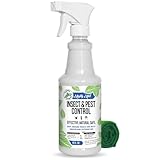
- Pet-Friendly & Family-Safe Formula – Mighty Mint is a top pick for pet parents looking for a natural pest control solution. Safe to use around dogs, cats, and kids when applied as directed—no harsh fumes or dangerous chemicals, just powerful peppermint protection you can trust.
- Powerful Plant-Based Pest Control – Formulated with extra-concentrated peppermint oil, this spray is a proven deterrent for spiders, ants, roaches, and more.
- Effective Indoor & Outdoor Use – Designed for versatile application on baseboards, entryways, patios, and other areas. Helps repel insects from kitchens, bathrooms, living spaces, and more—without staining surfaces.
- Fresh Minty Scent With Long-Lasting Effect – Infused with pure peppermint oil, this formula leaves a crisp, clean aroma that lingers without overwhelming. Free from synthetic fragrances and common allergens, making it a gentle option for scent-sensitive households.
- Ready-To-Use 16 Oz Spray For Targeted Application – Perfect for quick treatments in high-traffic areas, this 16 oz bottle delivers fast, focused pest control against spiders, ants, and other common insects. Pre-mixed and easy to use—just spray and go for natural protection wherever it’s needed most.
Do not make broad outdoor fogging the default
Routine perimeter spraying or broad outdoor fogging is a poor first response to mayflies arriving from the surrounding environment. A spray on a wall or lawn does not remove the aquatic source, and any relief is likely to be temporary. It can also expose pets, people, beneficial insects, birds, and aquatic wildlife.
EPA’s integrated pest management guidance prioritizes prevention and using pesticides only when necessary. If a pesticide is being considered for a specific, identified problem, read the current label, check state and local restrictions, keep pets away exactly as directed, and never use a product in or near water contrary to its label.
Do not rely on zappers, citronella, oils, or lawn treatments as a cure
The available evidence supports reducing attractive lighting, excluding adults, and removing them mechanically. It does not establish that a particular consumer bulb, electronic insect device, citronella product, essential oil, lawn treatment, or indoor spray will eliminate a regional mayfly emergence. These products may create expense, fumes, dead insects, or pet-exposure risks without addressing the source.
Independent reader supportYour contribution helps us test, update, and keep practical guides available for everyone.Could the insects be drain flies instead?
If the insects are tiny, fuzzy, and mothlike and you see them around a sink, shower, floor drain, or damp utility area, the issue may be drain flies rather than mayflies. Drain flies breed in wet organic buildup inside drains and plumbing-related areas, not in a nearby lake. Penn State Extension’s drain-fly guidance explains why identifying and removing that buildup is central to control.
The Tool Desk
Outbyte PC Repair FREERepair Windows errors before they cause bigger problemsFix Now →Outbyte Driver Updater FREEScan for outdated or missing drivers - takes under a minuteDriver Scan →Do not pour random pesticides or household chemicals down a drain, particularly in a home with pets. If cleaning does not resolve persistent activity, or if there is sewage, plumbing, or hidden-moisture damage, contact a qualified plumber or pest professional.
Best Value
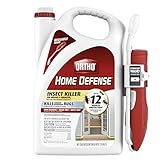
- WHERE TO USE INSECT SPRAY: Use this pest control spray indoors in kitchens and bathrooms or around doors and windows, and outdoors to the perimeter of foundations, patios, decks, garages or wherever insects are a recurring problem
- LONG-LASTING PROTECTION: This outdoor perimeter and indoor bug spray for homes creates a bug barrier that provides up to 12 month protection against ants, roaches and spiders when applied indoors on non-porous surfaces
- EASY-TO-USE APPLICATOR: This 1.33 gal. container of Ortho Home Defense Insect Killer for Indoor & Perimeter2 Ready-To-Use comes with a battery-powered Comfort Wand sprayer, which delivers a continuous spray for easy application
- INDOOR INSECT KILLER: Ortho Home Defense Insect Killer for Indoor & Perimeter2 is a bug killer spray that kills the toughest home-invading insects, including ants, cockroaches, spiders, fleas, ticks, scorpions, earwigs, silverfish, and more as listed
- WHEN TO USE: Apply this bug spray outdoors or indoors anytime as a preventative treatment or after you see evidence of insect activity
When to ask for identification or professional help
- The insects bite, sting, or appear to be mosquitoes, biting flies, or another harmful species.
- They are not delicate, long-tailed insects associated with nearby water and lights.
- Activity continues indoors after screens, doors, lighting, and moisture sources have been addressed.
- The insects are concentrated around drains, sewage, leaks, or persistent dampness.
- You are considering pesticide use near a lake, river, pond, ditch, or stormwater system.
- A pet may have contacted, inhaled, or ingested a pesticide; contact your veterinarian or an appropriate animal-poison service promptly and keep the product label available.
For an identification request, provide a sharp close-up photograph, the location where the insects were found, whether they bite, the time of day they swarm, and whether a body of water is nearby. Identification is especially important before applying any chemical treatment.
Quick answer
“Fish flies” are often mayflies, especially around the Great Lakes. They are harmless but can swarm around lights and pile up on buildings. Turn off unnecessary outdoor lights, use low-intensity shielded warm-yellow or amber lighting when light is necessary, close or repair screens, and vacuum or sweep up the adults. Do not spray the lake or river, and do not expect yard insecticide to stop insects emerging from nearby water. If the insects are fuzzy, drain-associated, biting, or unlike long-tailed mayflies, identify them before choosing a treatment.
Frequently Asked Questions
Do fish flies bite dogs, cats, or people?
No. The insects commonly called fish flies in Great Lakes communities are often mayflies, which do not bite, sting, infest homes, or damage property. True fishflies are a different group of aquatic insects, so unusual-looking insects should be identified before treatment.
What is the fastest way to reduce fish flies around a house?
Turn off unnecessary lights, close or repair screens, use door sweeps and weatherstripping, and vacuum or sweep up the adults. A warm-yellow or amber light may reduce attraction, but no bulb guarantees that mayflies will stay away.
Can I spray the lake or yard to kill fish flies?
No. Never spray insecticide into a lake, river, pond, ditch, stormwater feature, or other source water. Pesticides can harm aquatic insects, fish, amphibians, wildlife, pets, and people, and water-use restrictions may make such treatment illegal.
How can I tell fish flies from drain flies?
Possibly. Tiny fuzzy, mothlike flies around sinks, showers, or floor drains are more consistent with drain flies. They breed in wet organic buildup and need a different control approach.
The Bottom Line
The pet-safe strategy is prevention, not poisoning: reduce attractive outdoor light, seal openings, and remove adults mechanically. Mayfly “fish flies” are a temporary nuisance, not a household infestation, and treating nearby water can seriously harm aquatic life.
Quick Recap
Product prices and availability are accurate as of the date/time indicated and are subject to change. Any price and availability information displayed on Amazon at the time of purchase will apply.




