What’s actually slowing this PC down?
Pick the symptom - the matching free tool is one click away.
No—not all pufferfish are demonstrably poisonous. Their toxicity varies substantially by species, population, location, diet, tissue, season, maturity, and individual fish. Some pufferfish have tested as non-toxic or weakly toxic under particular conditions, while others can contain enough tetrodotoxin to cause paralysis or death.
That scientific qualification is not a safety recommendation: never eat a wild, unidentified, or improperly prepared pufferfish.



As an Amazon Associate I earn from qualifying purchases.
No. It is too broad to say that every pufferfish is poisonous. Pufferfish toxicity varies by species, population, location, diet, tissue, season, maturity, and even individual fish. Some pufferfish have tested as non-toxic or weakly toxic under particular conditions, while others can contain enough tetrodotoxin to cause paralysis or death.
PC Slower Than It Used to Be?
A free scan shows the junk files, broken settings and background clutter dragging Windows down - then fixes them in one click.Free scan · Windows 10 & 11Crashes, No Sound, or Screen Glitches?
Random freezes, missing sound and display glitches usually trace back to one bad driver. Find and replace yours safely.Free scan · under a minuteThat distinction does not make an unidentified pufferfish safe to eat. The practical rule is simple: never eat a wild, unidentified, or improperly prepared pufferfish. You cannot reliably judge its toxicity by appearance, by whether it is a freshwater or marine species, or by cooking the fish at home.
What are pufferfish?
Pufferfish are primarily members of the family Tetraodontidae. They are not one single species or one uniform toxicological category. Current FishBase family information lists more than 200 recognized species—206 in its current summary—although species counts can change as scientists revise fish taxonomy. The family includes marine, brackish-water, and freshwater species. FishBase’s Tetraodontidae summary provides the current family-level classification and species context.
That diversity matters. A statement about a highly toxic marine puffer should not automatically be applied to every freshwater aquarium puffer, and a report that one population has low toxicity does not establish that every member of its species is safe.
Why are some pufferfish poisonous?
The best-known pufferfish toxin is tetrodotoxin (TTX), a powerful neurotoxin. TTX blocks voltage-gated sodium channels, which are essential for nerves to transmit signals to muscles. Poisoning can begin with tingling or numbness around the mouth and may progress to nausea, dizziness, weakness, poor coordination, paralysis, respiratory failure, and death. Symptoms can appear within minutes or may be delayed for several hours. The CDC’s marine-toxin guidance describes the symptoms and the potential severity of pufferfish poisoning.
Recommended Free Tools
TTX is usually distributed unevenly through a fish. The liver, ovaries or other gonads, intestines, and skin are commonly among the most toxic tissues. Muscle may be less toxic—or test as non-toxic—in particular species or populations, but that is not a dependable rule for an unfamiliar fish. Some individuals can have dangerous muscle tissue, and a person preparing a fish can easily contaminate edible portions with toxic organs.
Toxicity may also change with the fish’s age or maturity, reproductive condition, season, geographic origin, and diet. These variables are why “just remove the liver” or “the meat is always safe” are unsafe generalizations.
Why isn’t every pufferfish equally toxic?
Studies have found substantial variation rather than a single toxicity pattern across the family. One review reported that 14 of 21 Japanese marine pufferfish species examined in an early survey were toxic, with additional toxic species identified later. The same body of research describes major differences between individuals and regions. Reviews of pufferfish poisoning also discuss species or populations that were non-toxic or only weakly toxic under particular conditions. These findings support the careful answer: many pufferfish can be poisonous, but not every pufferfish has been shown to contain the same toxin at the same concentration.
Researchers have also found evidence that much pufferfish toxicity is acquired through the food web. In experiments, cultured pufferfish raised on toxin-free diets could remain non-toxic, while exposure to toxin-containing food enabled them to accumulate toxins again. This suggests that diet and associated environmental or microbial processes are important. It should not be simplified into an absolute claim that pufferfish never produce toxins themselves; the precise biological pathways remain an active research subject. A review of pufferfish toxicology documents this dietary and geographic variation.
Freshwater and euryhaline species add another layer of uncertainty. Comparative research has found differences between marine and freshwater puffers in how they selectively take up and accumulate tetrodotoxin and paralytic-shellfish-poison toxins such as saxitoxin. In other words, a freshwater puffer may involve toxins other than—or in addition to—TTX. “Freshwater” is not a synonym for “safe.”
Are freshwater pufferfish poisonous?
Some may be toxic, some may be weakly toxic or non-toxic under particular conditions, and the answer cannot safely be generalized to all freshwater puffers. Freshwater pufferfish sold for aquariums are not automatically food fish, and their toxicity can depend on species, source, diet, and conditions before purchase.
Do not eat an aquarium pufferfish. Even if a particular species is reported to have low or undetectable toxicity in a study, that result does not verify the identity, diet, health, or toxin level of an individual fish in a home aquarium. Aquarium medications, contaminated food, and handling can also create risks unrelated to whether the species is considered edible.
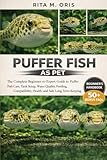
If your interest is identification rather than consumption, an educational pufferfish identification book may help compare species and explain their natural history. Use such a resource to learn about the fish—not to certify a wild specimen as safe to eat. Identification guides are not substitutes for regulated food-safety training, laboratory testing, or local regulations.
Can you tell whether a pufferfish is poisonous by looking at it?
No. Casual visual inspection cannot reliably establish whether a pufferfish is safe. Closely related species may differ in toxicity, and individuals of the same species may vary according to location, season, maturity, and diet. A fish may look healthy and normal while dangerous toxin is concentrated in its organs or skin.
Color, size, habitat, whether the fish inflated itself, and whether local people have eaten similar fish are not reliable safety tests. Nor is a previous uneventful meal proof that the next fish is safe.
NOAA educational material specifically warns that consumers may be unable to distinguish dangerous from safe pufferfish and recommends not eating pufferfish caught in Florida. Local rules and risks differ by region, but the underlying advice is broadly useful: do not treat an unfamiliar pufferfish as an edible catch. The NOAA pufferfish safety material explains this identification problem.
Does cooking make pufferfish safe?
Do not rely on cooking, freezing, drying, or ordinary household preparation to detoxify pufferfish. Tetrodotoxin is sufficiently heat-stable that conventional cooking cannot be assumed to destroy it. Freezing and drying should not be treated as reliable toxin-removal methods either.
In places where fugu is legally served, safety depends on controls such as approved species, regulated sourcing, trained and licensed preparation, and careful removal of toxic tissues. It is not simply a matter of cooking a pufferfish thoroughly. Home preparation of a wild or unidentified fish cannot reproduce those controls.
The U.S. Food and Drug Administration recognizes pufferfish as a seafood hazard and describes controls and restrictions for imported pufferfish products. Its guidance notes poisonings involving fish from the Indo-Pacific as well as Atlantic, Gulf, and other waters. The FDA hazard guidance for pufferfish is the relevant reference for those food-safety concerns.
Are pufferfish poisonous to touch?
Pufferfish are usually called poisonous, not venomous. “Poisonous” generally describes an organism that harms someone when its toxin is eaten or otherwise absorbed. “Venomous” usually describes a toxin actively delivered through a bite, sting, spine, or similar mechanism.
The main established human danger from pufferfish is eating toxin-containing tissue. Merely seeing a live pufferfish does not poison you, and the evidence does not support claiming that touching every live pufferfish is automatically fatal. Nevertheless, do not handle dead, damaged, or dismembered pufferfish unnecessarily, and avoid contact with internal organs. Wash thoroughly after accidental contact and seek professional advice if exposure may have involved ingestion, an open wound, or the eyes or mouth.
What to do after someone eats pufferfish
Treat possible pufferfish poisoning as a medical emergency. If someone has eaten pufferfish and develops mouth tingling, numbness, nausea, dizziness, weakness, trouble speaking, difficulty swallowing, or breathing problems:
Best Value
- Call emergency services or a poison center immediately. Do not wait for severe paralysis or breathing failure.
- Do not induce vomiting unless a medical professional specifically instructs you to do so.
- Keep the person under observation and tell responders what was eaten, when it was eaten, how it was prepared, and where the fish came from.
- Do not let the person drive. Symptoms can progress even after an initially mild period.
There is no dependable home antidote for tetrodotoxin poisoning. Hospital treatment focuses on monitoring and supporting breathing and other vital functions while the toxin clears. The CDC advises urgent medical attention for suspected marine-toxin poisoning.
Safe wording for the short answer
The most accurate one-sentence answer is: Not all pufferfish are demonstrably poisonous, but toxicity varies by species, population, tissue, diet, and environment, and no wild or unidentified pufferfish should be eaten because dangerous individuals cannot be reliably identified by casual inspection.
Avoid these claims:
- “Every pufferfish is deadly.”
- “All puffers are harmless if cooked.”
- “Freshwater puffers are always safe.”
- “Only the liver is poisonous.”
- “The meat is always safe.”
Each is more categorical than the evidence supports.
The Tool Desk
Outbyte Driver Updater FREEScan for outdated or missing drivers - takes under a minuteDriver Scan →Outbyte PC Repair FREEClear out junk files and repair common Windows errorsFree Scan →Frequently Asked Questions
Are all pufferfish poisonous?
No. Toxicity varies widely among pufferfish species, populations, tissues, and individual fish. Some have tested as non-toxic or weakly toxic under particular conditions, while others contain dangerous tetrodotoxin.
Are freshwater pufferfish safe to eat?
Some freshwater puffers may be weakly toxic or non-toxic under particular conditions, but freshwater does not mean safe. Aquarium puffers should never be eaten because identity, diet, and toxin levels are not verified for consumption.
Does cooking remove pufferfish poison?
No. Cooking, freezing, drying, and ordinary home preparation cannot be assumed to destroy tetrodotoxin. Regulated fugu preparation relies on approved sourcing, trained preparation, and removal of dangerous tissues.
What should you do if someone eats a pufferfish?
Possible symptoms include tingling or numbness around the mouth, nausea, dizziness, weakness, trouble speaking, paralysis, and breathing difficulty. Call emergency services or a poison center immediately; do not wait for severe symptoms.
Free tools Windows power users keep installed
One-click scans. No signup required.
The Bottom Line
Bottom line: No, not every pufferfish has the same demonstrated toxicity. But because toxin levels can vary between species, populations, tissues, and individual fish—and because cooking does not reliably remove the danger—an unfamiliar or wild pufferfish should never be eaten.
Quick Recap
Product prices and availability are accurate as of the date/time indicated and are subject to change. Any price and availability information displayed on Amazon at the time of purchase will apply.




