Give your cat one quiet, hazard-checked room first. Set it up with familiar bedding or a hiding place, food, water, toys and a litter box; keep the door closed while the cat settles. When the cat seems comfortable, open additional safe rooms gradually and supervise early exploration. Secure escape routes and household hazards before each expansion, and use a separate, staged introduction plan if other pets live there.
What a safe first exploration looks like
A new home is both stimulating and risky: doors may be propped open during the move, unfamiliar gaps can trap a small body, and ordinary household items can be dangerous when investigated with teeth or paws. The safest approach is controlled access rather than a whole-house tour. A home-base room gives your cat a retreat, keeps essential resources together and lets you inspect one area at a time.
As an Amazon Associate I earn from qualifying purchases.
There is no reliable universal timetable for moving from one room to the next. International Cat Care’s 2024 booklet addresses kittens specifically and recommends gradual, supervised access as a kitten is ready; the same comfort-led principle is useful for adult cats without turning it into a fixed schedule. International Cat Care’s kitten booklet and the ASPCA moving guidance both support expanding access only after the cat is settling in.
What’s actually slowing this PC down?
Pick the symptom - the matching free tool is one click away.
Prepare a home-base room before arrival
Choose a quiet, closable room
Pick a room away from moving traffic, loud appliances and frequent visitors. It should have a door that closes securely and enough floor space for the cat to move between resting, eating and toileting areas. A bedroom or quiet office often works; the best choice is the room you can keep calm and undisturbed.
#1 Best Overall

- ENLARGED HAMMOCK - This cat tree is Equipped with a sturdy and spacious square hammock, this large cat tree tower offers a comfortable resting spot for your adult cat. The hammock design allows large cats to lie down, providing a relaxing space for napping and rejuvenation
- SPACIOUS AND COMFORTABLE CAT CONDO - This cat tower provides a spacious cat condo that allows cats to rest, hide, or play comfortably inside. The cat cave is a safe, private space that meets cats' needs
- SISAL ROPE SCRATCHING POST - The cat tower with 4 scratching posts and a scratching board is meticulously lined with durable natural sisal. The rough texture of sisal provides an ideal surface for your feline friends to scratch
- ENLARGED REMOVABLE TOP PERCH - Up to 70 inches tall cat tree includes the enlarged top platform is detachable for easy cleaning and maintenance. Offers a spacious resting and observation area for cats
- DUAL CLIMBING PATHS FOR VARIED ACTIVITY PLEASURES - This cat climbing tower features two upward climbing routes, integrating activity and rest to meet cats' various needs and enhance enjoyment
Put the cat in this room immediately on arrival, rather than carrying it around for a house tour. Keep the door shut while furniture, boxes and people are still moving through the rest of the home. The ASPCA advises confining pets in a quiet room with the door closed during moving activity to reduce escape opportunities.
Provide familiar, usable resources
- A familiar bed, blanket or other scent-bearing item, plus a box or covered hide where the cat can retreat.
- Fresh food and water placed where the cat can reach them without crossing a busy doorway.
- A litter box in the same room, positioned away from food and water.
- Familiar toys and, if used previously, a scratching post.
These are functional resources, not a checklist that requires a particular product. The ASPCA adoption guidance recommends a quiet, safe space and time for a new pet to adjust; its moving guidance also places food, water and litter in the initial room.
Inspect the room at cat level
Get down low and look behind furniture, under beds and along baseboards. Close or block narrow openings where a cat could become wedged or disappear behind appliances. Remove loose cords, dangling blind cords and anything small enough to chew or swallow. Check that windows are fully latched and that the room’s door cannot be pushed open accidentally.
Quick wins for a faster PC:
Repair Windows errors before they cause bigger problemsFix Now →Scan for outdated or missing drivers - takes under a minuteDriver Scan →Remove medications, cleaning chemicals, pest-control products and toxic plants. The ASPCA Animal Poison Control Center checklist, dated March 3, 2021, emphasizes that pets investigate with their mouths and recommends checking plants, medicines and household hazards before bringing an animal home. For a particular plant, verify its safety using a current poison-control resource rather than relying on a generic plant list.
Secure the route from the carrier to the room
Control doors and windows
Before opening the carrier, close exterior doors, garage access and windows in the route and in the home-base room. Ask everyone helping with the move to keep those barriers closed. Do not rely on a verbal warning alone when several people are carrying boxes; assign one person to check each door.
Make the carrier familiar in advance
If travel has not happened yet, acclimate the cat gradually. The ASPCA recommends making the carrier familiar with food and positive experiences before the trip. Leave it open in a familiar area, place treats or meals near and then inside it, and allow the cat to investigate voluntarily. This preparation is separate from house exploration, but it can make the transfer into the new home less stressful.
Rank #2
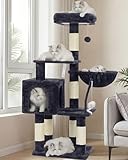
- Ideal design of structure: Structure of the cat tree is designed according the climbing habits of cats. Two jumping platforms not only increase the active space but also help kitties and older cats to climb up and down
- Stability is the Primary Consideration for A Cat Tower: Sturdy cat climbing frame base, sisal wrapped scratch posts and Anti-toppling devices ensures the security of active kittens and cats playing on the activity centre
- Spacious and Removable Top Perch: The well-padded top platform is suitable for kittens. They can lie on the soft place as a bed to sleep, observe and nap
- Lazy Cats Favorite Basket: Cats naturally like the feeling of being wrapped , which makes them feel safe, therefore a comfortable and strong basket are always necessary
- A Cat teasing stick and Plush Ball for Kittens to Play: The extra cat teaser stick increases the interactive fun of cat and its owner. The toy ball with bell do not make too much noise. It can meet the cats' play needs while not disturbing the owner
Arrival: let the cat choose the first contact
- Take the closed carrier directly to the prepared room. Keep the room door shut and set the carrier on the floor before opening it.
- Open the carrier and step back. Give the cat space to come out when ready. Do not pull it out, tip the carrier or carry it around the house.
- Keep the room predictable. Leave food, water, familiar items and the litter box in place. Limit visitors and loud activity.
- Allow hiding. A hiding place is a retreat, not a failure. Do not reach in or drag the cat out to make it interact.
- Approach on the cat’s terms. Sit quietly, speak softly and let the cat initiate contact. The ASPCA’s adoption advice emphasizes giving a new pet time and space instead of forcing interaction.
Some cats investigate immediately; others remain hidden while they process the unfamiliar smells and sounds. Neither response establishes a schedule for the next step. Continue providing resources and observe whether the cat is becoming more at ease in the room.
How to expand access without overwhelming the cat
Open one controlled area at a time
When the cat appears comfortable in the home-base room, open access to one additional, already inspected area. Keep other doors shut so the cat can retreat and so you can see where it goes. The ASPCA summarizes this approach as: “When they seem comfortable, gradually introduce them to other rooms in the house, while keeping some doors shut.” That sentence appears in the ASPCA’s moving guidance.
Stay nearby for early excursions, especially with a kitten or a cat that climbs, chews or squeezes into openings. Let the cat walk back to the base room rather than blocking the retreat. Before opening another room, repeat the low-level hazard check there.
Use comfort, not a calendar
Do not impose a “three-day” or other fixed timetable. The available guidance does not establish a population-wide settling time, and International Cat Care’s booklet is specifically about kittens rather than every adult cat. A cat that is exploring calmly may be ready for a little more space; a cat that is retreating from every new stimulus needs a smaller, quieter area for longer.
Keep some spaces off-limits
Closed doors are useful management, not a punishment. Keep doors shut to rooms containing renovation materials, open stairwell access, unfamiliar machinery or items you have not yet inspected. Recheck barriers after deliveries, visitors or furniture changes because a previously safe route can become an escape path.
Free tools Windows power users keep installed
One-click scans. No signup required.
Cat-proof every newly accessible room
Eliminate escape routes
- Latch windows and screen openings; never assume a high floor prevents a fall or escape.
- Close exterior doors promptly and keep the cat away from the entry during move-in traffic.
- Block gaps behind appliances, cabinets and radiators where a cat could become trapped.
- Secure doors that swing or slide open when pushed.
Remove things a cat can chew or ingest
- Bundle or cover electrical cords and remove frayed cables.
- Store medicines, cleaners, adhesives, batteries and small objects in closed cupboards.
- Remove pest baits and traps from accessible areas.
- Move plants out of reach until their safety has been confirmed for cats.
The ASPCA Animal Poison Control Center’s inspection checklist is a useful reminder to inspect from the animal’s perspective. It does not make any single room escape-proof, so supervision and closed barriers remain important.
Rank #3
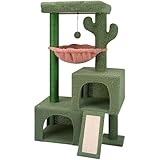
- Dimensions: 12.2x13.8 inch base board, made of high-quality P2 particleboard, featuring a sturdy base
- Multifunctional Activity Center: Multi-level design, spacious cozy condos, perch, and round hammock
- Furniture Protection: 100% sisal-wrapped posts and pad are perfect for scratching, protecting furniture and curtains
- Safe and Reliable: Pet safety is the top priority, with no sharp edges, ensuring cats can play with peace of mind
- Easy to Assemble: Comes with detailed instructions and tools, can be completed in minutes
Add vertical options as enrichment
A stable perch or cat tree can give a cat a safe way to observe the room from above. The ASPCA notes that many cats enjoy vertical space. Treat a perch as optional enrichment, not a condition for safe exploration; it must be stable, away from unsecured windows and positioned so the cat cannot reach hazardous shelves or escape routes.
Keep the litter box easy to find
Leave the litter box in the home-base room while the cat is settling. Once access expands, keep a clear route back to it. Do not move it abruptly just because another location looks tidier.
If you need to relocate it, move it in small increments. The ASPCA gives moving the box about one foot forward each day as an example; that is practical organizational guidance, not a universal veterinary rule. If the cat stops using the box, return it to the last location that worked and contact the cat’s veterinarian for individualized advice.
Do these 3 things before closing this tab:
1Fix the driver behind crashes, sound loss and screen glitches2Clear out junk files and repair common Windows errors3Scan for outdated or missing drivers - takes under a minuteWhen another cat or pet already lives there
A newcomer exploring a house is not the same event as introducing two cats. Keep resident pets out of the new cat’s home-base room while the newcomer settles. Continue the single-cat safety steps, then follow a separate introduction process.
Cat-to-cat introduction sequence
- Start with physical separation. The new cat remains in its room while the resident cat keeps its normal territory.
- Exchange scents. Swap bedding or cloths between areas so each cat can investigate the other’s smell without direct contact.
- Offer supervised exploration. Let the new cat inspect other rooms while the resident cat is elsewhere, then return the newcomer to its room.
- Begin visual contact at a distance. Use a secure barrier, such as a baby gate where appropriate, and allow both cats to remain far enough away to stay comfortable.
- Progress only when both cats remain settled. Increase proximity and shared time gradually, with supervision.
This staged sequence comes from the Humane Society’s guidance for adding a cat to a household with an existing cat. Its relevant stages concern a multi-cat relationship, not a reason to rush a single cat through the whole house. See the Humane Society’s 2023 cat-care PDF.
How the two situations differ
| Situation | Initial setup | Next access step | Additional process | Guidance scope |
|---|---|---|---|---|
| One cat in a new home | Quiet home-base room with hiding place, food, water, toys and litter | Open inspected rooms gradually; keep other doors closed | Ongoing hazard checks and supervision | ASPCA moving and adoption guidance; broad settling principles |
| New cat joining resident cat(s) | The same separate home-base room, with resident pets excluded | Supervised exploration while resident cats are elsewhere | Scent exchange, barrier-based visual introductions and staged contact | Humane Society 2023 multi-cat guidance, with International Cat Care’s kitten booklet as kitten-specific corroboration |
Do not let resident animals enter the newcomer’s room simply because the newcomer has begun exploring. The room remains the cat’s secure base during introductions.
Rank #4

- Thoughtful Structure Design: Structure of the cat tree is designed according to the climbing habits of cats. Two jumping platforms not only increase the active space but also help kitties and older cats to climb up and down
- Stability is the Primary Consideration for A Cat Tower: Sturdy cat climbing frame base, sisal wrapped scratch posts and Anti-toppling devices ensures the security of active kittens and cats playing on the activity centre
- Spacious and Removable Top Perch: The well-padded top platform is suitable for kittens. They can lie on the soft place as a bed to sleep, observe and nap
- Comfortable Basket for Cats: Cats naturally like the feeling of being wrapped, which makes them feel safe, therefore a comfortable and strong basket are always necessary
- Interactive Cat Toys Included: The extra cat teaser stick increases the interactive fun of cat and its owner. The toy ball with bell do not make too much noise. It can meet the cats' play needs while not disturbing the owner
Kittens and adult cats: apply the evidence carefully
International Cat Care’s 2024 booklet is written for kittens. Its advice on a quiet room, hiding places, hazard-free preparation and gradual supervised access supports the overall method, but kitten-specific cautions should not be presented as a rule for every adult cat. Adult cats may also benefit from the same controlled setup, while their pace and space needs can differ.
The Tool Desk
Outbyte Driver Updater FREEFix the driver behind crashes, sound loss and screen glitchesFind Drivers →Outbyte PC Repair FREERepair Windows errors before they cause bigger problemsFix Now →For either age, supervise early exploration if the cat climbs, chews, squeezes into gaps or encounters stairs and balconies for the first time. Adjust the environment instead of trying to physically restrain a curious cat during every movement.
Common mistakes and safer alternatives
Opening the whole house immediately
Why it fails: You lose control of hazards and escape routes, and the cat may retreat somewhere inaccessible.
Safer alternative: Begin with one prepared room, then add inspected areas while keeping other doors closed.
Forcing the cat out of hiding
Why it fails: It removes the cat’s chosen retreat and turns human contact into another unfamiliar pressure.
Recommended Free Tools
Safer alternative: Sit quietly, keep resources available and let the cat approach voluntarily.
Best Value

- MULTI-LEVEL CAT TREE TOWER: This cat tree offers perches, ladders, and a cozy cat condo, creating the ultimate playground where cats of all ages can climb, scratch, nap, and explore freely.
- STURDY CAT FURNITURE DESIGN: Crafted from high-quality materials, this cat tree offers durable cat furniture and secure cat accessories, ensuring stability, comfort, and daily relaxation.
- DURABLE CAT SCRATCHING POSTS: Wrapped in natural sisal, these scratching posts encourage healthy claw maintenance and function as durable cat scratchers for indoor cats while protecting furniture.
- COMFY CAT BEDS & HOUSES: With soft cat beds and spacious cat houses for indoor cats, this tower creates safe hideaways and cozy kitten bed options for rest during day or night.
- INTERACTIVE CAT TOYS INCLUDED: Built-in cat toys keep playtime exciting, while the hanging cat toy promotes exercise, mental stimulation, and provides hours of interactive fun daily.
Leaving doors ajar during the move
Why it fails: A single open exterior door can create an escape opportunity while people carry boxes.
Safer alternative: Confine the cat behind a closed door and assign someone to monitor entrances.
Assuming a new cat can meet resident pets right away
Why it fails: House exploration and social introduction are separate processes.
Safer alternative: Keep animals separated, exchange scents and use staged visual contact before direct meetings.
Moving the litter box in one jump
Why it fails: The cat may not find or accept the new location.
Safer alternative: Move it gradually, using the ASPCA’s one-foot-per-day example only as a practical reference.
When to call the veterinarian
This settling-in guide cannot diagnose illness or determine why a particular cat is hiding, refusing food, changing elimination habits or showing other concerning signs. If you notice persistent appetite changes, illness, elimination problems or behavior that worries you, contact the cat’s veterinarian. Seek urgent veterinary help for an emergency rather than waiting for the exploration process to resolve it.
PC Slower Than It Used to Be?
A free scan shows the junk files, broken settings and background clutter dragging Windows down - then fixes them in one click.Free scan · Windows 10 & 11Crashes, No Sound, or Screen Glitches?
Random freezes, missing sound and display glitches usually trace back to one bad driver. Find and replace yours safely.Free scan · under a minuteA simple checklist for each expansion
- Are exterior doors and windows secured?
- Are cords, medicines, chemicals, pest products and unverified plants inaccessible?
- Have gaps behind and under furniture been blocked?
- Can the cat retreat to the home-base room without being carried?
- Is the litter box still easy to reach?
- Will someone supervise the first exploration of this room?
- If other pets are present, are they separated according to the introduction stage?
Repeat this checklist after visitors arrive, furniture moves or a previously closed door is opened. Safe exploration is an ongoing management task, not a single inspection.
Quick Recap
Product prices and availability are accurate as of the date/time indicated and are subject to change. Any price and availability information displayed on Amazon at the time of purchase will apply.




