The safest way to help a frightened stray cat is to give it control: keep your distance, stay quiet, provide a place to hide, and let the cat decide whether to come closer. Do not chase, corner, pull it from hiding, or assume that an unfamiliar cat is homeless. A cat that appears ill, injured, dangerously thin, or impossible to approach safely needs a veterinarian or local animal-welfare organization rather than a prolonged trust-building exercise.
“Move at the animal’s pace,” advises the American Animal Hospital Association (AAHA). That principle applies outdoors as well as in a home: your job is to reduce pressure, observe carefully, and escalate to trained help when safety or health is in doubt.
As an Amazon Associate I earn from qualifying purchases.
Start with distance, quiet and an escape route
Before you approach, stop far enough away that the cat is not trying to flee. Watch where it can run and avoid standing between the cat and that route. A direct walk toward a frightened animal can feel like a chase even when you intend to help. Turn your body slightly sideways, keep your hands low, and avoid reaching over the cat.
Free tools Windows power users keep installed
One-click scans. No signup required.
Use a soft, ordinary voice or remain silent. Sudden movements, loud calls, attempts to stare the cat down, and a group of people gathering around it all increase pressure. If the cat retreats, stop following. Distance is not failure; it is information about what the cat can tolerate.
#1 Best Overall

- Pet Carrier: 17.5” L x 11” W x 11” H, Recommended max load of 16 lbs cats small dogs. Please do not choose your carrier based on weight--please reference your pet's length and height in selecting a pet carrier size.
- Fits for under-seat dimensions of most airlines. Every airline has a specific set of rules and regulations, please contact with airline before flying with your cats small dogs.
- Mesh windows for ventilation, top and side entry with locking zippers for safety. Carrying handles, adjustable shoulder strap which can also be used as seatbelt, and back strap can fasten the pet carrier to your luggage.
- Pet carrier comes with a removable base insert, which creates a solid surface for your pet to stand on, along with a removable & hand washable cozy fleece pet bed, which offers a cozy sleeping space for your traveling cats small dogs.
- "Toys for pets, of textile materials". Mostly used as a Toy of Fabric Pet Home for pets playing and relaxing.
- Pause when the cat notices you rather than continuing forward.
- Keep children, dogs and other cats away from the area.
- Leave a clear path to cover and do not block doorways, fences or other exits.
- Never grab a cat simply because you have reached it.
Some cats will remain hidden for a long time. Hiding is a coping strategy, not proof that the cat is being difficult or that it must be forced out.
Let the cat choose the pace of contact
If the situation is safe, sit quietly nearby and allow the cat to decide whether to reduce the distance. Keep your visits predictable if the cat is in your care: similar times, the same calm voice and the same low-pressure routine can make your presence easier to anticipate. Cats Protection’s shy-cat guidance emphasizes patience and warns against forcing interaction when a cat is not ready.
What voluntary contact looks like
A cat may first watch from cover, then look away, groom, sniff, or take a step toward you. Those small changes are invitations to remain calm, not permission to reach out. Let the cat approach your stationary hand if it chooses. Keep your hand still and low; do not pursue the cat’s head or body if it turns away.
What’s actually slowing this PC down?
Pick the symptom - the matching free tool is one click away.
If the cat backs up, freezes, crouches lower or runs, increase your distance immediately. Do not interpret a brief approach as proof that the cat can be picked up. Trust develops through many interactions in which the cat can leave.
Use treats without turning them into a trap
When the cat is interested in you and is not showing urgent illness, a small treat can create a positive association. Place it where the cat can take it without coming close to your body, then wait. A treat is not a reason to corner, grab or shut the cat in. If the cat will not eat, that may reflect fear, illness or the presence of an owner who feeds it; do not keep escalating food to force an approach.
Rank #2
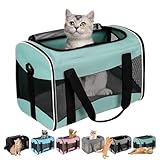
- [PRODUCT DIMENSIONS] Pet travel carrier size : 17x11x11 inches, recommended up to 15 lb pets, it is suitable for large, medium cats and small dogs. Please don't choose your airline cat carrying case based on weight, please refer to your pet's length and height when choosing a pet carrier size.
- [AIRLINE APPROVED] This cat carrier is designed with airline approved, it can fit comfortably under most flight seats, we can take our pets wherever we want. Dog travel carrier offers two attachment loop handles that can be used as a dual harness or as a luggage strap for balanced carry and secure transport.
- [EXCELLENT MATERIAL] Collapsible cat carrier is made of polyester fabric, supported by a steel ring, washable, wear-resistant and durable. The three sides and the top of this pet carrier are nylon mesh, scratch-resistant and not easy to damage, it can not only check your pet in real time, but also ensure enough air circulation.
- [SAFE AND COMFORTABLE] Dog travel bag has metal zippers on the top and side entrances, durable and not easy to deform, it allows your pets to enter and exit easily. The cat carrying case is equipped with an anti-escape safety buckle, which can effectively prevent pets from accidentally falling. It is suitable for car rides and vet rides.
- [PORTABLE AND FOLDABLE] Pet travel carrier comes with a detachable and hand washable wool pet bed, it can provide a comfortable sleeping space for your traveling pet. The cat travel case comes with an adjustable shoulder strap and handle for easy portability. When not in use, you can fold it up for storage.
Offer a refuge the cat can enter and leave
A quiet covered space can make a frightened cat feel safer. If circumstances allow, put a sturdy cardboard box on its side in a sheltered, low-traffic location. The opening should remain unobstructed and the cat should be able to leave. Do not reach into the box, shake it, tip it, or coax the cat out for a closer look.
For a cat already inside a room, reduce noise and activity around the hiding place. Keep other animals out, close unsafe gaps, and remove hazards without dismantling the cat’s refuge. A hiding place is useful only if the cat retains control over when to use it.
Quick wins for a faster PC:
Clear out junk files and repair common Windows errorsFree Scan →Scan for outdated or missing drivers - takes under a minuteDriver Scan →Do not drag a cat from under furniture, behind an appliance or out of dense vegetation. Pulling can injure the cat and teaches it that hiding places are not safe. If the location is dangerous, ask a local animal-welfare organization or veterinarian for a plan rather than improvising a forceful extraction.
Read fear and distress cues without diagnosing
Behavior can tell you that a cat is overwhelmed, but a single sign does not identify the cause. Cats Protection lists running away, retreating to hiding places, dilated pupils, flattened ears, cringing and cowering as fear signals. AAHA clinical guidance also describes hiding, attempted escape, freezing, a lowered posture, lowered ears and changes in eating or drinking as common distress behaviors.
| What you may see | What it means for your next action |
|---|---|
| Running away or repeated retreat into cover | Stop advancing and give the cat more space; do not follow. |
| Dilated pupils, flattened ears, cringing or cowering | Reduce noise and movement, keep an escape route open and wait. |
| Freezing or a very low posture | Do not assume stillness means acceptance; remain stationary and avoid touching. |
| Escape attempts, frantic movement or vocal distress | Back away and remove people and animals from the area. |
| Not eating or drinking, or a sudden change in either | Consider illness or severe distress and contact a veterinarian or local welfare group. |
These cues do not prove that a cat is feral, abandoned or sick. They are a reason to lower pressure and observe the whole situation. Sudden behavior change, weakness, breathing difficulty, visible wounds or other signs of poor health move the situation into the veterinary-help branch below.
Rank #3

- High Quality Design:Sturdy steel cage structure and wooden support board maintain good spatial stability and shape. Breathable mesh windows on four sides,which can ensure good air circulation and views,make pets have a comfortable and safe travel.It can also be easy for you to check on your pets.There is a front pocket to store pet toys,treats,etc.
- Dimension and Weight:Made of durable tear-resistant fabric.Four easy entrances for pets. Dimensions: 17 inch x 11 inch x 11 inch (L*W*H), suitable for pets up to 16 lbs.Please don't choose your carrier based on weight only,consider your pet's length and height when choosing a carrier.
- Airline Approved & Safty:Can be placed under the seats of most airplanes(Four non-slip feet on the bottom to prevent movement), and comfortably on the seat next to you in a car or bus.It has a adjustable shoulder strap.Can also be fastened to the car seat with a safety belt or shoulder strap to keep your pet safe.
- Easy to Clean :You can clean the stains and dirt on the surface with a soft cloth.Soft mat inside the pet carrier is removable and washable.You can take it out and wash it easily to solve all stains.
- Easy to Collapsible & Lightweight:When not in use,fold it into a flat,space saving and easy to store.Only 2.2lbs,it's easier to carry around.It can also used as a toy of pet house,allowing pets to play in a safe space to relax and rest.
Do not assume an unfamiliar cat is homeless
An outdoor cat may be owned, lost, stray or feral. A frightened response does not tell you which. Before deciding to adopt the cat or permanently relocate it, try to locate an owner and ask a local animal-welfare organization for advice. The appropriate process differs by country and municipality; Cats Protection’s stray-cat advice is written for the UK, so readers elsewhere should use local services and rules.
Practical owner checks
- Observe from a distance over more than one visit if the cat is safe and healthy enough to wait.
- Ask nearby residents whether they recognize the cat or know where it normally goes.
- Contact a local rescue, shelter, animal-control service or veterinary clinic for regionally appropriate guidance.
- If a professional advises checking identification, follow its instructions rather than trying to restrain the cat yourself.
Do not publish the cat’s exact location widely if doing so could attract people who might chase or harm it. Share details with a legitimate local service that can coordinate a safe check.
Should you feed a stray cat?
Food is not automatically the best first response. Cats Protection advises against routinely feeding an unfamiliar cat because it may have a medical condition or a special diet, and feeding can delay an owned cat’s return home. This is UK charity guidance, not a universal law; local veterinary and animal-welfare advice should take priority.
The same guidance describes limited exceptions: a particularly underweight cat may need help, and a small amount of food can sometimes lure a cat into a carrier for veterinary care. In either case, seek situation-specific advice rather than establishing an ongoing feeding station immediately. Never use milk as a default food for a frightened cat.
If food is advised locally
- Place a small amount down, then step well back so the cat can approach without passing close to you.
- Do not withhold an escape route or move the bowl toward the cat to make it come nearer.
- Remove leftovers according to local guidance so food does not attract hazards or create conflict with neighbors and other animals.
- Tell the veterinarian or welfare organization what was offered, especially if the cat may need treatment.
When illness or injury changes the plan
A sick or injured cat needs prompt veterinary or animal-welfare help, not a long period of socialization. Contact a local veterinary clinic or welfare organization and describe what you can see: wounds, inability to walk normally, marked weakness, breathing problems, unusual bleeding, collapse, severe thinness or distress. Call ahead before attempting transport; the clinic can tell you what it can receive and how to proceed safely.
PC Slower Than It Used to Be?
A free scan shows the junk files, broken settings and background clutter dragging Windows down - then fixes them in one click.Free scan · Windows 10 & 11Outdated Drivers Are Slowing You Down
One free scan finds every outdated or missing driver and matches the right update for your exact hardware.Free scan · exact hardware matchRank #4
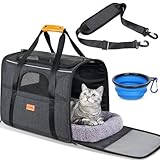
- 【 Spacious & Comfortable Cat Carrier 】The large cat carrier provides ample space for your feline friend to move, turn, and stretch during travel. Measuring 17.3 x 12.2 x 13.4 inches, it is wider and taller than most cat carriers, ensuring your pet feels comfortable and at ease while on the go.
- 【Balanced Mesh Design】Unlike other cat carrier hard, our cat carrier soft strikes the perfect balance with 40% mesh surface area. This ensures your pet can observe the surroundings and breathe easily while feeling safe and secure at the same time. The cat carrier large is suitable for pets in all kinds of situations.
- 【Built-in Dual-Sided Cushion】The detachable pad offers two distinct comforts: a cool side for summer and a super-soft, warm side for winter. You can easily flip it to match the season, providing the perfect temperature for your pet in any weather.
- 【Includes Foldable Bowl】Designed for on-the-go use, our foldable bowl carries 410g of food or 20oz of water. After use, simply collapse it and attach it directly to your pet's collar or leash, perfect for keeping your pet fueled and hydrated anywhere.
- 【Safe & Durable】Safety is our top priority, and the pet carrier for cat is equipped with a secure buckle to prevent your pet from escaping. The cat carrier soft is made of reinforced snow silk fabric and hard mesh material, ensuring durability and preventing any tearing during long-distance travel.
Do not delay urgent care while trying to gain the cat’s trust. Do not give human medicines, pour liquids into its mouth or attempt treatment that a professional has not instructed you to provide. Keep people and pets away and maintain a quiet perimeter while help is arranged.
If the cat can be placed safely in a carrier or box
Cats Protection names a cat carrier or a cardboard box as transport options. Use whichever can be employed safely for that cat and situation. A carrier is generally more secure for a veterinary journey; a sturdy box may be the only available option for a short, urgent transfer, but it must be strong enough, close securely without trapping the cat, and have adequate ventilation. Ask the clinic or welfare organization for exact instructions before moving an injured animal.
| Option | Use when | Important limitation |
|---|---|---|
| Cat carrier | You have one available and can place the cat inside without a dangerous struggle. | Having a carrier does not make it safe to chase or grab the cat. |
| Sturdy cardboard box | A carrier is unavailable and a professional advises that the box is suitable for the transfer. | It must be secure and ventilated; a weak or open box is not reliable transport. |
If you cannot safely place the cat in either option, stop trying and ask the local welfare organization for help. A frightened, injured animal can bite or scratch, and an unsuccessful attempt may drive it into a more dangerous hiding place.
Independent reader supportYour contribution helps us test, update, and keep practical guides available for everyone.How can you catch a stray cat without a trap?
There is no safe promise that every cat can be caught by hand. For a frightened cat, trying to catch it without suitable equipment usually means cornering, chasing or grabbing, all of which increase injury risk. Keep the cat contained in a safe area only if it has entered voluntarily and you can close an exit without putting hands near it; otherwise, contact a local rescue, shelter or animal-welfare organization.
Some organizations can arrange appropriate equipment and trained assistance for veterinary capture. Explain whether the cat is injured, how close anyone can approach, where it is hiding and whether other animals or traffic are nearby. Follow the organization’s instructions rather than setting up an improvised restraint.
Best Value
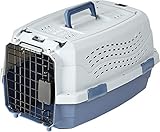
- Hard sided pet carrier with 2 doors for front and top entry; suitable for cat or extra-small dog breeds, such as chihuahuas and toy poodles (up to 11 pounds)
- Durable plastic construction with steel wire front door; screws keep the top and bottom sections securely connected
- Top door can swing open to the left or right for easy access and convenience
- Plenty of ventilation on sides, top, and back of the carrier
- Note: Be sure to measure the size of the pet when choosing carrier size
A calm approach sequence for a cat that is not in immediate danger
- Observe first. From a distance, note the cat’s location, escape routes, body language, eating and drinking, and any visible injury.
- Reduce pressure. Move people, children and pets away. Stop direct pursuit and keep your body angled rather than looming over the cat.
- Wait quietly. Sit or stand still at a distance the cat can tolerate. Use a low voice only if it appears to help.
- Provide cover. If safe, offer a side-turned cardboard box or another quiet refuge with an open exit. Never block or reach into it.
- Let the cat initiate. If it approaches, keep your hand still and allow it to sniff. If it retreats, stop the interaction.
- Use a small treat only when appropriate. Let the cat take it without moving closer or attempting to grab it.
- Escalate for health or safety concerns. Call a veterinarian or local welfare organization if the cat is sick, injured, underweight, in immediate danger or cannot be approached safely.
- Check for an owner once the cat is safe. Do not make an adoption decision solely because the cat was found outdoors.
Common mistakes that make fear worse
- Chasing after a retreat: the cat learns that your presence predicts pursuit.
- Pulling it from hiding: this removes its coping space and can cause injury.
- Blocking every exit: a trapped cat may panic, scratch or bolt into traffic.
- Assuming a still cat is calm: freezing can be a distress response.
- Using food to lure and then grabbing: this undermines trust and can make future veterinary capture harder.
- Feeding indefinitely without checking ownership: an owned cat may stop returning home, and a cat with a medical diet may be harmed.
- Handling an injured cat without advice: pain and fear increase the risk of bites, scratches and further injury.
- Trying to socialize on a deadline: some cats need distance, professional help or a different outcome than adoption.
When to end your attempt and call for help
Call a veterinarian or local animal-welfare organization when the cat appears sick or injured, is severely underweight, is trapped in immediate danger, or cannot be approached without a chase or struggle. Ask for help if you have no safe carrier or box, if the cat is in a place where closing an exit would be hazardous, or if you are unsure whether it is owned.
When you call, provide the location, time observed, visible signs, photographs taken from a safe distance if possible, how close the cat allows people to get, and whether traffic, dogs or other hazards are present. Do not delay an urgent case to collect more information.
After the cat is safe
Keep the environment quiet and predictable while a professional helps determine the next step. Continue to allow hiding and voluntary contact rather than testing whether the cat is “tame.” The appropriate outcome may be reunification with an owner, veterinary treatment, transfer to an animal-welfare group or another locally guided arrangement. A frightened cat does not owe anyone physical contact, and patience cannot replace medical care or trained capture when those are needed.
For UK readers, Cats Protection’s pages “Shy Cats: How to Help Your Cat Relax” and “Stray Cat Advice: What to Do If You Find a Stray Cat” provide the cited guidance on hiding, approach, feeding, owner checks and veterinary escalation. Readers in other countries should use their own veterinary clinic and animal-welfare organization for local procedures.
Quick Recap
Product prices and availability are accurate as of the date/time indicated and are subject to change. Any price and availability information displayed on Amazon at the time of purchase will apply.




