
Start changing your dog’s routine before the birth, not after you return home with the baby. Shift walks, meals, sleep arrangements and access to rooms in small steps; practice baby sounds and equipment at a comfortable level; teach a reliable settle cue; and create a retreat where your dog can rest undisturbed. When the baby arrives, use a second adult, keep the first meeting brief and calm, and supervise every contact.
The goal is not to make your dog tolerate handling or to predict a particular relationship. It is to make the new schedule familiar, give your dog safe ways to opt out, and prevent situations in which an adult cannot actively manage dog and infant together.
As an Amazon Associate I earn from qualifying purchases.
Start preparation early, using flexible planning windows
The ASPCA recommends introducing baby-related experiences about four months before the expected arrival and beginning anticipated routine changes one to two months beforehand. These are useful planning windows, not rigid deadlines. If the birth is sooner, begin with the changes that matter most and progress at a pace your dog can handle.
The Tool Desk
Outbyte Driver Updater FREEScan for outdated or missing drivers - takes under a minuteDriver Scan →Outbyte PC Repair FREEClear out junk files and repair common Windows errorsFree Scan →List what will change after birth: when meals and walks happen, where the dog sleeps, which furniture or rooms remain accessible, how much uninterrupted attention is realistic, and when a gate or other barrier may be needed. Make predictable changes in advance. For events that will be unpredictable, practice variation while still meeting your dog’s needs for exercise, rest, food and companionship.
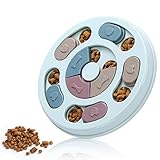
#1 Best Overall

- [Treat Distribution] Our food dispenser has differently sized spheres at both ends. As dogs push the toy, it moves within a fixed area, allowing dogs to continuously chase and play with it. During movement, food is dispensed from the food holes on both sides of the toy.
- [Adjustable Switch] Each of the two spheres with a food dispensing switch, making it suitable for various sizes and types of pet dry food or snack. The switch can be adjusted according to the different sizes of dog food. It also allows control over the amount of food dispensed, extending or shortening the time it takes for pets to obtain food. It is more conducive to a healthy dog diet.
- [Increase Pet Intelligence] This dog treat puzzle toy combines intellectual training with food rewards. When pets push this toy, it will not only be to get delicious food, but it will also stimulate their intelligence and hunting instinct. This design not only meets the needs of pets but also encourages them to learn and grow in the game.
- [Prolonged Play] The dog enrichment toy is designed to limit the amount of treats your dog gets while encouraging more extended playtime. This is intended for effective playtime for dogs and is NOT a chewed toy. It is also dog boredom buster toys and best dog gift to keep them busy when dogs are left home alone, relief anxiety.
- [Attract Dogs' Attention] With barbell shaped design and bright color, the dog puzzle toy ball can attract your dog's attention, stimulate their curiosity and drive them crazy to roll it. Size: 6.1*3.44*3.44in/15.5*8.7*8.7cm.
Map the old and new routine
| Area | Possible change | Practice before birth |
|---|---|---|
| Meals | Feeding may move around the baby’s care. | Shift meal times gradually and occasionally vary them within a reasonable range. Keep food, water and rest reliable. |
| Walks and toilet breaks | The timing or length of outings may change. | Move walks in small increments. Rehearse a shorter outing followed by enrichment at home when that is likely to be necessary. |
| Attention | Long, spontaneous sessions may become less available. | Replace a temporary burst of attention with several short, sustainable interactions that you can continue after the birth. |
| Sleep | The dog may sleep in a different room or bed. | Set up the future sleeping place early, make it comfortable, and reward the dog for choosing it. |
| Room and furniture access | A nursery, sofa or bed may become off-limits. | Teach the new boundary positively before the baby arrives; provide an appealing alternative nearby. |
| Separation | The dog may need to stay behind a gate or in another area during feeding, changing or visitors. | Practice brief separations while you remain close, pairing the area with a chew or food activity. |
ASPCA cautions against giving a dog unusually intense attention just before the birth and then abruptly withdrawing it. Build the post-birth pattern now: brief training, a calm greeting, a short play session, a walk, or quiet time on a mat. Consistency matters more than making every day identical.
Teach the behaviors that make baby care manageable
Reward-based training gives you options when your hands are occupied. Practice in quiet settings first, then around the equipment and sounds your dog will encounter. Useful cues include sit, down, stay, wait and a release word, plus a “place” or “settle” behavior on a bed or mat.
Build a settle-on-a-mat cue
- Put a comfortable mat or bed in a low-traffic spot and reward your dog for looking at it, stepping on it and lying down.
- When the dog is relaxed, deliver several small rewards between the paws. Add a cue such as “settle” just before the dog lies down.
- Increase the time between rewards by only a few seconds at first. Release the dog before it becomes restless.
- Practice while you sit, stand, carry an empty bottle or move a stroller. Reward calm observation rather than demanding eye contact.
- Move the mat to the places where you may feed or change the baby, while keeping it far enough away for everyone to be comfortable.
A mat is a communication tool, not a restraint. If the dog leaves, calmly guide it back with a reward or create more distance from the activity. Do not punish the dog for moving away.
Recommended Free Tools
Set boundaries before they become conflicts
Decide whether the dog may enter the nursery, approach the changing area, climb on furniture or sleep in your room. Teach those rules while the household is quiet. Reward the dog for remaining on its bed or behind a practiced boundary. If a rule will change after the birth, change it now rather than adding a sudden loss when the baby comes home.
Rehearse baby sights, sounds, smells and movement
Dogs adjust more easily when new stimuli arrive gradually and predictably. Introduce a doll, stroller, carrier, crib and other equipment under supervision. Allow calm investigation, then reward the dog and redirect chewing or carrying to the dog’s own toys. Baby items are not training props for grabbing, guarding or destruction.
Rank #2

- 【PRODUCT SIZE】10 inch*10 inch*1.3 inch.
- 【3 WAYS TO PLAY, UPGRADE SLOW FEEDER】Our dog mental stimulation toys have a unique squeak button in the middle, which make it easier to attract the attention of dogs and cats. Three different difficulty designs and the 16-hole dog treat dispenser design maximize slow feeding time, even beyond 20 minutes.
- 【FUNNY STIMULATING TOYS】All kinds of dogs and cats love the puzzle game of Spin & Slide and the Seek & Hide with their smell sense and paw skills to find food. Combining circular orbit sliding game and linear orbit sliding game, smart dog and cat must move the slider correctly to get the food reward hidden in the maze.
- 【NON-REMOVABLE PARTS DOG PUZZLE】Our dog treat puzzle is made of non-toxic materials, very durable and suitable for pets to play for a long time. This dog toy has no removable parts because the design has built-in play parts that fold tightly and won't fall off easily.
- 【ANTI-SLIP & EASY TO CLEAN】: The four corners of the bottom are equipped with four anti-skid pads, which can be well fixed during the dog's slow food process; It is easy to clean, also dishwasher safe.
Practice caregiving movements
- Hold or feed a doll while sitting, standing and walking a few steps.
- Rock the doll, bend over a changing surface and move between rooms.
- Push an empty stroller slowly, rewarding the dog for walking at a safe distance or settling while it passes.
- Pair each calm response with food, praise or a brief play session, then stop before the dog becomes overexcited.
Introduce sounds at a manageable level
Play recordings of crying or other baby sounds very quietly at first. The dog should be able to eat, respond to you and move normally. Pair the sound with rewards, and increase volume or duration only while the dog remains comfortable. If the dog startles, hides, pants, vocalizes or cannot take food, lower the intensity and add distance. This gradual exposure, combined with something positive, is the desensitization and counterconditioning approach described in veterinary behavior guidance from VCA Animal Hospitals.
Make smells and objects ordinary
Let the dog investigate baby equipment and fabrics while you supervise. Keep the dog’s own bedding, toys and chews available so there is an easy alternative to picking up a baby item. Never leave a new object on the floor with a dog that may chew, swallow or guard it.
Give your dog a retreat and practice separation
Every dog should have a comfortable place where the baby will not follow. A retreat may be a bed behind a gate, a crate, or an exercise pen. It should be familiar before the birth, large enough for the dog to rest naturally, and associated with food, sleep and calm activities. Closing a barrier for the first time during a stressful baby-care moment can make the barrier itself frightening.
| Management option | Useful when | Important limits |
|---|---|---|
| Baby gate | You need a quick visual boundary between rooms or a nursery doorway. | It must reliably prevent access for your particular dog. It is not supervision, and some dogs can climb or push through gates. |
| Crate | The dog already rests comfortably in a crate and can be given quiet downtime there. | Do not introduce it as punishment or use it for longer than the dog can comfortably manage. A crate does not replace an adult watching the situation. |
| Exercise pen | You want a larger, defined area for a dog that is comfortable inside it. | It still requires positive training, secure setup and an adult who remains responsible for supervision. |
Blue Cross recommends practicing short periods behind a gate with a chew before the baby arrives. Start while you are nearby, return before the dog becomes distressed, and gradually vary the duration. The purpose is to make separation routine, not to isolate the dog for long periods.
Use a final preparation checklist
- Write down the post-birth plan for meals, walks, sleep, furniture and room access.
- Begin the predictable routine changes one to two months before the due date, or as soon as practical.
- Practice sit, down, stay, wait and settle in the rooms where baby care will occur.
- Set up and positively train the dog’s bed, mat, gate, crate or pen.
- Rehearse carrying a doll, rocking, changing, feeding and walking beside an empty stroller.
- Play baby sounds at a low level and stop or reduce the intensity at any sign of discomfort.
- Store baby supplies so the dog cannot chew, swallow or guard them.
- Arrange a helper who can handle the dog during the homecoming and during busy care periods.
- Identify a veterinarian and a qualified reward-based trainer or behavior professional before you need urgent advice.
Plan the first meeting instead of improvising it
The homecoming is often noisy and exciting. Have another adult manage the dog, particularly if the returning parent expects a very enthusiastic greeting. The adult carrying the baby should be able to focus on the infant rather than restraining a jumping or frantic dog.
Rank #3

- 2 Levels in 1 Toy: start your pups off with a level 1 puzzle, add some treats in the base compartments and watch your dogs get their tasty reward by nudging the lids. For dogs who have mastered level 1, for added challenge in level 2, just put some treats in the top compartments, teach your dogs to press the top cover to dispense treats down into the base compartments and finally enjoy their reward
- Slow Feeder: The large capacity top transparent granary saves you the hassle to refill dog food frequently. The product can also be used as a slow feeder utensil for your dogs, which promotes healthy ingestion by slowing down eating speed by over 10x. Great for large and small dogs
- Not Easy to Tip Over: 4 non-slip rubber mats and weighted base hold the dog puzzle toy firmly in place when dogs eat and nudge and prevent the toy from tipping over
- We Prioritize Safety: the dog puzzle toys are designed with your pet’s health in mind, made of durable food-grade PP materials. Non-removeable parts make it safe and easy to clean. And you can give puzzles toy to your dog or directly out of the box, just no assembly!!
- Trains Dog’s Intelligence: interactive treat puzzle game challenges your puppies to get their reward of treats, works your dog's mind while reducing boredom and destructive behavior like chewing, digging and excessive barking. Size: 4.2 inch height
A calm first introduction
- Choose a calm area and remove hazards or high-value items that could create competition.
- Give the dog a chance to settle with the second adult before bringing the baby close.
- Allow a brief investigation only if the dog is relaxed and the caregiver is comfortable. Let the dog choose whether to approach; never push the baby toward the dog.
- Reward quiet behavior, then redirect the dog to a known cue, mat or suitable activity.
- End the interaction while it is still calm. Use the practiced barrier for the next transition, feeding or rest period.
A sniff, a lick or a calm glance does not prove that the dog understands or accepts the baby. Treat the first meeting as one carefully managed exposure among many, not as a test of their future relationship.
Quick wins for a faster PC:
Fix the driver behind crashes, sound loss and screen glitchesFind Drivers →Repair Windows errors before they cause bigger problemsFix Now →Keep the dog’s needs in the new daily routine
Continue walks, rest, enrichment and positive attention as consistently as circumstances allow. Short, dependable interactions are easier to maintain than promises of long sessions that disappear after the birth. If timing changes, preserve the dog’s basic needs and use gradual adjustments rather than an abrupt drop in activity.
Use enrichment during predictable baby-care periods
A food puzzle toy or suitable chew can occupy the dog while an adult feeds or cares for the baby, provided the dog is in a safe arrangement and the adult remains attentive. Enrichment is optional and is not a safety device. Do not give a chew in a location where the baby could crawl over and disturb the dog, and do not assume a busy dog is automatically safe.
Protect rest and choice
Do not invite the baby to approach the dog’s bed, crate, pen, food bowl or chew. Teach visitors and older children to respect the retreat as well. A dog that can leave an interaction without being followed has a safer way to communicate discomfort.
How can I keep my baby safe around the dog?
The essential rule from the American Kennel Club is: “Never leave baby alone and unsupervised with the dog.” Active supervision means an adult is awake, present and close enough to intervene immediately—not merely somewhere in the house. When that level of attention is impossible, use a practiced gate, crate, pen or separate room and check that the dog is comfortable.
What’s actually slowing this PC down?
Pick the symptom - the matching free tool is one click away.
Rank #4
- 【Size】: L9.44" * W9.44"* H1.14" suitable for cats, puppies and small dogs.
- 【Interactive Dog Toys】This is a interactive puppy puzzle , which can easily become the closest companion and toy for your puppies and cats, and will release pressure for dogs. Find food by sliding parts to improve eating pleasure and IQ.
- 【Slow Feed Bowl】This encourages pets to eat at a slower speed, helps to slow down the feeding time to help the dog digest, and can provide your dog with a variety of healthy snacks.
- 【Slow Feede toys】 Use this educational game toy to exercise the dog’s brain, which will help meet the dog’s instinct needs, train the pet’s sense of smell, and let the dog enjoy feeding when using the nose or paw to move the slider, while providing spirit stimulate.
- 【Dog toys】No toy is indestructible. Do not leave toys with unsupervised pets. Remove and replace toy if damaged.
- Keep dog and infant separated during sleep, showering, cooking, phone calls or any task that divides your attention.
- Prevent the baby from grabbing fur, ears, tail, collar, food, toys or chews.
- Do not ask the dog to tolerate poking, riding, hugging or other handling that can cause pain or fear.
- Keep the dog’s retreat available and make sure the baby cannot enter it.
- Use barriers before you become rushed; do not wait until the dog is already overwhelmed.
- Supervise visitors and explain the household rules before they interact with either the dog or baby.
Read discomfort early and create distance
Dogs do not always growl before they need space. The AKC lists lip licking, yawning, turning the head away, furrowed brows and low-held ears as possible stress signals. A dog may also stop taking food, freeze, hide, pace or try to leave. These signs are information, not disobedience.
- Move the baby or dog farther apart without scolding.
- Use a calm cue to guide the dog to its mat or retreat, if the dog can respond.
- End the interaction and provide quiet recovery time.
- Consider what made the situation difficult—distance, noise, duration, handling or lack of escape—and reduce that challenge next time.
Never punish a dog for growling, backing away or showing another warning. Punishment can suppress the warning without changing the underlying discomfort, leaving adults with less information. If you cannot create distance safely, use a barrier and seek professional help.
Troubleshoot common routine problems
The dog reacts to crying
Increase distance from the sound, lower the recording or shorten the exposure. Reward the dog for looking toward you, settling or choosing its retreat. Resume only at a level where the dog can remain relaxed. Persistent panic, frantic barking or attempts to escape warrant individual guidance from a veterinarian or qualified behavior professional.
The dog jumps when an adult carries the baby
Have the second adult manage the dog before the baby enters the room. Ask for a practiced sit or settle, reward four paws on the floor, and use a gate if the dog cannot remain calm. Do not rely on physically holding the dog while also carrying the infant.
Outdated Drivers Are Slowing You Down
One free scan finds every outdated or missing driver and matches the right update for your exact hardware.Free scan · exact hardware matchWindows Errors? Fix Them Before They Spread
Repair common Windows errors and clear accumulated junk for a smoother, more stable PC - no reinstall needed.Free scan · no reinstallThe dog picks up baby items
Prevent access when possible. Calmly trade for the dog’s own toy or a reward, then store the baby item away. Do not chase, grab or punish, especially if the dog stiffens, runs away or guards the object.
Best Value

- 【Product Size】10 inch*10 inch*1.2 inch.
- 【Interactive Dog Puzzle Toys 】This is a fun interactive puzzle toy,which can encourage and train your dogs or cats to seek foods by sliding the slider, helping pets to increase IQ by learning sequential steps and the challenging play.
- 【Squeaky Dog Toys】This dog puzzle toys is designed with a sounding device in the middle of the toy,which is to attract the pet's attention.Also,you would enjoy the fun of dog squeak puzzle toy with your pets, greatly improve relations with your pets and get fun during interactive dog games.
- 【Mental Excecise&Boredom Buster】Our memory training puzzle toy can keep smart dogs busy and engaged in more thinking and activities.Therefore,clot stimulation toys are great for reducing dogs’boredom,anxiety and destructive behaviors.
- 【Food-Safe PP Material】This dog treat puzzle is made with toxic-free, food-grade PP material. It is durable for interactive play and mental enrichment but not designed as a chew toy. Always supervise your pet during use.Easily washable with water or in the dishwasher.Note: No toy is indestructible. Remove and replace the toy if damaged.
The dog will not settle near baby care
Increase distance, reduce noise and shorten the session. Practice the mat behavior separately, then add one caregiving movement at a time. A dog that cannot relax even with gradual adjustments needs an individualized plan rather than repeated forced exposure.
Behavior changes suddenly
Sudden anxiety, irritability, unusual withdrawal or aggression can have medical as well as behavioral causes. Contact your veterinarian, particularly when the change is severe or appears without an obvious trigger.
Know when to bring in professional help
Ask a qualified trainer or veterinary behavior professional for help when the dog repeatedly shows fear, guarding, lunging, snapping, intense anxiety or behavior that adults cannot safely manage. Start with your veterinarian if you are unsure whom to contact or if the change is sudden. Provide a clear description of what happened, the distance between dog and baby, the dog’s body language, what ended the episode and what management equipment is available.
Professional advice should support prevention, gradual exposure, reward-based training and safe separation. Obedience skills are valuable, but they are not a guarantee that a dog will remain safe in every situation. Until an expert has assessed the problem, increase distance and use barriers so the dog and infant are never placed in a situation adults cannot control.





Leave a Reply