
An aquarium bacterial bloom is a sudden increase in free-floating bacteria that turns water milky white, gray, or sometimes yellowish. It is most common in a new aquarium or after biological filtration has been disturbed. The safe response is not to chase clear water blindly: test ammonia and nitrite first, check the fish, identify whether the cloud is bacterial or something else, then reduce waste while preserving the filter’s developing bacteria. A stable new-tank bloom often clears with time, while a bloom accompanied by dangerous water readings or distressed fish requires immediate water-quality action.
What an aquarium bacterial bloom is
A bacterial bloom is visible suspended bacterial growth in the water column. In a newly set-up aquarium, the surfaces and filter contain very little established biological life. Microbes that consume dissolved organic waste can multiply rapidly in the water before a stable community of beneficial bacteria becomes established on the filter media and other surfaces. The result is a haze rather than a film on the glass.
As an Amazon Associate I earn from qualifying purchases.
The cloud may look white, gray, or yellowish. Color is a clue, not a diagnosis: several unrelated problems produce cloudy water. Seachem describes white, gray, or yellow clouding as commonly associated with new aquariums or major changes, when free-floating bacteria use dissolved organic waste (Seachem’s cloudy-water guide). Aqueon likewise notes that a new aquarium initially has little biological life and that microbial growth can make the water cloudy while the biological filter develops (Aqueon’s new-tank guide).
What’s actually slowing this PC down?
Pick the symptom - the matching free tool is one click away.
Situations that commonly precede a bloom
- A newly filled or newly cycled aquarium in which the biological filter is still developing.
- Overfeeding, uneaten food, or decaying plant and animal material that supplies dissolved organic waste.
- Adding a large group of fish at once, which increases waste faster than the filter can process it.
- Major maintenance, replacement of filter media, or cleaning that removes or disrupts established bacteria.
- A sudden change in an established tank, such as a substrate disturbance or a substantial stocking change.
These circumstances increase the likelihood of a bloom but do not prove one. A cloudy tank still needs a visual and water-quality diagnosis.
#1 Best Overall

- QUICKLY CLEARS CLOUDY WATER by binding suspended particles together for easier filtration and removal
- SAFE FOR FRESHWATER FISH AND PLANTS when used as directed to maintain a healthy aquarium environment
- HELPS IMPROVE WATER CLARITY by causing fine particles to settle or become trapped by filtration systems
- IDEAL FOR ROUTINE AQUARIUM MAINTENANCE to help maintain a clean and attractive aquarium appearance
- EASY-TO-USE DOSING CAP INCLUDED with a recommended dosage of 5 mL (1 tsp) per 10 gallons of water
Tell bacterial clouding from other kinds of cloudy water
Look at the color, particle size, timing, light exposure, and what was changed recently. The same aquarium can experience more than one cause at once, so use these descriptions as a starting point rather than a substitute for testing.
| What you see | More likely explanation | Useful next check |
|---|---|---|
| Milky white, gray, or pale yellow haze, especially in a new or recently disrupted tank | Suspended bacterial growth | Test ammonia and nitrite; review feeding, stocking, and filter maintenance |
| Green water with a green cast throughout the tank | Free-floating algae, often encouraged by high light and available nutrients | Review light duration and nutrient sources; treat it as an algae problem, not automatically as a bacterial bloom |
| Cloudiness immediately after adding gravel, sand, décor, or new media; visible specks may settle | Dust or fine mechanical particles | Allow settling and use fine mechanical filtration such as filter floss |
| Cloudiness that begins after a buffer, mineral supplement, or other chemistry product | Mineral precipitation | Check the dose, water chemistry, and mineral balance before adding more products |
Seachem says dust from newly added materials may settle within a few hours and that fine mechanical media can capture particles. Aquarium Co-Op also separates particulate debris and algae from bacterial clouding in its troubleshooting advice (Aquarium Co-Op’s cloudy-water methods). A color-based guess cannot tell you whether ammonia or nitrite is accumulating.
Check fish safety before trying to clear the view
Water appearance is not a measurement of toxicity. Aqueon’s care guidance puts the first check plainly: “Have aquarium water tested for ammonia and nitrite as soon as the water begins to get cloudy” (Aqueon). Use a reliable freshwater test kit that measures both parameters and follow its instructions exactly.
Do these 3 things before closing this tab:
1Clear out junk files and repair common Windows errors2Fix the driver behind crashes, sound loss and screen glitches3Repair Windows errors before they cause bigger problems- Test ammonia and nitrite. Record the results and the test time. If either result is elevated for your aquarium’s livestock, treat that as a water-quality problem even if the cloud looks like a harmless bloom.
- Observe the fish. Gasping at the surface, rapid gill movement, unusual lethargy, loss of balance, clamped fins, or refusal to move normally are reasons to act on water quality promptly rather than simply waiting.
- Check the filter. Confirm that it is running, drawing water through the intended media, and receiving adequate flow. Do not replace or aggressively sterilize developing biological media just to improve clarity.
- Review recent changes. Note new fish, feeding increases, medication, substrate work, a media replacement, a deep filter cleaning, or a water-chemistry product added before the cloud appeared.
- Retest when readings or fish condition change. A single clear-looking sample does not guarantee that the biological filter is mature.
If ammonia or nitrite is elevated, or fish are distressed, prioritize the water-quality response recommended for your species and aquarium setup and obtain aquarium-specific help. Do not let a “wait it out” approach override a dangerous test result.
What to do when a new tank has a likely bacterial bloom
When the water is a milky white, gray, or yellow haze, the aquarium is new or recently disrupted, the fish are behaving normally, and ammonia and nitrite are not rising, the least disruptive plan is usually best.
Rank #2
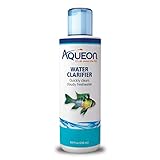
- QUICKLY CLEARS CLOUDY WATER by binding suspended particles together for easier filtration and removal
- SAFE FOR FRESHWATER FISH AND PLANTS when used as directed to maintain a healthy aquarium environment
- HELPS IMPROVE WATER CLARITY by causing fine particles to settle or become trapped by filtration systems
- IDEAL FOR ROUTINE AQUARIUM MAINTENANCE to help maintain a clean and attractive aquarium appearance
- EASY-TO-USE DOSING CAP INCLUDED with a recommended dosage of 5 mL (1 tsp) per 10 gallons of water
- Reduce inputs. Feed sparingly so little or no food reaches the bottom uneaten. Remove obvious uneaten food or decaying material with a siphon. Do not add another group of fish while the biological filter is developing.
- Leave developing filter media in place. Avoid replacing new cartridges, scrubbing biological media under untreated tap water, or performing unnecessary deep cleaning. Those actions can remove the bacteria the tank is trying to establish.
- Keep normal circulation and oxygenation. Make sure the filter outlet is moving the surface and that equipment has not been switched off. Do not make abrupt equipment changes solely because the water looks cloudy.
- Allow time for the microbial balance to change. Aquarium Co-Op describes a possible one-to-two-week clearing interval for a typical new-tank bloom. That is an estimate, not a guarantee or a deadline; continue testing and watching the fish.
- Resist repeated cosmetic water changes. Aqueon and Aquarium Co-Op caution that large or repeated changes made only to remove the haze can provide temporary visual improvement or prolong recurrence. This does not prohibit a water change when test results, fish condition, evaporation management, or an aquarium-specific maintenance plan calls for one.
Do not add fish to “use up” the bloom, and do not dose multiple clarifying or antibacterial products without a defined diagnosis. The goal is to let the biological filter stabilize while keeping waste production low.
When cloudiness appears in an established aquarium
A recurring or newly persistent cloud in a mature tank deserves an investigation rather than an assumption that it is a harmless new-tank event. Start by comparing the timing with the aquarium’s maintenance log.
Free tools Windows power users keep installed
One-click scans. No signup required.
Look for a change in biological load
Ask whether fish were added, feeding increased, a fish died unnoticed, or plant material began decomposing. Overfeeding and overstocking can supply more organic waste than the filter can process. Aqueon gives a rough rule of approximately one inch of adult fish per net gallon, but that guideline does not account adequately for species, behavior, adult size, tank dimensions, or filtration and should not be treated as a universal stocking formula. The practical decision is to avoid overstocking and avoid adding many fish at once.
Look for filter disruption
Check whether media was replaced, rinsed aggressively, allowed to dry, or cleaned with chlorinated water. Confirm that intake screens, impellers, and hoses are not clogged. Keep routine maintenance consistent and avoid extreme cleaning that strips biological surfaces.
Recheck alternative causes
Green coloration points toward algae; visible specks after substrate work point toward dust; a reaction after a buffer or mineral product points toward precipitation. If the appearance does not fit those patterns, test ammonia and nitrite again and consider whether a professional aquarium service or experienced aquarist should examine the system.
Rank #3

- Contains one (1) API ACCU-CLEAR Freshwater Aquarium Water Clarifier 4-Ounce Bottle
- Clears cloudy aquarium water
- Clumps floating particles into large clusters that can be easily removed by an aquarium filter
- Works fast and maximizes filter efficiency
- Use weekly and when cloudy water is observed in freshwater aquariums only
Choosing an intervention: match the tool to the cause
| Option | Best fit | Limits and cautions |
|---|---|---|
| Patience, reduced feeding, and preserved filter media | Likely new-tank bacterial bloom with healthy fish and stable tests | Does not replace water-quality action when ammonia or nitrite is elevated; clearing time varies |
| Fine filter floss or other fine mechanical media | Dust and suspended particles, including debris after substrate or décor work | Captures particles; it does not correct an underlying bacterial imbalance. Monitor for clogging and maintain flow |
| Activated carbon | May help with some new-tank cloudiness as an additional filter medium | Not a guaranteed cure for a bacterial bloom and not a substitute for biological filtration or testing |
| UV clarifier | Diagnosed suspended-organism clouding when the unit is correctly sized and installed | Optional, not universal; compatibility, flow, maintenance, and medication interactions matter |
| Water change | Elevated ammonia or nitrite, distressed fish, or a scheduled husbandry need | Large repeated changes made only for appearance may be temporary or prolong recurrence in a stable new tank |
| Gravel vacuum or siphon | Removing uneaten food and accumulated waste during routine maintenance | Useful waste control, not a direct cure for every type of cloudiness; avoid deep disruption of a newly developing substrate without a reason |
For particulate clouding, fine mechanical filtration is more directly relevant than a bacterial treatment. For green water, light and nutrient management or an appropriately used UV unit may be relevant. Do not use a product category as a diagnosis.
Using a UV clarifier cautiously
Advice differs on UV for bacterial clouding. Aquarium Co-Op recommends waiting for a typical new-tank bloom and advises against using a UV sterilizer or large water changes simply to remove that haze. Fluval states that its FX UVC Clarifier can clear cloudiness caused by suspended bacteria or algae when installed according to the product instructions (Fluval’s FX UVC Clarifier specifications and FAQ). These positions can be reconciled by treating UV as a conditional equipment option after diagnosis, not as the first or universal fix.
For the FX UVC Clarifier, the manufacturer lists aquariums up to 400 US gallons (1,500 L) and a maximum circulation of 563 US gallons per hour (2,130 L per hour). Those are the stated product limits, not a promise that every aquarium will clear at the same speed. Actual fit depends on the aquarium volume, plumbing, flow, installation, lamp condition, and the instructions for your exact setup.
Fluval also says its UVC unit should be turned off while medicating fish because UVC may reduce the effectiveness of some medications. If fish are under treatment, follow the medication and clarifier instructions rather than assuming simultaneous operation is safe.
How to prevent another bloom
- Build stocking gradually. Add fish in manageable groups and allow the filter to respond before increasing the biological load.
- Feed to consumption. Offer only what the fish can eat promptly, remove leftovers, and adjust portions when fish numbers or temperature change.
- Maintain the filter without sterilizing it. Preserve biological media, keep water moving, and rinse media only in a way compatible with your aquarium’s care plan.
- Use a siphon for routine waste removal. Remove detritus and uneaten food without repeatedly dismantling the entire system.
- Keep a simple log. Record ammonia, nitrite, feeding, livestock additions, medication, water changes, and filter work. A timing pattern often reveals the trigger.
- Control light and nutrients. Excess light and available nutrients favor green water, which requires a different response from a white bacterial haze.
- Change one major variable at a time when possible. That makes it easier to identify whether a cloud follows a new product, media change, substrate disturbance, or stocking increase.
Troubleshooting branches
The water is cloudy and ammonia or nitrite is elevated
Stop treating this as a cosmetic issue. Follow the water-change and emergency-care procedure appropriate to your livestock, increase testing frequency, reduce feeding, and seek help if you cannot bring readings down. Keep the filter operating and avoid actions that remove its biological media.
The Tool Desk
Outbyte Driver Updater FREEFix the driver behind crashes, sound loss and screen glitchesFind Drivers →Outbyte PC Repair FREEClear out junk files and repair common Windows errorsFree Scan →Rank #4
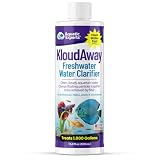
- FAST- ACTING - KloudAway quickly clears cloudy or hazy aquarium water by CLUMPING FLOATING PARTICLES together making them large enough to be trapped by your aquariums' mechanical filter. To remove these particles from the water your aquarium must have a mechanical filter.
- CUTTING EDGE FORMULA - Our advanced fish tank water clarifier is targeting unsightly particles in water such as uneaten fish food, dust and other debris to produce crystal clear water. KLOUDAWAY DOES NOT WORK ON "GREEN WATER" as algae continues to multiply.
- SAFE AND EFFECTIVE - Our cloudy water treatment is SAFE FOR all types of FRESHWATER FISH, TURTLES, PLANTS, SHRIMP and OTHER INVERTEBRATES and has no effect on the beneficial bacteria in your aquarium's biological filtration.
- REMARKABLE RESULTS! Use our aquarium clarifier to maintain sparkling clear water in your freshwater aquarium. For exact details of how to use KloudAway, causes of cloudy water and much more, WATCH OUR VIDEO "Clear Aquarium Water Fast"
- Water testing is recommended. Cloudy water is often caused by New Tank Syndrome, which can cause dangerously high levels of ammonia and nitrite. Protect your fish from ammonia spikes with TankFirst Water Conditioner!
The water is cloudy but fish are active and tests are stable
Confirm that the haze is white, gray, or yellow rather than green and that no recent substrate or chemical addition explains it. Reduce waste inputs, preserve the filter, and allow time for the tank to stabilize. Continue monitoring rather than repeatedly resetting the aquarium for a clearer appearance.
The cloud appeared immediately after adding sand or décor
Treat visible particles as a mechanical-filtration problem first. Let the material settle, ensure circulation is functioning, and add or clean fine mechanical media according to its instructions. If the haze persists after particles should have settled, return to ammonia, nitrite, and recent-change checks.
The cloud is green
Investigate light duration, direct sunlight, and nutrient accumulation. Green water is free-floating algae, so a bacterial-bloom waiting strategy alone is unlikely to address its cause. UV may be appropriate in some setups, but size and operate it according to the device instructions.
The bloom keeps returning after it clears
Look for a repeating trigger: overfeeding, rapid stocking, dead organic matter, clogged or replaced media, or a maintenance routine that removes too much biological material at once. Test when the cloud returns and compare the result with your log instead of adding another clarifier by default.
When to get additional help
Ask an experienced aquarist, aquatic veterinarian, or aquarium professional for assistance when fish are distressed, ammonia or nitrite remains elevated, multiple fish become ill, the cause is unclear after testing, or the cloud persists despite stable husbandry. Bring the tank’s volume, livestock list, test results, recent maintenance, products used, filter model, and photographs of the water and fish. That information is more useful than describing the water as simply “dirty.”
Quick Recap
Key decision checklist
- Is the haze milky white, gray, or yellow rather than green or visibly gritty?
- Did it follow a new setup, heavy feeding, new fish, major maintenance, or filter-media disturbance?
- Have ammonia and nitrite been tested since the cloud appeared?
- Are fish breathing and swimming normally?
- Is the filter running with its biological media intact?
- Can excess food and waste be reduced without dismantling the developing biofilter?
- If considering floss, carbon, or UV, does that tool match particles or suspended organisms, and is it compatible with the aquarium and any medication?
Product prices and availability are accurate as of the date/time indicated and are subject to change. Any price and availability information displayed on Amazon at the time of purchase will apply.





Leave a Reply