
Recommended Free Tools
Small pale worms in gravel or drifting through aquarium water are usually detritus worms: ordinary scavengers that consume leftover organic material. A sighting by itself is not a fish-disease diagnosis. The safe response is to identify the organism as confidently as possible, then correct excess food and debris with routine maintenance rather than immediately adding medication.
Angel Alvarado, LVT, writing for Petco, describes detritus worms as “a normal part of the tank ecosystem” and part of the clean-up crew. That reassurance applies to correctly identified detritus worms, not to every worm-like organism in a tank. Aquarium worms can also be parasitic, so uncertain cases need professional identification before treatment.

As an Amazon Associate I earn from qualifying purchases.
What detritus worms are—and what their appearance means
Detritus worms are small scavenging organisms that live among substrate particles, filter material and other places where organic debris collects. They help break down uneaten food, waste and decaying plant material. In a balanced aquarium, they may be present without being noticed because their numbers are low and fish or normal maintenance keep them out of view.
Do these 3 things before closing this tab:
1Fix the driver behind crashes, sound loss and screen glitches2Repair Windows errors before they cause bigger problems3Scan for outdated or missing drivers - takes under a minuteA sudden increase in visible worms usually means that more food or decomposing material is available, not that the worms have attacked your fish. Overfeeding, food that settles into gravel, dead leaves and other organic debris can support a larger population. This is a husbandry signal, not proof that the aquarium is neglected; even well-maintained tanks can contain them.
#1 Best Overall

- APPLICATION: Use for issues caused by lice and anchor worms to keep your fish healthy: For best results, perform three applications one week apart, with water changes prior to each application
- OK FOR SCALELESS FISH: Acceptable for use with scaleless fish and other ornamental aquarium fish, reptiles, amphibians, and mollusks; Recommended for use with crustaceans
- WORKS BEST IN CONTROLLED TEMPERATURES: Intended for use in water above 40 degrees F and under 100 degrees F
- DIRECTIONS: Shake well before use; Dose at the rate of 1 fluid ounce per 300 gallons (1,136 L); Prior to the initial use, a partial water change of 20% is recommended
- NOTE: Not for use with fish or aquatic invertebrates intended for human consumption
Seeing worms in the water column can happen when the substrate is disturbed, when debris is stirred up, or when a population is large enough that some leave the gravel. Location alone cannot establish species. A worm in the gravel, on a filter sponge or floating in the water may still require the same careful identification process.
Why a visual guess is not enough
There is no reliable one-feature test that lets a keeper select medication from a quick glance. Hobby descriptions often call detritus worms pale, threadlike or segmented, but those traits overlap with other aquarium organisms. A photograph, short video and information about where the organism was found can help an aquatic veterinarian or experienced aquarium professional, but an uncertain identification should remain an identification question.
Do not assume every white worm is harmless, and do not assume every visible worm is a parasite. PetMD’s veterinary-reviewed guidance explains that aquarium worms include both commensal organisms and parasites that can affect fish. Correct diagnosis should come before an over-the-counter worm treatment.
What’s actually slowing this PC down?
Pick the symptom - the matching free tool is one click away.
Are detritus worms dangerous to fish?
Correctly identified detritus worms are generally considered harmless to fish. Petco’s licensed veterinary technician states that they do not harm fish and describes their role as part of the aquarium’s clean-up crew. Their presence is therefore different from symptoms such as unexplained weight loss, sores, abnormal feces, persistent flashing, respiratory distress or a fish that stops eating.
That conclusion has an important boundary: a worm-like observation is not the same as a confirmed detritus-worm identification. If fish are showing illness, if the organism looks unlike the worms normally seen in the substrate, or if the population is associated with a new clinical sign, stop treating the observation as a simple nuisance. Seek an aquatic veterinarian or qualified aquarium professional and provide clear images, tank history and water-test information if available.
What the worms can indicate
- More available food: Portions may exceed what fish consume promptly, allowing residue to settle in the substrate.
- Accumulated organic debris: Dead leaves, uneaten food and waste provide material for scavengers.
- Disturbed substrate: Gravel cleaning or other activity can bring normally hidden organisms into view.
- No immediate problem: A few worms can be a normal part of the aquarium ecosystem and do not, by themselves, indicate poor care.
How to reduce detritus worms safely
The safest first response is ordinary aquarium maintenance. The objective is to reduce the food and debris supporting the visible population while preserving biological filtration and avoiding sudden chemical changes.
Rank #2
- Review feeding at the next meal. Offer only an amount your fish consume promptly. Watch where food lands, especially in corners and under decorations. If food remains after feeding, remove it with a net, siphon or other suitable tool rather than allowing it to settle.
- Remove dead plant material. Trim and take out decaying leaves, stems and other plant matter. Check behind hardscape and in low-flow areas where fragments collect.
- Vacuum the substrate during a routine partial water change. Use an aquarium gravel vacuum, substrate siphon or sludge extractor to lift debris from the gravel or sand while removing water. Work methodically, but do not strip every surface at once; beneficial microorganisms also live on aquarium surfaces.
- Replace water according to your normal maintenance schedule. Aquael’s aquarium-care guidance recommends regular water changes and substrate cleaning with a sludge extractor. Match replacement-water temperature and condition it appropriately for your aquarium’s inhabitants and local water supply.
- Maintain the filter without damaging its biological media. When cleaning filter cartridges or media, Aquael advises washing them only in water drained from the aquarium. Untreated tap water can damage useful bacteria, and replacing or aggressively scrubbing all media at once can destabilize filtration.
- Observe the trend rather than chasing individual worms. Continue normal maintenance and watch whether visibility declines as excess food and debris are removed. No source establishes a guaranteed time to disappearance, so avoid promises that a particular schedule will eliminate them by a specific day.
Using a gravel vacuum correctly
A gravel vacuum is a maintenance tool, not a chemical cure. Place the intake over a section of substrate, start the siphon according to the tool’s instructions and allow suspended debris to travel out with the removed water. Move through sections rather than repeatedly disturbing the same spot. In a planted aquarium, work around roots and avoid uprooting plants; remove loose dead material by hand or with a net when that is safer.
PC Slower Than It Used to Be?
A free scan shows the junk files, broken settings and background clutter dragging Windows down - then fixes them in one click.Free scan · Windows 10 & 11Crashes, No Sound, or Screen Glitches?
Random freezes, missing sound and display glitches usually trace back to one bad driver. Find and replace yours safely.Free scan · under a minuteIf the substrate is sand or very fine, keep the intake just above the surface so sand is not carried out. A sludge extractor recommended for aquarium substrate cleaning serves the same basic purpose: removing accumulated waste while performing a partial water change. Choose a tool that fits the tank and substrate, and never treat the device as a guaranteed worm eradicator.
What not to do
- Do not sterilize or strip the entire aquarium as a default response. Draining, replacing all substrate and scrubbing every surface can remove beneficial biological communities and create a new water-quality problem.
- Do not pour in a worm medication simply because worms are visible. PetMD cautions that indiscriminate over-the-counter treatment can worsen the problem when the organism has not been diagnosed.
- Do not over-clean filter media. Rinse cartridges or biological media in removed aquarium water, as recommended by Aquael, rather than under untreated tap water.
- Do not increase feeding to compensate for fish that missed one meal. Extra food becomes additional organic material and can support more scavengers.
- Do not rely on a single photograph-free description. Color and shape can vary with lighting, substrate and camera focus. Identification should use the organism’s behavior, location, fish symptoms and tank history together.
When treatment might be considered
Medication is not an automatic next step for ordinary, correctly identified detritus worms. Petco notes that treatment may be used for an overpopulation, but warns that worms dying and decaying can contribute to an ammonia spike. If a qualified professional confirms that treatment is appropriate, follow the exact product label, account for the species in the aquarium and monitor water quality during and after treatment.
PetMD takes the broader safety position that a suspected parasitic worm should be diagnosed by a trained professional before an over-the-counter worm product is used. This matters because different organisms require different responses, and a medication chosen for the wrong parasite can expose fish and invertebrates to unnecessary risk while leaving the actual problem unresolved.
Questions to answer before adding any product
- What organism has been identified, and what evidence supports that identification?
- Are fish showing clinical signs, or is the only observation a free-living worm?
- Is the product labeled for the fish and other animals in this specific aquarium?
- Could dead organisms create an ammonia increase as they decay?
- How will water quality be monitored during and after treatment?
- What is the recovery plan if fish react adversely or filtration is disrupted?
If you cannot answer these questions, continue low-risk maintenance and seek professional advice instead of guessing. Never exceed a label dose, combine products without expert direction or medicate a community tank casually when sensitive invertebrates are present.
How to tell a routine detritus-worm issue from a different problem
Use a decision process rather than a color-based rule.
Rank #3

- Prevent nasty parasites from your Discus, Angel fish and other prized aquarium fish. It is harmless to most fresh water tropical fish.
- Flubendazole is the effective main active ingredient, and works differently to other Fluke treatments by gently starving the parasite; making this product perfectly safe for regular usage.
- Wormer Plus cleverly balances out its ingredients making very little (if any) difference to PH when using wormer plus.
- Safe to use on most tropical fish and salt water fish. Will not harm plants, or chemical filtration. Can be used in conjunction with other medications. No need to remove or unplug your UV sterilizer (just remove any activated carbon for full effect).
- Effective for use against Gill Flukes, Body Flukes, Parasites, Intestinal Helminths. Including Tapeworm, Nematodes (Roundworms), Planaria (Flatworms), Capillaria, Camallanus Nematodes, Metacercaria, Sanguinicola and Intestinal Protozoa. It is also an effective in eradicating pest snails from your tank.
| Observation | What it may mean | Safer next step |
|---|---|---|
| A few worms in gravel or filter debris; fish behave normally | Compatible with ordinary scavengers, including detritus worms | Review feeding and continue routine partial water changes and substrate vacuuming |
| Many worms become visible after the substrate is disturbed | Hidden organisms or accumulated organic material have been exposed | Remove debris gradually with a gravel vacuum or sludge extractor; avoid sudden whole-tank stripping |
| Worm-like organisms plus weight loss, sores, abnormal feces, flashing or breathing changes | A fish-health problem or parasite is possible; the worm may be unrelated | Consult an aquatic veterinarian or qualified aquarium professional before treatment |
| Worm identity is uncertain from appearance alone | Insufficient evidence to choose a medication | Document the organism with focused photos or video and obtain an expert identification |
| Worms appear after a chemical treatment | Dead or stressed organisms may be decaying; water quality may change | Follow the label, test for ammonia as appropriate and seek professional help if fish deteriorate |
Fish symptoms matter more than the worm count
There is no published prevalence, population-size threshold or treatment-success percentage that establishes when a visible number becomes dangerous. Counting worms is therefore less useful than checking the animals and the water. Look for changes in appetite, activity, body condition, respiration and skin. A healthy fish community with a few scavengers calls for maintenance, while sick fish require a diagnostic approach even if only one worm is visible.
Independent reader supportYour contribution helps us test, update, and keep practical guides available for everyone.Prevention: keep the food supply under control
Prevention means managing the conditions that let scavengers multiply, not trying to make an aquarium biologically sterile.
Feed deliberately
Watch a feeding rather than relying on a fixed portion that may not suit the current stock. Remove food that settles uneaten. In mixed aquariums, distribute food so bottom dwellers receive an appropriate share without leaving a large surplus on the floor. Reassess portions whenever fish numbers, size or feeding behavior changes.
Inspect hidden areas
During routine maintenance, check beneath decorations, around plant bases and in corners with weak circulation. Remove dead leaves and trapped food. A clean-looking front pane does not prove that the substrate is free of organic debris.
Make partial water changes routine
Aquael’s maintenance guidance emphasizes regular water changes and substrate cleaning. Keep a consistent schedule suited to the aquarium’s stocking and filtration, and avoid making several major changes at once solely because worms were noticed. Stability helps fish and beneficial microbes while gradual debris removal addresses the likely food source.
Preserve biological filtration
Filter media is part of the aquarium’s biological system. Clean it in water removed from the tank, as Aquael recommends, and avoid replacing every cartridge or media type simultaneously unless a qualified professional directs you to do so. Stable filtration reduces the chance that a response to worms creates an ammonia problem of its own.
Rank #4
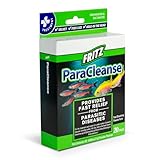
- Broad-Spectrum Parasite Treatment: Fritz ParaCleanse is expertly formulated to treat a wide range of parasitic diseases in aquarium fish, including velvet (Oodinium), hole-in-the-head disease (Hexamita & Spironucleus), fish lice, and gill & skin flukes (Dactylogyrus & Gyrodactylus), ensuring a healthy environment for your fish
- Safe for both freshwater and saltwater systems, this treatment does not, harm plants, invertebrates, or uninfected fish
- Dual Active Ingredients: Containing Metronidazole and Praziquantel, Fritz ParaCleanse is effective against a variety of common parasites in fish but also some internal bacterial infections
- User-Friendly Dosing: The pre-measured easy dosing packets simplifies the application process. Bulk jars are also available for larger systems
- Specific Treatment Indications: While highly effective against specific parasites, it is important to note that ParaCleanse does not treat Nematodes or Roundworms. For these, Fritz Expel-P is recommended
A practical observation and maintenance checklist
- Record where the organism is seen: gravel, glass, filter, plant or open water.
- Take a clear photograph or short video without disturbing the tank more than necessary.
- Note whether fish are eating, swimming and breathing normally.
- Look for uneaten food and decaying plant material before the next feeding.
- Remove visible debris and perform the aquarium’s normal partial water change.
- Vacuum one manageable substrate section with a gravel vacuum, substrate siphon or sludge extractor.
- Rinse filter media only in water removed from the aquarium.
- Recheck the tank during normal observation instead of repeatedly stirring the substrate.
- If identification remains uncertain or fish show illness, contact an aquatic veterinarian or qualified aquarium professional.
Frequently misunderstood points
“If I can see worms, the tank must be dirty.”
Not necessarily. Detritus worms are part of many aquarium ecosystems, and visibility can change after substrate disturbance or a temporary increase in available food. The useful question is whether feeding and debris management can be improved, not whether the keeper has failed.
Free tools Windows power users keep installed
One-click scans. No signup required.
“A medication will solve the problem faster.”
Only a correctly diagnosed target makes medication a rational choice. Wrong treatment can worsen the situation, and decaying worms can contribute to an ammonia spike. Maintenance is the lower-risk first response for a suspected detritus-worm population.
“Removing every worm is the goal.”
Complete elimination is neither necessary nor established as a realistic maintenance target. The practical goal is a stable aquarium with controlled organic waste and healthy fish. A few unseen scavengers can remain without causing harm.
Sources and scope of the guidance
Petco’s veterinary Q&A by Angel Alvarado, LVT, published June 29, 2019 and updated September 23, 2025, provides the description of detritus worms as normal scavengers, the warning about ammonia from decaying worms and the advice to address overpopulation carefully. Aquael’s “Aquarium Maintenance Issues” guidance, with a 2024 copyright notice and no displayed article date, supports regular water changes, substrate cleaning with a sludge extractor and rinsing filter cartridges in removed aquarium water. PetMD’s veterinary-reviewed editorial by Jessie M. Sanders, DVM, CertAqV, published February 13, 2018, establishes the distinction between commensal and parasitic aquarium worms and the need for diagnosis before using an over-the-counter treatment.
Those sources do not establish a universal worm count, prevalence statistic, medication success rate or guaranteed resolution time. Any aquarium-specific decision should therefore be based on confirmed identification, fish condition and water-quality observations rather than an assumed number or deadline.
Quick Recap
Product prices and availability are accurate as of the date/time indicated and are subject to change. Any price and availability information displayed on Amazon at the time of purchase will apply.





Leave a Reply