
Quick wins for a faster PC:
Clear out junk files and repair common Windows errorsFree Scan →Fix the driver behind crashes, sound loss and screen glitchesFind Drivers →Some links on this page are affiliate links: if you buy through them we may earn a commission, at no extra cost to you.
Introduce a senior rescue dog in stages, not with an immediate face-to-face meeting. First arrange a veterinary check and a quiet decompression area. Keep the dog’s meals, walks, sleep and individual attention predictable while you use separation and scent work. For another dog, begin with a neutral-ground parallel walk about 10 feet apart and close the distance only while both dogs stay loose and calm. For a cat or small pet, start with scent exchange and closed-door separation, then progress to visual contact through glass or a baby gate.
Move indoors only after calm barrier or outdoor sessions. Remove food and high-value items, provide separate resources and retreats, and supervise every interaction. A growl, avoidance, hard stare, chase or lunge is information to increase distance—not a behavior to punish. There is no reliable universal number of days; progress is measured by relaxed body language and voluntary choices.
As an Amazon Associate I earn from qualifying purchases.
The Tool Desk
Outbyte Driver Updater FREEFix the driver behind crashes, sound loss and screen glitchesFind Drivers →Outbyte PC Repair FREEClear out junk files and repair common Windows errorsFree Scan →Why senior rescue introductions need a slower plan
A senior rescue dog may arrive with pain, sensory loss, an unknown history or habits that are different from the resident animals’. Even a friendly dog can become defensive when tired, startled or crowded. Older dogs also need more recovery time and may not tolerate the intense play of a young animal.
The aim is not to make the pets interact immediately. The aim is to create repeated, low-pressure experiences in which every animal can retreat, communicate discomfort and return voluntarily. Relationships can take time to develop; trainer and behavior consultant Rachel Lane describes it as rarely being “love at first sight.”
Popular on Amazon

- WORRY FREE SAFETY: Our expandable dog gate is great for doorways and blocking off other indoor spaces to keep your pet safe and secure. This durable puppy gate is made of strong, appealing light gray plastic with adorable paw print accents.
- CONVENIENT AND PORTABLE: This gate for dogs is 23" tall, fits a variety of openings 26" - 40" wide. Please measure carefully: it will not work in a wider doorway. It is easy to take down and install - which means you can use it anywhere you need it!
- PERFECT FOR MODERN HOMES: Our portable, adjustable pet gate features rubber bumpers that protect your walls and are positioned higher than other gates to accommodate up to 4" molding. It's an ideal indoor dog gate.
- EASY AND COMFORTABLE TO USE: The sturdy, curved handle allows for a firm grip, which makes mounting and disassembling a breeze!
- PROUDLY MADE IN THE USA: Our rigorously tested gates, yards & pens bring peace of mind to the entire family. We stand for the highest safety, quality and operational standards while creating the ideal collection of products for your furry friends. This item is proudly made in the USA!
Use the dog’s behavior to decide when to advance. A calendar can help you organize sessions, but it cannot determine readiness. If an animal becomes tense, return to the last stage at which everyone was comfortable and remain there for several days before trying again.
Prepare before the first meeting
Arrange a veterinary check
Have the new dog examined before mixing pets. Ask the veterinarian to check for contagious disease and discuss any introduction concerns. Pain, arthritis, dental disease, impaired hearing or vision and medication effects can alter how a senior dog responds to another animal. Treating a medical problem does not guarantee compatibility, but it removes avoidable sources of irritability and helps you plan around mobility or rest needs.
Crashes, No Sound, or Screen Glitches?
Random freezes, missing sound and display glitches usually trace back to one bad driver. Find and replace yours safely.Free scan · under a minutePC Slower Than It Used to Be?
A free scan shows the junk files, broken settings and background clutter dragging Windows down - then fixes them in one click.Free scan · Windows 10 & 11Create a decompression area
Set up a quiet room or gated zone that belongs to the rescue dog. It should contain a bed, water, food bowl and somewhere to rest without being approached. Resident pets need their own protected areas as well. A closed room, sturdy gate or crate can provide separation; the crate should be a safe option, never a place where a dog is trapped with a threatening animal.
Preserve the senior dog’s routine
Keep normal meal times, walks, sleep and one-on-one attention as consistent as possible. A senior dog that loses its familiar routine while coping with a new home and new animals has fewer ways to recover from stress. Schedule quiet breaks every day, even when early sessions appear successful.
Audit resources and escape routes
Before animals share a room, remove bowls, chews, food puzzles, toys and other high-value items. Give each pet a separate bed and feeding location. Make sure the smaller or less confident animal can reach a retreat the dog cannot enter. For a cat, that may mean elevated furniture, a cat-only room or a gate with a cat-sized opening. For a small mammal or bird, use a secure enclosure and prevent the dog from reaching, pawing or staring at it.
Choose the protocol for the species pairing
| Pairing | First contact | Progression | Non-negotiable safety feature |
|---|---|---|---|
| Senior dog and resident dog | Neutral outdoor area; handlers walk roughly 10 feet apart. | Gradually reduce distance, allow brief greetings, then walk indoors together. | Loose leashes, duplicate resources and direct supervision. |
| Senior dog and cat | Separate rooms and scent exchange; no immediate contact. | Closed-door smells, visual contact through glass or a baby gate, then a leashed face-to-face session. | The cat must have an escape route while the dog remains controlled. |
| Senior dog and small pet | Secure enclosure and scent work from separate spaces. | Barrier-based visual sessions only if the dog stays calm; any direct access requires expert guidance. | A physically secure enclosure and a dog that cannot chase, paw or fixate. |
The more vulnerable animal determines the pace. A dog that can disengage from another dog may still be unsafe around a fleeing cat or small mammal, so calm behavior in one pairing does not prove safety in another.
Step-by-step: introducing the senior dog to another dog
1. Start with complete separation
For the first period at home, keep the dogs in separate areas and exchange routine rather than bodies. Let the rescue dog sleep, eat and explore without being followed. Walk each dog separately so neither has to compete for space. Feed behind closed doors and remove bowls after meals.
Also popular on Amazon

- [Worry-Free Safety]: Our expandable dog gate is great for doorways and blocking off other indoor spaces to keep your pet safe and secure. This durable puppy gate is made of strong, appealing fieldstone gray plastic with adorable paw print accents.
- [Convenient and Portable]: This gate for dogs is 23" tall, fits a variety of openings 26" - 40" wide. Please measure carefully: it will not work in a wider doorway. It is easy to take down and install - which means you can use it anywhere you need it!
- [Perfect for Modern Homes]: Our portable, adjustable pet gate features rubber bumpers that protect your walls and are positioned higher than other gates to accommodate up to 4" molding. It's an ideal indoor dog gate.
- [Easy and Comfortable to Use]: The sturdy, curved handle allows for a firm grip, which makes mounting and disassembling a breeze!
- [Proud USA-Owned Company]: Our rigorously tested gates & yards bring peace of mind to your family. We stand for the highest safety & quality standards while creating the ideal products for your furry friends. This item is proudly made in the USA!
2. Meet on neutral ground
Use a quiet outdoor location that neither dog treats as home territory. Have one handler per dog, with ordinary loose leashes rather than retractable lines. Begin about 10 feet apart, walking in the same direction. The distance is a starting point, not a test; increase it if either dog stiffens, stares, pulls or stops taking in the environment.
3. Use parallel movement
Continue walking while both dogs remain able to look away, sniff and respond to their handlers. Close the gap gradually, in small increments. Do not lure them together or hold them nose-to-nose. Movement gives each dog an alternative to staring and lets a worried dog create space without being chased.
4. Allow brief greetings
When both dogs are loose and calm at a closer distance, permit a short sniff, then cheerfully separate and keep walking. Several brief greetings are safer than one prolonged interaction. End the session while it is still going well; fatigue can turn a tolerable meeting into a defensive one.
What’s actually slowing this PC down?
Pick the symptom - the matching free tool is one click away.
5. Walk inside together
If outdoor sessions remain relaxed, enter the home with the dogs still moving and supervised. Keep food, toys and chews out of the area. Use open space rather than a narrow hallway, and maintain a route to separate rooms. Let the dogs investigate without forcing proximity.
6. Build shared time in small doses
Begin with short sessions and planned breaks. A gate, separate room or supervised drag line lets you interrupt without grabbing collars. Increase duration only when both dogs repeatedly choose to remain near each other, disengage easily and settle afterward. Continue separate feeding and sleeping arrangements until calm behavior is dependable.
7. Test consent
When play starts, move the more energetic dog away briefly. Give the quieter dog the opportunity to return. If it chooses to come back with a loose body, interaction may resume; if it stays away, respect that decision. Balanced play includes pauses, role changes and the ability to stop when either dog asks for space.
Step-by-step: introducing the senior dog to a cat or small pet
1. Keep rooms separate
Start with the dog and the other animal in different rooms. Do not carry a cat toward a dog or place a small pet’s enclosure on the floor for inspection. Each animal should be able to eat, sleep and use its normal facilities without seeing the other.
Also popular on Amazon

- Auto-Close Baby Gate: Designed with an intelligent self-closing system, this dog gate automatically swings shut at angle under 90°, providing reliable protection against accidental openings
- Dual-Lock Safety: This baby gate for stairs features a secure dual-lock mechanism, ensuring curious children and pets stay safely contained while allowing adults to open it effortlessly with one hand. Parents can pass through the baby gates for doorways with ease even while carrying groceries or a baby
- Tool-Free Installation: The pressure-mounted dog gate indoor provides a secure hold while protecting your walls or furniture from damage, ideal for renters and hassle-free setups. The dog gates for doorways offer a quick, temporary solution that's both safe and convenient. The attached sticky pads are provided to keep the wall cups in place, so you don't need to drill
- Stroller-Friendly Baby Gate for Stairs: Features an anti-stumble pedal, ensuring a seamless transition between the pet gate and the floor. This design reduces the risk of tripping and allows strollers to roll through the child gate effortlessly, making the pressure mounted baby gate ideal for families with elderly members and young children
- Adjustable Pet Gate Indoor: With an adjustable width from 29 to 40 inches, the baby gate with door fits most standard doorways and stair openings, creating a safety environment for your little ones and furry friends while giving you peace of mind. Please measure the width of the openings you want to place the child gate before installation
2. Exchange scent daily
Rub a clean cloth or blanket on one animal and place it near the other’s resting area. Swap bedding when practical. Scent exchange is useful only if it remains below the animal’s stress threshold; remove an item if it causes guarding, prolonged hiding or agitation.
3. Offer smells through a closed door
Allow the dog and cat to investigate each other’s scent beneath a closed door. Keep sessions brief and pair calm investigation with ordinary rewards or attention. A closed door prevents a sudden chase while each animal learns that the other’s smell predicts no intrusion.
4. Add visual contact through a barrier
Use a glass door, securely latched baby gate or another barrier that cannot be pushed aside. Keep the dog on leash. The cat must be free to retreat, climb or leave; never block its exit to obtain a closer look. For a small pet, keep the enclosure secured and far enough away that the dog cannot hit it with a paw or press against it.
5. Try a controlled face-to-face session
Only after repeated calm visual sessions should the dog and cat share a room. Keep the dog on leash, allow the cat to choose its position and maintain an unobstructed escape route. Do not hold the cat near the dog. End the session at the first sign of fixation, chasing or escalating fear.
Free tools Windows power users keep installed
One-click scans. No signup required.
6. Increase freedom gradually
Continue barrier sessions and leashed contact for as long as necessary. A cat should retain dog-free areas permanently. With a small pet, direct interaction may never be appropriate, particularly if the dog shows prey-drive behavior, stalking or inability to disengage. A qualified behavior professional should help determine whether additional access is safe.
How to read stress and consent
Body language is more useful than a single sound. Look at the whole animal and the direction it chooses to move.
Signs the interaction is comfortable
- Loose, wiggly muscles and a relaxed posture.
- Play bows, pauses and changes of role during play.
- Sniffing, looking away and returning attention to the handler or environment.
- A dog that moves away for a break and voluntarily returns.
- A cat that remains able to walk, climb, eat or groom rather than freezing or hiding.
Signs to increase distance immediately
- Turning away, moving away, hiding or repeated attempts to escape.
- Flattened ears, lowered tail, stiff posture, raised hair or a hard stare.
- Enlarged pupils, growling, barking, snapping, lunging or frantic pulling.
- Fixation on a cat or small pet, stalking, chasing or inability to respond to the handler.
- Repeated freezing or sudden changes in normal eating, resting or toileting.
At the first warning sign, calmly separate the animals and resume later from the last comfortable stage. Do not wait for a snap to prove that a warning was serious.
Also popular on Amazon
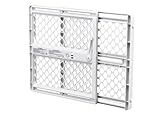
- WORRY-FREE SAFETY: Keep your pet contained and your home safe with the MYPET Universal 26" tall Pet Gate. This expandable dog gate fits a variety of openings from 26" to 42" wide. Made of strong, durable plastic and features two installation options.
- PRESSURE MOUNT FOR QUICK SETUP: Just expand gate in opening and engage pressure handle, it’s easy to install and take down! For extra security, use the included wall cups/door sockets, which provide extra holding power for pressure mounting.
- HARDWARE MOUNT FOR ADDED SECURITY: Use the included hardware mount to install as a swing gate or a gate for the top of a stairway. The door swings open for easy access, making it an ideal dog gate for stairs.
- STYLISH AND DEPENDABLE: Comes in an appealing gray finish and fits seamlessly in any of your standard openings. The durable, American-made plastic gate is sturdy and hard to climb! Perfect as a puppy gate or cat gate for doorway use.
- PROUDLY MADE IN THE USA: Our rigorously tested gates, yards & pens bring peace of mind to the entire family. We stand for the highest safety, quality and operational standards while creating the ideal collection of products for your furry friends. This item is proudly made in the USA!
Gates, crates and drag lines: choosing safe separation
Baby gates
A gate is useful when animals need to see and smell one another without physical contact. Choose a gate that is tall and firmly mounted for the dog, and consider a design that allows the cat to pass or climb away. Check that the dog cannot knock it over or bite through wide openings.
Crates
A crate can provide a protected rest period for a dog that already feels comfortable using one. It should not be used as the sole barrier during an intense stare-down, and no animal should be able to crowd the crate. Covering part of the crate may help a dog rest, but it does not replace distance or supervision.
Supervised drag lines
A lightweight line attached to a harness or suitable collar can let an adult interrupt a calm indoor session without reaching between animals. Use it only while a person is watching; a trailing line can snag on furniture or create a hazard if left unattended.
Closed rooms and duplicate resources
Separate rooms are the strongest everyday option when nobody can supervise. Give each animal its own food, water, bed and retreat. Separation prevents rehearsal of chasing or guarding, which can make later training harder.
What to do if the dog growls, snaps or lunges
Do not punish the growl
A growl communicates discomfort and may tell another animal to back off. Scolding can suppress the warning without changing the underlying fear, leaving you with less information before a bite. Keep your voice neutral, create distance and end the session.
Recommended Free Tools
Reset from a comfortable stage
- Interrupt calmly by calling the dog away or using the drag line if it is already attached.
- Place a barrier between the animals and allow everyone to settle.
- Identify what changed: distance, movement, food, a resting place, fatigue or a blocked escape route.
- Restart later with more space, shorter exposure or a stronger barrier.
If there is contact, a bite, an injury or repeated lunging, stop introductions and obtain professional guidance before trying again.
Independent reader supportYour contribution helps us test, update, and keep practical guides available for everyone.Protecting the senior dog’s welfare throughout the process
Keep the older dog’s normal walks, naps and one-on-one time even when the newcomer demands attention. Provide rest periods away from the other animal and avoid letting an energetic dog repeatedly solicit play. Adjust the environment for mobility: nonslip flooring, easy access to water and beds, and enough room to turn away without being cornered.
Also popular on Amazon

- EXTRA WIDE DOG GATE FOR DOORWAYS & BOTTOM OF STAIRS: Fits openings 29–36.5" wide and stands 30" tall. Fits 29–32" without extension and 34–36.5" with the included 4" extension. DOES NOT FIT OPENINGS BETWEEN 32–34". Measure your opening before purchase to confirm fit.
- PATENTED SMALL PET & CAT DOOR: Features a patented small pet door that allows cats and smaller pets to pass through while helping keep larger dogs contained. Ideal for multi-pet homes and households with pets of different sizes.
- WALK-THROUGH PET GATE WITH DOOR: Features a 16.5" wide walk-through opening with a one-touch safety latch for convenient adult access between rooms without stepping over the gate.
- PRESSURE-MOUNTED FOR A SECURE FIT: Pressure-mount design uses wall cups and included mounting hardware to help create a stable fit in doorways, hallways, and at the bottom of stairs.
- DURABLE METAL PET GATE: Built with a sturdy all-metal frame for dependable everyday use. Provides a secure indoor pet barrier for doorways, hallways, and other areas throughout the home.
Watch for delayed stress after sessions. A dog may appear fine during contact but become restless, withdrawn, irritable or reluctant to eat later. Shorten the next session and increase recovery time if that happens. The senior dog should never have to defend a bed, bowl or person to obtain peace.
How long should separation last?
There is no validated universal timeline or success-rate percentage for senior-rescue introductions. Some pairs progress through scent and barrier work quickly; others need weeks or longer. Keep the rescue dog separated until each animal can relax with the other’s presence at the current stage and you can supervise the next step reliably.
Advance when body language stays loose across multiple sessions, the dog can disengage from the other animal and the less confident pet can retreat without being followed. If stress appears, go back to the previous stage for a few days rather than pushing through it. Continue using barriers whenever nobody is actively watching.
Troubleshooting common situations
The resident dog is friendly but overwhelms the senior
Increase distance, slow the walk and interrupt play frequently. Reward calm pauses and give the senior dog separate rest periods. Use a consent test rather than assuming that continued proximity means enjoyment.
The senior dog ignores the cat but stares at it
A fixed stare can precede chasing even when the dog is silent. End the visual session, add distance or block the view, and work with a professional if the dog cannot redirect to you.
The cat hides continuously
Restore a cat-only room and stop face-to-face sessions. Resume scent work only when the cat eats, rests and uses its normal facilities. Do not pull the cat from hiding to make it participate.
Do these 3 things before closing this tab:
1Repair Windows errors before they cause bigger problems2Fix the driver behind crashes, sound loss and screen glitches3Clear out junk files and repair common Windows errorsGuarding appears around food or furniture
Return to complete separation during meals and rest. Remove high-value items from shared spaces and provide duplicate beds and bowls. A behavior professional should assess guarding that persists or escalates.
The dog chases after a previously calm barrier session
Prevent further rehearsal with a secure barrier and leash management. Increase distance and shorten sessions. Chasing and fixation around cats or small pets warrant qualified advice before any attempt at greater freedom.
When to call a qualified professional
Contact a veterinary behaviorist or another appropriately qualified behavior professional when fear, aggression, fixation, chasing, repeated lunging or injury persists, or when you cannot progress through barriers. A veterinarian can also investigate pain or illness that may be contributing. Check credentials, experience with senior dogs and interspecies cases, and local availability before booking.
Professional help is especially important when a small pet is at risk, a dog has a bite history, several adults cannot coordinate supervision, or the home cannot provide reliable separation. Equipment can reduce opportunity for conflict, but it cannot make incompatible animals safe together.





Leave a Reply