
Outdated Drivers Are Slowing You Down
One free scan finds every outdated or missing driver and matches the right update for your exact hardware.Free scan · exact hardware matchPC Slower Than It Used to Be?
A free scan shows the junk files, broken settings and background clutter dragging Windows down - then fixes them in one click.Free scan · Windows 10 & 11Some links on this page are affiliate links: if you buy through them we may earn a commission, at no extra cost to you.
The safest introduction is gradual: prepare a separate space, let the adopted pet decompress, exchange scents, add a barrier before face-to-face contact, and move forward only while every animal remains calm. Children need active adult supervision, resident pets need escape options, and chasing, fixation, persistent hiding, appetite changes, or escalating vocalization are signals to slow down. Some animals become comfortable in weeks; some require permanent management, and a few cannot safely share a home.
Prepare before the adopted pet arrives
Good introductions begin before the carrier or leash crosses your threshold. Ask the shelter or rescue for every available medical, behavior, and known-animal-history record. Request details about reactions to dogs, cats, children, handling, food, toys, confinement, and unfamiliar environments. The Association of Shelter Veterinarians says adopters should receive counseling on safe, gradual, controlled introductions and that behavior records should accompany an animal at transfer.
As an Amazon Associate I earn from qualifying purchases.
Set up a protected base camp
Choose a quiet room that resident animals and visiting children cannot enter freely. Equip it with food, water, bedding, hiding options, and secure barriers. For a cat, include a litter box placed away from food and water, plus elevated resting places if possible. For a dog, provide a bed or crate only if the dog already finds confinement comfortable; never use a crate as a place to force contact with another animal.
- Use doors, baby gates, pens, or closed rooms to create physical separation.
- Remove fragile objects and block gaps where a frightened animal could become trapped.
- Plan separate feeding areas and separate storage for high-value chews, toys, and treats.
- Keep a leash, treats, towels, and cleaning supplies ready before the first meeting.
- Book a veterinarian and identify a certified behavior consultant or veterinary behaviorist in case problems persist.
Assess household risk
Before adoption, consider the resident animals’ age, health, history, resource guarding, prey-drive behaviors, and ability to retreat. A large size mismatch, a child who cannot reliably follow safety rules, open stairways, or a home that cannot maintain physical separation raises the risk. Be realistic about whether you can keep animals apart whenever nobody is supervising.
Popular on Amazon
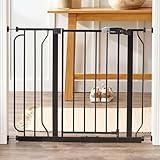
- ✅TESTED & TRUSTED BABY SAFETY GATE FOR OVER 30 YEARS: Parent-trusted safety gate certified by the Baby Safety Alliance.
- ❤️AMERICAN DESIGNED & FAMILY OWNED BABY GATE BRAND: Designed in the USA by parents, for parents. Regalo is a family-owned, US-based brand delivering trusted baby safety gates and child safety products for over 30 years.
- 🔒EXTRA WIDE BABY GATE FOR DOORWAYS & BOTTOM OF STAIRS: Expands to fit openings 29–38.5" wide and stands 30". Ideal for bottom of stairs, hallways, and doorways. FITS OPENINGS: 29–32" no extension, 35.5–38.5" with 6". DOES NOT FIT OPENINGS: 32–35.5".
- EASY SETUP WITH PRESSURE MOUNT DESIGN: ⚠️Install according to manufacturer’s instructions. ⚠️Wall cups must be used to keep the gate securely in place. ⚠️ To prevent falls, never use at the top of stairs.
- 🐾CHILD & PET SAFE | PUERTA DE SEGURIDAD PARA BEBÉS Y MASCOTAS: Walk-through safety gate designed for babies 6–24 months and small to medium pets. Features a secure safety locking system for parent convenience.
Give the newcomer time to decompress
An adopted animal may hide, sleep unusually much, appear restless, or eat less during the first days. Keep the household quiet and predictable: use the same feeding times, limit visitors, avoid parties and grooming appointments, and let the animal choose whether to approach. AAHA advises that adopted adult dogs build a relationship over weeks, not days. Trust cannot be hurried by carrying a dog toward a resident pet or placing a cat in the middle of a room.
Monitor eating, drinking, urination, defecation, and litter-box use. AAHA recommends veterinary advice when reduced eating or drinking lasts more than a day or two. A sudden change can reflect illness as well as stress, so do not assume that waiting will solve it.
A first-days routine
- Bring the newcomer directly to the prepared room or outdoor toilet area, avoiding a crowd at the door.
- Offer water, a small meal, and a quiet place to rest.
- Allow brief, low-pressure interaction with one calm adult at a time.
- Keep resident pets on their normal schedule while preventing accidental encounters.
- Record what happens: appetite, sleep, elimination, hiding, vocalization, and reactions to scents or sounds.
Introduce the adopted pet to children
Children should meet the animal only after an adult has established a secure routine and can control the environment. Older children may help with predictable care such as filling a water bowl under supervision. Younger children need an adult beside them throughout every interaction; never leave a child unsupervised with a dog.
Teach a child’s safe greeting
- Have the child stand still or sit quietly, with hands at their sides.
- Let the animal decide whether to approach and sniff.
- Keep faces away from the animal’s face; do not hug, climb on, or kiss an unfamiliar pet.
- Use gentle strokes only if the animal remains loose and chooses to stay.
- End the interaction when the animal walks away, stiffens, hides, growls, hisses, or becomes restless.
Children must never pull ears or tails, take food or toys, disturb sleep, corner an animal, or roughhouse. A fearful or aggravated animal may bite or scratch. Teach children to call an adult rather than trying to separate animals or retrieve a toy.
Also popular on Amazon

- Auto-Close Baby Gate: Designed with an intelligent self-closing system, this dog gate automatically swings shut at angle under 90°, providing reliable protection against accidental openings
- Dual-Lock Safety: This baby gate for stairs features a secure dual-lock mechanism, ensuring curious children and pets stay safely contained while allowing adults to open it effortlessly with one hand. Parents can pass through the baby gates for doorways with ease even while carrying groceries or a baby
- Tool-Free Installation: The pressure-mounted dog gate indoor provides a secure hold while protecting your walls or furniture from damage, ideal for renters and hassle-free setups. The dog gates for doorways offer a quick, temporary solution that's both safe and convenient. The attached sticky pads are provided to keep the wall cups in place, so you don't need to drill
- Stroller-Friendly Baby Gate for Stairs: Features an anti-stumble pedal, ensuring a seamless transition between the pet gate and the floor. This design reduces the risk of tripping and allows strollers to roll through the child gate effortlessly, making the pressure mounted baby gate ideal for families with elderly members and young children
- Adjustable Pet Gate Indoor: With an adjustable width from 29 to 40 inches, the baby gate with door fits most standard doorways and stair openings, creating a safety environment for your little ones and furry friends while giving you peace of mind. Please measure the width of the openings you want to place the child gate before installation
Use the same introduction ladder for every species
Most pairings work best through four stages: physical separation and scent exchange, visual contact through a barrier, supervised proximity, and carefully managed shared time. Progress only when all animals are calm at the current stage. If one becomes stressed, return to the last calm step rather than pushing through.
| Stage | What you do | Ready-to-progress signs | Stop or step back when |
|---|---|---|---|
| Separate and exchange scent | Keep animals in different rooms. Rotate bedding or allow one animal to investigate the other’s scent without direct contact. | Normal eating, drinking, elimination, sleep, and routine behavior around the scent. | Persistent hiding, appetite or litter-box changes, frantic scratching, or escalating vocalization. |
| Barrier viewing | Use a secure gate, pen, screen, or partly opened door. Keep sessions controlled and provide escape routes. | Loose body, ability to look away, take treats, and respond to the handler. | Fixation, continuous barking or hissing, lunging, charging, swatting at the barrier, or attempts to flee. |
| Supervised proximity | Bring animals closer for brief, controlled sessions. Keep a leash on a dog when appropriate and maintain a clear exit. | Calm investigation, relaxed movement, and easy interruption. | Stiff posture, hard staring, stalking, chasing, cornering, snapping, or panic. |
| Shared time | Allow access only when an adult can watch continuously. Separate animals for meals, high-value items, and unsupervised periods. | Repeated calm sessions in different rooms and situations. | Any unsafe incident or a pattern of rising arousal. |
Introduce an adopted dog to a resident dog
Start on neutral ground
Use an outdoor or otherwise neutral location that neither dog treats as its territory. Have two handlers, one per dog, and use secure equipment. Begin walking in the same direction with enough distance that both dogs can remain loose and responsive. Do not march them directly nose-to-nose.
Gradually reduce distance only while both dogs remain calm. Allow a brief sniff, then resume parallel movement. Keep the handlers moving and avoid tightening the leash in anticipation of trouble; a constantly taut leash can increase frustration. If either dog stiffens, stares, freezes, growls, or pulls hard, increase distance until calm returns.
Enter and manage the home
After a calm outdoor session, enter together rather than sending one dog through the doorway to confront the other. Remove high-value toys, bones, food bowls, and other conflict items before arrival. Keep leashes available, provide separate resting areas, and supervise closely.
Also popular on Amazon

- [Worry-Free Safety]: Our expandable dog gate is great for doorways and blocking off other indoor spaces to keep your pet safe and secure. This durable puppy gate is made of strong, appealing fieldstone gray plastic with adorable paw print accents.
- [Convenient and Portable]: This gate for dogs is 23" tall, fits a variety of openings 26" - 40" wide. Please measure carefully: it will not work in a wider doorway. It is easy to take down and install - which means you can use it anywhere you need it!
- [Perfect for Modern Homes]: Our portable, adjustable pet gate features rubber bumpers that protect your walls and are positioned higher than other gates to accommodate up to 4" molding. It's an ideal indoor dog gate.
- [Easy and Comfortable to Use]: The sturdy, curved handle allows for a firm grip, which makes mounting and disassembling a breeze!
- [Proud USA-Owned Company]: Our rigorously tested gates & yards bring peace of mind to your family. We stand for the highest safety & quality standards while creating the ideal products for your furry friends. This item is proudly made in the USA!
- Feed dogs in separate rooms or behind barriers.
- Give chews and prized toys only when dogs are physically separated.
- Interrupt crowding around people, doorways, beds, or water.
- Give each dog individual walks, training, and attention so competition does not build.
Do not punish growling. It is information that a dog needs more distance; calmly separate the dogs and reassess the previous step.
Introduce an adopted dog to a resident cat
Begin with several days of separation and scent exchange
Keep the dog and cat in separate rooms. Rotate bedding, towels, or other safe scent items, and let each animal investigate while the other is elsewhere. Do not hold the cat near the dog or allow the dog to camp outside the cat’s door. The cat should continue eating, using the litter box, and moving normally before visual contact begins.
Add a secure visual barrier
Use a properly installed baby gate or another barrier that the cat cannot easily be cornered against. Keep the dog on leash for the first visual sessions. Give the cat high escape routes and hiding places that the dog cannot enter. Reward the dog for calm looking, looking away, responding to its name, or settling on a mat.
End the session and increase distance if the dog fixates, barks continuously, lunges, strains toward the cat, or chases. Do not interpret a silent, motionless stare as calm; hard focus can precede a chase. If the cat crouches, hisses repeatedly, swats, bolts, or stops using normal spaces, provide more distance and return to scent work.
Also popular on Amazon

- EXTRA WIDE DOG GATE FOR DOORWAYS & BOTTOM OF STAIRS: Fits openings 29–36.5" wide and stands 30" tall. Fits 29–32" without extension and 34–36.5" with the included 4" extension. DOES NOT FIT OPENINGS BETWEEN 32–34". Measure your opening before purchase to confirm fit.
- PATENTED SMALL PET & CAT DOOR: Features a patented small pet door that allows cats and smaller pets to pass through while helping keep larger dogs contained. Ideal for multi-pet homes and households with pets of different sizes.
- WALK-THROUGH PET GATE WITH DOOR: Features a 16.5" wide walk-through opening with a one-touch safety latch for convenient adult access between rooms without stepping over the gate.
- PRESSURE-MOUNTED FOR A SECURE FIT: Pressure-mount design uses wall cups and included mounting hardware to help create a stable fit in doorways, hallways, and at the bottom of stairs.
- DURABLE METAL PET GATE: Built with a sturdy all-metal frame for dependable everyday use. Provides a secure indoor pet barrier for doorways, hallways, and other areas throughout the home.
Allow proximity only under direct control
When barrier sessions are repeatedly calm, permit a brief interaction with the dog still controllable and the cat free to leave. Keep doors and escape routes open, and never carry the cat toward the dog. Continue separating them whenever nobody is watching, including overnight, until their behavior is reliably calm. Some dogs with a strong chase response and some cats that remain terrified may require permanent separation.
Introduce an adopted cat to a resident dog or cat
Use the same protected-room, scent-exchange, barrier-viewing, and supervised-proximity sequence. Cats are territorial, so a slow pace helps reduce fearful or aggressive responses. Let the cat set the pace: a cat that chooses to remain in its safe room is not ready for a larger territory or closer contact.
Do these 3 things before closing this tab:
1Scan for outdated or missing drivers - takes under a minute2Repair Windows errors before they cause bigger problems3Fix the driver behind crashes, sound loss and screen glitchesFor cat-to-cat introductions, provide multiple litter boxes, feeding stations, water sources, beds, scratching areas, and elevated retreats. Prevent one cat from blocking access to essentials. A calm glance through a gate is progress; chasing, cornering, repeated swatting, or guarding a doorway means the cats need more separation.
Independent reader supportYour contribution helps us test, update, and keep practical guides available for everyone.Read behavior and know when to stop
Advance only in the calm range. A relaxed animal can eat, sniff, look away, move normally, and respond to a familiar cue. Watch for early stress rather than waiting for a fight.
Also popular on Amazon

- ✅ TESTED & TRUSTED BABY SAFETY GATE FOR OVER 30 YEARS: Parent-trusted baby safety product certified by the Baby Safety Alliance. Designed to support everyday baby proofing and help keep babies and toddlers safe at home.
- ❤️AMERICAN DESIGNED & FAMILY OWNED BABY GATE BRAND: Designed in the USA by parents, for parents. Regalo delivers dependable baby gates and baby safety products trusted by families for over 30 years.
- 🔒EXTRA WIDE BABY GATE FOR DOORWAYS & BOTTOM OF STAIRS: Expands to fit openings 29–38.5" wide and stands 30" tall. Ideal for bottom of stairs, hallways, and wide openings. FITS OPENINGS: 29–32" no extension, 35.5–38.5" with 6". DOES NOT FIT OPENINGS: 32–35.5".
- EASY SETUP WITH PRESSURE MOUNT DESIGN: ⚠️Install according to manufacturer’s instructions. ⚠️Wall cups must be used to keep the gate securely in place. ⚠️ To prevent falls, never use at the top of stairs.
- 🐾 CHILD & PET SAFE | PUERTA DE SEGURIDAD PARA BEBÉS Y MASCOTAS: Walk-through safety gate designed for babies ⚠️6–24 months and small to medium pets. Features a secure safety locking system for parent convenience.
- Watchful: brief staring or alert posture that softens when distance increases. Pause and reward disengagement.
- Stressed: crouching, hiding, pinned ears, tail tucked or puffed, lip licking, yawning, pacing, whining, hissing, or repeated barking. End the session and return to an easier step.
- Unsafe: lunging, charging, snapping, biting, stalking, relentless chasing, cornering, or inability to disengage. Separate immediately without putting your hands between animals.
Franklin County Dog Shelter & Adoption Center warns never to place a cat with a dog in a small room without a hiding place and never to force interactions by holding either animal in place. Those rules apply to every species pairing.
What to do if the dog chases the cat
- Interrupt safely from a distance using a door, gate, leash, barrier, or cheerful recall; do not grab collars or put your hands between animals during a struggle.
- Move the dog to a secure separate area and give the cat a protected room with food, water, litter, hiding places, and elevated options.
- Return to scent exchange and then barrier viewing. Keep the dog leashed and reward orientation away from the cat.
- Prevent rehearsal: the dog must not have opportunities to chase, even when the chase appears playful.
- Contact your veterinarian or a certified behavior professional if chasing recurs, intensifies, or cannot be interrupted.
A chase is not a harmless game when one animal is fleeing. Repeated pursuit can injure a cat and strengthen the dog’s predatory sequence. If the dog remains fixated despite distance, barriers, and training, permanent separation may be the safest outcome.
Quick wins for a faster PC:
Clear out junk files and repair common Windows errorsFree Scan →Fix the driver behind crashes, sound loss and screen glitchesFind Drivers →Repair Windows errors before they cause bigger problemsFix Now →Supervision, separation, and daily management
Never leave animals alone while they are still acclimating. Use closed doors or secure gates whenever you leave, sleep, cook, answer the door, or cannot watch continuously. Check that barriers cannot be climbed, pushed over, or opened by a determined animal.
Maintain separate feeding and sleeping arrangements until calm behavior is routine. Keep children out of introduction sessions unless an adult can focus entirely on safety. Give each animal private time with its people and predictable access to essentials. Management is not failure; it prevents frightening incidents while trust develops.
When to involve a veterinarian or behavior specialist
Seek veterinary advice for reduced eating or drinking lasting more than a day or two, sudden behavior changes, injuries, or elimination problems. Ask for a certified behavior consultant or veterinary behaviorist when fear, guarding, aggression, fixation, chasing, or vocalization persists after you slow the process.
Return to the last calm step while you arrange help. A professional can assess pain, medical contributors, learning history, environment, and handling technique, then design a plan for the specific animals. Some pairs need long-term management, and some are not safe together; responsible placement or permanent separation can protect every animal and person involved.
What’s actually slowing this PC down?
Pick the symptom - the matching free tool is one click away.
A practical introduction checklist
- Medical, behavior, and animal-history records requested from the shelter or rescue.
- Veterinary appointment arranged and behavior support identified.
- Quiet safe room prepared with food, water, bedding, hiding options, and barriers.
- Resident animals’ food, toys, chews, beds, and litter resources separated.
- Children taught stillness, gentle contact, and no interference with eating or sleeping.
- Scent exchange completed before visual contact.
- Barrier sessions conducted with escape routes and a dog on leash when appropriate.
- Progress based on relaxed behavior, never on a calendar deadline.
- Supervision maintained until calm interactions are dependable.
- A plan in place for immediate separation and professional help.
Empathy is the bridge between an adopted animal’s past and its new life, as the American Animal Hospital Association puts it. A controlled pace protects that bridge: let the newcomer recover, let resident animals retain safe territory, and make every next step earned by calm behavior.





Leave a Reply