The Tool Desk
Outbyte Driver Updater FREEScan for outdated or missing drivers - takes under a minuteDriver Scan →Outbyte PC Repair FREEClear out junk files and repair common Windows errorsFree Scan →Give your dog a mix of short training practice, scent searches, food puzzles and suitable indoor movement—not just one toy on repeat. Start with activities your dog can solve easily, supervise homemade games, and make searches gradually harder as your dog learns. These activities add mental engagement; they are not a universal substitute for the physical exercise your dog needs.
Build indoor enrichment around learning, searching and movement
A clever, playful dog needs opportunities to use both body and brain, even when outdoor time is limited. The American Kennel Club (AKC) notes that dogs still need the physical and mental stimulation that comes from learning new skills when confined. A useful approach is to rotate different kinds of engagement instead of expecting a single toy or game to meet every need.
As an Amazon Associate I earn from qualifying purchases.
Choose from three broad categories: training, in which your dog works out what you are asking; searching, in which they use their nose to locate food or a toy; and movement, adapted to the room and the dog’s ability. You do not need to use every category in one session. Changing the activity gives your dog a different task to think about and lets you select something that fits the space and the dog’s experience.
Quick wins for a faster PC:
Repair Windows errors before they cause bigger problemsFix Now →Scan for outdated or missing drivers - takes under a minuteDriver Scan →Clear out junk files and repair common Windows errorsFree Scan →- For a simple starting point: hide a few treats in easy-to-find places and invite your dog to search.
- For a dog who enjoys working with you: practice a familiar cue or teach a new skill.
- For a game with a clear goal: use a food puzzle or a homemade search setup.
- For a dog who already knows the relevant cues: try hide-and-seek.
- For movement: adapt an activity such as heeling or freestyle to the space and your dog’s ability.
Start with a food search
A treat search is an accessible first scent game because it can use ordinary household items—or no equipment at all. Begin with a few treats in places your dog can find readily. Invite your dog to search, and praise them when they discover a reward. The aim at first is to help the dog understand the game, not to make the hiding places difficult.
#1 Best Overall
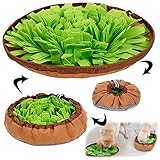
- ★ Dog Training Toys: It is a unique dog training mat that allows your dog to find snacks or small toys hidden in the mat. It helps to train your dog's smell, consume your dog's energy and lose weight. Keep your dog occupied and avoid your dog being bored and engaged in destructive behavior.
- ★ Non-slip & Large & Portable: The bottom is a non-slip cloth that effectively holds the mat and prevents the dog from moving the mat. The design is small and can be shrunk into a small storage bag. It can also be hung or set aside when not in use. Suitable for traveling.
- ★ Dual-use Design: The feeding mat can be folded into a bowl. Stick to the good habits of your dog or use it as an olfactory pad.
- ★ Easy to clean: The main fabric of the scent pad is felt cloth, environmentally friendly and easy to clean. It is suggested that washed by hand.
- ★ Guarantee: If you are not satisfied with our dog feeding snuffle mat, please feel free to contact us.
Make a simple hidden-treat trail
- Choose a small area where you can see your dog and keep the search contained.
- Place a few appropriate treats in easy-to-find locations. Do not make the first round a test of persistence.
- Let your dog investigate and find the food. Praise the discovery.
- Once the dog understands the activity, vary the locations or add more hiding places.
- When all the treats have been found, end the game clearly rather than leaving the dog to search for food that is no longer there.
As your dog becomes more successful, you can change the arrangement or expand the search area. Make one change at a time if the dog seems unsure; a game should remain solvable rather than turn into a frustrating hunt.
Use boxes for a simple search puzzle
Set out several boxes and put a treat in one. Let your dog investigate to find which box contains the reward. Start with an easy arrangement, then add boxes or change their positions as your dog learns how the game works. Stay with the dog while they search, particularly if they tend to chew or shred cardboard.
Try the muffin-tin and tennis-ball game
For a more hands-on puzzle, put treats in some cups of a muffin tin and cover cups with tennis balls. Your dog can move the balls to uncover the food. Keep the setup manageable and supervise the game. If the dog cannot work out how to reach the treats, simplify it—for example, by making the food easier to uncover—before trying again.
Windows Errors? Fix Them Before They Spread
Repair common Windows errors and clear accumulated junk for a smoother, more stable PC - no reinstall needed.Free scan · no reinstallOutdated Drivers Are Slowing You Down
One free scan finds every outdated or missing driver and matches the right update for your exact hardware.Free scan · exact hardware matchRank #2

- Mental Stimulation & Enrichment: Keeps dogs engaged and mentally active, encouraging natural foraging instincts and reducing boredom and destructive behaviors by hiding treats for your pup to sniff out
- Slow Feeding & Better Digestion: Promotes healthy eating habits with a textured design that slows down fast eaters, preventing bloating and improving digestion for dogs that gobble their food too quickly
- Durable & Easy to Clean: Built to last with high quality materials, this snuffle mat is machine washable or hand-washable for hassle-free cleaning, ensuring long-lasting use
- Stress & Anxiety Relief: Calms anxious dogs by providing a soothing activity where sniffing and searching for treats releases endorphins, offering a relaxing experience for your pet
- Non-Slip & Portable Design: Non-slip backing keeps the mat firmly in place even during excited foraging, lightweight and foldable at 19.7 x 19.7 inches for indoor use, lawns, parks, and travel
Make food puzzles fit your dog and your budget
Buying equipment is optional. A snuffle mat hides food in fabric folds and encourages sniffing, while a food puzzle makes a dog work to access food or treats. Both can offer a structured search, but the right choice depends on whether the dog can use the item safely and stay engaged. A product does not guarantee a particular behavior outcome or suit every dog.
| Option | How it works | What to consider |
|---|---|---|
| Hidden treats | Treats are placed in easy-to-find locations for the dog to search out. | No special equipment is needed. Keep track of where food is placed so you can end the search when it is all found. |
| Boxes | A treat is hidden in one of several boxes. | Use a simple arrangement first and supervise if your dog may shred or swallow pieces. |
| Muffin tin and tennis balls | Treats in selected cups are covered by tennis balls that the dog moves aside. | Choose a setup the dog can solve and watch how they handle the balls and tin. |
| Snuffle mat | Food is tucked into fabric folds for the dog to sniff out. | Check that the dog uses it without chewing or swallowing material; supervise when needed. |
| Food puzzle | The dog works to access food or treats. | Some puzzle toys are intended for supervised training rather than being left with a dog alone. |
If you want to try a store-bought scent activity, a snuffle mat is a relevant option; a treat-dispensing puzzle is another. You can test whether your dog enjoys searching with boxes, a muffin tin, tennis balls or other household containers before buying anything. Keep an eye on the dog’s interaction with any item, not just on whether they reach the food.
Practice cues or teach a new skill
Training is mental enrichment, even when you are working in a small area. Practice familiar cues or introduce a new skill in brief sessions. The point is to give the dog a clear task and an opportunity to learn, rather than to keep drilling after attention has faded.
Rank #3
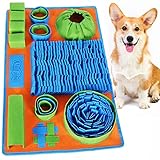
- SUITABLE FOR SMALL AND MEDIUM DOGS, CATS - The size of this snuffle mat is 26 x 16.5 inches, which is perfect for small dogs, medium dogs, cats and rabbits. It makes a wonderful gift for pet owners! NOT recommended for extra large and aggressive chewers dogs who could tear it up
- INTERACTIVE ACTIVITY MAT- If your dog always eat too fast, we recommend you try our enrichment training feeding mat. Dog snuffle mat simulate an environment for your dog to forage naturally, effectively slow down eating and prevent digestive problems
- 8 DIFFERENT PLACES TO HIDE TREATS - This sniff mat for dogs contains 8 different places to hide food or treats, increase the fun, challenge and training intensity of foraging. It allows you to enjoy the happy time of interacting with your dogs and avoid your dog destroys the furniture due to boredom
- SAFETY MATERIALS - The main material of the foraging mat is felt cloth, which is safety but not chewproof. When you receive this felt snuffle mat, machine wash it once to make the shape as good as the picture
- WASHABLE AND PORTABLE DESIGN - Easy to clean, hand wash and machine wash available. Two additional elastic straps can be fastened and easily wrapped around for storage
- Choose a familiar cue or one new skill to work on.
- Practice in a small, uncluttered space where your dog can focus.
- Keep the session brief and reward the behavior you are asking for using rewards appropriate to your dog’s diet.
- If the dog loses interest or seems confused, make the task easier or switch to a different activity.
Indoor adaptations of activities such as heeling and freestyle can add movement while asking the dog to pay attention to you. Keep the exercise appropriate to the room and the individual dog. A small home does not require you to attempt a high-energy activity in a tight space; choose a version that can be done without making the area unsafe or asking more of the dog than they can comfortably do.
Recommended Free Tools
Play hide-and-seek when your dog knows the cues
Hide-and-seek needs no special equipment, but it works best when your dog understands basic cues such as sit, stay and come. Those skills let you set up the game and call the dog to find you.
- Ask your dog to stay in a suitable spot.
- Move to another room or hiding place that is accessible to the dog.
- Call your dog to come find you.
- Praise the dog when they reach you, then choose whether to play another round.
If your dog does not yet understand stay or come, practice those cues first rather than making the hiding game depend on them. Begin with an easy hiding place so the dog can succeed, then vary where you hide as they understand the routine.
Rank #4

- TRAIN YOUR DOG’S SMELL TO HUNT: Boost your pet’s mental stimulation with a snuffle mat! Perfect enrichment toys for dogs and cats, hiding treats in messy grass for fun, scent-focused play.
- DIGESTION & MENTAL HEALTH IMPROVEMENT: The dog snuffle mat acts as a puzzle feeder dog, slowing eating and boosting digestion. These mentally stimulating toys for dogs aid in weight loss and reduce anxiety.
- SNUFFLE MAT AND FEEDING BOWL: This food puzzle for dogs doubles as a sniff mat for dogs and a feeding bowl. With size-adjustable PP belt, it's a convenient, stimulating dog toy for mental stimulation and puppy enrichment.
- ECO-FRIENDLY & WASHABLE MATERIAL: Made from eco-friendly, anti-pilling polar fleece, this dog food puzzle is machine or hand washable. It's a durable addition to dog brain stimulation toys and perfect for pet enrichment.
- NON-SLIP & PORTABLE DESIGN: This dog puzzle toy features a non-slip base and a portable, shrinkable design. Ideal as puppy puzzle toys and dog stimulation toys to keep your pet engaged.
Adjust challenge to your dog’s experience
Progression should follow success. AKC’s guidance for search games is to make them more challenging as the dog succeeds. That can mean changing hiding places, adding boxes or moving the game to another room. Avoid changing several things at once if it makes the task too difficult to understand.
- The dog finds the reward readily: vary the arrangement or add a few more hiding places.
- The dog is unsure what to do: make the food easier to find and give the dog a chance to learn the game.
- The dog becomes frustrated or disengaged: simplify the setup or switch to a different kind of activity.
- The treats are all found: signal that the search is over so the dog does not keep looking unsuccessfully.
Different dogs will find different tasks engaging. Use the dog’s response to guide the next step: successful, interested searching is a reason to make a modest change; confusion or loss of interest is a reason to make the game easier or choose another one.
Keep indoor games safe and worthwhile
Supervise homemade games and toys, especially if your dog may shred or swallow parts. Paper-based activities need particular attention: make sure the dog is not eating the paper. Some puzzle toys are designed for supervised training rather than being left with a dog alone, so do not assume every enrichment item is suitable for unsupervised use.
Best Value

- Engaging Dog Sniffing Mat Design: the dog activity mat features a variety of puzzles and different fabric textures, making the foraging process exciting for your furry friend, and keeping them busy
- Various Levels of Dog Enrichment and Mental stimulation: The dog foraging mat provides a range of puzzles with different levels of difficulty, suitable for dogs of various dog games experience
- Slows Down Fast Eating to Avoid Digestion Problems: Our dog sniffing mat encourages fast eaters to use their sense of smell, reduce anxiety and burn energy. No small plastic details
- Wider Dog Puzzle Sizes: This dog digging toy fits most dog muzzles. The dog treat mat is 39.4''x23.6'', has a non-slip bottom. It is made of soft material for pet comfort and safety. Machine washable
- Reduces Destructive and Anxious Behavior: Fights boredom by training your dog's brain, keeping them busy from exhibiting behaviors like chewing, digging, and excessive barking
- Use treats that are appropriate for your dog’s diet, and account for puzzle rewards as part of the dog’s daily feeding.
- Watch how your dog handles boxes, paper, balls, fabric and other parts of a game.
- Stop or adjust an activity if the dog is trying to eat its materials rather than use the puzzle.
- Keep the search manageable and finish it once all rewards have been found.
Mental enrichment does not establish how much physical exercise an individual dog needs. Exercise requirements vary, so ask your veterinarian how much exercise your dog can do, particularly when you are limiting outdoor activity or adapting movement indoors. Treat indoor games as useful engagement, not as a universal replacement for exercise.
Rotate activities instead of relying on one
A practical rotation can be as simple as choosing a different type of task when you need indoor engagement: a brief cue practice, an easy scent search, a food puzzle, or a movement activity suited to your space. Keep the plan flexible. If the dog is engaged and succeeding, gradually vary the challenge; if not, simplify or change activities. A routine built around the dog’s response is more useful than making every game harder or expecting one setup to work every time.
Quick Recap
Product prices and availability are accurate as of the date/time indicated and are subject to change. Any price and availability information displayed on Amazon at the time of purchase will apply.




