Free tools Windows power users keep installed
One-click scans. No signup required.
Make your pet’s comfort the deciding factor: skip a costume if the animal dislikes wearing one, give it a quiet retreat before visitors arrive, and take photos without a flash. Watch body language rather than assuming a silent or motionless pet is relaxed. Remove anything that restricts movement, vision, breathing, or normal communication, and stop an activity at the first sign of distress.
The safest plan at a glance
Costumes, busy gatherings, and sudden bright lights are separate stressors. Handle each one separately instead of expecting a pet to tolerate all of them at once. A plan that works for a confident, social dog may be unsuitable for a cat that prefers hiding, or for an animal that has previously panicked around clothing or visitors.
As an Amazon Associate I earn from qualifying purchases.
| Situation | Lowest-stress default | When to stop or change the plan |
|---|---|---|
| Costume | No costume, or a loose, simple bandana if the pet is comfortable wearing it | Remove it for distress, abnormal behavior, restricted movement, impaired vision or breathing, or any loose part the pet can chew |
| Crowd or visitors | A familiar, comfortable room away from the door, with water, bedding, toys, and species-appropriate enrichment | Move the pet to the retreat if it hides, paces, shakes, pants, tries to escape, or cannot settle |
| Photographs | Use natural or steady room light and keep the session optional | Stop if the pet is frightened or panicked; never force a pose |
| Outdoor activity after dark | Secure leash, current identification, and a reflective collar | End the outing if unusual activity makes the pet too frightened to walk safely |
These defaults reflect guidance from the ASPCA, VCA Animal Hospitals, and PDSA. A pet’s previous behavior and individual tolerance should override any holiday plan.
Recommended Free Tools
How to tell whether your pet is stressed
Look for a cluster of changes in posture, movement, facial expression, and breathing. VCA lists these anxiety signs in dogs:
#1 Best Overall

- [Treat Distribution] Our food dispenser has differently sized spheres at both ends. As dogs push the toy, it moves within a fixed area, allowing dogs to continuously chase and play with it. During movement, food is dispensed from the food holes on both sides of the toy.
- [Adjustable Switch] Each of the two spheres with a food dispensing switch, making it suitable for various sizes and types of pet dry food or snack. The switch can be adjusted according to the different sizes of dog food. It also allows control over the amount of food dispensed, extending or shortening the time it takes for pets to obtain food. It is more conducive to a healthy dog diet.
- [Increase Pet Intelligence] This dog treat puzzle toy combines intellectual training with food rewards. When pets push this toy, it will not only be to get delicious food, but it will also stimulate their intelligence and hunting instinct. This design not only meets the needs of pets but also encourages them to learn and grow in the game.
- [Prolonged Play] The dog enrichment toy is designed to limit the amount of treats your dog gets while encouraging more extended playtime. This is intended for effective playtime for dogs and is NOT a chewed toy. It is also dog boredom buster toys and best dog gift to keep them busy when dogs are left home alone, relief anxiety.
- [Attract Dogs' Attention] With barbell shaped design and bright color, the dog puzzle toy ball can attract your dog's attention, stimulate their curiosity and drive them crazy to roll it. Size: 6.1*3.44*3.44in/15.5*8.7*8.7cm.
- Low or tucked tail
- Ears held back
- Lip licking or repeated yawning
- Pacing or inability to settle
- Shaking or trembling
- Panting when heat and exercise do not explain it
- Widened eyes or visibly dilated pupils
The same source recommends checking whether a costume allows free movement and watching for anxiety rather than relying on a single signal. Cats may hide, crouch, flatten their ears, or attempt to flee; the important point is the change from that animal’s normal behavior. A dog that normally greets people but now stays behind furniture is communicating useful information, even if it has not growled.
Fear does not always look dramatic. The World Small Animal Veterinary Association’s welfare guidelines describe individual variation and common fear responses such as flight and fight. Freezing, becoming unusually quiet, or holding still for a photograph is not proof of comfort. Give the animal a way to retreat and allow it to choose whether to re-engage.
Check the whole pattern rather than trying to score one behavior. Panting after exercise may be normal; panting in a cool room while the pet is hiding, pacing, or wide-eyed is more concerning. Likewise, a cat that sits still but keeps its body crouched, ears flattened, or eyes enlarged may be frightened. If you are unsure, reduce the trigger and observe whether the pet’s posture and breathing return toward normal.
Costumes: test comfort before the event
Decide whether a costume is appropriate
The ASPCA advises not putting a dog or cat in a costume unless you know the animal likes wearing one. There is no welfare benefit that requires a pet to be dressed up. A comfortable collar or festive bandana can provide a seasonal look without covering the body or head.
Skip clothing altogether if your pet has previously panicked in garments, resists handling around the head or legs, or shows anxiety during a short trial. A costume is optional; the animal’s ability to move and communicate normally is not. “No costume” is a complete plan, not a failure to celebrate.
Check the fit and construction
Before an event, inspect the garment while your pet is calm. It must not restrict walking, jumping, sitting, seeing, breathing, barking, or meowing. VCA also advises a fit that permits free movement without tripping or constriction.
- Check that the neck, chest, and leg openings do not press into skin or interfere with breathing.
- Keep the face and eyes clear so the pet can see its surroundings.
- Look for dangling decorations, buttons, ties, elastic, and other small or chewable parts. They can become choking hazards.
- Confirm that the material does not catch on furniture, crates, door handles, or outdoor vegetation.
- Never leave a costumed pet unsupervised, particularly during play or around other animals.
Run your hands along seams and fasteners before each use. A part that was secure during a fitting can loosen when the animal scratches, rolls, or plays. Remove the garment if it becomes wet, twisted, overheated, or visibly uncomfortable. Keep spare accessories away from the pet even when it is not wearing the costume.
Introduce it in small steps
- Place the costume on the floor and let the pet investigate it voluntarily. Reward calm sniffing or walking away without trying to put it on.
- Touch the garment briefly to the shoulder or back, then remove it. Repeat only while the pet remains relaxed.
- Put it on for a few seconds in a quiet room. Offer a favorite food reward or calm interaction if the pet chooses to participate.
- Increase wearing time gradually over several short sessions. Do not wait for the animal to struggle before ending the trial.
- Before guests arrive, remove the costume and reassess. A pet that tolerated a trial may still find a noisy, crowded setting overwhelming.
Walking away is a valid response during every step. Do not lure an unwilling pet into clothing, hold it in place, or keep extending a session because a photograph has not yet been taken. Remove the costume immediately if you see distress or abnormal behavior. Do not punish resistance, and do not interpret compliance as enjoyment.
Rank #2

- 【PRODUCT SIZE】10 inch*10 inch*1.3 inch.
- 【3 WAYS TO PLAY, UPGRADE SLOW FEEDER】Our dog mental stimulation toys have a unique squeak button in the middle, which make it easier to attract the attention of dogs and cats. Three different difficulty designs and the 16-hole dog treat dispenser design maximize slow feeding time, even beyond 20 minutes.
- 【FUNNY STIMULATING TOYS】All kinds of dogs and cats love the puzzle game of Spin & Slide and the Seek & Hide with their smell sense and paw skills to find food. Combining circular orbit sliding game and linear orbit sliding game, smart dog and cat must move the slider correctly to get the food reward hidden in the maze.
- 【NON-REMOVABLE PARTS DOG PUZZLE】Our dog treat puzzle is made of non-toxic materials, very durable and suitable for pets to play for a long time. This dog toy has no removable parts because the design has built-in play parts that fold tightly and won't fall off easily.
- 【ANTI-SLIP & EASY TO CLEAN】: The four corners of the bottom are equipped with four anti-skid pads, which can be well fixed during the dog's slow food process; It is easy to clean, also dishwasher safe.
Managing crowds, visitors, and the front door
Create a retreat before people arrive
Most dogs and cats should be kept away from the front door and peak activity during trick-or-treating or a house gathering unless they are genuinely comfortable with visitors. The ASPCA recommends a separate, comfortable room for all but the most social pets.
Set up the room before the first doorbell rings:
- Use a familiar bed, blanket, crate left open if the pet likes it, and fresh water.
- Close the door or use a secure gate so visitors cannot enter unexpectedly.
- Reduce visual activity by closing curtains or blinds if movement outside is alarming.
- Provide species-appropriate enrichment: the ASPCA names a familiar food puzzle for a dog and an interactive toy for a cat.
- Keep the room at a comfortable temperature and check the pet periodically without forcing contact.
Put the retreat far enough from the entryway that footsteps, voices, and the doorbell are less intense. Tell every household member what the room is for and who is responsible for checking water and the door. If the pet prefers a covered crate, hiding place, or another familiar refuge, leave that option available rather than pulling it out to encourage interaction.
This is a retreat, not a punishment. Let the pet remain there for as long as the activity is intense, and do not bring it out to “get used to” a crowd once it is already frightened. A quiet room is often safer than repeated attempts to introduce the pet to each visitor.
Outdated Drivers Are Slowing You Down
One free scan finds every outdated or missing driver and matches the right update for your exact hardware.Free scan · exact hardware matchPC Slower Than It Used to Be?
A free scan shows the junk files, broken settings and background clutter dragging Windows down - then fixes them in one click.Free scan · Windows 10 & 11Make the doorway safe
Repeated door opening creates opportunities for a startled animal to bolt. Tell guests not to open the retreat door, and keep exterior doors closed between visitors. Costume accessories, wrappers, and candy should stay out of reach. The ASPCA warns that small accessories can choke pets and that chocolate and sweets containing xylitol can be dangerous.
Use a lidded container for candy and collect dropped wrappers promptly. Keep masks, strings, plastic decorations, and loose buttons off floors and low tables. Ask visitors to leave personal bags where pets cannot investigate them. If a pet does get into chocolate, xylitol-containing sweets, or a costume part, contact a veterinarian promptly rather than waiting for symptoms.
If a pet must pass through the entryway, secure it first and have one person manage the door while another handles the animal. A frightened pet can move faster than an owner expects. Check gates and screens before the event; an unsecured barrier is not a reliable safety plan for an animal trying to flee.
Choose whether the pet should join the gathering
Only invite a pet into the room if it approaches voluntarily, can retreat easily, and remains loose-bodied and able to settle. Ask guests to avoid crowding, grabbing, hugging, or insisting on a greeting. Children should be supervised around any animal, including one that normally enjoys attention.
The Tool Desk
Outbyte Driver Updater FREEFix the driver behind crashes, sound loss and screen glitchesFind Drivers →Outbyte PC Repair FREERepair Windows errors before they cause bigger problemsFix Now →Give visitors simple instructions: let the pet initiate contact, keep hands away from its face, and stop touching when it moves away. Do not pass a cat from person to person or block a dog’s route to its retreat. A familiar person can remain nearby, but should not coax the pet out repeatedly.
Rank #3

- 2 Levels in 1 Toy: start your pups off with a level 1 puzzle, add some treats in the base compartments and watch your dogs get their tasty reward by nudging the lids. For dogs who have mastered level 1, for added challenge in level 2, just put some treats in the top compartments, teach your dogs to press the top cover to dispense treats down into the base compartments and finally enjoy their reward
- Slow Feeder: The large capacity top transparent granary saves you the hassle to refill dog food frequently. The product can also be used as a slow feeder utensil for your dogs, which promotes healthy ingestion by slowing down eating speed by over 10x. Great for large and small dogs
- Not Easy to Tip Over: 4 non-slip rubber mats and weighted base hold the dog puzzle toy firmly in place when dogs eat and nudge and prevent the toy from tipping over
- We Prioritize Safety: the dog puzzle toys are designed with your pet’s health in mind, made of durable food-grade PP materials. Non-removeable parts make it safe and easy to clean. And you can give puzzles toy to your dog or directly out of the box, just no assembly!!
- Trains Dog’s Intelligence: interactive treat puzzle game challenges your puppies to get their reward of treats, works your dog's mind while reducing boredom and destructive behavior like chewing, digging and excessive barking. Size: 4.2 inch height
Return the pet to its quiet room at the first sign of escalating stress. Waiting for a growl, snap, or escape attempt means earlier signals were missed. If the animal cannot settle after a brief opportunity to withdraw, end its participation for the rest of the gathering.
Taking photos without increasing fear
Turn off the flash for ordinary pet photos
PDSA’s veterinary photo guidance gives the direct instruction: “Turn your flash off.” For an ordinary portrait, use daylight, a lamp, or a brighter room instead. The source specifically discusses eye photographs and says not to force a photo when an animal is frightened or panicked.
That advice is practical welfare guidance, not proof that every camera flash harms every animal. The available evidence does not establish a camera-flash-specific behavior effect. A bright, sudden visual event may bother some animals, so avoiding an unnecessary flash removes one possible trigger at little cost.
Keep the session optional
- Choose a quiet location away from the door and loud activity.
- Let the pet stand, sit, lie down, or leave. Do not hold it in a pose.
- Keep the camera at a comfortable distance and use a short session.
- Take several ordinary-light images rather than repeatedly calling the pet back.
- Stop at lip licking, yawning, pacing, shaking, panting, widened eyes, tucked posture, hiding, or an attempt to escape.
Photograph the pet in its normal environment instead of moving it into the busiest room. A helper can watch body language while another person takes the picture, but no one should block the animal’s exit. If the pet turns away, leaves, or stops accepting a familiar reward, treat that as a request to end the session.
PDSA notes that a flash may sometimes be useful for a veterinary ear photograph when it is necessary. That is a task-specific clinical exception, not a reason to use flash for a frightened holiday portrait. If a veterinarian needs a clinical image, follow the clinic’s instructions and keep the procedure as brief as possible.
Reduce other visual triggers
The Chicago Veterinary Medical Association discusses bright flashes in the context of storms and fireworks, recommending a quiet safe space and reduced visual stimulation with curtains or blinds. Its July 1, 2025 guidance concerns storms and fireworks, not camera flashes, so it should not be read as a camera-flash study. The broader, supported takeaway is to reduce sudden visual stimulation when an individual pet appears sensitive.
Turn off other automatic effects too, such as repeated bursts of light or loud camera sounds, when your device permits. These are practical ways to make the setting quieter and more predictable; they do not replace watching the animal’s response. If the pet is already hiding from visitors or reacting to outdoor activity, postpone the photo rather than adding another demand.
If you need to take the pet outdoors after dark
Unusual nighttime activity, costumes, and noise can frighten an animal and trigger a bolt. The ASPCA recommends a secure leash, proper identification, and a reflective collar for pets outside after dark.
Rank #4
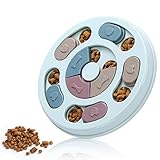
- 【Size】: L9.44" * W9.44"* H1.14" suitable for cats, puppies and small dogs.
- 【Interactive Dog Toys】This is a interactive puppy puzzle , which can easily become the closest companion and toy for your puppies and cats, and will release pressure for dogs. Find food by sliding parts to improve eating pleasure and IQ.
- 【Slow Feed Bowl】This encourages pets to eat at a slower speed, helps to slow down the feeding time to help the dog digest, and can provide your dog with a variety of healthy snacks.
- 【Slow Feede toys】 Use this educational game toy to exercise the dog’s brain, which will help meet the dog’s instinct needs, train the pet’s sense of smell, and let the dog enjoy feeding when using the nose or paw to move the slider, while providing spirit stimulate.
- 【Dog toys】No toy is indestructible. Do not leave toys with unsupervised pets. Remove and replace toy if damaged.
- Check that the collar, harness, and leash fit correctly before leaving.
- Use identification that is current and readable; verify the contact details before the event.
- Choose a familiar route and avoid the busiest areas.
- Keep the leash attached even if the pet is normally reliable off leash.
- Turn back if the pet is pulling to flee, freezing, shaking, or unable to respond safely.
A reflective collar improves visibility to people and vehicles; it does not make an anxious pet comfortable. The quiet indoor retreat remains the safer choice for an animal that is overwhelmed. Do not use a costume outdoors if it catches on objects, blocks vision, or makes the leash or harness fit incorrectly.
What to do when stress starts
- Stop the trigger. Remove the costume, end the photo session, or leave the crowded area.
- Add distance. Move behind a closed door, curtain, gate, or other barrier.
- Offer a familiar retreat. Provide bedding, water, and a known toy or food puzzle if the pet is willing to use it.
- Keep your behavior calm. Use quiet movements and avoid chasing, scolding, restraining, or forcing eye contact.
- Allow recovery time. Do not bring the animal back into the activity simply because it has stopped making noise.
Do not attempt to “toughen up” a panicked pet by prolonging exposure. A frightened animal may choose flight or fight, and cornering it can increase the risk of injury to the pet or a person. Keep pathways clear so the animal can move to safety without being trapped behind furniture or surrounded by guests.
Once the pet is in its retreat, observe from a distance. Offer familiar enrichment only if it normally enjoys it; do not push food, toys, or handling on an animal that is too frightened to engage. Recovery can take time, and a quiet period is more useful than another test.
Do these 3 things before closing this tab:
1Repair Windows errors before they cause bigger problems2Scan for outdated or missing drivers - takes under a minute3Clear out junk files and repair common Windows errorsWhen to involve a veterinarian
Speak with your veterinarian if anxiety is substantial, happens repeatedly, causes escape attempts or aggression, or prevents normal eating, resting, toileting, or safe handling. A veterinarian can look for medical contributors and discuss an individual plan.
VCA mentions pheromone products such as those sold for cats or dogs as options to discuss in the context of anxiety. The source does not establish that any particular product will work for every animal. Do not give a sedative, supplement, or human medication without veterinary direction, and do not borrow medication prescribed for another pet. A product should supplement—not replace—a safe retreat, reduced exposure, and supervision.
Seek urgent veterinary help for breathing difficulty, collapse, injury, suspected poisoning, or ingestion of chocolate, xylitol-containing sweets, costume parts, or other hazardous objects. A pet that cannot be safely moved away from a danger may require professional assistance rather than another home calming technique.
Common mistakes that make events harder
- Putting the costume on at the last minute: There is no time to discover that the fit or sensation is frightening.
- Assuming stillness means consent: Freezing can be a fear response.
- Using the crowd as exposure therapy: A busy gathering removes the pet’s ability to control distance and retreat.
- Forcing a “cute” photograph: A frightened animal cannot give a relaxed pose, and repeated attempts increase pressure.
- Leaving hazards within reach: Candy, wrappers, dangling decorations, and loose accessories can be swallowed or cause choking.
- Relying on a calming product as the whole plan: Environmental control and a safe retreat are the primary interventions supported by the guidance above.
- Reading one signal in isolation: A quiet pet may be frozen, and a moving pet may be trying to escape. Consider posture, eyes, ears, tail, breathing, and the ability to settle together.
- Making the retreat inaccessible: A closed crate, blocked doorway, or room visitors keep entering is not a dependable refuge.
A practical event checklist
- Decide in advance whether the pet will wear nothing, a bandana, or a tested costume.
- Inspect clothing for movement, breathing, vision, and chewable-part hazards.
- Prepare a quiet room with bedding, water, and familiar enrichment.
- Move candy, wrappers, and costume accessories out of reach.
- Plan to photograph without flash and never force a pose.
- Review the pet’s early stress signals with everyone who will handle it.
- Keep identification current and use a secure leash and reflective collar for any outdoor trip after dark.
- Have the veterinarian’s contact details available if the pet has a history of significant anxiety.
- Assign one person to monitor the retreat and one person to manage the door if visitors are expected.
- Decide in advance that the pet may spend the entire busy period away from guests.
The most successful celebration may be the one in which the pet spends the busiest period resting safely away from the action. A costume, crowd appearance, and photograph are optional; the animal’s ability to feel secure and leave the situation is the non-negotiable part.
Quick wins for a faster PC:
Repair Windows errors before they cause bigger problemsFix Now →Fix the driver behind crashes, sound loss and screen glitchesFind Drivers →Frequently Asked Questions
Should every dog or cat wear a costume for a holiday photo?
No. The ASPCA says to use a costume only when you know the animal likes wearing one. A simple bandana—or no clothing—is safer when a pet resists garments, and any costume must allow normal movement, vision, breathing, barking, or meowing.
Best Value

- 【Product Size】10 inch*10 inch*1.2 inch.
- 【Interactive Dog Puzzle Toys 】This is a fun interactive puzzle toy,which can encourage and train your dogs or cats to seek foods by sliding the slider, helping pets to increase IQ by learning sequential steps and the challenging play.
- 【Squeaky Dog Toys】This dog puzzle toys is designed with a sounding device in the middle of the toy,which is to attract the pet's attention.Also,you would enjoy the fun of dog squeak puzzle toy with your pets, greatly improve relations with your pets and get fun during interactive dog games.
- 【Mental Excecise&Boredom Buster】Our memory training puzzle toy can keep smart dogs busy and engaged in more thinking and activities.Therefore,clot stimulation toys are great for reducing dogs’boredom,anxiety and destructive behaviors.
- 【Food-Safe PP Material】This dog treat puzzle is made with toxic-free, food-grade PP material. It is durable for interactive play and mental enrichment but not designed as a chew toy. Always supervise your pet during use.Easily washable with water or in the dishwasher.Note: No toy is indestructible. Remove and replace the toy if damaged.
How can I tell whether my pet is anxious rather than simply quiet?
Watch for a cluster of changes such as a tucked tail, ears held back, lip licking, yawning, pacing, shaking, unexplained panting, widened eyes, dilated pupils, hiding, crouching, or attempts to flee. Freezing or silence alone does not prove comfort.
Is a quiet room better than letting my pet meet visitors?
For most dogs and cats, yes, unless they are genuinely comfortable with visitors. Set up a familiar room away from the door with water, bedding, and enrichment. Let the pet choose whether to leave the retreat, and never force greetings.
Can I use a camera flash for a pet picture?
For ordinary photos, turn the flash off and use steady room light or daylight. PDSA specifically advises this for veterinary eye photographs and says not to force a frightened or panicked animal. A flash may be necessary for a specific veterinary image, but that is a clinical exception.
What’s actually slowing this PC down?
Pick the symptom - the matching free tool is one click away.
What should I do if my pet begins shaking or trying to escape?
Stop the costume, photo, visit, or outing; add distance with a door, gate, or curtain; and provide the familiar retreat. Keep movements calm, do not chase or scold, and allow recovery time instead of returning the pet to the activity.
Are calming sprays, pheromones, or supplements enough?
VCA lists pheromone products such as Feliway or Adaptil as options to discuss with a veterinarian, but no product is guaranteed to work for every animal. Environmental control, a safe retreat, and respecting early stress signals remain central. Never give human medication or another pet’s prescription.
What safety equipment does a pet need outdoors after dark?
Use a secure leash, current identification, and a reflective collar, as the ASPCA recommends. Choose a familiar route, avoid the busiest areas, and turn back if the pet freezes, shakes, pulls to flee, or cannot walk safely.
When is anxiety an emergency?
Seek urgent veterinary help for breathing difficulty, collapse, injury, suspected poisoning, or ingestion of chocolate, xylitol-containing sweets, costume parts, or another hazardous object. Recurrent severe anxiety, aggression, escape attempts, or inability to eat, rest, toilet, or handle safely warrants a veterinary appointment.
The Bottom Line
Choose the least stimulating option: no costume or a comfortable bandana, a quiet retreat instead of a crowded room, and photos without flash. Watch for early stress signals, stop before panic, secure pets outdoors after dark, and ask a veterinarian about recurring or severe anxiety.
Quick Recap
Product prices and availability are accurate as of the date/time indicated and are subject to change. Any price and availability information displayed on Amazon at the time of purchase will apply.




