
Some links on this page are affiliate links: if you buy through them we may earn a commission, at no extra cost to you.
The reliable way to keep bears away is to remove every accessible food source, lock unavoidable attractants in certified wildlife-resistant containers, and physically exclude bears from pet and livestock areas. Bring bowls indoors, secure garbage, feed, bird seed, grills and compost, then add roofed enclosures and properly installed electric fencing where appropriate. If a bear is already present, get people and pets inside, leave the bear an escape route, and haze it from a safe position with loud noise. Report repeat, food-conditioned, injured or aggressive bears to your local wildlife agency.
Start by removing what attracts bears
Bears usually investigate a property because it offers an easy meal. A fence or alarm cannot compensate for an overflowing garbage cart, a bowl of dog food on a porch or a bird feeder that is replenished every day. Attractant control also reduces the chance that a bear learns to associate houses with food, which is safer for people, pets and the bear.
As an Amazon Associate I earn from qualifying purchases.
Lock up garbage and recycling
Keep garbage, recycling and food-soiled packaging inside a secure building until collection day whenever possible. If indoor storage is not practical, use a commercially manufactured, bear-resistant container accepted by your local waste provider. A standard lid that can be lifted, pried or tipped open is not equivalent to a certified wildlife-resistant container. Put the container on a level surface, keep it away from doors and windows when feasible, and follow local rules for cart placement and collection timing.
Rinse food residue from containers, tie bags securely and clean spills immediately. Do not leave a full bag beside the cart, in an open shed or under a deck. Ask the waste company or wildlife agency which container certifications and locking retrofits are recognized in your jurisdiction; acceptance and pickup requirements vary.
Popular on Amazon
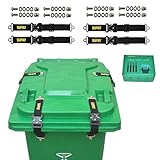
- Animal & Weather Resistant : A practical trash can lock strap that keeps your outdoor bin sealed—helps deter bears, raccoons, squirrels, pets, and gusty wind from opening or tipping the lid. Ideal for home, curbside, camping, and other outdoor use. A simple trash can lock solution for raccoon proof garbage cans and bear proof trash can setups."
- Bite-Resistant & Durable : Made with all-metal hardware and high-strength nylon, these trash can lock straps for animals can withstand chewing, scratching, and clawing from bears, raccoons, squirrels, dogs, and other pets. Designed for all-weather outdoor environments.
- Heavy-Duty X-Box Stitching : Each strap connection is reinforced with X-box cross-stitching, firmly attaching the nylon to metal hooks and locking buckle. This greatly improves tensile strength and tear resistance, making your garbage can lock more durable and long-lasting.
- Easy Installation : Drill a hole with a bit equal to or slightly larger than 8 mm (5/16") and secure the strap using the included screws. The strap length can be adjusted to the optimal position, and once set, it will self-lock without the risk of slipping.
- Universal Fit (28–100 Gallon) : Adjustable from 12.6–16.5 inches, fits most 28–100 gallon trash, recycle, and compost bins. No tools needed—just hook, tighten, and lock for a quick install. A versatile, lockable trash can solution for curbside and backyard use.
Manage dog, cat and livestock food
Feed pets indoors. Remove bowls as soon as the meal ends and wash them so grease and scraps do not remain outside. North Carolina Wildlife Resources Commission guidance specifically warns against storing pet food on a porch or in an open garage. Keep unopened bags and livestock feed in a secure building or a bear-resistant container, not in a screened room, vehicle bed or loosely latched shed.
For animals that must eat outdoors, use a scheduled feeding period while someone is present, then remove every bowl and spill. Never leave a self-feeder operating overnight. Check beneath decks, porches and stairs for dropped kibble before allowing a dog outside after dark.
Remove or secure bird feeders
Bird seed, suet and hummingbird nectar are concentrated food sources. Take feeders down during bear activity and store seed indoors in a sealed, wildlife-resistant container. Sweeping beneath a feeder is not enough if the feeder remains available; spilled seed can still draw a bear. If you reinstall feeders, inspect the ground daily and remove them again at the first sign of bear interest.
Clean grills and outdoor cooking areas
After cooking, burn off residue according to the grill manufacturer’s instructions, empty grease traps, wash grates and store the unit where a bear cannot reach it. Keep cooking oil, marinades, meat scraps and coolers indoors. A grill that looks empty can retain an odor and grease film strong enough to attract wildlife.
Secure compost, gardens and animal feed
Use a bear-resistant compost system or keep compost inside a secure structure. Do not add meat, bones, fish, dairy or grease to an exposed pile. Store chicken, rabbit, horse and other livestock feed in a locked building or commercially manufactured wildlife-resistant container. Harvest ripe garden produce promptly, collect fallen fruit, and clean up spilled grain around coops and feeders.
| Attractant | Preferred action | Common failure |
|---|---|---|
| Garbage and recycling | Indoor storage or an accepted bear-resistant container | Leaving bags beside a cart or using a loose lid |
| Pet food | Feed indoors; store bags in a secure building or resistant container | Bowls left on a porch or food kept in an open garage |
| Bird seed | Remove feeders and store seed securely during bear activity | Assuming a small feeder cannot attract a bear |
| Grill and grease | Clean grates and grease traps after every use; store securely | Leaving grease or food scraps in the drip tray |
| Compost and livestock feed | Use a resistant system or locked building | Open piles, loose bins or spilled feed |
Protect dogs, cats and small livestock with physical exclusion
Outdoor pet areas should be designed so a bear cannot climb over, push through, lift or dig under the boundary. Florida Fish and Wildlife Conservation Commission (FWC) recommends roofed or elevated pens with a skirt that extends outward and underground to deter digging. Keep the enclosure mowed and free of dense cover where a bear could approach unseen.
Roofed, dig-resistant pens
A roof prevents climbing over an open-top run and also protects against objects being tossed into the pen. Use sturdy, closely spaced structural components and a door that latches positively; inspect hinges and fasteners for loosening. Extend the perimeter skirt outward from the wall and bury it underground, following the enclosure manufacturer’s design. The outward apron blocks a bear that starts digging at the base, while the buried section prevents it from simply pulling the barrier up.
Also popular on Amazon
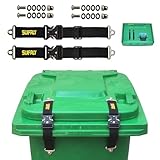
- Animal & Weather Resistant : A practical trash can lock strap that keeps your outdoor bin sealed—helps deter bears, raccoons, squirrels, pets, and gusty wind from opening or tipping the lid. Ideal for home, curbside, camping, and other outdoor use. A simple trash can lock solution for raccoon proof garbage cans and bear proof trash can setups."
- Bite-Resistant & Durable : Made with all-metal hardware and high-strength nylon, these trash can lock straps for animals can withstand chewing, scratching, and clawing from bears, raccoons, squirrels, dogs, and other pets. Designed for all-weather outdoor environments.
- Heavy-Duty X-Box Stitching : Each strap connection is reinforced with X-box cross-stitching, firmly attaching the nylon to metal hooks and locking buckle. This greatly improves tensile strength and tear resistance, making your garbage can lock more durable and long-lasting.
- Easy Installation : Drill a hole with a bit equal to or slightly larger than 8 mm (5/16") and secure the strap using the included screws. The strap length can be adjusted to the optimal position, and once set, it will self-lock without the risk of slipping.
- Universal Fit (28–100 Gallon) : Adjustable from 12.6–16.5 inches, fits most 28–100 gallon trash, recycle, and compost bins. No tools needed—just hook, tighten, and lock for a quick install. A versatile, lockable trash can solution for curbside and backyard use.
Do not treat a window screen, porch screen or lightweight mesh room as a bear enclosure. FWC states that screened enclosures are not secure. Ordinary six-foot fencing and scent products are not established by the cited agencies as reliable primary controls.
Choose the location carefully
New Jersey Fish and Wildlife advises placing animal pens at least 50 yards from forest tree lines or other cover used by bears. Keep vegetation around the pen short so you can see approaching wildlife and so a bear has fewer concealed approaches. Position the gate where a handler can reach it without standing between the pen and nearby woods.
For dogs, provide an indoor option at night and use the outdoor pen for supervised periods until you know the area is consistently secure. For chickens and other small livestock, protect feed storage as carefully as the birds themselves; a strong coop beside an open feed bin still creates an attractant.
Use electric fencing as a high-strength layer
The North Carolina Wildlife Resources Commission (NCWRC) wrote on July 29, 2026: “Properly installed, electrified wires are the most effective, non-lethal tool to keep people, property and bears safe.” The agency identifies electric fencing for livestock enclosures, beehives, compost piles, homes and sheds. It must be installed correctly, maintained and managed around children, pets and visitors.
Where it fits
Electric fencing is useful when you need to protect a perimeter or an unavoidable attractant, such as a chicken run, apiary, compost area or garbage storage point. It covers more area than a locking trash can, but it also requires a complete circuit, regular inspection and clear warnings. It should supplement, not replace, removal of food sources.
Installation and safety checks
- Check local wildlife, electrical and property rules before buying equipment. Ask whether permits, warning signs, grounding requirements or approved products apply.
- Define the protected perimeter and remove brush, tall grass and objects that could contact the wires and reduce performance.
- Install the energizer, grounding system, posts, insulators and wires exactly as the manufacturer specifies. Do not improvise connections or place wires where a person could accidentally contact them while opening a gate.
- Provide a clearly marked, non-electrified access point with a secure gate. Keep the gate closed except when animals or people are moving through.
- Post visible warnings for children, visitors and service workers. Tell everyone who cares for the animals how to switch the system off safely.
- Inspect after storms, mowing and animal contact. Replace broken insulators, sagging wire and damaged gates promptly.
NCWRC BearWise Coordinator Ashley Hobbs reports recommending electrified wire outside deck railings, around crawlspace vents and garbage carts, and in electrified “unwelcome mats.” Those applications still require professional judgment, safe clearances and local approval; never place a live wire where a child, pet or emergency worker could encounter it unexpectedly.
Add lighting and safer pet routines
Motion-sensor or other outdoor lighting can improve visibility and make a surprise nighttime encounter less likely. Lighting is a supplement, not a bear-proof barrier: it does not secure food or stop a determined animal. Aim fixtures at approaches, gates and feeding areas without creating glare that prevents you from seeing clearly.
Also popular on Amazon

- Heavy-Duty Animal-Proof Protection: Durable double metal claws deliver a firm, secure grip to lock trash cans tight. Effectively blocks bears, raccoons, squirrels and other critters from rummaging through garbage.
- Tight-Sealing Spill-Proof Design: The lock’s snug closure prevents trash spillage even in strong winds or when animals try to pry lids open, keeping your outdoor space neat and clean.
- Adjustable Fit for Most Bins: Straps adjust from 30 to 51 inches, fitting a wide range of trash can sizes. Easy to install and customize for a perfect, stable hold on various bin lids.
- Multi-Scene Versatile Use: Not just for trash cans—ideal for securing luggage and outdoor equipment too. A handy tool for both home outdoor areas and adventure trips.
- Tool-Free Quick Installation: No screws or fasteners required. Set up the adjustable strap lock in minutes without extra effort, saving time and hassle.
Check the yard before releasing a pet after dark. Walk dogs on a non-retractable leash, especially near wooded areas, and carry a noise maker such as an air horn. Keep cats indoors at night in regions with recurring bear activity. Do not allow a dog to chase wildlife; pursuit can turn a bear encounter into a defensive response.
FWC identifies bear spray for a close-range encounter. Carry it only where legal, keep it accessible rather than buried in a bag, learn the label directions and check expiration dates. Spray is an emergency tool for a person facing an immediate threat, not a substitute for secured garbage, fencing or supervision. Confirm local restrictions before carrying or using it.
What to do when a bear is in your yard
Prioritize distance and an escape route. FWC’s instruction is to get to a safe area, make sure the bear has a clear way out, then “SCARE THAT BEAR!” Follow this sequence:
- Bring people and pets indoors if you can do so without moving toward the bear. If a pet is outside, do not physically place yourself between the animal and wildlife.
- Close doors and windows. Tell children to stay inside and keep everyone away from the bear’s route.
- From a safe location such as inside a building, yell, bang pots, sound an air horn or use another loud noise. Give the bear space to retreat; do not corner it against a fence, vehicle or building.
- Do not approach, feed, photograph at close range, block a driveway or follow the bear. Never separate a dog from a bear by hand.
- Once the bear leaves, wait before releasing pets. Inspect for damaged fencing, spilled food and open gates, then remove the attractant that brought it there.
- Contact the local wildlife authority for a bear that returns repeatedly, shows little fear of people, appears injured or sick, or behaves aggressively. Use emergency services if a person is in immediate danger.
A bear standing on its hind legs is often trying to identify a smell or sound, not automatically preparing to attack. Keep your voice calm while backing toward safety, and do not run. The practical decision is always the same: increase distance, avoid blocking the animal and get professional help when behavior is persistent or dangerous.
Match the method to the problem
| Method | Protects | Strengths | Limits and responsibilities |
|---|---|---|---|
| Bear-resistant garbage container | One garbage or feed source | Continuous physical access control; useful where indoor storage is impossible | Must be commercially manufactured and accepted locally; does not protect other attractants |
| Roofed, skirted pen | Dogs, poultry and small livestock | Blocks climbing and digging when built and maintained correctly | Needs a strong gate, inspection and a location away from cover; screened rooms are not secure |
| Electric fence | A perimeter around pens, gardens, compost, beehives or storage | NCWRC calls properly installed electrified wire the most effective non-lethal tool identified in its guidance | Installation, maintenance, warning signs and safety management are essential |
| Motion lighting | Paths, gates and pet areas at night | Improves visibility and can reduce surprise encounters | Supplement only; it does not remove food or physically exclude a bear |
| Noise maker or bear spray | A person during an encounter | Provides an option when a bear is close and an escape route is available | Use from safety, follow the label and verify local legality; neither replaces prevention |
Inspect, maintain and troubleshoot the setup
If a bear opens or tips a container
Stop using that container for bear-attracting material until the failure is corrected. Move waste indoors, contact the manufacturer or waste provider about an approved locking solution, and inspect the surrounding area for spilled food. A container that worked for months can fail after a cracked hinge, bent lid or worn latch.
If a bear tests a pen or fence
Bring animals indoors if possible, remove nearby feed and check every panel, roof edge, skirt and gate. For electric fencing, look for vegetation touching wires, storm damage, broken insulators and an interrupted circuit. Keep children and pets away while the system is being serviced. If you cannot verify safe operation, use indoor housing or another secure barrier until repairs are complete.
If sightings continue after attractants are removed
Review less obvious sources: fallen fruit, grease under a grill, a neighbor’s feed, open crawlspaces, deck gaps or unsecured compost. Coordinate with nearby households and report repeat visits to the wildlife agency. Do not escalate to improvised traps, poisons or unsafe pursuit.
Also popular on Amazon

- LIDS STAY CLOSED OVERNIGHT: Dual straps secure both sides against pulling and prying, helping keep bears out and trash in the can—not across the yard.
- DUAL SCREW-MOUNTED HOLD: 3000-lb break-strength polyester webbing stays anchored to the cart, resisting shifting when bears pull, pry, or knock the bin over.
- INSTALL ONCE, SECURE IN 3 SECONDS: Screw-mounted straps stay attached to the cart; quick-release buckles lock or release the lid without reattaching straps each day.
- BUILT FOR YEAR-ROUND OUTDOOR USE: 304 stainless steel hardware and weather-resistant polyester webbing withstand rain, UV, snow, and wind for dependable outdoor use.
- FITS MOST 32–96 GAL ROLLING CARTS: Adjustable straps fit common 32, 45, 64, and 96 gal rear-handle carts; check handle structure and fit before drilling.
Plan a daily and seasonal routine
- Before feeding: check the yard and pen for wildlife, then feed pets while someone is present.
- After feeding: bring bowls inside, wipe spills and store food securely.
- At dusk: remove bird feeders, verify gates and turn on motion lighting.
- After cooking: clean grill grates and grease traps and move coolers indoors.
- Weekly: inspect enclosure skirts, roofs, latches, electric-fence wires and warning signs.
- After storms or yard work: clear fallen branches and vegetation from wires and confirm that gates still close.
- During local bear activity: suspend outdoor feeding and keep pets indoors at night until attractants and barriers have been checked.
Keep the contact details for your local wildlife agency and waste provider where every household member can find them. Rules for container certification, electric-fence installation, waste pickup, reporting and bear spray differ by jurisdiction, so local instructions take precedence over generic advice.
Frequently asked questions
Are bear-proof trash cans worth it?
They are worthwhile when garbage cannot be stored inside, provided the container is commercially manufactured, genuinely wildlife-resistant and accepted by your local waste service. They secure one attractant; they do not make a property bear-proof if pet food, compost or grills remain accessible.
How can I keep a bear away from my dog’s food?
Feed the dog indoors, remove the bowl immediately and store the food bag in a secure building or resistant container. Never keep pet food on a porch or in an open garage. If outdoor feeding is unavoidable, supervise it and clean every spill before the dog leaves the area.
What keeps bears out of an outdoor chicken coop?
Use a roofed, sturdy, dig-resistant enclosure with an outward and underground skirt, a secure gate and a mowed buffer. Place it at least 50 yards from forest tree lines or other cover when possible, protect feed storage, and consider properly installed electric fencing after checking local rules.
Will an ordinary fence, ultrasonic device or scent repellent stop a bear?
The cited wildlife agencies do not identify those options as reliable primary controls. Do not rely on a standard six-foot fence, scent product or ultrasonic device instead of removing attractants and building a secure enclosure.
Should I let my dog chase a bear out of the yard?
No. Bring the dog inside without putting yourself between the animals. From safety, provide an escape route and make loud noise. A dog that chases or corners a bear can intensify the encounter.
Frequently Asked Questions
How far should an outdoor pet pen be from woods?
New Jersey Fish and Wildlife advises at least 50 yards from forest tree lines or other cover used by bears, with the area around the pen kept mowed.
What should I do about a bear that keeps returning?
Remove every attractant, repair barriers and contact your local wildlife authority, especially if the bear is food-conditioned, injured or aggressive.





Leave a Reply