
Some links on this page are affiliate links: if you buy through them we may earn a commission, at no extra cost to you.
Keep pets away from bears by removing food attractants, controlling where animals go, and preventing dog–bear confrontations. Feed dogs and cats indoors, take bowls in immediately, store food and waste in a locked building or bear-resistant container, and secure garbage, grills, compost, birdseed, and fallen fruit. Keep pets indoors or in secure enclosures overnight and never leave them unattended outside.
When walking a dog, use a short, strong, non-retractable leash and keep the dog beside you. If you see a bear, keep children and pets close, do not run, back away slowly, and leave the bear an unobstructed escape route. Guidance below is written for American black-bear activity; follow your state, tribal, park, or local wildlife agency’s rules when they differ.
As an Amazon Associate I earn from qualifying purchases.
Windows Errors? Fix Them Before They Spread
Repair common Windows errors and clear accumulated junk for a smoother, more stable PC - no reinstall needed.Free scan · no reinstallOutdated Drivers Are Slowing You Down
One free scan finds every outdated or missing driver and matches the right update for your exact hardware.Free scan · exact hardware matchWhy dogs and bears are a dangerous combination
Black bears generally try to avoid people, but a dog can change an encounter quickly. A dog that rushes, barks at, chases, or corners a bear may trigger defensive behavior. The risk is especially high when a bear is surprised at close range, guarding food, or accompanied by cubs. The North Carolina Wildlife Resources Commission’s BearWise coordinator Ashley Hobbs summarizes the problem: “Dogs and bears don’t mix. They often act defensively toward each other. Never allow your dog to harass, chase or corner a bear. Always keep your dog on a non-retractable leash. Leashes really do save lives and prevent injuries.”
Cats can also create bear visits. Outdoor food, treats, and scraps provide a scent trail, and a bear that learns a home has food may return. Florida Fish and Wildlife Conservation Commission guidance puts it plainly: “Anything that attracts dogs, cats or raccoons will attract bears, too!”
Popular on Amazon
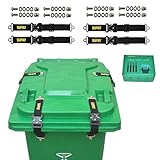
- Animal & Weather Resistant : A practical trash can lock strap that keeps your outdoor bin sealed—helps deter bears, raccoons, squirrels, pets, and gusty wind from opening or tipping the lid. Ideal for home, curbside, camping, and other outdoor use. A simple trash can lock solution for raccoon proof garbage cans and bear proof trash can setups."
- Bite-Resistant & Durable : Made with all-metal hardware and high-strength nylon, these trash can lock straps for animals can withstand chewing, scratching, and clawing from bears, raccoons, squirrels, dogs, and other pets. Designed for all-weather outdoor environments.
- Heavy-Duty X-Box Stitching : Each strap connection is reinforced with X-box cross-stitching, firmly attaching the nylon to metal hooks and locking buckle. This greatly improves tensile strength and tear resistance, making your garbage can lock more durable and long-lasting.
- Easy Installation : Drill a hole with a bit equal to or slightly larger than 8 mm (5/16") and secure the strap using the included screws. The strap length can be adjusted to the optimal position, and once set, it will self-lock without the risk of slipping.
- Universal Fit (28–100 Gallon) : Adjustable from 12.6–16.5 inches, fits most 28–100 gallon trash, recycle, and compost bins. No tools needed—just hook, tighten, and lock for a quick install. A versatile, lockable trash can solution for curbside and backyard use.
There is no authoritative national count of domestic dog or cat injuries or deaths from black-bear encounters. Wildlife agencies consistently identify two preventable causes of risk: unsecured attractants around homes and dogs confronting bears.
Make your property uninteresting to bears
Most residential visits are driven by an easy meal rather than a desire to approach pets. Treat every strong-smelling item as a possible attractant, even if it is not normally considered pet food.
Quick wins for a faster PC:
Scan for outdated or missing drivers - takes under a minuteDriver Scan →Clear out junk files and repair common Windows errorsFree Scan →| Attractant or situation | Safer practice | Why it matters |
|---|---|---|
| Dog or cat food, treats, and food waste | Feed indoors; remove bowls after meals; store dry food, treats, and waste in a locked garage, basement, shed, or bear-resistant container. | A bear can associate the smell with your home and return. |
| Water bowls | Bring bowls in with food, particularly overnight or during repeated bear activity. | Water itself is less attractive than food, but bowls can retain food odor and keep pets outside. |
| Garbage and recycling | Use a certified or purpose-built bear-resistant container, or keep materials in a locked building. Put containers out on collection morning where local rules allow. | Household garbage is a high-value, recurring reward. |
| Grills and grease | Clean grates and grease traps after every use; store the grill securely when practical. | Grease and cooked-food residue carry far outdoors. |
| Compost | Use a bear-resistant bin or an enclosed system approved by your local agency. | Food scraps can attract bears even when the pile appears inactive. |
| Bird feeders and seed | Remove feeders during bear season or elevate and secure them exactly as local wildlife officials advise; sweep spilled seed. | Seed and suet can draw bears close to doors and pet areas. |
| Fruit and garden produce | Pick ripe fruit promptly and collect windfalls daily. | Fallen fruit can keep a bear visiting after the tree is empty. |
Store pet food as carefully as garbage
Keep unopened and opened bags, cans, treats, chews, and food-contaminated litter in a secure building or bear-resistant container. A latched plastic tote that is not designed to resist bears is not equivalent to a certified container. If you feed a community cat, establish a supervised daytime feeding window, stay with the cats while they eat, and remove every bowl and leftover immediately. Do not leave free-ranging or community-cat food outside unattended.
Control access to the yard
At night, bring dogs and cats indoors or use a genuinely secure enclosure with a roof, intact doors, and no gaps a pet can exploit. Check the yard from a doorway or window before releasing an animal, especially after a neighbor reports a sighting. Motion lighting can improve visibility where local officials recommend it, but lighting is not a substitute for checking and supervising.
Walk a dog safely when bears are active
Choose control over convenience
Use a fixed, non-retractable leash that matches the dog’s size and strength. A retractable line can give a dog enough distance to rush a bear and can be difficult to reel in under stress. Select a leash length that lets the dog walk beside you, and keep the handle in your hand rather than looping it around a wrist where a sudden pull could cause injury. Use a well-fitted harness or collar that the dog cannot back out of.
Also popular on Amazon
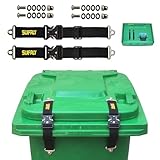
- Animal & Weather Resistant : A practical trash can lock strap that keeps your outdoor bin sealed—helps deter bears, raccoons, squirrels, pets, and gusty wind from opening or tipping the lid. Ideal for home, curbside, camping, and other outdoor use. A simple trash can lock solution for raccoon proof garbage cans and bear proof trash can setups."
- Bite-Resistant & Durable : Made with all-metal hardware and high-strength nylon, these trash can lock straps for animals can withstand chewing, scratching, and clawing from bears, raccoons, squirrels, dogs, and other pets. Designed for all-weather outdoor environments.
- Heavy-Duty X-Box Stitching : Each strap connection is reinforced with X-box cross-stitching, firmly attaching the nylon to metal hooks and locking buckle. This greatly improves tensile strength and tear resistance, making your garbage can lock more durable and long-lasting.
- Easy Installation : Drill a hole with a bit equal to or slightly larger than 8 mm (5/16") and secure the strap using the included screws. The strap length can be adjusted to the optimal position, and once set, it will self-lock without the risk of slipping.
- Universal Fit (28–100 Gallon) : Adjustable from 12.6–16.5 inches, fits most 28–100 gallon trash, recycle, and compost bins. No tools needed—just hook, tighten, and lock for a quick install. A versatile, lockable trash can solution for curbside and backyard use.
Stay alert for signs before you need to react
Scan the path and edges for tracks, scat, overturned logs, digging, den areas, fresh carcasses, or other signs. In thick vegetation and around blind corners, talk normally, clap occasionally, or use a whistle so you are not silently surprising an animal. Keep the dog close when visibility is poor, near streams where sound is masked, and around food sources such as berry patches or carcasses.
Never let a dog investigate a bear
If you spot a bear at a distance, turn away before the dog notices if you can do so safely. Do not allow barking, lunging, chasing, or “treeing” the bear. A dog that runs after a bear may bring the bear back toward you when it retreats. Do not drop the leash to give yourself freedom of movement; maintaining control protects the dog and keeps the encounter predictable.
Do not run from a bear. Running can provoke pursuit and can cause you to trip while holding the leash. Keep the dog close, speak firmly, and retreat at a walking pace.
What to do if a bear appears in your yard
- Bring pets and people inside if there is a clear path. Call the dog calmly; do not send anyone toward the bear to retrieve an animal. Keep children beside an adult.
- Give the bear space. Do not block its route to trees, cover, or an exit. Close doors and windows that open toward the animal.
- Do not run or make sudden advances. From a safe position, make your presence known with a firm voice or noise without moving toward the bear. Avoid surrounding it.
- Remove the immediate reward only after the bear leaves. Once the area is clear, bring in bowls, garbage, or other attractants. Do not attempt to take food away while the bear is present.
- Report the incident. Contact the relevant state, tribal, county, or municipal wildlife agency, particularly if the bear remains, repeatedly returns, enters a building, or acts aggressively. Use emergency services if people are in immediate danger.
If a bear is between you and your pet, do not dash past it. Wait for a safe opening, keep the animal from advancing, and call for professional help when necessary. A bear that has entered a house, garage, or other occupied building should be handled by trained wildlife personnel, not cornered by a homeowner or dog.
If you meet a bear while walking
- Stop and gather the group. Shorten the leash without jerking the dog, and place children behind you. Keep the dog at your side.
- Identify yourself without approaching. Use a calm, firm voice. If the bear has not noticed you, quietly increase distance; if it has noticed you, let it understand that you are a person.
- Back away slowly. Face the bear, avoid sudden movements, and do not run. Move toward an open route rather than into dense brush or a dead end.
- Leave an escape route. Never stand between a bear and cubs, food, a den, or the direction it is trying to travel.
- Wait for the bear to move away. Do not resume the walk until you can create substantial distance, and consider turning around.
A bear standing on its hind legs is often trying to identify what it sees; that posture alone does not mean it is attacking. Treat every close encounter seriously, however, and follow the behavior and distance guidance from your local wildlife agency.
Also popular on Amazon

- Heavy-Duty Animal-Proof Protection: Durable double metal claws deliver a firm, secure grip to lock trash cans tight. Effectively blocks bears, raccoons, squirrels and other critters from rummaging through garbage.
- Tight-Sealing Spill-Proof Design: The lock’s snug closure prevents trash spillage even in strong winds or when animals try to pry lids open, keeping your outdoor space neat and clean.
- Adjustable Fit for Most Bins: Straps adjust from 30 to 51 inches, fitting a wide range of trash can sizes. Easy to install and customize for a perfect, stable hold on various bin lids.
- Multi-Scene Versatile Use: Not just for trash cans—ideal for securing luggage and outdoor equipment too. A handy tool for both home outdoor areas and adventure trips.
- Tool-Free Quick Installation: No screws or fasteners required. Set up the adjustable strap lock in minutes without extra effort, saving time and hassle.
If a bear approaches or contact occurs
Keep the dog beside you and continue backing away when possible. Do not encourage the dog to confront the bear. If the bear follows, enters a home, or shows persistent aggressive behavior, seek immediate help from local authorities rather than improvising.
Black-bear defensive advice can differ from guidance for other bear species, so use the instructions issued for your area. California Department of Fish and Wildlife guidance states: “If a black bear makes contact – fight back! Then – Call 9-1-1.” Follow that jurisdiction-specific instruction for a physical attack. Once everyone is safe, obtain veterinary care for any bite, claw wound, or trauma, even if the injury appears small; bear-related wounds can be deep and contaminated. Also report the encounter to the appropriate wildlife agency.
Bear spray: when it is appropriate and how to carry it
Bear spray is an emergency deterrent, not a way to make a dog walk safer by itself. The U.S. Fish and Wildlife Service advises: “Carry bear spray, know how to use it, and make sure it is accessible.” Carry it only where lawful, check the expiration date, and keep it in a holster or other location you can reach immediately. Do not bury it in a backpack.
Read the product directions before entering bear country and practice removing the safety mechanism without aiming at people or pets. Wind, distance, and enclosed spaces can expose you, your dog, or bystanders to spray. Never spray a bear that is far away or merely passing through when you can safely retreat. Replace a canister after any discharge and follow local disposal rules.
Extra precautions for cats
Indoor cats avoid most direct encounters, but an outdoor cat can surprise a bear around a porch, shed, or feeding station. Keep cats indoors during periods of active sightings, overnight, and whenever you cannot supervise them. Use a secure catio or other enclosure if outdoor time is essential; an open yard is not a controlled enclosure.
Also popular on Amazon

- LIDS STAY CLOSED OVERNIGHT: Dual straps secure both sides against pulling and prying, helping keep bears out and trash in the can—not across the yard.
- DUAL SCREW-MOUNTED HOLD: 3000-lb break-strength polyester webbing stays anchored to the cart, resisting shifting when bears pull, pry, or knock the bin over.
- INSTALL ONCE, SECURE IN 3 SECONDS: Screw-mounted straps stay attached to the cart; quick-release buckles lock or release the lid without reattaching straps each day.
- BUILT FOR YEAR-ROUND OUTDOOR USE: 304 stainless steel hardware and weather-resistant polyester webbing withstand rain, UV, snow, and wind for dependable outdoor use.
- FITS MOST 32–96 GAL ROLLING CARTS: Adjustable straps fit common 32, 45, 64, and 96 gal rear-handle carts; check handle structure and fit before drilling.
Place litter-box waste and discarded food in a sealed container inside a locked building. Do not assume a small portion or “natural” food is harmless: bears can smell meat, fish, dairy, and many processed foods at a distance. If a cat must be medicated with food outdoors, supervise the entire feeding and remove all residue immediately.
Independent reader supportYour contribution helps us test, update, and keep practical guides available for everyone.Coordinate with everyone who cares for the pets
Write down one routine for family members, dog walkers, sitters, and neighbors: feeding times, where food is stored, the nighttime lock-up time, and who checks the yard. Tell visitors never to leave a door propped open or a bowl on a deck. Ask neighbors to tell you about fresh sightings so you can shorten walks and keep cats inside.
For community cats, work with the property owner and local wildlife or animal-control officials. A consistent supervised feeding schedule, prompt cleanup, and secure food storage reduce the chance that one household becomes a recurring bear stop. Do not relocate or trap a bear yourself; those actions may be illegal and can create additional danger.
Do these 3 things before closing this tab:
1Fix the driver behind crashes, sound loss and screen glitches2Repair Windows errors before they cause bigger problems3Scan for outdated or missing drivers - takes under a minuteChoosing practical safety equipment
| Equipment | What to check | Common mistake |
|---|---|---|
| Bear-resistant trash container | Independent certification or locking design, capacity, compatibility with local collection trucks, and whether you can store it indoors. | Buying a container that looks sturdy but is not accepted by the hauler or is easy to pry open. |
| Non-retractable dog leash | Fixed length, strength appropriate to the dog, comfortable grip, secure clip, and a length that keeps the dog beside you. | Using a retractable line or a long lead that gives the dog launch distance. |
| Bear spray | Legality in your location, range, expiration date, safety mechanism, accessibility, and your ability to use it under stress. | Carrying it in a pack, using an expired canister, or treating it as a substitute for distance and leash control. |
Common mistakes and better alternatives
- “The dog is friendly, so it can say hello.” A bear cannot know the dog’s intent. Keep the dog away and moving under control.
- “The bear is only in the yard for a minute.” Bring pets inside immediately and wait for the animal to leave before removing attractants.
- “A closed porch is outdoors but safe.” Bears can climb, push, or break through weak enclosures. Use a secure structure and supervise pets.
- “I will leave food out briefly.” Brief, unattended feeding can establish a repeat visit. Feed under supervision and remove every bowl.
- “Noise always scares bears away.” Noise can help identify your presence from a safe distance, but advancing, surrounding, or shouting at close range can escalate an encounter.
- “One report is enough.” Share repeat sightings and conflicts with wildlife officials so they can assess a pattern and advise on local action.
Daily checklist during active bear activity
- Feed all pets indoors and take bowls away after meals.
- Lock food, treats, food waste, and litter waste in a building or bear-resistant container.
- Secure garbage, recycling, compost, grills, birdseed, and ripe or fallen fruit.
- Check the yard before releasing a pet.
- Keep cats indoors and dogs supervised; secure them indoors overnight.
- Use a fixed leash and keep the dog beside you on every walk.
- Carry lawful, accessible bear spray if you choose to use it, and know its operation.
- Report sightings, encounters, and property conflicts to the relevant wildlife agency.
When to change your routine or seek help
Stop normal outdoor access and contact wildlife officials when a bear repeatedly returns, approaches people or pets, enters a building, remains after you create distance, or shows aggressive behavior. Keep a written record of dates, locations, attractants, and what the bear did; that information helps officials distinguish a passing animal from a conditioned one. Follow any evacuation, closure, or leash rule issued for your park or community.
Seasonal activity, local laws, agency contacts, and available equipment change. Verify current instructions for your location, including which species are present and what to do after a bite or attack. The safest plan is the one your household can follow consistently before a bear is already at the door.





Leave a Reply