
Quick wins for a faster PC:
Scan for outdated or missing drivers - takes under a minuteDriver Scan →Repair Windows errors before they cause bigger problemsFix Now →Fix the driver behind crashes, sound loss and screen glitchesFind Drivers →This guide starts with an important qualification: “trapdoor spider” covers several families and species, and the commonly repeated advice comes from different kinds of sources. The practical setup below draws on a hobbyist account by RezonantVoid (Arachnoboards, 24 October 2018), natural-history information from the Australian Museum (updated 7 September 2024), a New South Wales public-safety fact sheet, and a species-specific Cataxia care sheet. Treat the keeper’s dimensions and routines as informed examples, not universal standards. Identify the species before fixing humidity, temperature, or burrow depth.
What a trapdoor spider is—and why identification comes first
Trapdoor spider is a common name, not a single species or even one family. These spiders are generally ground-dwelling, burrowing mygalomorphs, but their burrows, defenses, moisture needs, adult size, and activity patterns vary substantially. The Australian Museum notes that many spiders called trapdoors do not make a literal hinged door; some members of the genus Arbanitis, for example, have open burrows. A captive spider may therefore be healthy while making no obvious door or while placing its burrow where you cannot see it.
As an Amazon Associate I earn from qualifying purchases.
Species identification should precede the final care plan. Ask the breeder or seller for the scientific name, locality or native habitat when available, life stage, and whether the animal is captive-bred. If the spider is an unidentified rescue or a specimen found outdoors, use conservative handling and enclosure choices until an experienced local keeper, museum, or qualified professional can help with identification. A generic humidity target is not reliable across this group.
The Australian Museum gives a general lifespan range of 5 to 20 years for trapdoor spiders. That is a broad natural-history range, not a guarantee for every species or captive individual. Its fast-facts entry for one Arbanitis species lists an adult size of 1.5–3 cm; other trapdoor spiders can differ. Plan for a long-term animal rather than a short-lived display pet.
#1 Best Overall

- 【Acrylic Reptile Terrarium】Our small reptile cage measures 7.87" x 4.72" x 4.33", perfect size for kinds of baby reptiles or other small animals, providing sufficient room for reptiles pets to move around.
- 【360 Degree View】Our large breeding tank is all-round transparent, it's convenient to observe your slithery friends in the box and feed them in time. The top is clam-shell design, easy to open and close.
- 【Easy to Install】Tear off the protective film on the surface at first and the acrylic tarantula enclosure requires a simple installation , the rubber bands do well in holding everything together. It's also easy to disassemble when not use for saving storage space.
- 【Perfect Design】This reptile breeding box tarantula enclosure is designed with ventilation holes on the two sides, providing the reptiles with fresh air. And the locking handle keeps your pet safe.
- 【Reptile Tank for Insects】Provide a perfect home and a warm habitat for your small reptiles, amphibians and invertebrates. Ideal for spiders, lizard, small turtles, snails, frogs, snakes, tarantulas, hermit crab or any other insects.
Are trapdoor spiders harder to keep than tarantulas?
“Harder” depends less on a single technical parameter than on what you expect to observe. A trapdoor spider can thrive in a relatively simple, secure enclosure, yet spend most of its time below the substrate. You may see little of it, and a rehousing or substrate change can be stressful because the animal must excavate and reinforce a new retreat. Tarantulas are also variable, but many commonly kept species are easier to observe and have more widely published care conventions.
| Consideration | Trapdoor spider implications | What the evidence supports |
|---|---|---|
| Visibility | Burrows may be hidden, open, or positioned away from the viewing wall; a visible hinged door is not guaranteed. | The Australian Museum documents substantial variation in burrow design. |
| Substrate | A secure, diggable column is central to the enclosure rather than a thin decorative layer. | The hobbyist guide and species-specific care sheet both use coco-based substrate. |
| Moisture | Moisture must suit the species and should not turn the substrate into saturated mud. | The keeper describes moist, not soaked, cocopeat; the Cataxia sheet gives species-specific guidance. |
| Disturbance | Frequent digging, rehousing, or attempts to expose the spider can destroy a retreat and prolong adjustment. | The hobbyist account specifically cautions against frequent rehousing. |
| Handling | Unnecessary handling adds escape and bite risk and can be dangerous when identification is uncertain. | The keeper advises never handling; New South Wales safety advice recommends observing uncertain spiders from a safe distance. |
In practical terms, a keeper who accepts an occasionally invisible animal and can maintain a stable burrow may find trapdoors straightforward. Someone seeking a frequently visible, handleable display spider may find them less satisfying and more difficult to monitor.
Before bringing one home
Confirm the species and origin
- Record the scientific name and, if known, locality or habitat type.
- Ask whether it is captive-bred and what substrate and moisture routine it has already been using.
- Check local rules governing ownership, importation, and collection of native spiders.
- Do not collect wild spiders for a casual display project, and never release a captive-bred spider outdoors. The Cataxia care guidance explicitly warns against release.
Prepare the enclosure first
Have the secure enclosure, prepared substrate, ventilation, lid, and feeding plan ready before the spider arrives. Moving a newly acquired animal repeatedly between temporary containers creates exactly the disturbance the hobbyist guide warns against.
The Tool Desk
Outbyte Driver Updater FREEFix the driver behind crashes, sound loss and screen glitchesFind Drivers →Outbyte PC Repair FREERepair Windows errors before they cause bigger problemsFix Now →Plan for a long, mostly subterranean commitment
A five-year minimum is not a safe planning assumption; the museum’s 5–20-year range means some individuals may remain with you for decades. Arrange a keeper who can maintain the enclosure during travel or illness, and keep records of molts, feeding, and maintenance without excavating the burrow to check on the spider.
Choosing and setting up the enclosure
Container style and security
RezonantVoid describes using clear, lidded plastic containers with ventilation and moving very large species to a larger tank. The useful principles are a rigid, escape-resistant lid, enough height for the planned substrate column, and ventilation that allows air exchange without rapidly drying the burrow. The exact number and diameter of holes in that post are setup-specific examples, not engineering specifications.
Rank #2

- [HOUSE-SHAPED JUMPING SPIDER Enclosure] Everything you need for your tiny pet comes in one box! Includes a premium acrylic enclosure, assembly tool and accessories. No glue or tools required — simply peel the protective film and snap the panels together, securing with the rubber ring for a secure, gap-free setup in minutes.
- [FRONT-OPENING DESIGN WITH FEEDING PORT] Features a magnetic front-opening door and a convenient top feeding hole for easy daily care, cleaning, and decorating. The secure locking system prevents escapes while allowing direct interaction with your pet without stress or disturbance.
- [ULTRA-CLEAR, SHATTER-RESISTANT ACRYLIC] Crafted from 3mm-thick, crystal-clear acrylic that’s 3× more scratch- and impact-resistant than glass. Enjoy full 360° visibility to observe your spider, mantis, or gecko in stunning detail — perfect for both beginners and experienced keepers.
- [OPTIMAL AIRFLOW & HEALTHY ENVIRONMENT] Equipped with precision ventilation holes on both sides and top to promote ideal airflow and humidity balance. Prevents moisture buildup while maintaining the comfort and respiratory health of humidity-sensitive species.
- [VERSATILE FOR MULTIPLE SMALL SPECIES] Ideal for jumping spiders, tarantulas, praying mantises, beetles, scorpions, baby geckos, and snails. Compact yet spacious (7.9"L × 4.0"W × 6.0"H), this modern house-style terrarium is both a functional habitat and an elegant display for your desk or shelf.
Use a container that cannot flex open when lifted and that has no gap around the lid or access door. Place it where vibration, direct sun, heaters, and household traffic are limited. A clear side can help you see the burrow if the spider chooses the wall, but do not pack or excavate the substrate merely to improve the view.
How deep should the substrate be?
There is no universal depth. In the 2018 Arachnoboards guide, the keeper says a two-foot-deep container is not always necessary, suggests up to about 30 cm as a personal maximum, and notes that some species may be content with 20 cm or less. Those are that keeper’s observations, not minimum requirements for every taxon.
What’s actually slowing this PC down?
Pick the symptom - the matching free tool is one click away.
A later Arachnoboards post about small Fufius specimens gives another keeper’s example of roughly 50–60 mm of substrate for a sling about 6 mm in size, while noting that deeper substrate was also acceptable. This is a species-linked anecdote. Use it only as evidence that a small juvenile can require a meaningful substrate column, not as a formula for all slings.
Choose depth by combining species, life stage, expected adult size, and the animal’s natural burrowing style. The spider needs enough material to construct a stable retreat without being forced against the lid. If you cannot obtain species-specific guidance, choose a conservative, diggable depth and avoid rebuilding the enclosure solely because the burrow is not visible.
Footprint, access, and visibility
A deeper enclosure is not automatically better if it is narrow, unstable, or difficult to maintain. Provide a footprint that lets the spider turn and place the burrow away from the lid seam. An access opening that allows feeding without dismantling the enclosure reduces disturbance. Clear walls are useful for observation, but a spider that burrows at the rear has not necessarily failed to settle.
Rank #3
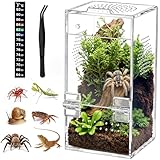
- 【Fresh Airflow Circulation】287 micro ventilation holes (0.06" diameter) are distributed across all 4 sides of this jumping spider habitat, with low intake vents drawing in cool air and high exhaust vents releasing warm, humid air. This layout maintains a steady bottom-to-top flow of fresh air inside the spider terrarium, effectively lowering humidity and preventing stale air buildup, while ensuring a stable microclimate for your reptile.
- 【No Assembly, No Mess】Skip the hassle of flat-packed cages! Unlike spliced designs that leak sand and water through panel gaps, this praying mantis enclosure arrives fully assembled with a sealed base to keep substrate and water securely inside. Four non-slip pads on the bottom provide extra stability—no sliding, no spills, just a clean, leak-free habitat from day one.
- 【Magnetic Side-Opening Door】This jumping spider enclosure features a strong yet easy-to-open magnetic side door, allowing you to feed or mist without disturbing your pet’s setup. The smart side-slide design avoids upper corners where spiders often build hammocks, keeping webbing intact. Perfect for a secure spider terrarium—no more worrying about pets sneaking out through a loose door.
- 【360-Degree Crystal-Clear View】Unlike dull, cloudy PP cages, this premium acrylic terrarium stays brilliantly clear—letting you watch your pet leap, hunt, and explore from every angle. Crafted from sturdy, scratch-resistant acrylic that won’t warp or leak, it’s a durable and pet-safe spider terrarium—perfect for nature lovers of all ages.
- 【Spacious 58% Larger Design】Our jumping spider enclosure kit measures 3.5 × 3.5 × 7 inches – 85.7 cubic inches of space! Compared to other 3×3×6-inch boxes (54 cubic inches), it provides 58% more space to create a cozy, enriched habitat your pet will love! (Enclosure ONLY, Plants and Animals NOT INCLUDED)
Rehousing
The original keeper reports that their spiders can take time to readjust after a move and cautions against frequent rehousing. Rehouse only when the container is unsafe, badly contaminated, too small for the growing spider, or unsuitable for the identified species. Prepare the new enclosure in advance, transfer as little old burrow material as is safely practical, and give the spider time to rebuild rather than repeatedly opening the container to inspect progress.
Substrate and moisture: damp is not waterlogged
Use a stable, diggable medium
The hobbyist guide uses cocopeat. A Minibeast Wildlife care sheet for Cataxia sp. also names coco-peat as suitable and describes it as moist but not sodden. Coco coir products vary in how finely they are processed and how much water they hold, so prepare the material consistently and remove hard, sharp, or contaminated pieces.
Apply the keeper’s squeeze test cautiously
RezonantVoid describes wetting the cocopeat and hand-squeezing out excess water as a practical rule of thumb. This is not a calibrated moisture measurement. It can help avoid dripping substrate during setup, but it cannot replace species-specific observation. A substrate that feels right for a humid-forest species may be excessive for a spider from a seasonally dry habitat.
Balance moisture with ventilation
Ventilation prevents stagnant, overly wet conditions, while too much exposed airflow can dry the burrow. The guide reports that its ventilated containers retained moisture; the hole pattern itself should not be copied as a universal design. Observe the substrate over several days: persistent pooling, sour odors, collapsing wet walls, or visible mold indicate that the moisture-and-air balance needs correction. Correct gradually rather than flooding or completely drying the enclosure.
Do not generalize one species’ humidity figure
The Cataxia care sheet gives a humidity range of 60–90% for that care context. It is species-specific guidance, not a target for all trapdoor spiders. The same caution applies to any temperature instruction on a supplier or breeder sheet. Set those parameters only after confirming that the named species and locality match your spider.
Rank #4

- 【Tailor-Made Tiny Habitat】Spider terrarium small 3x3x6 inch size enclosure is specifically designed for jumping spiders, tarantulas, snail, mantis, lizard, and other small reptiles and amphibians, providing a safe and comfortable habitat
- 【Micro-Optimized Airflow System】Unlike other jumping spider enclosures,ours uses 264 Precision Micro-Vents (0.8mm) deliver 360° airflow while blocking fruit fly escapes—perfect humidity control for tropical habitats
- 【Magnetic Doors】Acrylic spider enclosure with magnet doors enable 1-second feeding access while military-grade prevent escapes. Handle your jumping spider or feed without anxiety
- 【Crystal-Clear 360° Theater Display】Optical-grade acrylic (98% light transmittance) transforms feeding time into a captivating show. Perfect for observing and interacting with your jumping spider or other small creatures
- 【No Assembly and Stackable Design】Portable jumping spider enclosure aquariums require no assembly and disassembly and are ready to use right out of the package, the unique stackable design allows for easy storage and customization, perfect for beginners and experienced pet owners
Feeding a trapdoor spider
Appropriate prey
The Australian Museum lists crickets, moths, beetles, and grasshoppers among natural prey. RezonantVoid prefers crickets in captivity because, in that keeper’s experience, they are readily caught and do not burrow away into the substrate. Prey should be smaller than the spider can safely subdue, and the amount should reflect the spider’s body size and life stage.
How often?
Do not copy a single schedule as a universal rule. The Cataxia care sheet recommends feeding once or twice a week in that care context and notes that young spiders may feed more often as they grow. A mature, settled spider may accept meals less consistently, especially around a molt. Track acceptance, abdomen condition, growth, and leftover prey rather than forcing food on a fixed calendar.
| Situation | Practical response |
|---|---|
| Newly moved spider | Allow time to settle before interpreting a missed meal as illness; avoid opening the burrow repeatedly. |
| Small juvenile | Offer appropriately small prey and use the species’ guidance; growing juveniles may feed more frequently. |
| Adult that refuses food | Check species, molt status, temperature and moisture guidance, and prey size before increasing offerings. |
| Uneaten prey | Remove it when you can do so without collapsing the retreat or provoking the spider. No trapdoor-specific universal removal interval was established, so prioritize preventing injury, mold, and persistent disturbance. |
Feed with long tools from outside the enclosure where possible. Do not leave large, aggressive, or unmonitored prey in a confined retreat. A prey item disappearing into the burrow is not proof that it was eaten; record what you offered and what you observed.
Independent reader supportYour contribution helps us test, update, and keep practical guides available for everyone.Observation, disturbance, and handling
Observe without excavating
Most useful monitoring is non-invasive: check that the lid remains secure, inspect ventilation, look for substrate collapse or contamination, and note prey remains or a fresh molt. A closed burrow is normal behavior, not an invitation to dig. Use a low-intensity light and brief observations rather than repeatedly lifting the lid.
Free tools Windows power users keep installed
One-click scans. No signup required.
Do not handle an unidentified spider
The hobbyist guide says never to handle these spiders and warns that some species are defensive and may bite. New South Wales safety advice similarly recommends observing uncertain spiders from a safe distance because trapdoor spiders can be confused with funnel-web or mouse spiders. Do not assume that every trapdoor bite is harmless, and do not make a risk assessment from appearance alone.
Best Value
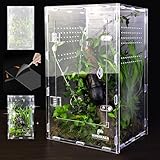
- 【Acrylic Reptile Terrarium】Our Large reptile cage measures 13.78" x 7.48" x 7.87", perfect size for kinds of baby reptiles or other small animals, providing sufficient room for reptiles pets to move around.
- 【360 Degree View】Our large breeding tank is all-round transparent, it's convenient to observe your slithery friends in the box and feed them in time. The top is clam-shell design, easy to open and close.
- 【Easy to Install】Tear off the protective film on the surface at first and the acrylic tarantula enclosure requires a simple installation , the rubber bands do well in holding everything together. It's also easy to disassemble when not use for saving storage space.
- 【Perfect Design】This reptile breeding box tarantula enclosure is designed with ventilation holes on the two sides, providing the reptiles with fresh air. The feeding hole on the top also makes you easier to add food. And the locking handle keeps your pet safe.
- 【Reptile Tank for Insects】Provide a perfect home and a warm habitat for your small reptiles, amphibians and invertebrates. Ideal for spiders, lizard, small turtles, snails, frogs, snakes, tarantulas, hermit crab or any other insects.
If the spider escapes, close the room, keep people and pets away, and use a container-and-card method only if you can do so without direct contact. For an uncertain or medically significant bite, seek urgent local medical advice and, where safe, preserve a clear photograph or the spider’s enclosure information for identification. Do not attempt to catch a potentially dangerous spider by hand.
Maintenance routine that minimizes stress
At every check
- Confirm the lid, seams, and ventilation are secure and unobstructed.
- Look for standing water, foul odor, widespread mold, or a collapsed burrow.
- Check that prey has not remained loose in a way that could injure the spider.
- Record feeding, visible activity, and any molt signs.
When conditions need correction
Make one change at a time. If the surface is drying while the identified species requires moisture, adjust the moisture method conservatively rather than soaking the whole column. If the substrate is saturated, improve balanced ventilation and allow gradual drying while protecting the burrow. If the enclosure is too small or structurally unsafe, prepare a replacement before moving the spider.
During a molt
A spider that stops feeding or seals itself in may be preparing to molt. Treat the burrow as off-limits, remove only clearly accessible hazards, and do not offer prey into a sealed retreat. Species-specific signs and timing vary, so avoid declaring a problem from inactivity alone.
Do these 3 things before closing this tab:
1Fix the driver behind crashes, sound loss and screen glitches2Repair Windows errors before they cause bigger problems3Scan for outdated or missing drivers - takes under a minuteCommon problems and how to respond
| What you see | Likely interpretation | Safer next step |
|---|---|---|
| No visible trapdoor | The species may make an open burrow or may have built out of view. | Confirm identification and observe the substrate without digging. |
| Spider stays underground | Burrowing is expected; visibility is not a health test. | Monitor enclosure security and condition, not display time. |
| Wet, collapsing substrate | Moisture exceeds the enclosure’s drainage and ventilation capacity. | Correct gradually; avoid flooding or a rushed full excavation. |
| Spider refuses several meals | Possible premolt, stress after rehousing, unsuitable prey, or a mismatch in conditions. | Review the identified species’ guidance and reduce disturbance. |
| Frequent escapes or lid gaps | The enclosure is not secure enough. | Move the enclosure to a safe room and repair or replace the lid before the next feeding. |
| Unidentified spider found indoors | Appearance alone may not distinguish a trapdoor from a medically important spider. | Keep distance and follow local public-safety guidance. |
A practical setup checklist
- Identify the spider: obtain the scientific name, life stage, and locality or habitat information.
- Select a secure container: choose a rigid, escape-resistant lid and ventilation appropriate to the species and climate.
- Prepare diggable substrate: cocopeat or coco-peat is used in the cited keeper and Cataxia guidance; adjust depth to the species rather than copying a universal number.
- Set moisture conservatively: aim for the identified species’ requirements, never waterlogged soil, and use the squeeze method only as the original keeper’s rough setup aid.
- Place the spider with minimal disturbance: allow it to choose its burrow location and do not excavate for visibility.
- Establish a feeding record: offer suitable prey, follow species- and age-appropriate frequency, and remove hazards without dismantling the retreat.
- Maintain quietly: inspect security and substrate condition, document changes, and rehouse only for a clear welfare or safety reason.
What the evidence can—and cannot—tell you
The strongest general facts here are natural-history observations: trapdoor spiders vary widely, not all make doors, and the Australian Museum reports a broad 5–20-year lifespan range. The enclosure dimensions, squeeze test, cricket preference, and anti-rehousing advice come from one keeper’s account, useful as practical experience but not a controlled husbandry study. The 60–90% humidity figure and once- or twice-weekly feeding schedule come from a Cataxia-specific care sheet and should remain attached to that species and context. No controlled comparison establishes one best enclosure, universal humidity, or universal feeding interval for the entire group.
That uncertainty is not a reason to improvise. It is a reason to identify the spider, copy the appropriate species guidance accurately, and make slow changes while protecting the burrow. A secure enclosure, suitable diggable substrate, balanced moisture and ventilation, correctly sized prey, and hands-off observation address the needs shared by many captive trapdoor spiders without pretending that one recipe fits every species.
Quick Recap
Product prices and availability are accurate as of the date/time indicated and are subject to change. Any price and availability information displayed on Amazon at the time of purchase will apply.





Leave a Reply