What’s actually slowing this PC down?
Pick the symptom - the matching free tool is one click away.
The safest arrangement is straightforward: a young child and a blind dog are either within arm’s reach of an attentive adult, or physically separated. A camera, baby monitor, or hearing the pair from another room cannot replace an adult who can intervene immediately. Use secure barriers whenever your attention must shift, keep the dog’s indoor map stable, teach predictable voice and touch cues, and block stairs and other hazards until the dog can navigate them reliably.
This plan protects the child from a startled or cornered dog and gives the dog a way to move, rest, eat, and retreat without being grabbed or surprised. If the vision loss is new, worsening, painful, or accompanied by anxiety or unusual behavior, arrange a veterinary examination rather than trying to solve the problem through forced contact.
As an Amazon Associate I earn from qualifying purchases.
Start with the non-negotiable safety rule
Never leave a young child alone with any dog, including a familiar, gentle dog and including a dog that cannot see. “Supervision” means an adult is close enough to watch both of them continuously and intervene at once. The American Academy of Pediatrics’ HealthyChildren guidance and the American Veterinary Medical Association’s bite-prevention advice both emphasize this standard.
Before cooking, answering the door, using the bathroom, taking a phone call, helping another child, or doing any task that divides your attention, separate the child and dog. Put one behind a securely closed door or a properly installed barrier before you turn away. The UK Department for Environment, Food & Rural Affairs (DEFRA) guidance is explicit that a monitor or camera is not a substitute for an adult physically present and able to intervene. Its legal provision beginning 1 November 2026 concerns banned-breed dogs and children under 12 in the UK; that legal scope does not automatically apply to every dog, child, or country. The practical supervision principle is useful much more broadly.
#1 Best Overall

- ✅ TESTED & TRUSTED BABY SAFETY GATE FOR OVER 30 YEARS: Parent-trusted baby safety product certified by the Baby Safety Alliance. Designed to support everyday baby proofing and help keep babies and toddlers safe at home.
- ❤️AMERICAN DESIGNED & FAMILY OWNED BABY GATE BRAND: Designed in the USA by parents, for parents. Regalo delivers dependable baby gates and baby safety products trusted by families for over 30 years.
- 🔒EXTRA WIDE BABY GATE FOR DOORWAYS & BOTTOM OF STAIRS: Expands to fit openings 29–38.5" wide and stands 30" tall. Ideal for bottom of stairs, hallways, and wide openings. FITS OPENINGS: 29–32" no extension, 35.5–38.5" with 6". DOES NOT FIT OPENINGS: 32–35.5".
- EASY SETUP WITH PRESSURE MOUNT DESIGN: ⚠️Install according to manufacturer’s instructions. ⚠️Wall cups must be used to keep the gate securely in place. ⚠️ To prevent falls, never use at the top of stairs.
- 🐾 CHILD & PET SAFE | PUERTA DE SEGURIDAD PARA BEBÉS Y MASCOTAS: Walk-through safety gate designed for babies ⚠️6–24 months and small to medium pets. Features a secure safety locking system for parent convenience.
Separate at predictable risk points
Use a barrier whenever the dog is sleeping, eating, drinking, ill, recovering from treatment, holding a valued toy, trying to move away, or showing signs of discomfort. A toddler’s quick movements, loud noises, reaching hands, or face-to-face contact can be frightening even when the dog has previously tolerated the child.
Give the dog an escape route
Every shared area should have a path to a quiet retreat that the child is not allowed to enter. A dog that can leave an interaction is less likely to feel trapped. Do not call the dog back into the child’s reach when it is attempting to retreat.
Draw a safe map of the home
A blind dog relies on memory, scent, touch, and sound. The safest home is not necessarily the one with the most equipment; it is the one whose layout is predictable and whose hazards are controlled.
| Area or hazard | Practical setup | Check before allowing free movement |
|---|---|---|
| Stairs | Install a secure gate at the top and bottom. Keep access blocked while the dog learns the layout. A rug or other tactile change before the first step can signal the transition. | The dog can identify the approach and use the stairs calmly under supervision; the child cannot open, climb, or reach through the gate. |
| Balconies, open landings, and drop-offs | Block access with a closed door or a barrier that prevents climbing and reach-through. | There is no gap under, over, or beside the barrier that permits a fall or escape. |
| Furniture and walkways | Keep routes clear and pad sharp corners where practical. Do not leave bags, toys, or laundry in the dog’s established paths. | The dog can walk from bed to water, food, door, and retreat without unexpected obstacles. |
| Food, water, and bed | Keep each item in a permanent location. Place resources where the child cannot approach them. | The child cannot grab the bowl, climb into the bed, or corner the dog while it is using a resource. |
| Exterior doors | Use a gate or a second closed door near exits to prevent a dash outside. | An adult can open the exterior door without the dog slipping past. |
| Small or fragile objects | Remove items the dog may knock over or the child may put in its mouth. Secure cords and unstable furniture. | Neither the dog nor child can pull an object down or gain access to a choking or toxic item. |
Change the layout slowly
AAHA guidance for blind and deaf pets recommends keeping furniture, bowls, beds, and other familiar objects in consistent positions. If you must move something, walk the dog through the changed area on leash, let it investigate, and use familiar cues. Repeatedly rearranging a room makes orientation harder and increases collision risk.
Mark transitions with touch
Colorado State University’s veterinary guidance describes a tactile floor change, such as a rug before stairs, as a useful warning that the surface or level is about to change. Choose a texture that lies flat, does not slide, and is distinct from the surrounding floor. Use the same principle at a doorway or the edge of a protected zone if your dog benefits from another consistent signal.
Rank #2
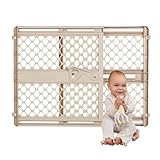
- PROVIDES PEACE OF MIND - The kids gate creates a secure barrier to help prevent access to stairs, bathrooms, kitchens, and other off-limit areas, so your little one can safely explore.
- ADJUSTABLE SAFETY GATE - This plastic child safety gate is adjustable, fits openings 26 to 42 inches wide, and is 26 inches tall. It is designed to be difficult for kids to climb. Our baby gate is perfect for stairs, doorways, hallways, and more.
- EASY TO INSTALL - Two installation options, pressure-mounted baby gate for a quick setup or hardware-mounted for use as a stairway safety gate that swings open. All necessary hardware is included. For stairway use, hardware mounting is required.
- COMFORTABLE HANDLE - Our baby gate for doorways features an ergonomic, easy-press handle that allows smooth opening and secure locking in seconds, even with one hand.
- MADE IN USA - Our JPMA-certified baby gate brings peace of mind to the entire family. We stand for the highest safety, quality, and operational standards while creating the ideal collection of products for babies ages 6-24 months. Proudly made in the USA!
Choose and test physical separation
A baby safety gate is often the most practical way to separate a child and dog while preserving visibility and airflow. Veterinary and government guidance also supports a closed door or a separate room. The right choice depends on the opening, the child’s abilities, and whether the dog can push, climb, or squeeze through the setup.
| Setup | Useful when | Limitations to address |
|---|---|---|
| Closed door | You need complete prevention of contact, such as during meals, naps, or an unsupervised interval. | The dog still needs water, comfortable temperature, bedding, and a safe retreat. Do not shut the dog away in an unfamiliar or stressful space. |
| Pressure-mounted or hardware-mounted gate | You need a visible boundary at a doorway or stair opening. | Check that it cannot be pushed over, climbed, opened by the child, or bypassed at the sides, top, or bottom. Hardware mounting is generally preferable where a fall is possible. |
| Separate room or child-free zone | The dog needs a reliable resting area while the child plays elsewhere. | The room must remain calm and accessible to the dog, with no hazards or entrapment points. |
| Crate or pen | The dog already chooses and tolerates it as a comfortable space. | Do not introduce confinement as an emergency solution or use it as punishment. It does not replace exercise, toilet access, or a broader management plan. |
Run a reach-through inspection
Stand on both sides of every barrier and look for gaps a child’s hand or the dog’s muzzle can reach through. Check the space underneath, around hinges, and beside the wall. A barrier is not adequate if the child can pass a hand, toy, or food through to the dog, or if the dog can nose its way around the edge. Recheck after installation and whenever the child grows stronger or more mobile.
Recommended Free Tools
Keep essential resources on the dog’s side
The separated area should contain familiar bedding and access to water, and it should not force the dog to pass the child to reach those resources. If the dog’s bed is in a high-traffic location, move it gradually to a quieter place before the baby or toddler begins using the room.
Teach a predictable communication system
A blind dog can learn household routines, but it cannot see a hand signal or a child approaching from behind. Use the same words, tone, and gentle tactile signals every time.
Announce your approach
Say the dog’s name or use a familiar phrase before touching it, waking it, clipping on a leash, or entering its resting area. A light touch on the shoulder can follow the verbal cue once the dog is awake. Do not allow a toddler to rush up, hug, climb on, or wake the dog.
Rank #3
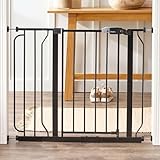
- ✅TESTED & TRUSTED BABY SAFETY GATE FOR OVER 30 YEARS: Parent-trusted safety gate certified by the Baby Safety Alliance.
- ❤️AMERICAN DESIGNED & FAMILY OWNED BABY GATE BRAND: Designed in the USA by parents, for parents. Regalo is a family-owned, US-based brand delivering trusted baby safety gates and child safety products for over 30 years.
- 🔒EXTRA WIDE BABY GATE FOR DOORWAYS & BOTTOM OF STAIRS: Expands to fit openings 29–38.5" wide and stands 30". Ideal for bottom of stairs, hallways, and doorways. FITS OPENINGS: 29–32" no extension, 35.5–38.5" with 6". DOES NOT FIT OPENINGS: 32–35.5".
- EASY SETUP WITH PRESSURE MOUNT DESIGN: ⚠️Install according to manufacturer’s instructions. ⚠️Wall cups must be used to keep the gate securely in place. ⚠️ To prevent falls, never use at the top of stairs.
- 🐾CHILD & PET SAFE | PUERTA DE SEGURIDAD PARA BEBÉS Y MASCOTAS: Walk-through safety gate designed for babies 6–24 months and small to medium pets. Features a secure safety locking system for parent convenience.
Build cues with positive reinforcement
Teach cues such as “come,” “step,” “wait,” “bed,” and a release word in short sessions. Pair the cue with a reward when the dog responds; training treats are a support, not a substitute for barriers and supervision. Keep every caregiver’s wording consistent. A tactile cue should be gentle, repeatable, and never used to startle or punish.
Teach the child a simple rule set
Use a few concrete rules that can be repeated as the child develops:
- Pet only when an adult says it is safe and the dog is awake and relaxed.
- Keep hands away from the dog’s food, water, toys, and bed.
- Never pull ears, tail, fur, collar, or harness.
- Keep your face away from the dog’s face and do not climb onto the dog.
- Stop and call an adult if the dog walks away, stiffens, growls, or seems worried.
A toddler may understand a rule and still be unable to follow it reliably. The adult remains responsible for positioning and separation.
Plan supervision around real life
Supervision fails most often during ordinary interruptions, not dramatic events. Decide in advance where the dog goes when your hands or eyes are occupied.
- Identify the interruption. Cooking, carrying a hot drink, opening the front door, bathing the child, or answering a delivery all count.
- Call the dog to its safe zone before attention shifts. Use the familiar cue and reward calm movement if appropriate.
- Place the child on the other side of the barrier. Do not rely on a high chair, playpen, or leash alone if the dog can still make contact.
- Finish the task before reopening access. Reunite them only when an adult can watch both continuously.
Control greetings and arrivals
Visitors, children’s friends, and delivery workers can create sudden noise and open doors. Secure the dog before the door opens. Let the dog investigate visitors by scent and sound at its own pace; do not allow a guest or child to reach over the dog’s head.
The Tool Desk
Outbyte PC Repair FREEClear out junk files and repair common Windows errorsFree Scan →Outbyte Driver Updater FREEScan for outdated or missing drivers - takes under a minuteDriver Scan →Rank #4

- Auto-Close Baby Gate: Designed with an intelligent self-closing system, this dog gate automatically swings shut at angle under 90°, providing reliable protection against accidental openings
- Dual-Lock Safety: This baby gate for stairs features a secure dual-lock mechanism, ensuring curious children and pets stay safely contained while allowing adults to open it effortlessly with one hand. Parents can pass through the baby gates for doorways with ease even while carrying groceries or a baby
- Tool-Free Installation: The pressure-mounted dog gate indoor provides a secure hold while protecting your walls or furniture from damage, ideal for renters and hassle-free setups. The dog gates for doorways offer a quick, temporary solution that's both safe and convenient. The attached sticky pads are provided to keep the wall cups in place, so you don't need to drill
- Stroller-Friendly Baby Gate for Stairs: Features an anti-stumble pedal, ensuring a seamless transition between the pet gate and the floor. This design reduces the risk of tripping and allows strollers to roll through the child gate effortlessly, making the pressure mounted baby gate ideal for families with elderly members and young children
- Adjustable Pet Gate Indoor: With an adjustable width from 29 to 40 inches, the baby gate with door fits most standard doorways and stair openings, creating a safety environment for your little ones and furry friends while giving you peace of mind. Please measure the width of the openings you want to place the child gate before installation
Manage play
Keep child toys and dog toys separate. Avoid chase games, wrestling, or games that encourage grabbing near the dog’s face. A calm activity such as the child looking at a book while the dog rests behind a barrier is safer than trying to make them interact continuously.
Protect outdoor movement and exits
Outside an enclosed, familiar fence, use a leash. AAHA and Veterinary Partner/VIN guidance emphasize leash control and secure boundaries because a blind dog may not see a vehicle, drop-off, unfamiliar animal, or open gate. A small, secure potty area can reduce navigation demands while the dog learns a new yard.
Survey the yard
Block ponds, pools, compost, garden chemicals, sharp edges, and gaps under fencing. Keep the route from the door to the potty area clear and consistent. Walk the dog through it on leash until it can follow the route confidently.
Prevent door dashes
Use the interior gate or a closed room before opening an exterior door. A verbal “wait” cue helps, but it is not a physical safeguard. Check that visitors close the gate behind them.
Free tools Windows power users keep installed
One-click scans. No signup required.
Recognize discomfort before it becomes a bite
Separate the pair at the first sign that the dog needs space. Possible warning behaviors include turning away, repeatedly moving off, freezing, stiffening, trembling, hiding, panting unrelated to heat, lip licking, growling, snapping, persistent searching, or fixation on the child. A growl is information; do not punish it or force the dog to remain near the child.
Best Value

- Space-Saving Baby Gate Retractable: Cideny 34" tall pet gate extends up to 55" wide to suit various spaces. When not in use, the mesh fully retracts, keeping walkways clear and saving space without disrupting your home's style
- Child Safety Lock with One Hand Operation: Retractable dog gate features a secure double lock that’s tough for toddlers but easy for adults. Designed for busy parents, easily open or close with one hand while holding a baby, groceries, or multitasking at home
- Upgraded Safety Design, Tighter and Trip-Free: Baby gate for stairs tightly stretched after locking, offering better support for babies. Unlike other gates with bottom rails, Cideny stair gate is trip-free, safer for toddlers learning to walk and parents rushing through
- All-Purpose Mesh Safety Child Gate: Child gates for doorways, stairways, hallways, and indoor or outdoor spaces. Easily fits kitchens, living rooms, patios, and more, providing a safe, stylish barrier to keep babies and pets secure throughout your home
- Hassle-Free and Baseboard-Friendly Installation: The lower brackets of retractable gate sit 6.5" above the floor, so you can install the dog gate for stairs without drilling into baseboards to protect your trim. All accessories for installation included makes installation quick and effortless
When to call a veterinarian
Arrange veterinary care for new or worsening vision loss, eye pain, disorientation, anxiety, aggression, or any unusual behavior around the child. An eye specialist may be appropriate for a new visual problem. UC Davis School of Veterinary Medicine advises seeking professional help when behavior concerns arise, and AAHA recommends veterinary input for blind-pet accommodations. A veterinarian or veterinary behaviorist can assess pain, sensory change, and a behavior plan. Until the appointment, use complete separation whenever you cannot provide close supervision.
Do not test the dog
Do not place the child closer to “see what happens,” take away a valued item to prove tolerance, or encourage hugging as a bonding exercise. Safety improves through predictable distance, choice, and gradual professional guidance, not forced exposure.
Consider optional aids carefully
Some adaptations may help an individual dog, but none removes the need for management.
Quick wins for a faster PC:
Repair Windows errors before they cause bigger problemsFix Now →Fix the driver behind crashes, sound loss and screen glitchesFind Drivers →- Furniture edge guards: AKC lists padding sharp corners as a practical way to reduce injury when a dog is learning the home. Install guards securely and inspect them for pieces the child or dog could pull off.
- Blind-dog halo collar: AAHA mentions a halo-style device as a possible accommodation that can warn of obstacles. Ask your veterinarian whether your dog can wear one comfortably and safely; it is not a substitute for blocking stairs, balconies, or exits.
- Sensory toys and familiar bedding: These can make the retreat inviting, provided they do not become items the child can take or the dog must defend.
- Treats: Use them to reinforce calm responses to cues and movement through the home. Store them out of the child’s reach and never let a child hand-feed a dog that is tense or protective.
Use a maintenance checklist
Reassess the arrangement as the child becomes more mobile and as the dog’s vision or health changes.
- Are all gates still firmly attached, high enough, and free of reach-through gaps?
- Can the child open, climb, push, or move any barrier?
- Can the dog reach food, water, bed, and retreat without passing through the child’s play area?
- Have furniture, rugs, bowls, or toys moved from the dog’s established routes?
- Are stairs, balconies, pools, and exterior doors blocked when not actively supervised?
- Does every caregiver know the same approach cue, separation plan, and child rules?
- Has the dog shown any new pain, fear, disorientation, guarding, or attempts to escape?
Update the plan after a move, renovation, new baby milestone, illness, medication change, or episode in which either the child or dog was startled. A short written plan on the refrigerator can help every caregiver act consistently.
What a safe routine looks like
In the morning, take the dog through its familiar route to water and outdoors before the child begins active play. During play, keep the dog either beside a relaxed adult or behind its barrier with its retreat available. Before meals, naps, visitors, or chores, separate them first. In the evening, keep pathways clear, announce every approach, and settle the dog in its usual resting place. This routine gives the child clear boundaries and gives the dog repeated, nonthreatening information about what happens next.
The central decision is always the same: if an adult cannot watch closely enough to intervene, the dog and young child must not have physical access to each other. Stable surroundings, consistent cues, secure barriers, and prompt veterinary help make that rule workable while allowing both to share a home.
Quick Recap
Product prices and availability are accurate as of the date/time indicated and are subject to change. Any price and availability information displayed on Amazon at the time of purchase will apply.




