Cat resource guarding is a description of threatening or aggressive behavior around something a cat values—not a diagnosis or proof of a single motive. Pain or illness, fear, competition, and the home environment can all contribute. Arrange a veterinary check, prevent further conflict with safe separation, and use gradual, reward-based steps; seek veterinary behavior support if the aggression is severe or hard to manage.
What cat resource guarding means—and what it does not
A cat may hiss, swat, chase, or bite when another animal approaches food, a resting place, territory, or another valued resource. “Resource guarding” names the behavior around that resource; it does not establish why the cat is doing it. Veterinary behavior guidance treats aggression as an observable behavior that can have several motivations, sometimes at once. Food or territory competition and attempts to escape a threatening situation are among the possibilities. Avoid labels such as “dominant” or “greedy” as explanations: they do not identify the cause. VCA’s overview of aggression notes, “In animals, aggressive behaviors are a means of communication.”
As an Amazon Associate I earn from qualifying purchases.
Watch the situation around the behavior: what the other cat was doing, where the interaction happened, whether food or a resting spot was involved, and whether the cat could retreat. Those details can help your veterinarian assess likely contributors, but body language alone cannot diagnose motive.
Free tools Windows power users keep installed
One-click scans. No signup required.
Why a cat may guard food or another resource
Medical problems or pain
A sudden change or escalation in aggression warrants a veterinary examination before you treat it as a training problem. Pain can make a cat less tolerant of touch or movement, and medical contributors can include hyperthyroidism, osteoarthritis, dental disease, or central nervous system problems. Tell the veterinarian when the behavior began and whether you have noticed changes in eating, movement, handling tolerance, or other behavior. Cornell’s guidance on feline aggression advises ruling out medical causes before attempting behavior or environmental changes.
#1 Best Overall

- Interactive Level 2 Cat Puzzle Toy: 13" x 9.5" cat puzzle feeder that triggers hunting and foraging instincts. Level 2 adjustable difficulty for beginner to advanced cats.
- Indoor Cat Enrichment: Keeps indoor cats engaged, minimizes boredom, and delivers rewarding treat-finding play that supports daily stimulation.
- Level 2 Slow Feeder Puzzle: Holds 1/4 cup food or treats across 16 compartments. Promotes slower eating and positive feeding habits with adjustable challenge.
- Multiple Ways to Play (Level 2 Adjustable): Easy mode: treats in base compartments only. Hard mode: add treats into sliding cups via top holes so cats must push and move pieces to release rewards.
- Safe, Durable & Easy Clean: No removable parts. Made without BPA, PVC, lead, or phthalates. Wipes clean quickly for everyday use.
Competition, fear, and the surrounding environment
Another cat’s approach may create competition or make a cat feel unsafe, especially if access to food or a resting place is difficult to control. Feeding conditions can add stress: Cornell identifies busy areas, noise, other animals, dirty food containers, and nearby litter boxes as factors that may deter a cat from eating. Consider whether each cat can reach its food without passing close to another animal, and whether the feeding place is quiet and comfortable. See Cornell’s feeding guidance.
How to read warning signs and prevent injury
Possible signs of aggression or fear include dilated pupils, ears flattened backward, an erect tail with raised hair, an arched back, flattened whiskers, a tucked tail, or a low posture. These cues need context; none proves a particular cause. Give the cat space rather than approaching or reaching toward it.
Rank #2

- Interactive Level 3 Cat Puzzle Toy: Cat puzzle feeder that triggers hunting and foraging instincts. Adjustable difficulty lets beginner cats start with an easier setup while advanced cats take on the full Level 3 challenge.
- Indoor Cat Enrichment: Keeps indoor cats engaged, minimizes boredom, and delivers rewarding treat-finding play that supports daily stimulation.
- Level 3 Slow Feeder Puzzle: Holds 1/4 cup food or treats across 14 base treat compartments plus 5 treat-filled pegs. Promotes slower eating and positive feeding habits with adjustable challenge.
- Adjustable Difficulty: Easier mode: place treats in base compartments and under spinning wheel, leave raindrops uncovered. Harder mode: also place treats inside pegs through top holes, cats must swivel the raindrops and slide the pegs to release rewards.
- Safe, Durable & Easy Clean: No removable parts. Made from a durable wood-and-plastic composite material; no BPA, PVC, or phthalates. Hand wash with warm soapy water and dry before refilling.
- If cats are fighting, never put your hand or another body part between them.
- Use a door or suitable barrier to separate cats safely. A gate or panel may help in some homes, but it is only a separation aid—not treatment—and must work for the cats and layout.
- Do not physically punish an aggressive cat. Punishment can increase fear or anxiety and worsen aggression.
For broader safety guidance, see Cornell’s advice on aggression and safe handling.
The Tool Desk
Outbyte PC Repair FREERepair Windows errors before they cause bigger problemsFix Now →Outbyte Driver Updater FREEFix the driver behind crashes, sound loss and screen glitchesFind Drivers →What to do when a cat guards food or attacks another cat
- Book a veterinary examination. Ask the veterinarian to assess medical causes before beginning a behavior plan. Describe the incidents and any accompanying changes in health or behavior.
- Stop repeated confrontations. Separate the cats when needed. Give each independent access to food, water, litter, resting places, and other important resources; separate rooms can be appropriate when shared access leads to conflict.
- Make feeding less stressful. Choose quiet locations and arrange bowls so cats do not have to compete or pass close to one another. Keep food containers clean and avoid placing food near litter boxes where possible.
- Reduce exposure to triggers. If a particular sight, sound, or encounter sets off aggression, prevent or limit exposure while you work on a plan. VCA describes avoiding the arousing stimulus as a practical initial prevention step in its guidance on redirected aggression.
- If reintroducing cats, proceed gradually and supervise. Use food rewards only at a distance where both cats stay relaxed enough to eat. If either will not eat, increase the distance or end the session and separate them. VCA’s guidance on treating aggression between household cats covers separation and gradual reintroduction.
- Be cautious with food-filled toys. A food puzzle is not automatically suitable for a cat that guards food: some pets guard food-filled toys. Avoid introducing one where it could trigger aggression, and ask your veterinarian for advice. See VCA’s guidance on enrichment and activity toys.
Choosing a safe setup for multiple cats
Choose a management arrangement by whether it prevents contact, gives each cat independent access to resources, keeps both cats calm enough to eat, and can be supervised and adjusted gradually.
Rank #3

- PUZZLE MASTER: Turn snack time into playtime with this cat food puzzle that challenges your furry friend's brain and keeps them entertained as they hunt for treats
- LEVEL UP: This cat puzzle features five different compartments and difficulty levels that keep clever companions challenged and coming back for more
- SLOW & STEADY: This puzzle feeder turns mealtime into a fun challenge, encouraging slower eating habits and helping manage your cat's weight naturally
- STAYS PUT: Non-slip rubber pads keep this food puzzle securely in place while your cat explores and searches for treats without chasing it across the floor
- EASY CARE: After your cat's adventure with this treat dispenser, cleanup is quick and easy with handwashing or top rack dishwasher placement
| Arrangement | When it may help | What to check |
|---|---|---|
| Separate rooms with closed doors | When cats cannot share space or a barrier does not prevent conflict. | Each cat needs access to food, water, litter, and a resting place in its own area. |
| Separate feeding locations | When the main problem is competition or stress around meals. | Make sure neither cat has to pass the other to reach its bowl. |
| Gate or panel | When a barrier provides useful separation in that home. | Check that the cats remain safe and relaxed; a barrier is optional, not treatment. |
Veterinary guidance discusses barriers as possible separation aids but does not endorse a particular product. If a setup cannot prevent contact or keep both cats calm, use a more reliable separation arrangement and ask your veterinarian for help planning the next steps.
Independent reader supportYour contribution helps us test, update, and keep practical guides available for everyone.When to seek veterinary behavior support
Ask your veterinarian about referral to a veterinary behaviorist if aggression causes injury, is severe, persists despite safe management, or is difficult to handle without risking harm. A specialist can help assess the behavior and shape a gradual plan for the cats and household. Cornell’s aggression guidance and VCA’s household-cat reintroduction guidance describe veterinary support as part of managing difficult cases.
Quick Recap
Rank #4
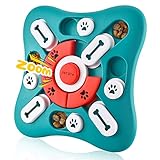
- 【PRODUCT SIZE】10 inch*10 inch*1.3 inch.
- 【3 WAYS TO PLAY, UPGRADE SLOW FEEDER】Our dog mental stimulation toys have a unique squeak button in the middle, which make it easier to attract the attention of dogs and cats. Three different difficulty designs and the 16-hole dog treat dispenser design maximize slow feeding time, even beyond 20 minutes.
- 【FUNNY STIMULATING TOYS】All kinds of dogs and cats love the puzzle game of Spin & Slide and the Seek & Hide with their smell sense and paw skills to find food. Combining circular orbit sliding game and linear orbit sliding game, smart dog and cat must move the slider correctly to get the food reward hidden in the maze.
- 【NON-REMOVABLE PARTS DOG PUZZLE】Our dog treat puzzle is made of non-toxic materials, very durable and suitable for pets to play for a long time. This dog toy has no removable parts because the design has built-in play parts that fold tightly and won't fall off easily.
- 【ANTI-SLIP & EASY TO CLEAN】: The four corners of the bottom are equipped with four anti-skid pads, which can be well fixed during the dog's slow food process; It is easy to clean, also dishwasher safe.
Product prices and availability are accurate as of the date/time indicated and are subject to change. Any price and availability information displayed on Amazon at the time of purchase will apply.




