
The safest way to pet a cat is to make touch brief, gentle, and optional. Start around the head, cheeks, or neck, move with the coat, pause often, and let the cat decide whether to continue or leave. A belly-up pose, purring, or sitting beside you does not automatically mean every kind of touch is welcome. Your cat’s posture, movement, and response to your hand matter more than any universal list of favorite spots.
Where cats commonly enjoy being petted
Many cats prefer gentle contact around the head and neck, particularly areas associated with facial scent glands. In practical terms, that often means the forehead, cheeks, chin, and sides of the neck. The 2022 AAFP/ISFM Cat Friendly Veterinary Interaction Guidelines say, “Cats are most comfortable when being petted or massaged in the direction of their fur.” Use that as a starting point, not a promise about an individual cat.
As an Amazon Associate I earn from qualifying purchases.
Keep your hand light and follow the coat rather than rubbing against it. A short stroke over the head or cheek is easier for a cat to accept than a long, sweeping motion over the entire body. Pause after one or two strokes. If the cat stays engaged, you can offer another brief stroke; if it shifts away, stiffens, or monitors your hand, stop.
The abdomen and the area immediately before the tail base are commonly disliked touch zones. Some cats tolerate them, but tolerance has to be demonstrated by that cat in that moment. Never use a general rule about “favorite spots” to override a cat that is trying to end contact.
#1 Best Overall

- All - in - One Grooming Solution: These dog grooming gloves and cat grooming gloves are a must - have. The finger - like design with silicone nubs makes them perfect for reaching deep into the undercoats, similar to a deshedding dog brush or shedding brush for dog hair. Use them as dog washing gloves, dog bath gloves, or a dog shampoo brush, or cat gloves for grooming during bath time for a thorough clean.
- Upgraded Comfort & Performance: Featuring 260 premium silicone nubs, these gloves offer a hand - like massage experience. Whether it's for a dog or a cat, they are highly effective in deshedding, better than many dog brushes for shedding. Ideal for pet grooming lovers.
- Easy to use: This pet grooming glove brush comes with an adjustable wristband that allows for easy adjustment of palm size for a comfortable grip and perfect fit. Compared to regular pet brushes, it can easily and quickly remove pet hair.
- Skin friendly: Our pet groomimg gloves suitable for long, short and curly haired dogs, cats, horses and other pets for quick, gentle and effective grooming; The lost hair sticks to the glove and can be easily peeled and thrown away without any substances that may cause skin damage; Soft silicone ensures gentle massage and combing without scratching the skin;
- What You Get – Every order comes complete with 2-Pack pet grooming glove
How to tell whether a cat wants contact
Consent in a petting interaction is an ongoing process. A cat can welcome one stroke and reject the next, or accept touch from one person but not another. Look at the whole animal rather than one sound or gesture.
Signs that support trying a brief stroke
- The cat approaches your hand instead of retreating from it.
- Its body appears loose rather than cowering, flattened, or rigid.
- It remains near you after a pause and voluntarily repositions for more contact.
- It can move away easily and is not trapped, held down, or cornered.
These are invitations to test a small amount of touch, not blanket permission. Offer your hand, allow the cat to investigate, and begin with a single light stroke. Then pause again.
Signs to stop immediately
- The cat moves away, turns away, or repeatedly watches the approaching hand.
- The body becomes tense, low, flattened, or cowering.
- The cat swats, bites, hisses, growls, or makes a sudden defensive movement.
- The cat’s tolerance is clearly declining even if it has not yet shown aggression.
When a cat leaves, the interaction is over. The AAFP and ISFM Feline Environmental Needs Guidelines state: “When a cat ends an interaction by moving away, do not force further contact.” Do not follow, grab, block, or coax the cat back for another stroke.
Recommended Free Tools
A cat-led petting method, step by step
- Set up an exit. Sit or stand where the cat can walk away. Do not corner it between your body and furniture, and do not restrain it for a petting session.
- Approach slowly. Move at an easy pace and avoid reaching over the cat’s head. A hand presented low and to the side is less threatening than a hand descending from above.
- Offer a hand to investigate. Hold still and let the cat decide whether to come closer. Do not push your fingers toward its face if it does not approach.
- Begin in a predictable area. If the cat approaches and appears relaxed, try one gentle stroke over the forehead, cheek, or neck, following the direction of the fur.
- Pause. Remove your hand for a moment. Watch whether the cat stays engaged, moves toward you, or leaves. The pause prevents you from missing a subtle request for space.
- Repeat only while the cat participates. Keep strokes short and light. Allow the cat to change position rather than pursuing a preferred angle or body part.
- End before tension builds. A successful interaction can be only a few strokes. Stopping while the cat is still comfortable makes it easier to respect the next request for contact.
This method is a practical synthesis of feline-handling guidance, not a guarantee that every cat will accept the same sequence. A familiar cat may want touch only at certain times, from certain people, or for a particular duration.
Why a cat may bite or swat during petting
Petting-related aggression has more than one possible explanation. Cornell’s Feline Health Center describes biting or swatting during contact as potentially linked to overstimulation or to a cat attempting to control when the interaction ends. The behavior is communication that the current contact must stop, not an invitation to hold the cat still and continue.
Rank #2

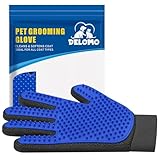
- UPGRADE VERSION: With enhanced 255 silicone grooming tips, mimics the touch of your hand for a soft and relaxing massage; This flexible, slip-on grooming gloves allow you to brush away dirt and loose hair from dogs and cats
- Pet Hair Removal Glove: Perfect for long, short and curly haired dogs, cats, horses, and other pets, grooming the hair quickly, gently and effectively; The shedding hair sticks to the glove, making it easy to peel and throw hair away
- Bath Brush: Bathe the pets with this glove, which will clean the pet hair easily and give your pets a gentle massage without hurting their skin; Five finger design allows you to groom hard-to-reach places like tail or face
- Skin-friendly: Free from any materials which could cause skin damage; Soft silicone ensure gentle massage and grooming without painful removing of fur or scratching the skin; One size fits all, it has adjustable wrist strap for a comfortable fit
- What You Get: 2 blue DELOMO pet hair removal glove (1 left-hand and 1 right-hand; The left-hand glove is customized for left-hander)
What to do after a warning or bite
- Stop touching as soon as aggression appears.
- Keep your hands away and give the cat a cooling-down period.
- Do not punish, yell, chase, or physically restrain the cat.
- Think back to the preceding strokes, location, speed, and duration so you can offer less contact next time.
If you try again later, return to one or two light strokes in a preferred head or neck area and pause. Cornell notes that a small food treat can reward tolerance of brief, light stroking without aggression. The treat should reinforce a cat’s voluntary, comfortable participation; it must never be used to lure the cat into unwanted touching or prevent it from leaving.
Why rolling onto the back does not necessarily mean “rub my belly”
A cat may roll over to stretch, greet you, play, expose scent glands, or display a defensive posture. The position alone does not establish that abdominal touch is welcome. The abdomen is a vulnerable area, and many cats react badly when a hand moves there even after they have rolled onto their backs.
Free tools Windows power users keep installed
One-click scans. No signup required.
Read the movement that follows. If the cat remains loose and actively guides its head or cheek toward your hand, keep contact in those areas instead. If it grabs your hand, kicks, bites, stiffens, or turns away, withdraw immediately. Do not test the belly simply because it is visible.
Handling the tail-base area
The area just before the tail base is another commonly disliked zone. Individual cats differ: one may tolerate a brief touch there, while another may react instantly. Treat it as a high-caution area rather than a standard destination for your hand.
If a cat clearly seeks contact in that location, use the lightest possible touch, pause frequently, and stop at the first sign of tension. A cat’s history, pain level, age, and current arousal can change what it accepts from one day to the next.
Rank #3
- Gentle Grooming Massage – Brush away mats, light tangles and loose undercoat with a soft, flexible groomer that turns petting into an effective deshedding tool
- Pet Hair Removal Glove – Removing hair not only helps reduce flying hair in the air, it stimulates skin oils and improves coat softness and shine
- Versatile Wet or Dry Use – Great for dogs and cats with short, medium, curly, or long coats, this pet hair removal glove can be used daily or during bath time for an even deeper clean
- Adjustable Comfort Fit – Flexible and breathable, our cat and dog brush fits most pet owners thanks to the adjustable wrist strap; better yet, it’s machine washable
- What You Get – Every order comes complete with 1 right-hand pet grooming glove
Petting without overstimulation
Overstimulation can develop gradually. A cat may initially enjoy contact and then become unable to tolerate another stroke. The safest response is to use shorter sessions, slower movements, and regular pauses rather than trying to discover a maximum tolerance point.
What’s actually slowing this PC down?
Pick the symptom - the matching free tool is one click away.
A simple pacing pattern
- Give one or two strokes.
- Pause with your hand still.
- Check whether the cat remains voluntarily near you.
- Continue only if its posture and movement remain comfortable.
- Finish at the first reliable sign that tolerance is dropping.
Do not assume that purring proves relaxation. Cats can purr in different emotional states, so interpret the sound together with posture and movement. Likewise, a cat’s choice to sit beside you means it wants proximity, not necessarily continuous touching.
Cat-led contact versus forced contact
Feline-handling guidelines favor giving cats choice and avoiding unnecessary restraint. The comparison below describes the interaction design, not a controlled household trial showing a numerical success rate.
| Interaction approach | Cat’s control | What you can observe | Ability to disengage |
|---|---|---|---|
| Brief, cat-led touch with pauses | The cat chooses whether to approach, remain, reposition, or leave. | You can respond to subtle tension before it becomes a bite or swat. | Clear and immediate; the cat has an open route away. |
| Prolonged or forced contact | The person determines duration, location, or restraint. | Early discomfort may be missed or suppressed until a sudden defensive response. | Limited if the cat is held, blocked, or followed. |
Choice does not mean a cat will always choose touch. It means the interaction remains safe and intelligible when the answer is “not now.”
Why individual cats respond differently
There is no universal “cats like petting” rule. The AAFP and ISFM environmental-needs guidance emphasizes individual differences in interest in petting and other human interactions. A cat’s preference can vary with the person, location, time of day, recent handling, stress level, health, and whether other animals or unfamiliar people are nearby.
Rank #4

- Works on Dogs, Cats, Horses, and More - Whether you're dealing with hair removal, bathing, or massaging these gloves are flexible enough for all your pet care needs. Gentle bristles allow for an effective grooming experience without causing uncomfortable friction. No hair type is a challenge for these grooming gloves, easily handling short, medium, long, and coarse fur with equal efficiency
- The Original Patented Pet Grooming Glove - Groom your pet in comfort with our lightweight gloves, designed with rubber nodules for soothing massages mimicking the gentle touch of flexible bristles. Built to suit all pet personalities & tough enough to withstand baths, playful nibbles, and lots of love!
- More than Just a Hair Remover - The scrubbing nodules work to stimulate circulation and distribute natural oils, promoting a healthy skin and coat for your pet! The dual purpose of the gloves allows you to keep your hands dry, clean, and protected while providing your pet with a professional grooming experience
- Durable & Easy to Clean - Built to last, these grooming gloves are highly durable, ensuring they withstand heavy grooming and bathing conditions with ease. Simply rub your gloved hands together and the pet hair falls right off. When finished grooming, rinse the gloves off with water and air dry or throw them in the washing machine for quick and easy wash
- Paws Down, Pets Love It - Our customers find that the grooming gloves are a great tool for scrubbing clean during washing, but also great for de-shedding and waterless massaging with the non-abrasive flexible nodules on the fingers and palms. So many of our small and large furry friends get excited to see the gloves for the one-on-one time as a special treat
Use patterns you observe with that cat. If the cat repeatedly approaches for cheek strokes but leaves when the hand travels down its back, respect that boundary. If it accepts touch in a quiet room but not during a noisy gathering, change the setting rather than assuming the cat has become inconsistent.
Independent reader supportYour contribution helps us test, update, and keep practical guides available for everyone.Common mistakes and better alternatives
Mistake: reaching over a cat that has not approached
Better: present a still hand and let the cat close the distance. If it does not, leave it alone.
Mistake: treating purring as automatic permission
Better: check posture, movement, and whether the cat remains voluntarily engaged after each pause.
Mistake: rubbing the belly because the cat rolled over
Better: keep to the head and neck unless that individual cat has repeatedly and clearly welcomed another area.
Quick wins for a faster PC:
Repair Windows errors before they cause bigger problemsFix Now →Fix the driver behind crashes, sound loss and screen glitchesFind Drivers →Clear out junk files and repair common Windows errorsFree Scan →Mistake: continuing after a warning signal
Better: stop at tension, withdrawal, hand-monitoring, swatting, or biting. Give space and try a shorter interaction another time only if the cat initiates.
Best Value

- Pet hair remover glove:With enhanced 259 silicone grooming tips;Enhanced five-finger design for a soft and relaxing massage;Fits all hands with the adjustable wrist strap;Machine washable
- Skin-friendly:Pet grooming gloves are gentle;clean your pet hair easily and give your pets a gentle massage without hurting their skin;Your pets will enjoy it very much
- Fits all hands:The dog glove has adjustable wrist strap for a comfortable fit;one pair of pet gloves;For left and right hands
- Breathable mesh:The back of the pet grooming glove has a soft mesh design,good ventilation;You will not feel hot
- Suitable for all types of pets:Perfect for long;short and curly haired dogs;cats;horses;and other pets;grooming the hair quickly;gently and effectively
Mistake: using treats to override reluctance
Better: use a small food reward only after the cat voluntarily tolerates a brief, light stroke. The cat must remain free to stop.
When a change in tolerance needs veterinary attention
A sudden or persistent change in a cat’s response to touch can have a health component, especially if it appears alongside changes in appetite, mobility, grooming, sleep, elimination, or general behavior. General behavior guidance cannot diagnose an individual cat. Arrange veterinary advice when aggression is sudden, escalating, unusually intense, or accompanied by other health changes.
Until the cat has been assessed, avoid pressing on or repeatedly testing the area that triggers a reaction. Give the cat a quiet way to avoid contact and handle it only when necessary for safety or care.
Do these 3 things before closing this tab:
1Scan for outdated or missing drivers - takes under a minute2Repair Windows errors before they cause bigger problems3Fix the driver behind crashes, sound loss and screen glitchesA practical checklist for every petting session
- Can the cat leave freely?
- Did you approach slowly without reaching over or cornering it?
- Did the cat choose to investigate your hand?
- Did you begin with a brief stroke around the head, cheek, or neck?
- Did you move with the fur and pause after a stroke or two?
- Did you stop when the cat moved away, became tense, or showed aggression?
- Are you treating this cat’s preferences as individual rather than assuming all cats like the same contact?
Good petting is not measured by how long you can keep your hand on a cat. It is measured by whether the cat can communicate, remain comfortable, and end the interaction without being forced.
Quick Recap
Product prices and availability are accurate as of the date/time indicated and are subject to change. Any price and availability information displayed on Amazon at the time of purchase will apply.





Leave a Reply