Free tools Windows power users keep installed
One-click scans. No signup required.
For natural-behavior photos, let the animal set the distance: move slowly, stay quiet, and back off if it reacts. Use a close-focusing macro lens for insects when it is safe to work nearby; photograph wary, mobile, or potentially dangerous wildlife with a telephoto lens or viewing aid from a safe distance.
Start with the animal, not the composition
A photograph shows natural behavior only while the animal can continue its routine undisturbed. The National Park Service advises photographers to stay quiet and still because noise and quick movements can threaten wildlife. Massachusetts wildlife guidance also notes that disturbance can make an animal change its behavior or flee.
Watch before raising the camera. If an animal looks nervous, stops feeding, changes what it is doing, or moves away, increase your distance or stop photographing. Do not follow it to recover a composition. These are practical warning signs, not a universal species-by-species threshold; prioritize local and species-specific guidance.
For broader wildlife viewing, the National Park Service recommends binoculars, a spotting scope, or a telephoto lens for a safe close-up view: How To Photograph Wildlife. Its advice is to stay quiet and still, rather than use noise or quick movements that may threaten wildlife.
#1 Best Overall
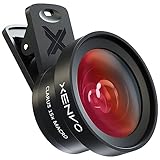
- ✔ COMPATIBLE WITH ALL SMARTPHONES, TABLETS, and LAPTOPS including ALL iPhone models, Samsung Galaxy and Note, Google Pixel, Huawei and more. CONTENTS INCLUDE: TruView 0.45x Wide Angle Lens, Clarus 15x Macro Lens, TruGrip Lens Clip, GlowClip Mini Rechargeable LED Light + Charging Cable, Quick-Release Lanyard, DuraCase, EasyClip, and Cleaning Cloth.
- ✔ TRUVIEW 0.45x WIDE ANGLE LENS - CAPTURE 45% MORE PICTURE WITH EVERY SNAP: Shoot stunning photos of people, pets, travel scenery, landscapes, architecture, selfies and more. NO DARK CORNERS (vignetting) like cheaper lenses. Crafted from aircraft-grade aluminum and premium optical glass for durability and clarity. Multi-element, coated glass lenses minimize ghosting, reflections, lens flare, and other artifacts. Xenvo cell phone lens attachment is ideal for hobbyists and photography pros alike.
- ✔ CLARUS 15x MACRO LENS - MARVEL YOUR SENSES. MAGNIFY NEARBY SUBJECTS FOR BREATHTAKING, SUPER CLOSE-UP PHOTOS: Capture all the intricacies and details with precision-focus for razor crisp macro photos every time. (For best results, position macro lens approximately 1/2 inch from subject. Not designed for zooming in on distant subjects.) THE TRUGRIP LENS CLIP offers SUPERIOR GRIPPING POWER to fasten your lenses to your cell phone when you're in action mode, framing your next perfect shot.
- ✔ GLOWCLIP RECHARGEABLE LED FILL LIGHT - The GlowClip LED light clips ANYWHERE on your phone to instantly illuminate your subject and surroundings with warm continuous light. The warm and natural LED light is superior to your smartphone's built in flash—which can be blinding and unnatural—especially in darker settings and venues. FEATURES 3 BRIGHTNESS SETTINGS: Low, Medium and High. Say goodbye to frustrating photo "retakes" and hello to brilliant photos the first time.
- ✔ QUICK-RELEASE LANYARD AND TRAVEL CASE - TRANSPORT AND PROTECT YOUR LENS KIT: Perfect for taking your Xenvo lenses with you on the fly. The travel case stores and protects all lens kit components snugly and safely while the quick-release lanyard is the perfect way to carry your lenses on your next outing. Just drape the lanyard and lens around your neck. The quick-release lanyard head makes it a cinch to access your Xenvo lenses in a flash so you never miss another photo moment.
Photographing insects up close
Choose a close-focusing lens—and account for working distance
A macro lens is designed to focus very close, making it a direct choice for fine details such as an insect’s eyes, wings, or body texture. Nikon’s macro photography guide notes that shorter focal lengths require you to get physically closer. That can make a shorter macro lens less suitable when the subject is easily startled or when approaching would be unsafe. There is no single ideal focal length for every insect; choose a setup that gives you enough working distance for the subject and setting.
Set your position and focus deliberately
When it is practical and safe, get down to the insect’s level instead of shooting down from above. Choose the feature that carries the image—often the eyes—and focus on it deliberately. Move gently and avoid brushing nearby plants or reaching into a space where you cannot see what else is present.
Rank #2
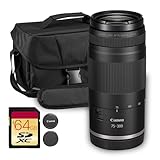
- Canon USA Authorized. Items Include: Canon RF 75-300mm f/4-5.6 Lens (Canon RF), Bag, 64GB UHS-I SDXC Memory Card
- Lightweight telephoto zoom for Canon RF-mount full-frame and APS-C mirrorless cameras, covering a versatile 75-300mm range (120-480mm equivalent on APS-C), making it ideal for sports, wildlife, portraits, and everyday distant subjects while remaining compact and easy to carry.
- Variable f/4-5.6 aperture design balances reach with portability, keeping the lens just over 1 lb and slim with a 58mm filter thread, ensuring an affordable and travel-friendly telephoto option without sacrificing image quality.
- Optical design is optimized for sharpness and clarity, enhanced by Canon’s Super Spectra Coating to minimize lens flare and ghosting while boosting contrast and color fidelity when working in bright or backlit shooting environments.
- Close-focusing capability with a 4.9' minimum focus distance and 0.25x maximum magnification makes it suitable for semi-macro shooting, while its seven-blade aperture diaphragm creates smooth, natural bokeh for subject isolation.
Keep a safe distance from stinging insects. Do not put your hands, face, or equipment close to an insect merely to fill the frame; use more working distance or let the subject go.
Use flash selectively and diffuse it
Flash can help with light and motion in field macro photography, but it is not required for every subject or condition. Insect wings and exoskeletons can reflect direct flash as harsh or blown highlights. Entomology Today’s field equipment guidance recommends a diffuser to soften those reflections: Photographing Insects in the Field: Know Your Equipment.
Rank #3
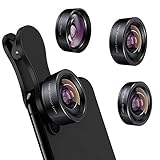
- 3 in 1 Phone Camera Lens Set: Every lens can be used separately. The 20X Macro lens has a best focusing distance of 1.18-3.54 inch, help you to explore the microworld. 120° Wide lens can expand the shooting area of 10%, make a bigger view to the world. 198° Fisheye lens can produce a strong visual effect to make thing cuter
- High Quality: Professional HD Lens with advanced lanthanide optical glass can reduce the reflection and ghosting, bringing you amazing vision with details and clarify. High quality grade aluminum shell can protect the glass offering a long durability
- Clip-on Phone Lens: Easy Use Design. Just attach the lens to the clip and clip it on the phone camera, then you can enjoy the amazing effect of the lens. The clip has soft rubber to avoid scratch on your phone. Strong spring can hold on tightly
- Compatible with Most Smartphones: Universal design of 3.6 cm clip make the lenses compatible with most iPhone, Samsung google phone etc. Note: For different model you might have to use different way to clip the clamp.
- Package Content: 1x 120° Wide Angle Lens, 1x198° Fisheye Lens, 1x 20X Macro Lens, 1x Universal Clip, 1x Storage Bag, 1x User’s Manual
A diffuser is most relevant when you have chosen to use flash and reflections are a problem. Consider the setup’s bulk and the subject’s sensitivity to your presence; no flash intensity is established as safe or ideal for every species.
Photographing small wildlife from a distance
For wildlife that is wary, mobile, or potentially dangerous, do not try to solve the framing problem by walking closer. Use a telephoto lens, binoculars, or a spotting scope to compose from a safe distance. The National Park Service gives the same options for getting a closer view without approaching the animal: wildlife photography guidance.
Rank #4

- The popular Tamron AF 70-300mm F/4.5-5.6 Di LD Macro features a built in motor to ensure fast accurate focusing
- This telephoto zoom will crop in tight or bring distant subjects in close
- There is also an incredible macro mode for photographing small objects up close giving a magnification ratio of 1:2
Observe quietly and wait for natural activity rather than prompting it. Massachusetts Division of Fisheries and Wildlife’s wildlife photography tips explain that disturbance may alter behavior or cause an animal to flee. If the animal reacts, prioritize distance over the shot.
Independent reader supportYour contribution helps us test, update, and keep practical guides available for everyone.Choose support that does not trap you in place
A steady camera can help in suitable conditions, especially with a telephoto lens or a long shutter speed. A tripod is one option, but it can limit how easily you follow a changing scene or back away. A stable seated or resting position may steady a handheld camera while leaving you freer to move.
Quick wins for a faster PC:
Scan for outdated or missing drivers - takes under a minuteDriver Scan →Clear out junk files and repair common Windows errorsFree Scan →Best Value
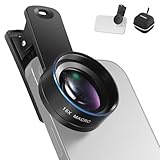
- Introducing NEEWER BASICS: Simple and practical, NEEWER BASICS is an economical product line that focuses on essential functions and designs, without unnecessary extras and materials
- 15X detail at close range: 15X magnification offers an optimal shooting distance of 0.8" to 1.6" / 2 to 4 cm to reveal fine detail in insects, jewelry, coins, plants, and other close ups with natural bokeh; rugged aluminum alloy shell supports outdoor use
- Clear 2 element HD optics: HD optical glass, not resin, uses 2 elements in 2 groups to reduce glare, reflections, and ghosting for clear detail; protective coatings resist water, fingerprints, and scratches; cleaning cloth included
- 37 mm clamp for more phones: Clip attaches to smartphones and secures the macro lens through a 37 mm thread; compatible with iPhone 18 Pro Max 18 Pro 17 Pro Max 16 16e 15 Android Samsung Galaxy S26 S25 Ultra, and other smartphones
- Reduce vignetting before shooting: Clean every phone camera before use; vignetting varies by model; if it occurs, disable macro mode, tighten the lens, and set camera zoom to 1.1X or higher
National Park Service guidance on ethical wildlife photography supports keeping wildlife’s welfare central to the approach. Choose a tripod only when the location and situation leave you able to move naturally and withdraw safely.
Quick Recap
Make the field decision before taking the shot
- Can you photograph without approaching? For wildlife, frame with a telephoto lens or viewing aid. For insects, use a macro lens with enough working distance for the situation.
- Is your position safe? Keep clear of stinging insects and avoid placing yourself or your gear where you cannot retreat easily.
- Is the animal continuing its routine? If it looks nervous, stops feeding, changes behavior, or flees, increase distance or stop.
- Will your setup let you respond? Use support when it helps, but do not let a tripod prevent you from moving or backing away.
- Is flash helping more than it intrudes? If you use flash on reflective insect surfaces, try diffusion; do not treat flash as a universal requirement.
Product prices and availability are accurate as of the date/time indicated and are subject to change. Any price and availability information displayed on Amazon at the time of purchase will apply.




