
Some links on this page are affiliate links: if you buy through them we may earn a commission, at no extra cost to you.
The safest wildlife photograph is the one made on the animal’s terms. For dolphins, that means staying at least 50 yards (150 feet) away unless a stricter local rule applies, using binoculars or a telephoto lens instead of approaching, and stopping when the animal shows stress. For octopuses, it means becoming a stable, quiet diver, keeping every part of your equipment off the reef and animal, and never touching, moving, baiting, blocking, or lighting the subject repeatedly. In both cases, prepare your camera before the encounter, let the animal choose the distance, and leave when its behavior changes.
The rule that governs every frame
Animal behavior is your exposure limit. A technically perfect image is not successful if getting it required pursuit, handling, separation of a mother and calf, reef contact, or repeated attempts to make an animal react. Compose from the distance already available, accept a smaller subject in the frame, and treat a retreat, prolonged dive, color change, jetting movement, or altered course as a clear request for more space.
As an Amazon Associate I earn from qualifying purchases.
What’s actually slowing this PC down?
Pick the symptom - the matching free tool is one click away.
Wildlife-protection laws and site rules are part of your camera technique. Dolphins, porpoises, whales, seals, and sea lions are protected under the U.S. Marine Mammal Protection Act (MMPA), and local authorities can impose stricter distances or operating conditions. Public photography is lawful only when it does not disturb the animals. Commercial and educational projects may need a NOAA permit, and a permit does not authorize touching an animal or attaching equipment to it.
There is no single octopus approach distance that works at every reef, tide pool, or protected area. Local regulations, habitat, visibility, current, the animal’s escape route, and its response determine how far away you must remain. The same behavior-first standard applies whether you are on a boat, on shore, snorkeling, or scuba diving.
Popular on Amazon

- 75-300 millimeter telephoto zoom lens with f 4-5.6 maximum aperture for Canon SLR cameras
- Improved mechanism makes zooming smoother; front part of zoom ring sports silver ring
- Measures 2.8 inches in diameter and 4.8 inches long; weighs 16.8 ounces; 1-year warranty
- 4.9-foot closest focusing distance; 32- to 8-degree diagonal angle of view
- Image Stabilization: No
Photographing dolphins from a boat or shore
Check the rule before you launch
NOAA Fisheries’ general guidance is to remain at least 50 yards (150 feet) from dolphins and porpoises. Some locations require 100 yards, and rules vary by species, state, and site. Confirm the current requirement with the local marine authority, protected-area manager, or licensed operator before departure; do not assume that a familiar coastline uses the same rule as your last trip.
For Hawaiian spinner dolphins, NOAA’s 2024 federal-rule question-and-answer material specifies a 50-yard (45.7-metre) minimum. Aerial viewing has a much larger separation requirement: NOAA Fisheries’ 2025 FAQ gives at least 333 yards (1,000 feet) when viewing dolphins, porpoises, or seals from the air. These figures are minimums, not targets to approach. If animals move away, increase the distance even when you are technically outside the boundary.
Crashes, No Sound, or Screen Glitches?
Random freezes, missing sound and display glitches usually trace back to one bad driver. Find and replace yours safely.Free scan · under a minuteWindows Errors? Fix Them Before They Spread
Repair common Windows errors and clear accumulated junk for a smoother, more stable PC - no reinstall needed.Free scan · no reinstallUse reach instead of closing the gap
NOAA specifically recommends binoculars and telephoto lenses for viewing dolphins while maintaining distance. A long lens, a stable support, and a shutter speed fast enough to freeze a jumping or surfacing animal will produce more usable frames than trying to steer closer. From a small boat, brace your elbows or use a properly secured monopod only if it cannot become a snag hazard; never let support equipment, straps, or loose accessories hang overboard.
Set focus and exposure before the encounter. Dolphins may appear for only a few seconds, so use a responsive autofocus mode, keep the active focus area over the animal rather than the horizon, and leave enough shutter speed to account for boat motion as well as the dolphin’s movement. Review the histogram or highlights between appearances, not while steering. A shorter burst followed by a pause helps you watch the group and notice a change in behavior.
Approach geometry matters more than a close crop
Do not pursue or follow a dolphin. If the vessel must move, travel slowly from the recommended distance and stay slightly parallel to, or behind, the animal. Never cut across its path, trap animals between a boat and shore, or position a vessel so that a calf is separated from its mother. Avoid creating a corridor that forces the group to pass between multiple boats.
If a dolphin approaches your vessel, put the engine in neutral and let the animal pass. Do not turn toward it, accelerate to maintain the encounter, or reposition for a bow-riding photograph. A voluntary approach does not cancel the distance rule or make touching, swimming with, or feeding acceptable.
Free tools Windows power users keep installed
One-click scans. No signup required.
Remove sensory pressure
Keep speed and direction changes gradual. Avoid loud or sudden noises, splashing intended to attract attention, feeding, and any attractant. Never throw food into the water: NOAA Fisheries states, “Never feed a dolphin—it’s harmful and illegal.” Do not use flash aimed at the animal. Even when a flash is legal, a bright, repeated burst can add unnecessary pressure and obscure the moment you need to observe behavior.
Watch the entire group, not just the individual in your viewfinder. A boat that seems unobtrusive to one dolphin may block another’s route, and an adult shielding a calf can be a warning that the group is uncomfortable. Keep another passenger responsible for navigation and lookout whenever possible; the photographer should not be the only person monitoring distance, current, and other traffic.
Also popular on Amazon

- Compact, lightweight and high-image quality RF tele zoom lens, with a versatile zoom range of 100-400mm
- Optical Image Stabilizer with up to 5.5 Stops of shake correction
- Up to 6 stops of shake correction when paired with EOS R series cameras featuring In-Body Image Stabilizer (IBIS)
- Minimum focusing distance of 2.89 feet at 200mm and maximum magnification of 0.41x at 400mm
- High speed, smooth and quiet autofocus with Canon’s Nano USM
Limit the session
NOAA guidance recommends no more than 30 minutes of overall viewing for a dolphin group. That is a total viewing period, not 30 minutes for each boat or photographer. Plan a short, calm sequence, then leave with a wide margin. Repeated passes that keep the animals surfaced, turning, or moving away are not justified by the possibility of a better frame.
Recognize the stop signals
Stop shooting and leave cautiously if you observe any of the following:
The Tool Desk
Outbyte Driver Updater FREEScan for outdated or missing drivers - takes under a minuteDriver Scan →Outbyte PC Repair FREERepair Windows errors before they cause bigger problemsFix Now →- Rapid changes in direction or speed.
- Prolonged dives or repeated dives that begin after the vessel arrives.
- Underwater exhalations or course changes away from the boat.
- Rapid surface swimming.
- A female shielding a calf or placing her body between the calf and the vessel.
- Tail slapping or lateral tail swishing.
One signal may have a natural explanation, but a cluster of changes after your arrival is enough to end the encounter. Do not wait for a dramatic escape. Shift away slowly, avoid crossing the group’s path, and do not return for another pass.
Never manufacture a close encounter
Do not swim with, touch, feed, chase, corner, or attempt to elicit a reaction from a dolphin. NOAA warns that selfies and close interaction can constitute harassment and can put both people and animals in danger. A “close encounter” image is not an achievement if the animal had no practical way to leave.
Photographing an octopus underwater
Arrive as a diver first
Macro photography magnifies every movement. Before attempting close work, practice neutral buoyancy and a controlled hover without touching the bottom. Your fins, knees, gauges, hoses, strobes, camera handles, and dangling accessories must remain clear of the reef and the octopus. Secure clips and lanyards so they cannot drag through coral, seagrass, rubble, or a den entrance.
Use your breath and trim to hold position rather than sculling with your hands. If a surge or current makes hovering difficult, increase distance or abandon the shot. A camera that is stable only because you are kneeling on the substrate is not a stable setup; it is habitat damage waiting to happen.
Do these 3 things before closing this tab:
1Fix the driver behind crashes, sound loss and screen glitches2Clear out junk files and repair common Windows errors3Scan for outdated or missing drivers - takes under a minuteNever stage the subject
Do not touch, pick up, move, pin, block, chase, bait, or expose an octopus for a clearer frame. Do not ask a guide or dive leader to manipulate one. Moving a rock, placing an object near a den, or repeatedly prodding an arm changes the behavior and can leave the animal without its chosen shelter. The photograph should document behavior that occurred without photographer intervention.
Keep the lens and housing outside the animal’s escape route. An octopus may explore a camera, but curiosity is not permission to move closer or allow contact. If an arm reaches toward the housing, hold position or back away; never let the interaction become a staged “handshake.”
Also popular on Amazon

- ★ JINTU 420-800mm MF Super HD Telephoto lens, Solid Construction with full metal body, Small size 10.6 x 3.5 x 3.5 inch, lightweight 700g=1.8LB, easy to carry to anywhere.
- ★ Ultra high definition image quality from Japan, Multi coated low-dispersion glass. Free canon adapter supply. If your camera is Nikon, Pentax, Sony e mount cameras or other brand which can buy it from our store.
- ★ Compatible with Canon EOS Rebel T1i, T2i, T3, T3i, T4i, T5, T5i, T6, T7, T6i, T6s, T7i, SL1, SL2, 60D, 70D, 77D, 80D, 50D, 40D, 30D, 5D, 1D, 5D III, 5D IV, 5Ds, 6D, 7D, 7D Mark II etc SLR Digital Cameras.
- ★ Perfect for boyfriend or husband birthday gifts or photographyer. Best choice for small or distant subjects, ranging from birds and wildlife, through sports, to moon etc.
- ★ NOTE: This is a manual lens, NO auto focus, your camera will show "lens not attach", but not defect. pls switch to MF MODE in order to use this lens.
Let hiding be the answer
If the octopus retreats into a crevice, changes color, jets away, compresses its body, or otherwise alters its behavior after you arrive, stop firing and give it room to re-emerge—or accept that it will not. Do not keep illuminating the den, repositioning around the opening, or waiting directly over the exit. Back away along your original approach path so the animal retains a clear route.
Color changes can be natural camouflage, but a sudden change accompanied by retreat or jetting is a reason to stop. Do not interpret a motionless animal as approval; an octopus may freeze because it is assessing a threat. Your distance and posture should allow it to leave without passing through your equipment.
Use the least intrusive light
More flash or torch power is not automatically better. Avoid repeated high-intensity bursts and keep a continuous beam brief and indirect where possible. The UK wildlife code advises avoiding flash photography and using zoom rather than closing distance. Angle strobes so the light reaches the subject without forcing you to hover over it, and allow a pause between frames so you can check whether the animal’s behavior has changed.
Ambient-light silhouettes, slower deliberate compositions, or a slightly wider frame can be preferable to a brightly lit close-up. If visibility or depth requires powerful light for a safe exposure, increase distance rather than compensating by holding the light close to the animal. Turn the light off while repositioning.
Protect the den and surrounding habitat
Maintain clearance from coral, seagrass, rubble, and den entrances. Do not rest the housing on the bottom or use a reef as a tripod. A displaced stone can expose an octopus, collapse a shelter, or damage small organisms that are part of the site’s food web. Keep fins and hoses elevated and check your equipment before moving so nothing is snagged.
In the Florida Keys, NOAA advises that interaction can stress wildlife and disrupt feeding and mating, and recommends no touching, handling, feeding, or chasing. Those principles are useful anywhere, but local protected-area rules remain controlling.
Choose an operator who will enforce the rule
Ask the divemaster before entering the water whether the group follows a no-touch policy and whether guides will refuse requests to move animals. A responsible operator should state an abort signal, limit crowding around a den, and intervene when a participant blocks an escape route or uses repeated flash. NOAA identifies Blue Star operators in the Florida Keys as a responsible-diving option; verify an operator’s current participation before booking because status can change.
If a guide proposes lifting an octopus, placing it in open water, or gathering divers around a den, decline the interaction and leave the area. You can report serious violations to the relevant site manager or wildlife authority after the dive, but do not escalate the encounter underwater.
Also popular on Amazon
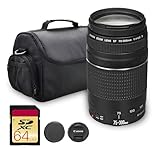
- Canon USA Authorized. Items Include: Canon EF 75-300mm f/4-5.6 III Lens, Shoulder Bag, 64GB Memory Card
- The Canon EF 75–300mm f/4–5.6 III is a versatile 4x telephoto zoom lens designed for full-frame DSLRs and compatible with APS-C cameras, offering a 120–480mm equivalent range. Compact and lightweight, it’s ideal for portraiture, sports, wildlife, and general telephoto shooting, providing reliable reach and pleasing compression in a portable form factor.
- Its optical design features Canon’s Super Spectra coating to minimize flare and ghosting, ensuring accurate color rendition and high contrast, even when shooting in bright or backlit conditions. This enhances image clarity and depth across the zoom range, making it suitable for both outdoor and event photography.
- A DC micro motor autofocus system delivers fast, smooth, and accurate focusing performance, allowing users to capture sharp images with ease. The system pairs effectively with Canon’s electromagnetic diaphragm for reliable exposure control, even during continuous shooting at variable focal lengths.
- The lens features a rounded seven-blade diaphragm that produces a pleasing background blur, contributing to natural-looking bokeh in portrait and close-up compositions. Combining reach, simplicity, and affordability, the EF 75–300mm f/4–5.6 III is an excellent entry point into telephoto zoom photography.
Choosing a method: distance, light, and control
| Decision | Dolphins | Octopuses |
|---|---|---|
| Best way to preserve distance | Use binoculars or a telephoto lens from a boat or shore; comply with the local minimum, generally at least 50 yards (150 feet). | Use a macro or moderate close-focus setup only after establishing neutral buoyancy; keep enough room for an unobstructed escape route. |
| Movement | Do not pursue or follow. If movement is necessary, travel slowly, slightly parallel to or behind the group. | Move quietly with controlled breathing and trim. Abort if current or surge makes hovering unreliable. |
| Light | Avoid flash aimed at the animals and any light intended to attract them. | Use the least intrusive light; keep beams brief and indirect and avoid repeated high-intensity flash. |
| How to judge success | A smaller frame showing natural surfacing is better than a close image produced by pursuit. | A natural posture and behavior are more important than filling the frame. |
| Session limit | NOAA guidance recommends no more than 30 minutes of viewing for one group. | No universal time limit is established; leave when behavior changes, the animal hides, or your presence restricts movement. |
| Operator standard | No feeding, chasing, touching, swimming with, or attempts to elicit a reaction. | No touching, moving, baiting, blocking, or asking a guide to manipulate the animal. |
| Distance rule | Rules vary by species and location; some sites require 100 yards. Hawaiian spinner dolphins have a 50-yard (45.7-metre) federal minimum. | No universal octopus-specific distance; local rules, habitat, and the animal’s behavior control the decision. |
A field workflow that keeps the camera secondary
Before the trip
- Identify the species, site, protected-area authority, and current approach rules.
- Ask whether the operator has a written no-touch, no-feed, and no-chase policy.
- Choose optics that provide reach for dolphins or stable close focus for octopuses without requiring you to move closer.
- Set focus behavior, exposure compensation, file format, and flash or torch controls before boarding or entering the water.
- Secure straps, clips, hoses, lights, and buoyancy equipment so nothing can contact an animal or habitat.
- Agree on who handles navigation, distance, and the abort signal; the photographer cannot safely monitor everything while looking through a viewfinder.
During a dolphin encounter
- Establish the required distance before raising the camera.
- Put the vessel in neutral if dolphins approach; let them pass without steering toward them.
- Keep the boat’s course slow and predictable if repositioning is necessary, staying parallel to or behind the group.
- Photograph in short sequences while scanning for calves, other boats, and stress signals.
- Stop immediately when behavior changes, even if the animals remain visible.
- Leave by a route that does not cross the group, and do not make a second pass.
During an octopus encounter
- Establish neutral buoyancy and a clear position before aiming the camera.
- Check that fins, knees, hoses, gauges, strobes, and handles cannot touch the substrate or animal.
- Keep the den entrance and likely escape route open.
- Take a few frames with minimal light, then pause to observe behavior.
- Back away if the octopus retreats, changes color with avoidance behavior, jets, or loses access to shelter.
- Leave the site without moving rocks, stirring sediment, or making another approach.
Legal and permitting boundaries
The MMPA prohibits harassing protected marine mammals. NOAA describes viewing as acceptable only when conducted in a manner that does not harass the animals. Feeding, pursuing, touching, and attracting wildlife are prohibited conduct for the general public, and local rules may be stricter than the federal baseline.
A commercial or educational photography project is a separate permitting process. A NOAA permit may authorize activities that do not exceed Level B harassment, but it does not create a right to touch an animal, attach an animal-borne camera, or override a site’s distance rule. If your project involves repeated approaches, boats dedicated to filming, aircraft, unusual lighting, or equipment deployment, contact NOAA and the relevant local authority before filming rather than assuming a recreational exception applies.
Quick wins for a faster PC:
Fix the driver behind crashes, sound loss and screen glitchesFind Drivers →Repair Windows errors before they cause bigger problemsFix Now →For octopus photography, check the marine park, sanctuary, fishery, or coastal-access rules for collection, lighting, touching, and habitat contact. Where a site has no octopus-specific distance, the absence of a number is not permission to approach closely; the animal’s response and its ability to leave are the practical limits.
Troubleshooting common situations
The dolphin group keeps turning away
Stop photographing, place the vessel in neutral if safe, and increase distance slowly. Do not interpret a later return as an invitation to follow. A group that resumes a natural course after you leave may have been reacting to your presence.
Another boat is already close
Do not join the crowd. Stay outside the required distance, avoid creating a second approach angle, and leave if the combined traffic traps the animals between boats and shore. Record the operator details only when doing so does not prolong your own presence.
The octopus is inside a narrow den
Do not shine a beam into the opening repeatedly or block the exit with your body or housing. Move back to a wider angle, wait briefly without firing, and leave if the animal does not emerge on its own.
Your camera cannot expose the subject without strong light
Increase distance, widen the composition, reduce the number of frames, or accept an ambient-light image. A bright frame is not worth repeated flashes, a close torch, or a position that prevents the animal from leaving.
A guide suggests moving the animal
Decline, state that you want only unmanipulated behavior, and leave the site if the request continues. Choose operators that enforce a no-touch policy rather than relying on a promise made after the encounter begins.
What an ethical final image should show
A responsible photograph preserves context: enough water around a dolphin to make the distance and behavior understandable, or enough reef around an octopus to show that its shelter was not disturbed. Avoid cropping out a boat, diver, or barrier when doing so would make a pressured encounter look voluntary. In captions, identify the location and any relevant rule or protected status accurately, and do not imply that a close approach is safe simply because the animal remained visible.
When reviewing a sequence, delete frames made after the stop signal. Keep the images that show natural travel, hunting, resting, camouflage, or surfacing without a visible reaction to you. The strongest evidence of good wildlife photography is not proximity; it is behavior that continues as though the camera were not there.





Leave a Reply