
Some links on this page are affiliate links: if you buy through them we may earn a commission, at no extra cost to you.
Prevent a bite by stopping the encounter before your dog reaches the point of panic or aggression. Learn your dog’s triggers and early stress signals, create distance, block or leave the situation, and keep the dog securely managed. Then, with veterinary and qualified behavior guidance, use gradual desensitization and reward-based counterconditioning at a level your dog can handle. A properly fitted basket muzzle can add protection for necessary handling, but it does not replace distance, training, supervision, or professional care.
Why stress can lead to a bite
Biting is often a dog’s last attempt to make a frightening or overwhelming situation stop. Fear, a startling approach, perceived threat, guarding of food or space, pain, and illness can all lower a dog’s tolerance. The same dog may be relaxed at home yet react when cornered by a stranger, restrained for grooming, approached while eating, or surprised by another dog.
As an Amazon Associate I earn from qualifying purchases.
Free tools Windows power users keep installed
One-click scans. No signup required.
Breed alone cannot predict which dog will bite. Individual history, learning, health, context, and the person’s behavior matter more. A dog that has been punished for growling may stop giving obvious warnings while remaining frightened, which can make a later bite seem sudden. Treat every aggressive display as useful information about the dog’s emotional state, not as a character judgment.
The practical goal is not to make a dog endure every encounter. It is to prevent rehearsals of lunging or biting while teaching the dog that triggers can predict safety, distance, and good things.
Popular on Amazon
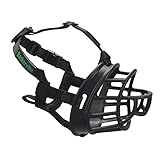
- DOGS CAN PANT AND DRINK: The Baskerville Ultra Muzzle PATENTED HUMANE DESIGN allows dogs to pant (when hot or stressed) and drink. SUITABLE FOR DAILY WALKS and longer periods of wear.
- SHAPE FOR CUSTOM FIT: Like a mouth-guard, the Ultra Muzzle can be HEAT SHAPED using warm water to fit DIFFERENT DOG NOSE SHAPES. See fitting guide for more info and to find the BEST SIZE for your dog.
- IDEAL FOR REACTIVE DOGS: you can TRAIN and REWARD treat your dog if they are reactive around other dogs, people or in new situations like the vet.
- STRONG & SAFE: Built with strong Thermo Plastic Rubber (TPR) the Ultra Muzzle is SAFE TO PREVENT BITES. Extra secure with LOCKABLE NECK STRAP CLIP, HEADSTRAP and COLLAR ATTACHMENT if needed.
- COMFORTABLE FIT: Comes in 6 sizes with PADDED STRAPS and NO METAL WORK ON DOGS FACE. Great for dog owners looking for SMALL, MEDIUM or LARGE sized dog muzzles.
Recognize the warning signals before escalation
Dogs commonly move through increasingly intense signals. The sequence is not identical for every dog, and some skip subtle signs when they are highly aroused. A wagging tail is not proof that a dog is friendly; a stiff, high, fast wag can accompany tension.
| Lower-intensity stress | Rising tension | High-risk behavior |
|---|---|---|
| Yawning, lip licking, looking away, turning the head or body aside, ears held back, crouching, tail tucked, attempting to hide or leave | Freezing, stiffening, weight shifted forward, hard staring, closed tense mouth, raised hackles, repeated barking, refusal of food | Growling, snarling, snapping, charging, lunging, air snapping, or biting |
Stop the interaction at the earliest sign you can identify. A dog that turns away is already communicating discomfort; waiting for a growl gives the dog fewer safe options. Observe the whole body and the setting rather than relying on one signal.
Quick wins for a faster PC:
Repair Windows errors before they cause bigger problemsFix Now →Fix the driver behind crashes, sound loss and screen glitchesFind Drivers →What to do when a reaction is about to happen
In an active crisis, management is more reliable than asking for obedience. Use this sequence to reduce risk:
- Notice the trigger and your dog’s state. Identify the person, dog, object, sound, handling procedure, food, doorway, vehicle, or location that preceded the change. If your dog is staring, freezing, stiffening, growling, or no longer taking food, assume you are too close.
- Create distance immediately. Turn away, cross the street, move behind a parked car, enter an open doorway, or guide the dog to another room. Increase space until the dog can breathe normally and respond to you. Do not wait to see whether the dog will “get over it.”
- Block the view or access. Close a gate or door, place a solid barrier between the dog and the trigger, or position furniture so the dog cannot rush forward. Ask another adult to move the visitor or trigger rather than reaching over a tense dog.
- Keep physical control without wrestling. Use a secure, well-maintained leash attached to equipment your dog cannot slip. Hold the leash with two hands and avoid wrapping it around your wrist. Do not grab a collar near a dog that is redirecting or snapping; use a barrier or call for help if possible.
- Leave the setting. In a crowded, noisy, or confined area, calmly exit. A fearful dog does not need to greet a person or another dog to succeed. If an off-leash dog approaches, put your dog behind you or a barrier and continue moving away rather than allowing a forced greeting.
- End the session and decompress. Once safe, give the dog quiet space, water, and time. Do not punish, scold, or force another exposure that day. Record what happened while details are fresh so you can change the management plan.
“If your dog seems uneasy, remove them from the situation to reduce the risk of biting.” — American Veterinary Medical Association
Also popular on Amazon
Sale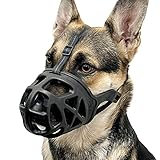 BARKLESS Dog Muzzle, Humane Basket Muzzle for Medium Dog Biting, Scavenging | No Bite Cage Mouth Guard for Medium Aggressive Reactive Dogs, Training, Grooming and Walks, Able to Pant and Drink
- The Only Muzzle You Need: Say goodbye to your old muzzle. The BARKLESS practical muzzle has features you need to prevent your dog from nipping, destroying, fighting and digging and eating everything while the basket-style design gives all-around mouth protection allowing your pet unrestricted drinking and panting. This muzzle for dogs make it the ideal choice for reactive dogs’ daily walks, occasional use, dog park socialization, grooming, vet visits, training, traveling, and walking
- Safe & Humane: Friendly dog muzzles are more pliable and softer, making them comfortable for the dog. Humane muzzle for dogs allow your dog to pant, drink and treat train while being worn with the uniquely designed bar spacing which forms the canine muzzle
- Easy to Use: Comfort-fit design for most sizes of breeds with adjustable head and neck straps allow you to quickly adjust the size to fit your dog, making it ideal for the puppy, small, medium, and large dogs. The twist on each side of the strap is part of a unique design, ensuring a better fit for your dog’s head shape. This is a thoughtful feature, not a defect, aimed at providing a more comfortable and secure fit
- Prevent Muzzle Slippage: An incorrect size, improper fit, or lack of muzzle training can cause the dog to remove the cage muzzle. Adjust the straps to ensure a snug fit—secure enough to keep the basket muzzle for dogs in place without causing discomfort. Check the head strap to prevent slippage. Refer to the included instructions to help your dog adjust to the dog muzzles to prevent biting
- Desensitizing Your Dog to a Muzzle: Many dogs may resist wearing cage muzzles for dogs initially, especially if they've never worn one before. To help them adjust, use gradual desensitization training—start with short periods and reward calm behavior. Over time, your dog will accept it as part of their routine
Build management around predictable situations
Management prevents bites while training changes the underlying emotional response. Choose arrangements that keep your dog below the level at which fear or aggression takes over.
Visitors, children, and deliveries
Before opening the door, place the dog behind a closed door, sturdy gate, exercise pen, or other secure separation. Give delivery personnel instructions not to enter or reach toward the dog. For planned visitors, have the dog settled before the guest arrives; do not use the doorway as a greeting exercise. Visitors should ignore the dog, avoid eye contact and touching, and follow your instructions.
Children must not be responsible for managing a fearful or reactive dog. Keep the dog and children separated whenever an adult cannot actively supervise. Never permit hugging, climbing, cornering, chasing, taking toys, or disturbing a dog that is eating or resting. If the dog has shown guarding or aggression around children, maintain complete separation and obtain professional guidance rather than testing the dog.
Walks and encounters with other dogs
Walk at times and in places that provide escape space. Scan ahead, use parked cars or hedges as visual screens, and turn around before another dog is close. A secure harness or collar and a leash in good condition are essential. Do not allow on-leash greetings when either dog is tense, staring, barking, or pulling. If your dog reacts, leave the area instead of holding the dog in place while the trigger approaches.
Also popular on Amazon
- The Only Muzzle You Need: Say goodbye to your old muzzle. The BARKLESS practical muzzle has features you need to prevent your dog from nipping, destroying, fighting and digging and eating everything while the basket-style design gives all-around mouth protection allowing your pet unrestricted drinking and panting. This muzzle for dogs make it the ideal choice for reactive dogs’ daily walks, occasional use, dog park socialization, grooming, vet visits, training, traveling, and walking
- Safe & Humane: Friendly dog muzzles are more pliable and softer, making them comfortable for the dog. Humane muzzle for dogs allow your dog to pant, drink and treat train while being worn with the uniquely designed bar spacing which forms the canine muzzle
- Easy to Use: Comfort-fit design for most sizes of breeds with adjustable head and neck straps allow you to quickly adjust the size to fit your dog, making it ideal for the puppy, small, medium, and large dogs. The twist on each side of the strap is part of a unique design, ensuring a better fit for your dog’s head shape. This is a thoughtful feature, not a defect, aimed at providing a more comfortable and secure fit
- Prevent Muzzle Slippage: An incorrect size, improper fit, or lack of muzzle training can cause the dog to remove the cage muzzle. Adjust the straps to ensure a snug fit—secure enough to keep the basket muzzle for dogs in place without causing discomfort. Check the head strap to prevent slippage. Refer to the included instructions to help your dog adjust to the dog muzzles to prevent biting
- Desensitizing Your Dog to a Muzzle: Many dogs may resist wearing cage muzzles for dogs initially, especially if they've never worn one before. To help them adjust, use gradual desensitization training—start with short periods and reward calm behavior. Over time, your dog will accept it as part of their routine
Handling, grooming, and veterinary care
Tell groomers and veterinary staff about any history of snapping, lunging, or biting before an appointment. Ask how the facility will separate dogs and what low-stress handling options are available. Practice brief touches at home only when the dog is relaxed, pairing each touch with a valued reward and stopping before discomfort appears. Painful ears, joints, skin, teeth, or other conditions can make handling suddenly dangerous; a veterinary examination is important when a response is new or stronger than usual.
Food, toys, resting places, and vehicles
Feed the dog in a quiet area where people and other animals will not approach. Do not take a bowl, chew, or toy away to prove authority. Instead, exchange for something better during planned training, and leave the dog alone while eating or sleeping. In a car, use a secured crate or harness and prevent window-to-window encounters. At home, close doors or use gates to keep the dog away from visitors, repair workers, and other high-arousal activity.
Busy public places and unavoidable triggers
Skip crowded events, narrow trails, and situations where you cannot turn away. If an unavoidable trigger is expected, plan an exit route, bring high-value food, and arrange a second adult to help with barriers or doors. A plan that keeps the dog at a safe distance is more responsible than hoping repeated close contact will produce socialization.
Train below the reaction threshold
Desensitization and counterconditioning change the dog’s association with a trigger. Desensitization means presenting the trigger at an intensity the dog can tolerate. Counterconditioning pairs that trigger with something the dog values, such as small pieces of high-value food. The dog must remain able to eat, move normally, and respond; if the dog freezes, vocalizes, lunges, or refuses food, the session is too difficult.
Also popular on Amazon
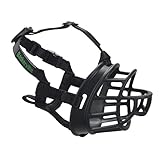
- DOGS CAN PANT AND DRINK: The Baskerville Ultra Muzzle PATENTED HUMANE DESIGN allows dogs to pant (when hot or stressed) and drink. SUITABLE FOR DAILY WALKS and longer periods of wear.
- SHAPE FOR CUSTOM FIT: Like a mouth-guard, the Ultra Muzzle can be HEAT SHAPED using warm water to fit DIFFERENT DOG NOSE SHAPES. See fitting guide for more info and to find the BEST SIZE for your dog.
- IDEAL FOR REACTIVE DOGS: you can TRAIN and REWARD treat your dog if they are reactive around other dogs, people or in new situations like the vet.
- STRONG & SAFE: Built with strong Thermo Plastic Rubber (TPR) the Ultra Muzzle is SAFE TO PREVENT BITES. Extra secure with LOCKABLE NECK STRAP CLIP, HEADSTRAP and COLLAR ATTACHMENT if needed.
- COMFORTABLE FIT: Comes in 6 sizes with PADDED STRAPS and NO METAL WORK ON DOGS FACE. Great for dog owners looking for SMALL, MEDIUM or LARGE sized dog muzzles.
A safe training procedure
- Define one trigger. “People” is too broad for a first plan. Specify a person in a hat, a dog across the street, a hand reaching toward the collar, or a visitor entering the doorway.
- Find the starting distance or intensity. Begin far enough away that your dog notices the trigger but remains loose and willing to eat. For handling, start with the hand still and several inches away; for sounds, use a very low volume.
- Present the trigger briefly. The instant your dog notices it, feed several small treats. Do not lure the dog toward the trigger or ask for a greeting.
- Remove or reduce the trigger. Stop the visual exposure, lower the sound, or increase distance before tension appears. The dog should learn that noticing the trigger predicts relief and rewards.
- Repeat short sessions. A few successful repetitions are more useful than a long session that ends in a reaction. Finish while the dog is still comfortable.
- Progress in small increments. Only reduce distance, increase duration, or raise intensity after multiple sessions in which the dog remains relaxed. Change one variable at a time.
- Regress at the first setback. Increase distance or lower intensity at the next repetition. Stress, illness, poor sleep, heat, and an earlier frightening event can temporarily reduce tolerance.
The American Society for the Prevention of Cruelty to Animals advises letting a dog progress at its own pace and never forcing it to remain around something when it is clearly fearful or uncomfortable. The American Veterinary Society of Animal Behavior similarly notes that progress is often slow at first. Flooding—holding a dog close to a feared trigger until it stops reacting—can intensify fear, remove the dog’s ability to escape, and increase bite risk.
Use rewards strategically
Choose food your dog will take in the training environment, cut it into tiny pieces, and deliver it immediately after the trigger appears. If the dog will not eat, do not keep offering food beside the trigger; create more distance. Food is a communication tool, not a way to distract a dog into accepting unwanted contact. Praise, play, or the opportunity to move away can also be rewards when they are genuinely valuable to that dog.
Keep a simple progress log
Record the trigger, distance or intensity, body language, whether the dog ate, and how quickly the dog recovered. This reveals patterns and helps a behavior professional adjust the plan. A sudden decline in tolerance, reactions in new contexts, or unusually intense behavior warrants a veterinary check rather than harder training.
Independent reader supportYour contribution helps us test, update, and keep practical guides available for everyone.Use a basket muzzle as an added safety layer
A basket muzzle can reduce the chance of a bite during necessary handling or carefully managed exposure. It is not a license to bring a distressed dog closer to people or other dogs, and it cannot prevent all injury from a muzzle strike. The American Animal Hospital Association recommends teaching a dog to put its face into the muzzle voluntarily through reward-based training.
Also popular on Amazon
- DOGS CAN PANT AND DRINK: The Baskerville Ultra Muzzle PATENTED HUMANE DESIGN allows dogs to pant (when hot or stressed) and drink. SUITABLE FOR DAILY WALKS and longer periods of wear.
- SHAPE FOR CUSTOM FIT: Like a mouth-guard, the Ultra Muzzle can be HEAT SHAPED using warm water to fit DIFFERENT DOG NOSE SHAPES. See fitting guide for more info and to find the BEST SIZE for your dog.
- IDEAL FOR REACTIVE DOGS: you can TRAIN and REWARD treat your dog if they are reactive around other dogs, people or in new situations like the vet.
- STRONG & SAFE: Built with strong Thermo Plastic Rubber (TPR) the Ultra Muzzle is SAFE TO PREVENT BITES. Extra secure with LOCKABLE NECK STRAP CLIP, HEADSTRAP and COLLAR ATTACHMENT if needed.
- COMFORTABLE FIT: Comes in 6 sizes with PADDED STRAPS and NO METAL WORK ON DOGS FACE. Great for dog owners looking for SMALL, MEDIUM or LARGE sized dog muzzles.
Choose the right design and fit
- Select a basket style that leaves enough room for the dog to open its mouth, pant, and drink. The nose should not be pressed against the end, and the straps should be secure without rubbing.
- Check that the dog cannot remove it with a paw or push it off against furniture.
- A restrictive fabric or grooming muzzle that holds the mouth closed is unsuitable for extended wear, exercise, heat, or situations in which panting is needed.
| Equipment approach | What it can do | Important limitation |
|---|---|---|
| Reward-conditioned basket muzzle | Adds bite protection while allowing panting and drinking when correctly fitted | Does not replace distance, barriers, supervision, or behavior treatment |
| Restrictive or aversive muzzle | May limit mouth movement briefly for specific professional procedures | Can restrict panting and increase distress; not a general solution for fearful encounters |
Condition the muzzle step by step
- Let the dog see and sniff the muzzle; feed a treat and put it away.
- Place a treat inside so the dog chooses to put its nose in. Do not fasten it.
- Repeat until the dog readily inserts its nose, then briefly touch the straps while feeding.
- Fasten the muzzle for one or two seconds, feed continuously, and remove it before the dog paws or panics.
- Increase wearing time gradually in a calm room, then while walking quietly at home.
- Practice in low-stress locations before using it for veterinary handling or a planned encounter.
Never use a muzzle to force proximity to a trigger. Do not leave a distressed muzzled dog unattended, and check breathing, heat, rubbing, and the dog’s ability to drink throughout use.
Know when veterinary and behavior help is needed
Arrange a veterinary examination when aggression is new, worsening, unusually intense, directed at familiar people, or otherwise unexplained. Pain and illness can lower tolerance, and treating a medical problem may be an essential part of reducing risk. Tell the veterinarian exactly what happened, including the trigger, distance, warning signals, contact, and recovery time.
Windows Errors? Fix Them Before They Spread
Repair common Windows errors and clear accumulated junk for a smoother, more stable PC - no reinstall needed.Free scan · no reinstallCrashes, No Sound, or Screen Glitches?
Random freezes, missing sound and display glitches usually trace back to one bad driver. Find and replace yours safely.Free scan · under a minuteAfter any bite or aggressive display, seek qualified behavior help even if skin was not broken. Appropriate credentials and experience include a board-certified veterinary behaviorist, a Certified Applied Animal Behaviorist, or a Certified Professional Dog Trainer who can document work with fear and aggression. Ask how the professional manages safety, what methods are used, and how progress will be measured. Avoid anyone who promises a rapid cure, relies on intimidation, or recommends forcing the dog into a feared situation.
If a bite occurs
- Separate the dog and the person without putting your hands between them. Use doors, gates, leashes, or barriers if they can be applied safely.
- Provide prompt medical care for the person, especially for punctures to the hands, face, or joints, heavy bleeding, or signs of infection.
- Secure the dog in a quiet area and do not stage another interaction.
- Contact your veterinarian and a qualified behavior professional. Write down the circumstances while they are fresh.
- Check local rules for bite reporting, vaccination documentation, quarantine, leash requirements, and dangerous-dog procedures; these obligations vary by jurisdiction.
Common approaches that increase risk
- Forcing a greeting: A dog does not need to be touched, approached, or introduced when it is backing away, freezing, or growling.
- Punishing warnings: Yelling at a growl may suppress the signal without removing fear, leaving a snap or bite as the next communication.
- Relying on obedience in a crisis: A frightened dog may be unable to respond to cues. Distance and barriers are safer than testing a command.
- Using equipment as a cure: A leash, harness, or muzzle manages access; none changes the emotional cause by itself.
- Advancing too quickly: A single calm session does not prove readiness for a closer or longer exposure.
- Assuming a wag means safety: Evaluate posture, muscle tension, facial expression, movement, and the surrounding context.
Create a written bite-prevention plan
Share a short plan with every adult who handles the dog. Include:
- The dog’s known triggers and earliest warning signs.
- The distance, route, room, or barrier that reliably helps.
- Who handles the leash, who moves visitors, and where the dog rests.
- Which rewards the dog accepts under mild stress.
- Whether a conditioned basket muzzle is used, how it is fitted, and when it must not be worn.
- Your veterinarian’s contact details and the behavior professional’s instructions.
- What to do if the dog escapes, a visitor arrives unexpectedly, or a bite occurs.
Review the plan after every incident or near miss. Prevention succeeds when the environment is arranged so the dog does not have to choose between enduring a threat and using its teeth.





Leave a Reply