
Some links on this page are affiliate links: if you buy through them we may earn a commission, at no extra cost to you.
The safest way to protect frog spawn and tadpoles is to improve the pond rather than handle the animals: keep fish out, provide a sunny pond with shallow, gently sloping planted margins, stop polluted or livestock-contaminated runoff, and leave spawn in the pond where it was laid. Newts, insects, birds and mammals will still eat some eggs and tadpoles, because natural losses are part of frog reproduction. Use a temporary, taut wildlife net only for a clearly identified danger, and inspect it frequently. Do not move spawn or tadpoles to another pond unless a qualified wildlife authority directs you.
Why frog spawn and tadpoles disappear
A large clump of spawn is not a guarantee that many frogs will emerge. Female frogs lay thousands of eggs because predators, disease, cold weather and drying ponds remove a substantial proportion. Froglife explains that producing large numbers of eggs is a natural response to those pressures. Seeing losses is therefore not, by itself, evidence that the pond is failing.
As an Amazon Associate I earn from qualifying purchases.
Free tools Windows power users keep installed
One-click scans. No signup required.
Some causes are avoidable. Fish are the most important artificial predator in a breeding wildlife pond: they can eat spawn and tadpoles rapidly. Excessive shade, a pond that is too deep, and late frost can stop eggs developing. Poorly managed runoff, sediment and livestock trampling can cloud the water and damage the shallow vegetation where tadpoles feed and shelter.
Other losses are normal. Newts, aquatic insects, waterfowl and small mammals all take amphibian eggs or larvae. The goal is to reduce unnecessary pressure while retaining a functioning food web, not to make the pond sterile.
Popular on Amazon

- Effortlessly Keep Pond Clean & Beautiful - Fed up with exhausting leaves removal work? Alloxity pond netting will completely eliminates this trouble for you. Only a few minutes are taken to shake leaves off the koi pond netting, efficiently keeping pond crystal clear. Thanks to the black color and reasonable spacing, the pond netting blends in water perfectly and allows great visibility of the stunning pond scenery.
- Strong Barrier against predators — The anti-tear pond netting for koi ponds is enhanced to protect fishes against strong or trick predators and barrier unwanted animals out, including blue herons, kingfishers, egrets, raccoons, frogs and cats. No more concerns about fish losses. The versatile netting is also perfect to protect your plants or poultry, such as bushes, vines, or small trees, hen, strawberry.
- Stretchy & Sturdy Material to Ensure Durability - Made of high-density polyethylene (HDPE) material, the heavy-duty netting shows unbeatable resistance to hot sunlight, strong wind, and cold snowy weather, lasting for seasons. In addition, the fish netting reinforced with multi strong strands will remain well-knitted and sturdy without tearing, twisting or tangling even after long-term use, easy to remove and roll up to store for next use.
- Simple Installation in Minutes - No extra tools are required! Just simply stretch the lightweight koi pond net over the pond and stake it into ground with included pegs. Coming zip ties makes it more convenient to secure the net to frame). Packed in a roll-up way, the soft pond cover is easier to pull out and cut to size. The package includes: Alloxity pond netting x1, ground pegs x12, zip ties x20.
- Alloxity is committed to providing superior product quality & customer experience. Pls feel free to contact us if you need more information of the product.
Start with the pond: conditions that support development
Keep breeding water fish-free
Do not introduce ornamental goldfish, koi or any other fish into a pond intended for frog breeding. Isle of Man Government guidance warns: “Do not bring fish into a pond if you want frogs to breed successfully, as the spawn may be eaten very quickly.” Fish also compete with tadpoles and alter the pond’s food web.
If fish are already present, do not release them into a stream, public pond or another person’s water. Ask your local wildlife or environmental authority about lawful removal and rehoming. A fish-free seasonal pond is often especially suitable because it may dry before fish can become established, while still retaining enough water for frog development in a typical season.
Do these 3 things before closing this tab:
1Scan for outdated or missing drivers - takes under a minute2Clear out junk files and repair common Windows errors3Fix the driver behind crashes, sound loss and screen glitchesGive spawn warmth and light
Choose or maintain an open site that receives sunlight for part of the day. Surrey Wildlife Trust and North Wales Wildlife Trust both identify excessive shade and late frost as common reasons for failed development. North Wales guidance also notes that a pond can be too deep for successful breeding. Dense tree canopy, tall structures and permanent deep water can keep the surface cold when eggs need to warm.
You do not need to remove every nearby tree or plant. Instead, identify whether shade covers the spawning area for most of the day and whether fallen leaves are accumulating heavily. Where practical, thin or manage vegetation outside the pond rather than repeatedly disturbing the spawn itself. Make changes gradually and avoid cutting habitat during periods when adult amphibians are using it.
Also popular on Amazon

- Keep Koi Fish Safe from Leaves & Wildlife: This pond netting creates a protective barrier over your pond, helping reduce fallen leaves while discouraging access from herons, birds, raccoons, cats, and other visiting wildlife. Suitable for koi ponds, fish ponds, water gardens, and other outdoor ponds.
- Helps Maintain a Cleaner Pond: The 1/2 inch fine woven mesh helps block leaves, twigs, and floating debris before they enter the water, reducing routine cleanup and helping maintain a cleaner pond environment for fish and aquatic plants throughout the seasons.
- 1/2 Inch Woven Mesh for Reliable Coverage: The woven fine mesh combines strength with flexibility, allowing air, sunlight, and water circulation while helping cover the pond effectively. The diamond mesh design adapts to different pond shapes. For optimal coverage, selecting a net larger than the pond is recommended.
- Durable HDPE for Outdoor Use: Made from premium HDPE material, this pond cover net is lightweight, tear-resistant, UV-resistant, and suitable for year-round outdoor use. The woven construction provides dependable performance through changing weather conditions.
- Easy to Install, Store & Reuse: The flexible pond net is easy to unfold, cut, fold, and store after use. Secure it with the included stakes or other suitable anchors around the pond to create stable coverage. It can also be used in gardens or other outdoor areas where lightweight protective netting is needed.
Build shallow, gently sloping margins
Frogs need shallow water for spawning and froglets need an easy route out. Isle of Man guidance recommends gently sloping edges, varied plants and an open, warm location. Include a shallow shelf or ramp rather than sheer sides. This creates warm margins, feeding space and escape routes without forcing froglets to climb smooth vertical walls.
Maintain several depths instead of one uniform basin. Shallow shelves warm quickly and support marginal plants; a somewhat deeper area can retain water during dry spells. Avoid making the whole pond deep in an attempt to prevent it drying. Temporary or seasonal water bodies are part of the natural strategy of many amphibians and are less likely to support predatory fish.
Plant for refuge and food
Use a mixture of native aquatic and marginal plants suited to your region. Stems, leaves and submerged growth give tadpoles places to hide from predators and surfaces on which algae and other food grow. Keep enough open water for sunlight to reach the spawn, rather than allowing vegetation to form an impenetrable canopy.
Do not strip a pond because it contains algae. Tadpoles graze algae and other plant material, and vegetation provides cover. Remove only obvious excess growth, and do so in stages so that you do not remove all food and shelter at once. Place removed material beside the pond for a short period before composting or disposing of it, allowing trapped insects and amphibians to return to the water.
Also popular on Amazon
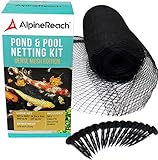
- Reliable Fish Protection – Brilliantly designed to keep your fish safe against Blue Heron birds, cats and other predators. The protective net is knitted using premium resistant material and provides safeguarding from the Sun. The lightweight net floats above the waterline so your fish don’t get caught.
- 3/8 Inch Heavy Duty Woven Mesh – The net’s extra strength comes from a tightly woven mesh and works extremely well. The 15’ x 20’ size is suitable for the majority of ponds & pools and may be effortlessly cut down to size.
- Keep Out Smallest Leaves & Debris – The dense mesh will keep your pond & pool staying beautiful and clean; capturing the smallest leaves. It is adapted for enduring through the Fall and Winter. Perfect for gardeners, aquascaping, watergardens, waterfall features, DIY and people who appreciate a tidy look.
- Quick Setup & Versatility Saves Time – All durable stake accessories are easy-to-use and included. Just follow the simple instructions or for multi-purpose use. Our net is highly versatile for outdoor activities.
- Quality Assurance – The original AlpineReach woven mesh netting recommended by gardeners worldwide. Beware of cheaper imitations. AlpineReach products go through a rigorous design and testing process so our customers receive top products with top customer service.
Prevent water-quality problems at the source
Block polluted runoff
Keep fertiliser, pesticides, oil, household chemicals and dirty surface water out of the pond. Runoff can carry nutrients and toxins, trigger excessive algal growth, add sediment and change conditions faster than a small pond can absorb. Maintain a vegetated buffer around the pond and divert clean roof or path drainage away from the water where feasible.
If a spill or visibly contaminated flow reaches the pond, stop the source first. Do not add a random treatment to neutralise it. Contact a local environmental or wildlife authority for advice, particularly if tadpoles are dying or the contamination may affect a protected species.
Quick wins for a faster PC:
Clear out junk files and repair common Windows errorsFree Scan →Scan for outdated or missing drivers - takes under a minuteDriver Scan →Keep livestock from trampling the margins
Livestock access can cause “poaching”: hooves break down the banks, stir sediment, destroy marginal plants and add manure. The resulting cloudy water reduces the quality of spawning and feeding habitat. Fence animals away from the pond or provide a controlled drinking point that does not require them to enter the water. Inspect the fence after heavy rain and repair eroded approaches.
Allow a balanced pond to work
Froglife states: “A well balanced pond should be able to keep good water quality without any filter.” A planted wildlife pond normally relies on sunlight, plants, microbes, sediment and natural water exchange rather than mechanical filtration. Avoid routine chemical algaecides, disinfectants and clarifiers: they can harm tadpoles, invertebrates and the plants that support them.
Also popular on Amazon

- High-quality Material: The pond netting cover is made of precise polyester mesh and PE material, which is safe, durable, effectively keeps the fallen leaves out. Fiberglass poles and bottom metal pins are built to withstand harsh weather.
- Large Coverage: The pond tent dome measures 13 x 17 ft and has a large coverage area, enough to form an oversized barrier against predators such as birds, raccoons, herons, and other windblown leaves, debris. Besides, You can fold and store it in the included bag.
- Embedded Zipper Design: The zipper design makes it easy for you to open and close, and the opened part can be hung on both sides for easy access to view the garden or pond in the covered area. The dome is suitable for unobstructed growth of plants of different heights.
- Easy to Install: Fully spread out the garden pond mesh net dome, then pass the connected fiberglass poles through the net's diagonals respectively, finally insert the four corner pins into the fiberglass poles and fix with the ground stakes. The operation is relatively simple without professional skills.
- Wide Applications: Our garden pond protector can block the intrusion of fallen leaves, little rabbits, squirrels, fawns, herons, etc. Widely used in ponds, gardens, vegetable farms, yards to keep it tidy, save cleaning time, and let flowers, fish, vegetable and plants grow better.
Some algae and cloudy water are temporary and may settle naturally. Take action when the problem is persistent, worsening or associated with lethargic or dead tadpoles. A consumer pond test kit can help identify a change, but no universal set of numerical readings was established for every pond, season and amphibian species. Treat test results as diagnostic clues, not proof that water is safe. Record the date, weather, recent rainfall, appearance of the water and any deaths, then seek local environmental advice before changing the chemistry.
Should you move frog spawn or tadpoles?
Usually, no. Surrey Wildlife Trust’s advice is: “Please don’t move the spawn or tadpoles to another pond due to the risk of transferring amphibian diseases and let nature take its course.” Moving water, plants, eggs or larvae can also spread invasive plants and pathogens into a previously healthy pond. North Wales Wildlife Trust similarly warns that tadpoles face many predators and are susceptible to amphibian diseases.
Recommended Free Tools
A puddle drying is not automatically a rescue emergency. Temporary ponds may be part of the species’ normal breeding strategy, and moving animals can create a greater ecological risk than allowing natural mortality. Do not transfer spawn simply because another pond looks larger, clearer or more productive.
Contact a licensed local wildlife organisation if the pond has immediate chemical contamination, has been physically damaged, or involves a legal or protected-species issue. Follow the authority’s instructions rather than improvising containers, water changes or releases. Never combine spawn from different ponds.
Also popular on Amazon

- 【Complete Koi Pond Netting Kit - 12 Stakes Included】Our pond netting kit includes a 28 x 30 FT heavy duty 3/8 inch mesh pond net, 12 ground stakes — everything you need for a secure setup over your koi pond, fish pond, or water garden. No extra purchases needed. Available in 4 sizes: 20x30 FT, 20x40 FT, 28x30 FT, and 40x40 FT.
- 【3/8" Dense Mesh Catches Leaves & Debris】The 3/8 inch (1cm) tightly woven mesh is dense enough to catch small leaves, twigs, pine needles, seed pods, and other debris before they reach your pond water. Keep your koi pond, goldfish pond, or water feature clean and reduce the time spent on skimming and maintenance. The lightweight net floats above the waterline without tangling with your fish.
- 【Protect Koi & Goldfish from Predators】This pond cover net creates a strong physical barrier to guard your valuable koi and goldfish against herons, blue herons, egrets, raccoons, cats, owls, and other predators. The woven mesh design is visible enough for you to enjoy watching your fish while keeping unwanted visitors out.
- 【Heavy Duty HDPE - Durable for All Seasons】Crafted from UV-resistant high-density polyethylene (HDPE) woven mesh, this pond netting withstands sun, rain, wind, and freezing temperatures without tearing or degrading. Use it in fall for leaf protection, in winter for snow and ice coverage, and year-round for predator defense. Designed to be reused across multiple seasons.
- 【Easy Setup & Versatile Use】Simply stretch the net over your pond and secure with the included 12 stakes and cable ties. Cut freely with scissors to fit any pond shape — round, oval, or irregular. Also works as pool netting, water garden cover, waterfall feature netting, or raised garden bed cover. One net, versatile protection for your outdoor water features.
Use covers only for a defined, temporary risk
Froglife notes that some people cover ponds to protect spawn from icy weather. A cover or wildlife pond net can also deter a specific predator, but it is not a general substitute for good habitat.
If you use netting:
- Choose a wildlife-pond net designed to remain taut rather than sagging into the water.
- Keep it clearly visible and securely above the surface so frogs, birds, hedgehogs and other animals cannot become caught.
- Inspect it frequently, especially after wind, rain and frost.
- Remove it as soon as the identified risk has passed.
- Keep unobstructed access for adult amphibians entering and leaving the pond.
Do not drape loose mesh over plants or the water. Entanglement can kill wildlife and a sagging cover can shade the very spawn it is intended to protect. A net should address a particular, short-lived threat, not remain in place throughout the breeding season without inspection.
A low-risk protection plan
- Check for fish. Look for goldfish, koi or other introduced fish and confirm whether someone has stocked the pond. If fish are present, obtain local advice on lawful removal; never dump them elsewhere.
- Inspect the site. Note how much direct light reaches the spawning area, whether the margins are shallow, and whether a steep wall prevents froglets leaving. Plan gradual habitat improvements for the appropriate season.
- Identify pollution routes. Trace ditches, downspouts, field drains and paths that could carry fertiliser, pesticide, oil, manure or sediment. Block or redirect the contamination at its source.
- Control livestock access. Fence the pond or create a separate drinking arrangement. Repair trampled banks and allow marginal plants to recover.
- Retain useful vegetation. Keep native submerged and marginal plants for food and cover. Thin only obvious excess growth, and remove it in stages.
- Observe before intervening. Record spawn development, tadpole activity, water clarity, temperature changes and mortalities. Natural predation is expected; intervene when a pattern indicates a preventable problem.
- Use a cover only if needed. Install taut, visible netting for a defined frost or predator risk, inspect it frequently and remove it when the risk ends.
- Escalate suspected disease or contamination. If tadpoles repeatedly die, remain lethargic or fail across seasons, test for suspected water-quality changes and contact local wildlife or environmental specialists before adding any product or moving animals.
Troubleshooting common symptoms
| What you see | Causes to check | Low-risk response |
|---|---|---|
| Spawn disappears quickly | Fish, newts, aquatic insects, birds or mammals | Confirm that no fish are present; retain natural plant refuge; avoid pesticides and observe whether losses are limited to normal predation. |
| Eggs remain undeveloped | Excess shade, a cold snap, late frost or unsuitable depth | Do not routinely move the spawn. Improve light and shallow margins for future breeding, and consider a temporary, monitored cover only for a specific frost risk. |
| Tadpoles grow slowly | Cold water, limited food, disease or generally poor conditions | Retain plants and algae as food and cover, watch the trend, investigate suspected water-quality problems and seek local advice if poor growth persists. |
| Water is cloudy or repeatedly disturbed | Livestock poaching, sediment, polluted runoff or decaying material | Fence or limit livestock access, stop contamination at its source and allow suspended material to settle before considering any further action. |
How long tadpole development takes
Norfolk Wildlife Trust says it typically takes a tadpole around 14 weeks from hatching to become a small frog. That is a typical estimate, not a deadline: water temperature, food, disease, crowding and species affect the pace. Cold weather can slow development, while a sudden loss of water can end it. Avoid handling tadpoles to accelerate the process; improve the pond conditions that influence them.
Choosing between possible interventions
When deciding what to do, compare the intervention’s effect on predators, entanglement risk, water quality, reversibility, disease-biosecurity risk, maintenance and local wildlife law. Habitat improvements usually create fewer new risks than moving animals or adding chemicals.
| Intervention | Predator effect | Wildlife and biosecurity considerations | Maintenance and reversibility |
|---|---|---|---|
| Keep fish out or obtain advice on removing introduced fish | Removes a major avoidable predator | Do not release fish elsewhere; follow local rules | Generally low maintenance once the pond remains fish-free |
| Prevent polluted runoff and livestock access | Reduces indirect stress rather than directly removing predators | Protects water quality and bank habitat without handling amphibians | Requires fence and drainage checks but is readily reversible |
| Add shallow shelves and native plants | Provides refuge from predators and improves feeding habitat | Low disease risk when using clean, locally appropriate plants | Seasonal trimming may be needed; changes are usually reversible |
| Temporary taut wildlife net | Can deter a specified predator or reduce frost exposure | Entanglement and exclusion risk if loose, low or unattended | High inspection burden; remove promptly when the risk passes |
| Move spawn or tadpoles | May avoid one local hazard but does not remove predation elsewhere | Can spread amphibian diseases and invasive plants; may breach local rules | High handling burden and low biosecurity; do only under qualified direction |
| Add chemicals or major water treatments | Not a reliable general solution for natural predation | Can harm tadpoles, plants and invertebrates; diagnosis is required first | Product-specific maintenance and uncertain side effects |
Wider pond context
The Wildlife Trusts report that half a million ponds have been lost over the last 100 years and that one in five remaining ponds is thought to be in poor condition. Protecting a breeding pond therefore has value beyond one season’s spawn: clean, vegetated ponds provide habitat for amphibians and the invertebrates on which wetland food webs depend.
Keep records of when frogs spawn, when tadpoles hatch and when froglets leave. These observations help distinguish a one-off weather event from a recurring problem with shade, pollution, fish or disease. If several seasons show the same failure despite good habitat, share those records with a local wildlife organisation or environmental authority.
The Tool Desk
Outbyte PC Repair FREERepair Windows errors before they cause bigger problemsFix Now →Outbyte Driver Updater FREEFix the driver behind crashes, sound loss and screen glitchesFind Drivers →When to seek specialist help
- Multiple tadpoles become lethargic or die over a short period.
- There is a known pesticide, oil, sewage or other chemical spill.
- A pond has been stocked with fish and you need lawful removal advice.
- Construction, drainage work or livestock damage is altering the pond.
- You are considering moving spawn because the pond may dry.
- Local law may protect the amphibians, their habitat or the proposed intervention.
Until advice arrives, prevent further contamination, keep people and animals from disturbing the pond, and do not transfer spawn, tadpoles, water or plants to another site.





Leave a Reply