Quick wins for a faster PC:
Fix the driver behind crashes, sound loss and screen glitchesFind Drivers →Clear out junk files and repair common Windows errorsFree Scan →Scan for outdated or missing drivers - takes under a minuteDriver Scan →The most reliable way to reduce hairballs is to remove loose fur before your cat swallows it: brush or comb regularly, paying extra attention to long coats and shedding periods. Hairball-formulated foods or lubricants may help some cats, but they should be chosen with veterinary guidance. Repeated vomiting, unproductive retching, lethargy, refusal to eat, or trouble keeping water down is not a grooming problem to watch at home—it needs prompt veterinary assessment.
What a cat hairball is—and why it forms
A cat’s tongue has backward-facing structures that catch loose hairs during grooming. Your cat swallows that fur, and most of it travels through the digestive tract and leaves in the stool. Hair is indigestible, however, so some can collect in the stomach and later be expelled as a hairball. Despite the name, regurgitated hairballs are often elongated rather than round. Cornell Feline Health Center explains the process and the potential complications.
As an Amazon Associate I earn from qualifying purchases.
Long-haired cats generally have more loose coat available to swallow, and seasonal shedding can increase the amount of hair entering the digestive tract. A hairball becomes dangerous when it cannot pass and contributes to a gastrointestinal obstruction. Obstruction is uncommon, but it is potentially life-threatening and cannot be safely treated with home grooming or an over-the-counter product.
A hairball is not simply a nuisance because of its appearance: it is swallowed hair being brought back up. It is also not the only explanation for gagging, hacking, or vomiting. Hair in an episode does not rule out another problem, and repeated retching without producing a hairball should not be assumed to mean that one is about to appear. A veterinarian can assess the pattern and decide whether further evaluation is needed.
#1 Best Overall
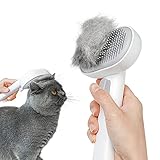
- 【Professional Cat Hair Brush】Perfect gift for pet owners, vets, and pet groomers. Using this cat brush for long haired cats on a regular basis can gently and effectively remove loose hair, tangles, knots, dander and trapped dirt. Suitable for short, medium or long, thick, thin or curly haired dogs/cats/rabbits, making your pets shiny and healthy.
- 【Skin-friendly Massage Needles】The mental pins on the cat brush with release button have round rubber tips on the ends. As a cat deshedding brush, it's perfect for shedding and massaging your pets without scratching your pet's skin, even the sensitive skin. After use, you can hang it with the silicone loop strap to protect the bent needle.
- 【Upgraded High Quality Material】The our long hair cat grooming brush made of durable 304 stainless steel and fine ABS material. Our wire bristles is 1.2 times as thick as bristles of other deshedding brush for cats. More sturdy and not easy to deform, can be used for a long time. 150° bent needles designed to penetrate deep into the coat are really easier to groom the undercoat well.
- 【One-click Cleaning Button】After brushing your pet, simply click the button. The shutter will pop out, separating the brushed hair from the metal needle, then wipe the hair off. The button of cat shedding brush on the handle saves time and energy when grooming and cleaning.
- 【SUPPORT · 365 Days】If the pet hair brush have any problems during use, we will provide you with replacement or 100% money back. And we have a professional customer service team and pet experts to provide you with the pre-sales and after-sales service. aumuca is always at your side.
How often are hairballs normal?
There is no universal number that guarantees safety for every cat. Cornell describes an occasional hairball—roughly once every week or two in its article—as not necessarily abnormal when the cat is otherwise well. That observation is not a population statistic or a promise that this frequency is safe for an individual animal. VCA recommends contacting a veterinarian when hairballs occur more than once a month. The practical decision is to watch the pattern and your cat’s overall condition rather than rely on a single cutoff.
- Contact your veterinarian if hairballs are becoming more frequent, larger, harder to pass, or different from your cat’s usual pattern.
- Arrange prompt evaluation when vomiting occurs more than once a week, or when vomiting is accompanied by weakness, lethargy, reduced appetite, blood, diarrhea, or changes in thirst or urination, as outlined in Cornell’s vomiting guidance.
- Do not assume every coughing or gagging episode is a hairball. Hacking can instead reflect a respiratory problem such as asthma.
These frequency markers come from different veterinary guidance and are not interchangeable. Cornell’s description of an occasional hairball is not a reason to wait if your cat is unwell; VCA’s more cautious contact threshold is another reason to ask a veterinarian when episodes recur. Pay attention to changes from your cat’s normal pattern, and seek advice sooner if you are worried or other symptoms appear.
How to reduce hairballs with grooming
Brushing works by removing loose fur while it is still on the coat, before your cat can ingest it. Cornell recommends making daily brushing and combing a habit, and Merck also advises frequent brushing to limit swallowed hair. The right interval depends on coat length, shedding, tolerance, and how quickly the coat mats; long-haired cats and cats in heavy shedding periods usually need the most consistent attention.
There is no specific brush or comb brand established as best. Choose a tool appropriate to your cat’s coat and individual tolerance, and focus on removing loose fur without irritating the skin. If a cat has a long coat or is shedding heavily, check the coat regularly rather than waiting until loose fur or tangles have accumulated. A routine that your cat will accept consistently is more useful than a tool or session that causes distress.
Build a tolerable brushing routine
- Choose a calm time. Start when your cat is relaxed, not immediately after a stressful event or during energetic play.
- Use a tool suited to the coat. A comb or brush should reach loose undercoat without scraping or cutting the skin. There is no particular brand or model established as superior; select a tool your cat accepts and that removes loose fur effectively.
- Begin with brief sessions. A few gentle strokes followed by a pause and reward is better than restraining a frightened cat for a long session. Gradually extend the session as tolerance improves.
- Work in the direction of hair growth. Use light pressure and check the skin as you go, especially around the neck, armpits, belly, hindquarters, and behind the ears, where tangles can hide.
- Stop for pain, skin changes, or severe resistance. Pulling through mats can injure the skin. If detangling is painful or impossible, ask a veterinarian or qualified professional groomer for help rather than cutting close to the skin at home.
- Remove collected fur and clean the tool. Dispose of loose hair so it cannot be swallowed during later play or grooming.
Consistency matters more than an occasional intensive session. Put brushing on the same daily schedule, and increase attention during visible shedding. If your cat will not tolerate a full-body session, divide it into short sessions focused on one area at a time.
When grooming reveals a medical problem
Excessive self-grooming, bald patches, scabs, redness, dandruff, or repeated licking of one area can indicate a skin, allergy, parasite, pain, or other medical issue rather than a simple hairball tendency. Cornell advises raising excessive grooming and hair loss with a veterinarian. Treating the underlying cause can reduce both the abnormal grooming and the amount of hair swallowed.
Rank #2

- Cat brushes for long haired cats and short haired cats
- Soft Tip Bristles:Cat comb with soft tip bristles, helping to break up tangles and mats effectively,Your pet will enjoy the gentle massaging
- Soft Gel Handle:Super soft handle with anti-skid curved silicone gel, keeps your hand comfortable while grooming
- Self-Cleaning Button:Simply push the release button, and all the fur will come off the bristles, no more digging in between bristles to get the hair out
- Premium Material:The cat grooming brush is made of resistant and durable material, free of toxins and chemicals, healthy and easy to use
Brushing may help remove fur, but it does not explain why a cat is grooming excessively or treat irritated skin. If grooming exposes hair loss or skin changes, note where they occur and raise them during a veterinary visit. Avoid treating the coat alone as the answer when the cat’s behavior or skin has changed.
Can hairball-control food help?
Some commercial cat foods and treats are formulated to help prevent hairballs. Veterinary references describe these products as an option, but the sources do not establish a best formula, brand, or guaranteed success rate. A diet that is appropriate for one cat may conflict with another cat’s kidney, urinary, gastrointestinal, allergy, weight, or other dietary needs.
| Approach | What the evidence supports | How to use it safely |
|---|---|---|
| Hairball-formulated food or treats | Some commercial products are designed to help with hairballs; no specific formula is established as best. | Discuss the change with your veterinarian, particularly if your cat has another health condition or a prescribed diet. Introduce any new food gradually according to veterinary advice. |
| Regular maintenance diet | A complete diet supports general health, but ordinary food should not be assumed to prevent or clear an obstruction. | Do not replace a medically indicated diet solely because a product makes a hairball claim. |
| Home-added oils, laxatives, or similar remedies | Evidence and safety vary, and a product cannot be assumed to move an obstructing hairball. | Do not give a laxative or home remedy without veterinary approval and supervision. |
Cornell specifically advises veterinary approval and supervision for commercial diets that claim to prevent or relieve an obstruction. A food may support passage of hair in some circumstances, but it is not an emergency treatment and should never delay an examination when symptoms are concerning.
Think of a diet change as a possible prevention discussion, not a way to diagnose or treat a current episode. Before switching, tell your veterinarian what your cat currently eats, whether it has a prescribed diet, and what other health concerns it has. A hairball claim alone does not establish that a product is appropriate for every cat, and the available veterinary sources do not identify a universally superior formula.
What about hairball gels and lubricants?
Veterinary references mention lubricants or medicines in selected cases. VCA describes hairball gels as over-the-counter supplements that should be used under veterinary direction, while Cornell strongly cautions against giving a laxative without veterinary approval and supervision. These products should therefore be treated as clinician-directed options, not routine self-treatment.
The Tool Desk
Outbyte Driver Updater FREEScan for outdated or missing drivers - takes under a minuteDriver Scan →Outbyte PC Repair FREERepair Windows errors before they cause bigger problemsFix Now →- Ask your veterinarian whether a lubricant is appropriate for your cat, considering age, medical history, medications, hydration, and the possibility of an obstruction.
- Follow the exact product and dosing instructions your veterinarian provides; do not extrapolate a dose from another cat or an internet post.
- Never use a gel or laxative to “wait out” repeated vomiting, unproductive retching, severe pain, or inability to keep water down.
- Remember that, in the United States, the FDA does not review non-drug health products for safety or effectiveness before sale. This regulatory statement is specific to the U.S.; rules differ in other countries. VCA discusses lubricants, gels, and this regulatory limitation.
An over-the-counter label does not mean a product has been reviewed in the United States for safety or effectiveness before sale. That fact does not prove that a particular gel is unsafe or ineffective; it is a reason to ask your veterinarian which product, if any, fits your cat’s situation. A supplement is not a substitute for veterinary assessment of repeated vomiting or suspected blockage.
Rank #3

- 【Easy Desheding】: Swihauk self cleaning dog brush for long haired dogs with release bottom helps effortlessly reduce shedding. A must have dog brush for short haired dogs, cat brush for indoor cats, cat brush for shedding, slicker brush for dogs.
- 【Safe Design】: Soft and protective plastic round head bristles creating a comfortable feeling while deshedding without hurting your pet. Ideal puppy brush for small dogs, dog brush for shedding and grooming.
- 【Sturdy & Durable】: Premium stainless steel metal and compact design make our product sturdy and durable for long term use.
- 【Ergonomic Design】: Press bottom for easy cleaning, high-quality & lightweight TPR handle make your grooming effortlessly.
- 【Effective to Remove Loose Fur】: Swihauk pet grooming brush is effective to remove loose fur, suitable for dogs, cat with long and short hair, perfect for your lovely pet like puppies, golden retriever, rabbit, kitten, bunny, yokie and more.
When is a hairball an emergency?
A cat that repeatedly retches without producing anything, repeatedly vomits, becomes lethargic, or stops eating may have an obstruction or another illness. Richard Goldstein, DVM, an associate professor of small animal medicine identified by Cornell, warns that an intestinal obstruction by a hairball can be fatal without surgical intervention. His warning concerns an uncommon but serious complication—not the usual occasional hairball.
Seek veterinary care without delay for:
- Repeated unproductive retching or repeated true vomiting.
- Inability to keep food or water down.
- Lethargy, weakness, collapse, obvious abdominal pain, or a worsening condition.
- Refusal to eat for more than a day or two.
- Blood in vomit, diarrhea, or marked changes in thirst or urination.
- A known or suspected swallowed string, ribbon, plastic, toy part, or other foreign material.
Cornell’s expert guidance states: “A cat that is lethargic, refuses to eat for more than a day or two or has had repeated episodes of unproductive retching or true vomiting should be examined by a veterinarian without delay, he advises.” If symptoms are severe or progressing, use an emergency veterinary service rather than waiting for a grooming or diet adjustment to work.
Repeated vomiting is not proof of an obstruction, but it should not be dismissed as “just a hairball”: vomiting can have causes other than swallowed fur, and hacking may be respiratory rather than digestive. Similarly, a single apparently ordinary episode does not establish that a hairball is the cause of every later episode. A veterinarian can assess symptoms and determine the next steps. If your cat is worsening or cannot keep food or water down, do not wait to see whether brushing or a food change helps.
Crashes, No Sound, or Screen Glitches?
Random freezes, missing sound and display glitches usually trace back to one bad driver. Find and replace yours safely.Free scan · under a minuteWindows Errors? Fix Them Before They Spread
Repair common Windows errors and clear accumulated junk for a smoother, more stable PC - no reinstall needed.Free scan · no reinstallPrevent other blockages in the home
Not every obstruction involves hair. Swallowed foreign material—especially strings and similar objects—can cause a serious blockage. Keep thread, yarn, ribbon, dental floss, elastic bands, small plastic pieces, and toy parts inaccessible. If you see string hanging from your cat’s mouth or anus, do not pull it; contact a veterinarian for instructions, because pulling can worsen an internal injury.
Make string safety part of ordinary housekeeping: put away sewing and craft supplies, and check toys for loose parts. Cornell identifies swallowed foreign material as a possible source of serious obstruction, so prevention matters even in a cat whose hairballs have become less frequent. If you suspect your cat has swallowed an object, contact a veterinarian rather than trying a hairball remedy.
How to tell a hairball episode from coughing or vomiting
Owners often describe any gagging sound as a hairball, but the distinction matters. Vomiting usually involves abdominal effort and may produce food, fluid, foam, or hair. Coughing is a respiratory action and may be accompanied by a crouched posture with the neck extended; Cornell notes that hacking can reflect asthma or another respiratory disease. Repeated episodes, uncertainty about what you are seeing, or any breathing difficulty warrants veterinary advice.
Rank #4

- WORLD’S #1 CAT HAIR BRUSH: Our cat grooming brush / cat shedding brush is the world's best patented pet grooming brush for cats, small dogs, and rabbits. It is the perfect cat deshedding brush, short hair cat brush, & cat brush for long haired cats.
- EASY AND FAST CLEANUP: SleekEZ Deshedding Grooming Tool is great for removing hair and fur from carpets, pet bedding, cat trees, and more! Our cat comb for shedding is also an amazing pet hair remover and cat fur remover / cat hair remover brush.
- ALL HAIR & FUR TYPES: It is the perfect cat comb for long haired cats and cat brush for short haired cats. SleekEZ works as a deshedding brush for cats, cat deshedding tool, undercoat brush for cats, cat fur brush, cat deshedder, & small dog brush.
- PAINLESS AND ENJOYABLE: SleekEZ serves as a versatile kitten brush, puppy brush for small dogs, & bunny brush / rabbit brush. It's the best pet hair brush on the market and is an absolute essential for cat shedding control!
- GREAT GIFT: SleekEZ makes the industry's leading cat combs for indoor cats & shedding brush cat hair. It is a must have for any cat grooming kit, cat essentials for indoor cats, & cat supplies. Also an amazing cat dander remover & cat undercoat brush
If safe to do so, record a short video of an episode for your veterinarian and note what came up, how long the event lasted, how often it happens, and whether appetite, drinking, stool, urination, or activity changed. Do not delay urgent care to obtain a recording.
What’s actually slowing this PC down?
Pick the symptom - the matching free tool is one click away.
When describing an episode, be as specific as you can: did your cat bring up hair, food, foam, or nothing; did it happen once or recur; and is the cat acting normally afterward? Those observations help a veterinarian understand the pattern, but they cannot reliably rule out an obstruction or another illness at home. If the event is repeated or accompanied by other warning signs, seek professional advice promptly.
Independent reader supportYour contribution helps us test, update, and keep practical guides available for everyone.A practical hairball-reduction plan
- Start a coat log. Record coat type, brushing frequency, visible shedding, hairballs, vomiting, appetite, stool, and activity. A change from your cat’s baseline is useful information for a veterinarian.
- Brush or comb on a dependable schedule. Aim for daily grooming when tolerated, with extra attention during shedding and to long-haired areas that mat easily.
- Inspect the skin while grooming. Note bald spots, redness, crusts, parasites, mats, or signs of pain. Arrange an examination for excessive grooming or hair loss.
- Make the environment string-safe. Store ingestible objects behind closed doors and check toys regularly for loose parts.
- Discuss diet before changing it. Ask whether a hairball-formulated food fits your cat’s nutritional and medical needs. Do not assume a claim means an obstruction can be prevented or treated.
- Ask before using a gel or laxative. Use only a veterinarian-directed product and plan; never self-treat a cat with warning signs.
- Escalate based on symptoms, not just frequency. A cat that is bright, eating, drinking, and passing stool may be monitored while you improve grooming, but repeated vomiting, retching, lethargy, appetite loss, blood, diarrhea, or altered thirst or urination calls for veterinary assessment.
Keep the log simple enough to maintain. The useful information is whether episodes are increasing or changing, whether your cat is eating and behaving as usual, and whether other signs accompany them. Bring your notes or video to the appointment if you have one, but never let record-keeping delay care for a cat that is deteriorating.
Questions to take to your veterinarian
- Is the episode more consistent with vomiting, coughing, or retching?
- Could skin disease, allergy, parasites, pain, or anxiety be causing excessive grooming?
- Would a hairball-formulated food be appropriate with my cat’s current diet and medical conditions?
- Is a lubricant or hairball gel suitable, and what exact product and instructions should I use?
- Which changes in appetite, stool, drinking, urination, or activity should trigger an urgent call?
Regular grooming is the low-risk foundation: it reduces the loose fur available to swallow without pretending to diagnose the cause of vomiting. Diets and gels can be considered as supervised additions, while any pattern of repeated vomiting or unproductive retching should be treated as a medical problem until a veterinarian determines otherwise.
Frequently Asked Questions
How do I stop my cat from getting hairballs?
You may not be able to prevent every hairball, but regular brushing or combing removes loose fur before your cat swallows it. Make grooming consistent, especially for long-haired cats and during shedding periods. Discuss hairball-formulated foods or lubricants with a veterinarian rather than relying on them as a cure.
Free tools Windows power users keep installed
One-click scans. No signup required.
How often should I brush my cat?
Cornell recommends making daily brushing and combing a habit to minimize hairballs and complications; Merck also recommends frequent brushing. Adjust the routine to your cat’s coat, shedding, and tolerance. Long-haired cats and cats shedding heavily generally need especially consistent attention.
Best Value

- REMOVES LOOSE FUR & UNDERCOAT: The 5-inch EquiGroomer deshedding brush gently pulls loose hair and undercoat from cats and dogs without cutting healthy fur.
- PERFECT SIZE FOR CATS & SMALL DOGS: The compact 5-inch blade fits smaller pets and tight spots - face, legs and paws - for easy, precise grooming.
- WORKS ON SHORT & LONG HAIR: Rounded stainless-steel teeth glide through any coat, reducing shedding while keeping your pet calm and comfortable.
- LESS SHEDDING, LESS MESS: Regular use dramatically cuts loose hair on furniture, floors and clothes and leaves a softer, shinier coat.
- COMFORT-GRIP HANDLE: A lightweight, ergonomic handle gives you full control for quick, stress-free grooming sessions.
Can hairball food help?
Some commercial foods and treats are formulated to help with hairballs, but veterinary sources do not establish a best brand or guaranteed success rate. Ask your veterinarian whether a particular diet fits your cat’s health and any prescribed food. A hairball food is not treatment for a suspected obstruction.
Are hairball gels or laxatives safe to give at home?
Veterinary references describe gels or lubricants as options for selected cases, but VCA advises using hairball gels under veterinary direction, and Cornell cautions against giving laxatives without veterinary approval and supervision. Ask for the exact product and instructions; never use one to delay care for repeated vomiting or retching.
When is a hairball an emergency?
Seek prompt veterinary care for repeated unproductive retching or vomiting, lethargy, weakness, refusal to eat, inability to keep food or water down, blood, diarrhea, or changes in thirst or urination. These signs can reflect obstruction or another illness, not just a hairball. Cornell’s vomiting guidance also recommends evaluation when vomiting happens more than once a week.
Recommended Free Tools
Is it normal for a cat to cough or gag like it has a hairball?
Not necessarily. Hacking can indicate a respiratory problem such as asthma, and coughing, vomiting, and retching can be confused. If episodes repeat, you are unsure what you are seeing, or your cat has breathing difficulty, contact a veterinarian. A short video can help explain an episode if recording it does not delay urgent care.
The Bottom Line
Brush or comb regularly to remove loose fur before it is swallowed, with extra consistency for long-haired cats and during shedding. Treat hairball foods and gels as veterinarian-guided options, not guaranteed prevention or treatment. Repeated vomiting or unproductive retching, lethargy, appetite loss, or other worsening signs warrant prompt veterinary care.
Quick Recap
Product prices and availability are accurate as of the date/time indicated and are subject to change. Any price and availability information displayed on Amazon at the time of purchase will apply.




