Do these 3 things before closing this tab:
1Scan for outdated or missing drivers - takes under a minute2Repair Windows errors before they cause bigger problems3Fix the driver behind crashes, sound loss and screen glitchesCats swallow some loose hair while grooming, and that alone is usually not a sign of illness. Repeatedly chewing or pulling out fur, developing bald or irritated patches, or producing more hairballs than usual is different: it can point to itchy skin, pain, stress, or another problem that needs a veterinarian’s assessment. The behavior by itself cannot identify the cause.
When eating fur is part of grooming—and when it may be a problem
A cat’s tongue removes loose hair during grooming, and some of that hair is swallowed. A hairball vomited occasionally can occur as part of this process; VCA Animal Hospitals discusses hairballs in its guidance on vomiting in cats. Swallowing some hair while grooming does not, by itself, mean a cat has pica or a disease.
As an Amazon Associate I earn from qualifying purchases.
The concern is a change in the cat’s behavior or coat, not simply seeing a cat groom. Look for repeated biting or pulling at the coat, thinning or bare patches, broken hairs, irritated or wounded skin, or a noticeable rise in hairballs. Cornell Feline Health Center describes hair loss or excessive hairballs from licking as abnormal; PetMD’s January 10, 2025 article, reviewed by Hannah Hart, DVM, also advises an exam for a sudden increase in grooming, bald patches, irritated skin, or more hairballs.
Published estimates illustrate how much normal grooming can vary: Cornell reports that cats may groom for 30–50% of the day, while PetMD gives up to 50% of waking hours. These are approximate figures from the respective sources, not a diagnostic threshold. Neither source establishes a number of minutes that an owner can use to diagnose overgrooming. A meaningful change from your cat’s usual habits, especially alongside coat or skin damage, is more useful to report.
#1 Best Overall
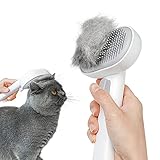
- 【Professional Cat Hair Brush】Perfect gift for pet owners, vets, and pet groomers. Using this cat brush for long haired cats on a regular basis can gently and effectively remove loose hair, tangles, knots, dander and trapped dirt. Suitable for short, medium or long, thick, thin or curly haired dogs/cats/rabbits, making your pets shiny and healthy.
- 【Skin-friendly Massage Needles】The mental pins on the cat brush with release button have round rubber tips on the ends. As a cat deshedding brush, it's perfect for shedding and massaging your pets without scratching your pet's skin, even the sensitive skin. After use, you can hang it with the silicone loop strap to protect the bent needle.
- 【Upgraded High Quality Material】The our long hair cat grooming brush made of durable 304 stainless steel and fine ABS material. Our wire bristles is 1.2 times as thick as bristles of other deshedding brush for cats. More sturdy and not easy to deform, can be used for a long time. 150° bent needles designed to penetrate deep into the coat are really easier to groom the undercoat well.
- 【One-click Cleaning Button】After brushing your pet, simply click the button. The shutter will pop out, separating the brushed hair from the metal needle, then wipe the hair off. The button of cat shedding brush on the handle saves time and energy when grooming and cleaning.
- 【SUPPORT · 365 Days】If the pet hair brush have any problems during use, we will provide you with replacement or 100% money back. And we have a professional customer service team and pet experts to provide you with the pre-sales and after-sales service. aumuca is always at your side.
What “overgrooming” and “pica” mean
Overgrooming removes fur or damages skin
Overgrooming describes grooming that is excessive enough to remove fur or harm the skin. A cat may lick, chew, or pull hair from a particular area, leaving thinning, bare patches, broken hairs, redness, or wounds. Repeated fur chewing can be overgrooming even if you do not see the cat swallow the hair. The visible pattern can help a veterinarian understand what is happening, but it does not establish the cause.
Pica involves persistent consumption of non-food material
UC Davis School of Veterinary Medicine defines pica as persistent chewing and consumption of non-nutritive substances. A brief observation of a cat grooming or swallowing loose fur is not enough to label the behavior pica. Persistent consumption of fur, or chewing and eating other non-food materials, raises a broader abnormal-eating concern; UC Davis notes that pica can have multiple causes and that medical problems should be ruled out.
These descriptions can overlap in everyday conversation, but they are not interchangeable diagnoses. A cat may be removing fur through overgrooming; persistent eating of fur or other non-food material may also prompt a veterinarian to consider abnormal eating behavior. Describe exactly what you see rather than trying to assign a label at home.
Free tools Windows power users keep installed
One-click scans. No signup required.
Why a cat may chew or pull out its fur
Several problems can produce similar licking and chewing, so the appearance of the coat alone cannot reliably distinguish them. Skin irritation, parasites, allergy, infection, pain, and behavioral factors are among the possibilities described by PetMD, UC Davis, and VCA Animal Hospitals.
Itchy or irritated skin
Fleas and other parasites, allergies, and skin infections can make a cat itch or feel irritated, prompting repeated licking or chewing. PetMD lists flea allergy, mites, environmental allergy, food allergy, and infections as possible contributors to overgrooming. A pattern of hair loss may provide clues, but it does not confirm which condition is present. Even if the behavior looks focused on the skin, an examination is needed to assess the cause.
Pain or discomfort
A cat may repeatedly groom an area that hurts or feels uncomfortable. PetMD gives back pain and discomfort around the lower belly or genital area as examples where the location of grooming can be informative. Note where your cat is chewing and whether the behavior is concentrated in one area, then share that observation with the veterinarian. Location can be a clue, not a diagnosis.
Rank #2

- Cat brushes for long haired cats and short haired cats
- Soft Tip Bristles:Cat comb with soft tip bristles, helping to break up tangles and mats effectively,Your pet will enjoy the gentle massaging
- Soft Gel Handle:Super soft handle with anti-skid curved silicone gel, keeps your hand comfortable while grooming
- Self-Cleaning Button:Simply push the release button, and all the fur will come off the bristles, no more digging in between bristles to get the hair out
- Premium Material:The cat grooming brush is made of resistant and durable material, free of toxins and chemicals, healthy and easy to use
Stress, anxiety, boredom, or compulsive behavior
Changes in routine or environment, anxiety, and inadequate stimulation may contribute to excessive grooming or abnormal eating. PetMD includes stress and boredom among possible overgrooming contributors; UC Davis lists anxiety, boredom or lack of enrichment, and compulsive disorder among possible contributors to pica. These possibilities do not mean that a behavior is “just stress.” Medical causes should be considered rather than assumed away based on the timing or appearance of the behavior.
If repetitive behavior continues after medical causes have been ruled out, a veterinarian may recommend additional behavioral help. VCA Animal Hospitals notes that a veterinary behaviorist may be recommended for pica once medical causes have been excluded.
How to interpret the pattern you see
Normal grooming generally leaves the coat intact and follows the cat’s familiar routine. Overgrooming is more likely when grooming has clearly increased or has caused thinning, broken hairs, baldness, redness, or wounds. Abnormal eating is a separate concern when you repeatedly see the cat consume fur or other non-food items rather than merely swallow loose hairs during ordinary grooming.
- Loose hair swallowed during routine grooming: often part of normal self-care, particularly if the coat and skin remain healthy.
- Focused licking or chewing: may indicate itch, pain, irritation, or a behavioral problem, especially when it targets one body area.
- Fur removal or skin injury: signals that grooming has become damaging and warrants an examination.
- Repeated eating of fur or other non-food material: should be described to a veterinarian rather than self-diagnosed as pica.
These categories are practical descriptions, not a home diagnostic test. A cat can have more than one contributor, and the same visible sign can occur with different conditions.
When to call a veterinarian
Arrange an appointment if fur chewing or grooming is new, persistent, increasing, or damaging the coat or skin. Contact your veterinarian if you notice bald patches, broken or irritated skin, wounds, or more hairballs than is usual for your cat. Also ask for guidance about persistent chewing or eating of fur or other non-food material. These signs merit an assessment because skin disease, parasites, allergy, pain, and behavioral contributors can look similar at home.
What’s actually slowing this PC down?
Pick the symptom - the matching free tool is one click away.
Do not wait for a particular amount of fur loss or a set number of grooming minutes: the sources do not establish a universal threshold. A sudden or substantial change in your individual cat’s pattern, especially together with visible skin or coat changes, is reason to call. Oregon Veterinary Medical Association guidance on feline overgrooming also supports veterinary attention for the behavior.
Rank #3

- 【Easy Desheding】: Swihauk self cleaning dog brush for long haired dogs with release bottom helps effortlessly reduce shedding. A must have dog brush for short haired dogs, cat brush for indoor cats, cat brush for shedding, slicker brush for dogs.
- 【Safe Design】: Soft and protective plastic round head bristles creating a comfortable feeling while deshedding without hurting your pet. Ideal puppy brush for small dogs, dog brush for shedding and grooming.
- 【Sturdy & Durable】: Premium stainless steel metal and compact design make our product sturdy and durable for long term use.
- 【Ergonomic Design】: Press bottom for easy cleaning, high-quality & lightweight TPR handle make your grooming effortlessly.
- 【Effective to Remove Loose Fur】: Swihauk pet grooming brush is effective to remove loose fur, suitable for dogs, cat with long and short hair, perfect for your lovely pet like puppies, golden retriever, rabbit, kitten, bunny, yokie and more.
When to seek prompt triage
The available veterinary guidance does not define an emergency threshold based on a specific quantity of swallowed self-fur. If your cat seems acutely unwell, cannot keep food or water down, or you are concerned about a large ingestion, contact a veterinarian or emergency clinic promptly for case-specific advice. This is not a complete symptom checklist, and it does not mean that a hair blockage has been diagnosed. VCA discusses veterinary assessment of vomiting, while PetMD notes that accumulated fur can cause digestive problems in some overgrooming cases.
What to observe and share at the appointment
A short, factual history can help the veterinarian understand the pattern. You do not need to diagnose the problem or perform a home test; the sources do not prescribe a universal owner diagnostic test. Before the visit, note:
- When the licking, biting, or fur eating began, and whether it is becoming more frequent.
- Which parts of the body your cat targets, and whether the behavior seems focused in one area.
- Any thinning, bare patches, broken hairs, redness, irritation, or wounds you have noticed.
- Whether hairballs have become more frequent than usual, or whether you have seen chewing or eating of other non-food materials.
- Any recent changes in routine or environment that may help put the timing in context.
Bring those observations to the appointment and describe what you have actually seen, including what has changed from your cat’s usual behavior. This helps avoid mistaking a possible contributor for a confirmed cause; the veterinarian can assess the history and examine the cat.
What to do while arranging care
Keep the observations going; do not assume it is behavioral
Continue to note where and when the chewing happens and whether the skin or coat changes. A recent household or routine change may be relevant information, but it does not prove that stress is the cause. Avoid treating persistent or damaging fur chewing as purely behavioral before medical causes have been considered.
Use grooming and enrichment only for their limited purpose
A grooming brush can help manage loose coat hair, but it does not treat itching, pain, compulsive fur chewing, or hair loss. If you use one, the goal is loose-fur management—not to test whether your cat has a medical problem or to delay an assessment. When choosing any brush, consider its intended use, whether it suits your cat’s coat, how easy it is to clean, and whether you can use it safely under supervision. No particular brush, model, price, or coat-specific recommendation is established by the cited guidance.
If boredom or inadequate stimulation may be contributing, predictable routines and opportunities for activity may help. UC Davis identifies exercise, mental stimulation, interactive toys, and social interaction as relevant to boredom-related abnormal behavior. Toys or food puzzles are enrichment options, not treatment for a skin condition or a substitute for veterinary evaluation when chewing is persistent or damaging. Use any toy or puzzle with attention to the cat’s safety and the intended activity rather than as a remedy for fur loss.
Rank #4

- WORLD’S #1 CAT HAIR BRUSH: Our cat grooming brush / cat shedding brush is the world's best patented pet grooming brush for cats, small dogs, and rabbits. It is the perfect cat deshedding brush, short hair cat brush, & cat brush for long haired cats.
- EASY AND FAST CLEANUP: SleekEZ Deshedding Grooming Tool is great for removing hair and fur from carpets, pet bedding, cat trees, and more! Our cat comb for shedding is also an amazing pet hair remover and cat fur remover / cat hair remover brush.
- ALL HAIR & FUR TYPES: It is the perfect cat comb for long haired cats and cat brush for short haired cats. SleekEZ works as a deshedding brush for cats, cat deshedding tool, undercoat brush for cats, cat fur brush, cat deshedder, & small dog brush.
- PAINLESS AND ENJOYABLE: SleekEZ serves as a versatile kitten brush, puppy brush for small dogs, & bunny brush / rabbit brush. It's the best pet hair brush on the market and is an absolute essential for cat shedding control!
- GREAT GIFT: SleekEZ makes the industry's leading cat combs for indoor cats & shedding brush cat hair. It is a must have for any cat grooming kit, cat essentials for indoor cats, & cat supplies. Also an amazing cat dander remover & cat undercoat brush
Until the cause is assessed, keep the distinction clear: ordinary grooming can involve swallowing loose hair, while repeated fur removal, skin injury, persistent abnormal eating, or a marked change in hairballs calls for veterinary guidance. A brush or enrichment may address loose hair or activity needs, but neither can determine why your cat is chewing its coat.
The Tool Desk
Outbyte Driver Updater FREEFix the driver behind crashes, sound loss and screen glitchesFind Drivers →Outbyte PC Repair FREERepair Windows errors before they cause bigger problemsFix Now →Frequently asked questions
Is it normal for a cat to swallow fur?
Yes, cats commonly swallow some loose hair while grooming, and an occasional hairball can occur. It becomes concerning when grooming changes noticeably, fur is being removed, skin is damaged, hairballs increase, or the cat persistently consumes fur or other non-food material.
Does eating fur automatically mean my cat has pica?
No. UC Davis defines pica as persistent chewing and consumption of non-nutritive substances. A brief sighting of swallowed loose hair is not enough to make that diagnosis. Tell the veterinarian whether the behavior is repeated and whether other non-food items are involved.
Could stress be the reason my cat is chewing its coat?
Stress, anxiety, boredom, and inadequate enrichment can contribute, but they should not be assumed from appearance alone. Fleas, mites, allergies, infection, and pain can look similar. Medical causes need consideration before a behavior is treated as purely emotional.
Will brushing stop my cat from eating its fur?
Brushing may remove loose coat hair and can be part of routine grooming, but it does not diagnose or treat itching, pain, compulsive behavior, or hair loss. Choose an appropriate, clean brush and supervise its use; do not use it to postpone an examination.
How many hairballs are too many?
No universal number is established in the cited guidance. Compare your cat with its own usual pattern. A noticeable increase, especially alongside excessive licking, bald areas, irritated skin, vomiting, or an unwell appearance, is a reason to contact a veterinarian.
Best Value

- REMOVES LOOSE FUR & UNDERCOAT: The 5-inch EquiGroomer deshedding brush gently pulls loose hair and undercoat from cats and dogs without cutting healthy fur.
- PERFECT SIZE FOR CATS & SMALL DOGS: The compact 5-inch blade fits smaller pets and tight spots - face, legs and paws - for easy, precise grooming.
- WORKS ON SHORT & LONG HAIR: Rounded stainless-steel teeth glide through any coat, reducing shedding while keeping your pet calm and comfortable.
- LESS SHEDDING, LESS MESS: Regular use dramatically cuts loose hair on furniture, floors and clothes and leaves a softer, shinier coat.
- COMFORT-GRIP HANDLE: A lightweight, ergonomic handle gives you full control for quick, stress-free grooming sessions.
When should I seek urgent advice?
The guidance does not give an emergency cutoff based on a particular amount of swallowed fur. Seek prompt veterinary or emergency-clinic advice if your cat seems acutely ill, cannot keep food or water down, or you are worried about a large ingestion. That advice is for triage and does not establish that a blockage has occurred.
Frequently Asked Questions
Is it normal for a cat to swallow fur?
Cats commonly swallow some loose hair while grooming, and an occasional hairball can occur. Fur removal, skin damage, a sudden grooming increase, or persistently eating fur is different and merits veterinary advice.
Does eating fur automatically mean pica?
No. Pica involves persistent chewing and consumption of non-nutritive substances. A brief sighting of swallowed loose hair is not enough to diagnose it.
Quick wins for a faster PC:
Clear out junk files and repair common Windows errorsFree Scan →Fix the driver behind crashes, sound loss and screen glitchesFind Drivers →Could stress cause coat chewing?
Stress, anxiety, boredom, and inadequate enrichment are possible contributors, but fleas, allergies, infection, and pain can look similar. Medical causes should be considered first.
Will brushing stop the behavior?
A brush can manage loose coat hair but does not treat itching, pain, compulsive behavior, or hair loss. Use an appropriate brush under supervision and do not delay an examination.
How many hairballs are too many?
There is no universal number. A noticeable increase from your cat’s normal pattern, especially with coat or skin changes, warrants a veterinary call.
When is urgent advice needed?
Contact a veterinarian or emergency clinic promptly if your cat seems acutely unwell, cannot keep food or water down, or you are worried about a large fur ingestion.
PC Slower Than It Used to Be?
A free scan shows the junk files, broken settings and background clutter dragging Windows down - then fixes them in one click.Free scan · Windows 10 & 11Outdated Drivers Are Slowing You Down
One free scan finds every outdated or missing driver and matches the right update for your exact hardware.Free scan · exact hardware matchThe Bottom Line
Swallowing loose hair during ordinary grooming can be normal. Repeated fur chewing or pulling, bald or irritated skin, persistent eating of fur or other non-food material, or more hairballs than usual should prompt a veterinary assessment. Track the pattern, avoid assuming stress is the cause, and use brushing or enrichment only as supportive measures—not as a substitute for finding the underlying problem.
Quick Recap
Product prices and availability are accurate as of the date/time indicated and are subject to change. Any price and availability information displayed on Amazon at the time of purchase will apply.




