
Some links on this page are affiliate links: if you buy through them we may earn a commission, at no extra cost to you.
The most reliable way to get cat hair off a couch is a four-part sequence: check the upholstery label, vacuum loose hair from every surface and gap, lift embedded residue with a roller or slightly damp rubber glove, then deal with odor as a separate problem. Start gently, test any new tool in a hidden spot, and stop if the fabric reacts.
This method works because each tool handles a different kind of mess. Suction removes loose hair, mechanical collection catches strands left on the surface, and odor treatment addresses compounds that hair-removal tools cannot touch.
As an Amazon Associate I earn from qualifying purchases.
The four-step method at a glance
| Step | What to do | Best for | Important limitation |
|---|---|---|---|
| 1. Check and test | Read the couch-care instructions and test the chosen tool in an inconspicuous area. | Preventing discoloration, pulls, water marks, or other fabric damage. | Not every method is suitable for every upholstery fabric. |
| 2. Vacuum | Use an upholstery or pet-hair nozzle and work over cushions, seams, cushion junctions, and beneath removable cushions. | Loose hair, surface hair, and hair collected in gaps. | Vacuuming may leave strands woven into the fabric. |
| 3. Collect residue | Use a lint roller, adhesive tape, reusable fabric brush, or a clean rubber glove that is only slightly damp. | Stray and embedded hairs left after suction. | Hard edges can damage delicate weaves; moisture is unsuitable for some labels. |
| 4. Treat odor separately | Use an appropriate odor-neutralizing approach, especially for urine, instead of expecting a hair tool to remove smell. | Lingering pet odor or urine contamination. | Freshener masks or reduces odor; it does not remove hair or necessarily neutralize urine. |
There is no single tool that is best for every sofa. Fabric type, hair depth, the amount of hair, and the couch’s care instructions determine which combination is safest.
Step 1: Check the upholstery label and test first
Before applying water, adhesive, bristles, or a new attachment, find the furniture-care label or the manufacturer’s cleaning instructions. Follow the method specified for that upholstery. VCA and Ask A Vet both caution that a technique that works on one fabric may be unsuitable for another.
Popular on Amazon

- Know when it's full: the translucent window shows you when its time to empty
- Easy empty: A latch keeps the dust bin door secured in place and is simple to open with a press of the button
- Reusable and sturdy: no more ripping and throwing away sticky tape
- Comfortable grip: rubber, over-molded grip for better handheld comfort
- Amazing pick up: remove dog hair and cat hair easily
What to check
- Whether the instructions permit the type of cleaning you plan to use.
- Whether removable cushion covers have separate washing instructions.
- Whether the fabric has a loose, looped, textured, or otherwise delicate weave that could catch on a hard edge.
- Whether the manufacturer warns against moisture, solvents, adhesive products, or vigorous brushing.
If the label is missing or unclear, contact the furniture maker or a professional upholstery cleaner before wetting the fabric. Do not assume that a “pet” attachment or a rubber glove is automatically safe.
How to perform a hidden-area test
- Choose a concealed section, such as the back edge beneath a removable cushion.
- Use the exact tool and pressure you intend to use on the visible upholstery. If you plan to dampen a glove, use the same slight moisture level.
- Work a small patch, then allow it to dry if moisture was involved.
- Check for color transfer, a halo or water mark, raised fibers, snagged loops, or a change in texture.
- Only continue if the fabric looks and feels unchanged. If it reacts, stop and choose a method allowed by the care instructions.
Ask A Vet’s practical rule is simple: test a new tool on an unobtrusive area before using it widely. This small pause is especially important on dark, patterned, vintage, or loosely woven upholstery, where a minor change may be conspicuous.
Step 2: Vacuum the bulk of the cat hair
Vacuuming is the first working pass because it removes the largest amount of loose hair without adding moisture or adhesive. Use an upholstery attachment, animal-hair nozzle, or brush attachment that is compatible with your vacuum. Catster advises going over each surface twice in alternating directions; FOUR PAWS likewise recommends an animal-hair nozzle or brush.
Prepare the couch
- Remove throws, toys, and other objects so the nozzle can contact the upholstery.
- Take off removable cushions if the design allows it.
- Check the care instructions and hidden-area test from Step 1 before using a powered brush or a tool with stiff bristles.
Vacuum in a complete pattern
- Start at the top of the backrest and work downward so loosened hair is not pushed onto an already-cleaned area.
- Pass over the front, back, and sides of each cushion.
- Run the attachment slowly along seams and piping, where hair collects.
- Clean the junction between cushions, then vacuum beneath removable cushions.
- Make a second pass in a direction that crosses the first pass, as recommended by Catster. Alternating directions helps the attachment approach hairs from another angle.
- Use the edge of the upholstery tool carefully around corners rather than forcing it into a gap that could catch fabric.
For a sectional or sofa with reclining mechanisms, follow the same surface-and-gap pattern while keeping the nozzle clear of moving parts. If the vacuum has adjustable suction, use the strongest setting that the care instructions and fabric tolerate; excessive force can pull at a fragile weave.
When vacuuming does not finish the job
Hair that remains after two careful passes is often clinging to the nap, caught in a seam, or woven between fibers. Do not keep grinding a stiff brush over the same patch. Move to Step 3 for controlled collection. Repeated aggressive brushing can create more wear without removing the embedded strands.
Also popular on Amazon
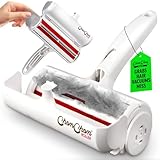
- NO MORE HAIR EVERYWHERE: The ultimate pet hair roller for effective dog and cat hair removal. Far superior to traditional lint rollers for pet hair or sticky rollers, the ChomChom ensures deep cleaning.
- CONVENIENT: Take the ‘fur’ out of ‘furniture’ once and for all! Ideal for cleaning couches, pillows, rugs, and more. Whether it's furniture, your car, or a carpet, this pet lint roller is an essential tool for all pet owners.
- VERSATILE: Not just a dog lint roller, it's adept at cat hair removal too. The lint roller for pet hair extra sticky capability ensures every strand is picked up, leaving your spaces hair-free.
- EASY TO USE: Just roll back and forth along any surface to trap fur and lint into the built-in receptacle. When you’re all done, just press down on the release button to open the pet fur remover and empty it out completely. Purr-fectly simple!
- SUSTAINABLE - This reusable lint roller requires no adhesives or sticky tape, and can be used again and again.
Step 3: Collect the hair that remains
After vacuuming, choose one collection tool based on the fabric and the depth of the remaining hair. A lint roller or adhesive tape is quick for visible residue. A reusable fabric brush can be convenient for repeated touch-ups. A clean rubber glove, used only slightly damp, can gather stubborn hair at low cost.
Option A: Lint roller or adhesive tape
- Use a fresh adhesive sheet or a clean section of tape.
- Roll or press in short, controlled strokes over the hair-covered area.
- Lift the adhesive rather than dragging it forcefully across a delicate weave.
- Replace the sheet when it is covered and no longer picks up efficiently.
Catster’s veterinarian-reviewed instructions put this step after vacuuming: “After you’ve vacuumed the bulk of the hair off your couch, pick up your lint roller to pick up the remaining stray hairs.” Adhesive is convenient for a quick visible cleanup, but the care label should take priority if the surface is fragile or prone to lifting.
Option B: Reusable fabric brush or roller
A reusable brush or roller reduces disposable waste and is useful for frequent touch-ups. Choose a model intended for upholstery, not one with a sharp scraping edge. Work with the grain or nap when the fabric has a visible direction, and use light pressure. If the brush catches, stop and switch to a gentler method rather than pulling through the snag.
The phrase reusable pet hair remover roller for couch describes the type of tool to look for. Check that the product is designed for fabric, that its edge is not abrasive, and that its cleaning instructions do not conflict with the couch label.
Option C: A slightly damp rubber glove
FOUR PAWS recommends rubber gloves for hairy furniture: “stroke the surface of your couch and armchair.” Ask A Vet also lists a clean rubber glove lightly moistened with water as a lower-cost option for collecting hair.
Quick wins for a faster PC:
Repair Windows errors before they cause bigger problemsFix Now →Scan for outdated or missing drivers - takes under a minuteDriver Scan →Clear out junk files and repair common Windows errorsFree Scan →Also popular on Amazon

- Your sticky roller pack includes a unique set of lint rollers and additional refills featuring our traditional spiral cut easy-peel sheets for a total of 450 sheets. We've continuously revised, updated, and now formulated our newest and most effective roller yet.
- Our Canine Executive Officer Jax the Husky graciously shed plenty of hair to evaluate and make sure our extra sticky adhesive effectively picks up pet hair. Besides pet hair removal, our sticky roller is excellent for picking up dust, dirt, and lint with ease leaving your area sleek and clean.
- Our handle was designed for effortless 360° rotation back and forth for a frustration free rolling experience. There's no need to be concerned with or ease of use or about rolling in a specific direction.your pets, furniture, clothing, and carpet.
- Convenient arrows simplify sheet removal, keeping your lint roller hygienic and ideal for maintaining spotless surfaces in pet-friendly homes and high-cleanliness environments.
- With PetLovers extra sticky adhesive, your lint roller doubles as a grooming tool that noticeably removes more hair, dust, and lint from your pets, furniture, clothing, and carpet.
- Use a clean glove with no residue from household chemicals.
- Dampen it lightly; it should feel moist, not wet enough to leave a trail.
- Stroke the upholstery in one direction with gentle, even pressure.
- Gather the hair that forms into small clumps and remove it from the glove.
- Rinse and re-wet the glove as needed, staying within the fabric-care instructions.
Moisture helps hair cling to the glove, but it is not a universal solution. Skip this option if the care label prohibits water or if the hidden-area test shows darkening, a ring, or texture change. Never substitute a soaking-wet glove for a cleaning method approved for the upholstery.
Choosing among the collection tools
| Tool | Hair depth handled | Speed | Reusability | Cleanup effort | Fabric considerations |
|---|---|---|---|---|---|
| Lint roller or adhesive tape | Loose and surface residue | Fast for small areas | Disposable unless using a reusable roller | Discard sheets or tape | Test first on delicate or lifting fabrics. |
| Reusable fabric brush or roller | Surface hair and some clinging strands | Fast once familiar | Designed for repeated use | Empty or clean the tool | Avoid hard edges and excessive pressure on loose weaves. |
| Rubber glove | Stubborn hair that clumps when stroked | Moderate; best for targeted areas | Reusable after rinsing | Rinse and dry the glove | Use only slightly damp and only where the label permits moisture. |
| Upholstery vacuum attachment | Loose hair, seams, and cushion gaps | Best first pass over large areas | Reusable with the vacuum | Empty or clean the vacuum system | Use a compatible attachment and label-appropriate suction. |
Step 4: Treat odor as a separate problem
Hair removal and odor control are different jobs. Catster notes that a fabric freshener may address lingering odor, but it does not remove hair. Applying a scented product to a hairy couch can leave the visible problem untouched and may make it harder to identify the source of a smell.
If the odor is ordinary pet smell
First remove the hair using Steps 2 and 3, then follow the upholstery manufacturer’s approved approach for odor. Ventilation and a fully dry surface matter because damp fabric can develop its own smell. Test any freshener or cleaner in a hidden area, and do not saturate upholstery unless the care instructions specifically allow that method.
If urine has reached the couch
Urine requires neutralization rather than simple deodorizing. Cornell advises avoiding ammonia or vinegar products: their smell can resemble urine to a cat, and they can irritate people or animals. Identify the affected area, follow the couch manufacturer’s instructions, and use a product or professional service intended for that upholstery and contamination. If the odor returns after drying, more urine may remain in the cushion or underlying material; seek professional guidance rather than repeatedly layering fragrance over it.
Recommended Free Tools
If illness or ringworm is suspected
Hair cleanup is not a substitute for infection control. Veterinary Partner recommends daily vacuuming or using lint rollers or duct tape on upholstered furniture as part of a veterinarian-directed cleaning and disinfection plan for ringworm or other infectious conditions. Ask your veterinarian which surfaces, products, laundry steps, and isolation measures apply to your cat and home. Do not improvise a disinfectant regimen around an animal with a suspected contagious disease.
Also popular on Amazon

- Sticky & easy peel off: excellent roller for picking up dust, dirt, lint and removing pet hair. The sticky and easily removable sheets will save you tons of time and energy. Forget about going over the same spot again and again. Instantly pick up dirt and shards even from your most delicate things. Spend no more than a second to effortlessly replace sheets.
- Lightweight, compact & ergonomic design: featuring travel size and lightweight body, these lint rollers for clothes will easily fit in your handbag or your car's glove compartment so you always look presentable on the go. Keep your clothes lint free, especially in the office, at business meetings or while traveling. New upgraded ergonomically designed handles make cleaning easy thanks to the effortless 360° back and forth rotation.
- Multi use: this pack of lint rollers will serve as a perfect assistant in your home, car and office. It can tackle everything from curtains to car seats, and anything in between. Effective for clothes, furniture, sofas, carpets, bed sheets, etc. Does your pet's hair cling to furniture and clothes even though you brush it every day? Our dog & cat hair lint roller will finally help you deal with the fur situation!
- 450 sheets: Polardo lint rollers come with 2 reusable ergonomic grip handles that comfortably fit in your hand, five refills of 90 sticky easy peel off spiraled sheets. With two rollers, you can use one at home and the other at your office or during trips. Total 450 sheets in one package with great value.
- In case you have questions, do not hesitate to reach our team. We are here to help you make the right choice. Just drop us a line, and we’ll answer you as soon as possible.
How to prevent cat hair from building up again
Brush the cat, not just the couch
The ASPCA recommends brushing your cat over the body to remove dead hair and tangles. Regular grooming can reduce the loose hair that reaches furniture, while also giving you a chance to notice mats, skin changes, or unusual shedding. Choose a grooming tool appropriate for your cat’s coat and use calm, gentle handling; stop if brushing causes pain or distress and ask a veterinary professional for advice.
Protect the cat’s favorite seat
A removable, washable cover on a preferred cushion creates a washable barrier between the coat and the upholstery. Ask A Vet recommends a removable washable cover for a favorite seat. Select a cover that fits securely and follow its laundering instructions. A cover does not eliminate the need to check seams and surrounding upholstery, but it can make routine hair removal easier.
Make cleanup easier to repeat
- Keep the approved upholstery attachment with the vacuum so the first pass is convenient.
- Store a tested roller, brush, or glove near the cat’s usual resting place for small touch-ups.
- Clean tools after use so collected hair does not transfer back to the next surface.
- Address visible hair before it is pressed deeper by repeated sitting, especially on the cat’s preferred cushion.
For a couch used by several people or animals, divide the work by surface rather than rushing over the entire sofa. Complete the backrest, cushions, gaps, and underside in an orderly pass, then use the gentlest tested collection tool only where hair remains.
What’s actually slowing this PC down?
Pick the symptom - the matching free tool is one click away.
Troubleshooting common couch-hair problems
“The vacuum picks up loose hair, but strands remain in the fabric.”
That indicates embedded residue rather than a vacuum failure. Confirm that you completed the alternating-direction passes, then use the collection tool that the hidden-area test approved. Work slowly on the affected patch; more suction is not always safer or more effective.
“Hair keeps reappearing in the cushion gap.”
Hair can collect where cushions meet and beneath removable cushions. Remove the cushions if the design permits, vacuum the junction and underside, and replace everything only after the area is clear. Check that the cushions are seated correctly so the gap does not widen unnecessarily.
Also popular on Amazon

- 50% STICKIER*: This pet lint roller uses an extra sticky surface to pick up lint, hair, and debris without damaging clothes or fabrics.
- PICK THE FLUFF UP: Put away the scary vacuum cleaner and make fur disappear with a lint remover designed for pet hair.
- VERSATILE USE: The perfect hair and lint remover for clothes, car seats, dog beds, couches, lamp shades, curtains, furniture, and more.
- ALSO GREAT FOR LARGE DEBRIS: Do more around the home by using this pet hair remover to clean up leaves, dirt, grass, sand, crumbs, and salt.
- EASY TO USE: This refillable dog hair removal lint roller is designed to fit comfortably in your hand and sheets tear cleanly down to the last one.
“The glove leaves damp marks.”
Stop immediately and allow the area to dry. The glove was too wet for that upholstery, or the method is not compatible with the label. Do not add heat or another product to disguise the mark; consult the manufacturer or an upholstery professional if it remains visible.
“A brush catches on the upholstery.”
Do not pull through the snag. Stop using that brush on the fabric and choose a tested lint roller, tape, or another label-approved method with lighter contact. A tool that is safe on a tight weave may damage a looped or raised one.
“The couch still smells after cleaning.”
Determine whether the smell is ordinary pet odor, urine, dampness, or a possible medical contamination. Freshener cannot neutralize every source. For urine, follow the neutralization guidance above and avoid ammonia or vinegar products. For suspected ringworm or another infection, involve your veterinarian.
When to call a professional
Get professional upholstery advice when the care label is missing, the fabric is valuable or antique, a test patch changes color or texture, urine has penetrated the cushion, or repeated approved cleaning does not resolve the problem. A professional can identify the textile and choose a method that does not trade a hair problem for permanent staining or fiber damage. Veterinary advice is appropriate when shedding is sudden or extreme, the cat has skin lesions or painful mats, or a contagious condition is possible.





Leave a Reply