
Some links on this page are affiliate links: if you buy through them we may earn a commission, at no extra cost to you.
Make your senior cat’s essential resources easy to reach without stairs, high jumps or competition from other pets. Put a wide, low-entry litter box on the main living level, add food and water stations where jumping is unnecessary, provide deep washable beds in warm draft-free areas, and improve traction with rugs or yoga mats. Keep the layout predictable, then involve your veterinary team whenever mobility, appetite, thirst, toileting or behavior changes.
Start with access: map the route your cat actually uses
Age-related stiffness, reduced vision or hearing, and cognitive changes can make a familiar house difficult to navigate. Watch your cat for a full day and note where it sleeps, eats, drinks, toilets, hides and climbs. The goal is to shorten and simplify those routes rather than make the cat cross a house full of obstacles.
As an Amazon Associate I earn from qualifying purchases.
Keep essentials on the main living level
Place the primary litter box, food, water and at least one bed on the floor or level where your cat spends most of its time. If the cat regularly uses another level, provide duplicate resources there instead of expecting it to use stairs every time. A box on each level the cat uses can prevent urgent trips and accidents.
Do not change the map abruptly
The 2021 American Association of Feline Practitioners (AAFP) Feline Senior Care Guidelines emphasize stable placement of major resources. Cats with sensory or cognitive decline may rely on memory to find them. Move items gradually, keep walking paths clear and avoid relocating a favorite bed, bowl or box without a practical reason.
Popular on Amazon
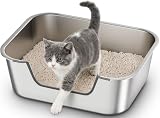
- Thoughtful 3.15in Low Entry Design – Each litter box features a 3.15" low front entry, making it easy for kittens, senior cats, or injured pets to step in and out with confidence. High sides still provide excellent splash protection, combining care and practicality
- High-Sided Anti-Splash Protection – Raised sides and back effectively block litter scatter and urine splash, keeping your floors clean while offering your cats a more comfortable and secure toileting experience
- 6 Sizes for Every Cat Family – Available in four sizes from 15.6"x11.6"x5.9" up to 27.5" × 19.6" × 7.8", ensuring the right fit for small cats, large breeds, or multi-cat households. Choose the size that suits your pets best
- Premium Stainless Steel Construction – Built with durable, odor-resistant stainless steel that outperforms plastic litter boxes. The smooth, non-stick surface resists scratches, prevents residue buildup, and makes cleaning quick and simple
- Easy to Clean & Time-Saving – Smooth stainless steel surface prevents litter and stains from sticking. Just rinse or wipe to keep the box spotless, making cleanup fast and effortless
Check for competition
In a multi-cat or mixed-pet home, a younger cat, dog or child can unintentionally block a narrow hallway, bowl or litter area. Give the senior cat a quiet retreat and more than one route to essential resources. A private room, gated area or elevated refuge is useful only if the cat can reach it safely; low, ramp-accessible hiding places are preferable to high perches.
Make the litter area easy to enter and monitor
For an arthritic or weak cat, climbing over a tall wall or turning inside a cramped covered box can be painful. Choose a large, wide, uncovered box with at least one low side or entry. Stability matters: the box should not slide or tip when the cat steps in.
Free tools Windows power users keep installed
One-click scans. No signup required.
Where to put boxes
- Put one box on the main living floor, close to the cat’s sleeping area but not directly beside food or water.
- Add a box on each additional level the cat uses.
- Use a quiet location with a clear approach, rather than a closet or corner where another pet can trap the cat.
- Keep the route free of clutter, loose cords and slippery flooring.
Clean frequently
Scoop often and wash the box routinely with a cat-safe cleaner. Older cats may reject a dirty box sooner, and a clean box makes changes in urine or stool easier to notice. Do not suddenly change litter texture or fragrance if the current substrate is working.
Know which toileting changes need a call
Increased urination, straining, constipation, diarrhea, repeated trips, vocalizing in the box or new accidents are not normal “just because” signs of aging. They can reflect pain, kidney disease, diabetes, thyroid disease, urinary disease or other conditions. Contact a veterinarian promptly, especially if the cat produces little or no urine, strains repeatedly or seems distressed.
Also popular on Amazon

- Ideal for Senior and Disabled Cats: This low entry litter box for senior cats measures just 2.76 inches in height, making it easy for arthritic or elderly cats to access, unlike traditional 6-inch litter boxes
- Versatile and Multi-Functional: Not only is this small metal litter box perfect for cats, but it also serves as a pet bath for small animals like rabbits, ferrets, guinea pigs, and hamsters, providing a comfortable space for various uses
- Easy to Clean: Made from stainless steel, the stainless steel litter box low entry features a smooth metal surface that makes cleaning a breeze, ensuring your pets have a hygienic environment.
- Safe and Pet-Friendly Design: The low entry litter box features rounded corners and no sharp edges, providing a safe experience for your pets, including kittens and senior cats
- Perfect Size for Kittens: This kitten litter box low entry is designed with dimensions of 17.72''Lx 13.78'' W x2.76'' H, making it an excellent choice as a shallow litter box for kittens or a small litter pan for young pets.
Place food and water where bending, stairs and intimidation are unnecessary
Set bowls on the level the cat already uses and avoid forcing a stiff cat to climb or jump for meals. Slightly raised bowls may reduce bending for some cats, but the best height is the one that lets your individual cat eat comfortably without stretching or crouching.
Use several water points
Multiple drinking stations keep water available when a cat does not want to cross the house. Put bowls in separate quiet rooms and away from litter boxes. Some cats prefer still water in a bowl; others drink more readily from a quiet fountain. Choose the format your cat already accepts and keep every station clean.
Quick wins for a faster PC:
Scan for outdated or missing drivers - takes under a minuteDriver Scan →Clear out junk files and repair common Windows errorsFree Scan →Fix the driver behind crashes, sound loss and screen glitchesFind Drivers →Prevent resource blocking
Observe mealtimes in multi-cat homes. If another animal guards a doorway, bowl or fountain, place an additional station in a room the senior cat can enter and leave safely. Feed separately when necessary. A senior cat should never have to pass an assertive housemate to reach food or water.
Watch intake, not just bowl position
Weight loss, a sudden appetite increase or decrease, increased thirst, vomiting or a change in eating posture warrants veterinary advice. A cat that approaches food but cannot comfortably lower its head, chew or remain standing may be showing pain or illness rather than pickiness.
Also popular on Amazon

- 【Low Entry for Easy Access】 The low entry of this cat litter pan makes it perfect for kittens, senior cats, and cats with limited mobility. Whether you're caring for a playful kitty or an elderly cat, this kitty litter box provides easy access, ensuring your cat can use it comfortably and independently.
- 【Anti-Diffusion Design for Less Litter Mess】 This large cat litter box is equipped with an anti-diffusion design that helps minimize litter scattering. Its thoughtful structure reduces the chances of litter being kicked out of the box, keeping your floors cleaner and ensuring less mess. This feature is perfect for cats that dig or move around a lot while using the litter box.
- 【Large Space for Comfort】 This large litter box provides ample room for your cat to move freely and feel comfortable. Its spacious design ensures a stress-free experience, allowing your pet to use the cat litter box with ease. A perfect choice for cat boxes for indoor cats, this cat box keeps your pet at ease every time.
- 【Easy to Clean Design】 Designed with smooth, seamless surfaces, this plastic litter box is easy to clean, preventing litter buildup and odors. Its washable design ensures maintenance is a breeze, keeping your home fresh and your cat's space hygienic. Cleaning is quick and simple, making it ideal for busy pet owners. This plastic litter box is built to last with minimal upkeep.
- 【Durable and Long-Lasting】 Crafted from high-quality plastic, this large cat litter box is durable and built to withstand regular use. The sturdy construction ensures long-term reliability, providing a safe and comfortable space for your cat for years to come. This extra large cat litter box is a practical, long-lasting solution for indoor cats.
Build warm, supportive resting places without overheating
Older cats often sleep more and benefit from deep, washable beds in quiet, draft-free areas. Offer more than one so the cat can choose between social and private locations. A covered or igloo-style bed can help a cat that seeks security, while an open bed lets a cat monitor the room and leave easily.
Use gentle heat only
Heated pads and beds must feel gently warm, not hot. Provide an unheated section or a second bed so the cat can move away from the heat, and check frequently because a cat with limited mobility may not escape excessive temperatures quickly. Cornell Feline Health Center guidance states: “Too much heat, though, can potentially burn a cat who can’t move quickly, so be sure to think warm, not hot.”
Windows Errors? Fix Them Before They Spread
Repair common Windows errors and clear accumulated junk for a smoother, more stable PC - no reinstall needed.Free scan · no reinstallOutdated Drivers Are Slowing You Down
One free scan finds every outdated or missing driver and matches the right update for your exact hardware.Free scan · exact hardware matchChoose supportive, washable bedding
- Use a thick surface that cushions joints without swallowing the cat’s body.
- Choose a cover you can remove and wash after urine, vomit or diarrhea.
- Keep the entrance low and the bed stable so stepping in does not require a jump.
- Place beds away from drafts, direct heat sources and busy traffic lanes.
Restore favorite places with safe ramps and steps
If your cat can no longer jump onto a sofa, bed or windowsill, preserve the destination rather than removing it. Cornell advises creating box steps, ramps or pet stairs so an older cat can reach a special spot independently.
Test a ramp or stair unit before relying on it
- Use a broad, nonslip surface with a gentle incline.
- Secure the base and top so the unit cannot shift when the cat pushes off or turns around.
- Confirm that the cat can turn around safely on the platform.
- Check the product’s weight rating and keep the footprint clear of doorways.
- Introduce it beside the destination with treats or familiar bedding; never force a frightened cat onto it.
Short, broad steps may suit a cat that dislikes a long incline. A ramp may be better for a cat with severe stiffness because it reduces repeated lifting of the hind legs. Whichever you choose, supervise initial use and remove it if the surface slides or the cat avoids it.
Also popular on Amazon

- HIGH QUALITY MATERIAL - This low entry senior cat litter box is made of high-quality plastic with good durability and long-lasting performance. The sturdy structure ensure that it can be reused without damage.The large size pet low entry open top litter box for senior kitten does not leave any unpleasant odor and it is not easily broken.
- LOW ENTRY CAT LITTER BOX - The cat litter box for kittens adopts a convenient low entrance design, allowing senior cats & kittens, elderly cats or disabled cats with weak and sickly conditions to enter the litter box without struggling to get in and out.The open top helps to reduce odors by providing better ventilation.
- LARGE SPACE - The spacious dimensions of this senior cat litter box are approximately 23.23 x 16.54 x 4.33 inches /59 x 42 x 11cm, providing ample space for pets such as big cats, bunnies, hamsters, etc.Say goodbye to cramped space.
- WIDELY APPLICATION - The low entry open top litter box for senior kitten is suitable for various occasions and purposes; With the generous size of the gigantic litter box, the large cat litter box is ideal for households with multiple cats, elderly cats, kittens, or small pets, this low entry cat litter box can meet all their needs; It is also very convenient for kittens to do behavioral training.
- EASY TO CLEAN - The smooth and non stick surface make it easy to wipe and clean, preventing litter buildup and odors and keeping your home fresh and your cat's space hygienic. The cleaning is quick and simple, which make it an ideal gift for busy pet owners.
Improve traction and remove fall hazards
Slick flooring can turn ordinary walking into a painful or dangerous event. AAHA senior-pet home-modification guidance lists rugs or yoga mats for footing, along with suitable ramps, litter-box designs, elevated bowls and beds.
Make walking paths predictable
- Lay rugs or yoga mats over polished floors where the cat walks, turns or lands.
- Secure edges so mats do not curl or become trip hazards for people.
- Choose washable materials and check them for dampness, loose threads or bunching.
- Remove clutter, unstable furniture and trailing cords from the route between bed, bowls and litter box.
- Guard open stairwells, balconies and other fall hazards.
Keep perches and hiding places low or connect them to the floor with a stable ramp. A tall cat tree is not automatically safe simply because the cat used it when young.
Keep the social environment calm and predictable
Senior cats generally cope better when feeding times, lighting, furniture and resting options change as little as possible. Familiar bedding or a familiar person’s scent can make a retreat feel secure. Give the cat a place where dogs, children and other cats cannot disturb sleep or block an exit.
Support a cat with sensory or cognitive decline
Use consistent lighting and avoid rearranging furniture around the cat’s main route. Speak before touching a cat with reduced hearing or vision, and approach slowly. If the cat appears disoriented, guide it calmly toward a nearby bed, bowl or litter box rather than carrying it repeatedly across the home.
Also popular on Amazon

- 【Easy Access for All Cats】This low entry litter box with a gentle 2.9" entrance allows kittens, senior cats, and those with limited mobility to step in effortlessly. The thoughtful kitty litter box design minimizes strain and offers a secure, comfortable experience every time.
- 【Spacious Comfort and Freedom】The jumbo cat litter box provides ample room for cats to move, dig, and turn naturally. Measuring 23.6"L x 15.7"W x 5.9"H, this big litter box is ideal for multi-cat households, giving every feline the space and freedom they deserve.
- 【Smart Corner Entrance Design】This corner litter box features a unique angled entry that promotes smooth movement and keeps litter scatter contained inside the cat litter tray. Its space-saving design fits neatly in room corners while maintaining a tidy, organized area.
- 【Open-Top and Easy-to-Clean Structure】The open-top shallow litter box improves ventilation and visibility, helping reduce odors and keeping your cat comfortable. The smooth plastic cat pan surface is easy to wipe clean, ensuring freshness and hygiene with minimal effort.
- 【Durable and Cat-Friendly Construction】Made from sturdy plastic, this large litter pan is built to last through daily use. The lightweight yet durable kitten litter box design provides lasting comfort and safety, making it a practical choice for homes with multiple or aging cats.
Protect rest without isolating the cat
A quiet retreat should remain accessible and should not become a dead end. The cat needs to leave for food, water and toileting without passing through a crowded room or confronting another pet.
Independent reader supportYour contribution helps us test, update, and keep practical guides available for everyone.A practical room-by-room arrangement
| Resource | Placement | Design priorities |
|---|---|---|
| Litter box | Main living level, plus other levels the cat uses | Wide, uncovered, low entry; stable; easy to clean |
| Food | Quiet area on the cat’s usual level | Comfortable bowl height; protected from other pets |
| Water | Several quiet locations separate from litter boxes | Clean bowls or a quiet fountain the cat already accepts |
| Bed | Warm, draft-free resting sites in more than one room | Deep, washable, supportive and easy to enter |
| Favorite perch | Low destination or ramp-accessible window or sofa | Nonslip route, secure landing area and room to turn |
| Walking route | Between sleeping, eating, drinking and toileting areas | Rugs or yoga mats, no clutter, no exposed fall hazards |
Choose equipment by function, not by age label
“Senior” on a package does not guarantee that an item suits your cat. Evaluate the features that affect access, stability, cleaning and safety.
| Equipment | What to check | Common failure to avoid |
|---|---|---|
| Litter box | Low entry, wide interior, uncovered access, stability and cleanability | High walls, a narrow interior or a box that slides |
| Ramp or stairs | Nonslip surface, gentle incline, footprint, weight rating and turning space | A steep, narrow or unsecured unit |
| Bed | Gentle warmth, washable cover, joint support, draft protection and easy entry | Overheating, deep sides or fabric that cannot be cleaned |
| Water station | Quiet operation, cleaning burden, several locations and the cat’s bowl-versus-moving-water preference | A noisy or dirty fountain the cat avoids |
| Flooring aid | Traction, safe edges, washability and a flat fit | Loose corners or a mat that creates a human trip hazard |
Set up the home in a controlled sequence
- Observe first. Record the cat’s current routes, favorite resting places, difficult jumps, missed steps and any conflict with other pets.
- Install the main litter box. Put a wide, low-entry, uncovered box on the primary living level and keep the approach clear.
- Duplicate essentials. Add food, water and litter resources on other levels the cat uses, and place extra water stations in quiet rooms.
- Improve rest. Set out deep washable beds in warm, draft-free locations, including a private retreat.
- Build safe access. Add a stable ramp or broad steps to one favorite destination, secure every contact point and supervise use.
- Fix footing. Cover slippery turns and landing zones with secured rugs or yoga mats; remove clutter and guard falls.
- Observe and adjust gradually. Keep the arrangement stable, then change one item at a time if the cat avoids a resource or struggles to use it.
Daily and weekly checks
- Daily: Scoop boxes, refresh water, check that mats and ramps have not shifted, and look for changes in appetite, drinking, walking or toileting.
- Several times a week: Wash bowls and inspect beds for dampness, flattened padding or loose threads.
- Weekly: Clean litter-box surfaces, test ramp stability, inspect stair and balcony barriers, and confirm that another pet has not begun guarding a resource.
- Whenever behavior changes: Note when the change began, what happens before it and whether it affects eating, drinking, sleeping, movement or elimination. Share those observations with the veterinary team.
When a home modification should become a veterinary appointment
Do not assume a new limitation is an unavoidable part of aging. Reduced jumping, reluctance to use stairs, sleeping in unusual places, house-soiling, altered sleep, weight change, appetite change or increased thirst can indicate pain or disease.
Arthritis is common, but signs and X-rays do not always match
An AAFP guideline published in 2004 reported radiographic osteoarthritis changes in up to 90% of cats aged 12 years and older. The same guidance notes that visible clinical signs do not always correspond neatly with radiographic findings. A cat can have substantial pain without an obvious limp, or show mobility changes that require investigation beyond arthritis.
Expect an individualized work-up
Regular examinations and appropriate blood, urine or imaging tests can help detect kidney disease, thyroid disease, diabetes, cancer and other causes of new difficulty. Ask the veterinary team which tests fit your cat’s age, history and symptoms. Home changes improve access, but they do not treat an underlying diagnosis.
How old is a senior cat?
Age labels are conventions, not diagnoses. PetMD commonly describes cats as senior around age 10, while Cornell University College of Veterinary Medicine states that cats are considered older at approximately 12–14 years. Individual health, body condition and function matter more than a single birthday, so begin accessibility changes when your cat shows difficulty rather than waiting for a formal age threshold.
Do these 3 things before closing this tab:
1Scan for outdated or missing drivers - takes under a minute2Repair Windows errors before they cause bigger problems3Fix the driver behind crashes, sound loss and screen glitches




Leave a Reply