Quick wins for a faster PC:
Repair Windows errors before they cause bigger problemsFix Now →Scan for outdated or missing drivers - takes under a minuteDriver Scan →Clear out junk files and repair common Windows errorsFree Scan →There is no validated, one-size-fits-all procedure for teaching a dog to take a toy directly from a child’s hand. The safer approach is to prepare the dog with adult-led fetch and other structured games, then involve a child only when an adult can supervise continuously and intervene immediately. Even a dog that plays fetch politely may not be safe for a direct hand-to-mouth toy exchange.
ASPCA’s basic rule is unambiguous: “Always supervise children and dogs. Never leave a baby or young child alone with a dog.” (ASPCA, Dog Bite Prevention) If the dog guards toys or food, stiffens, growls, snaps, has bitten, or shows other aggressive behavior, do not attempt this exercise. Separate the dog and child and contact a qualified behavior professional.
As an Amazon Associate I earn from qualifying purchases.
The safety answer: prepare the dog, but do not promise a handoff
Dogs can learn calm, polite toy play. However, a dog taking a toy from an adult during fetch is not the same behavior as taking one from a child’s hand. A child may move unpredictably, hold on to the toy, squeal, fall, or misread the dog’s signals. The dog may also become excited or protective of the object. The available veterinary guidance supports preparation through fetch and structured games, not a guaranteed child-to-dog handoff.
ASPCA says that teaching a dog to play fetch “can prepare her for safe, fun interaction with your child.” (ASPCA, Dogs and Babies) Treat that as preparation, not permission to let a child place a toy near the dog’s mouth. The adult remains responsible for deciding whether the activity is appropriate at all times.
#1 Best Overall

- BUDDY TRAINING BITES - These bite-sized treats are chock full of meaty flavor from appetizing pork liver as the 1st ingredient, so they are easy to eat and perfect for dogs of all ages.
- ALL THE GOOD STUFF - Our training treats are made in the USA and they are free of corn, soy, artificial flavors and preservatives. With Buddy, you can feel good about serving your best bud the treats they deserve!
- LOW CALORIE - Only 1.5 calories per treat to help make your dog training sessions last longer! The delicious aroma will have your pup coming back for more.
- 501 TREATS PER BAG - Reward your dog's good behavior with 500 treats per bag. Buddy is healthy, tasty & fun!
- EVERYBODY LOVES BUDDY: Buddy is the perfect companion for your best friend! Buddy's delicious flavors are sure bring your pup joy! Buddy has a range of treats - all made with real, simple ingredients that you can pronounce.
The American Veterinary Medical Association likewise emphasizes education and supervision as part of preventing dog bites. (AVMA, National Dog Bite Prevention Week) No training result removes the need for active adult supervision.
Screen the dog, child and setting first
Before practicing with any child present, assess four questions. If the answer to any safety question is no, use adult-only play or obtain professional guidance instead.
- Does the dog have a guarding or aggression history? A dog that guards toys, food or stolen objects; stiffens over an item; growls; snaps; lunges; or has bitten should not practice child-to-dog transfers.
- Can the child follow instructions reliably? The child must be able to stop when told, avoid grabbing the dog or its toy, and move away when an adult directs it. A baby or very young child cannot perform these safety tasks.
- Can an adult supervise continuously? The adult must watch the interaction rather than multitask, recognize early warning signs and intervene before contact escalates.
- Is the activity controlled? The dog should be participating in an adult-led, structured game, not competing with a child over a toy or deciding when to start and stop.
| Situation | Safest choice | Reason |
|---|---|---|
| No guarding or aggression signs; child follows directions; adult can watch continuously | Use adult-led fetch and structured play. Child involvement, if any, stays broad and closely supervised. | This matches the preparation and supervision advice from ASPCA. |
| Dog has guarded a toy or food, or has shown threatening behavior | Keep child and dog apart and seek qualified professional help. | ASPCA describes a resource-guarding dog living with children as “unacceptably risky.” |
| Child is too young to follow safety instructions or the adult cannot supervise | Do not conduct the interaction. Use physical separation. | Supervision must be active; a child must never be left alone with a dog. |
| Dog becomes uncomfortable, overexcited or possessive during practice | Stop, separate calmly and reassess with a professional if the behavior repeats. | Continuing can turn a warning into a bite or a stronger guarding pattern. |
Build polite toy skills with an adult first
Keep the child out of the initial training. The objective is a calm, predictable game that the adult can start, pause and end. Use reward-based training and praise for the behavior you want; do not punish the dog for hesitating or moving away.
Rank #2

- REAL BEEF FIRST: Blue Buffalo Bits dog training treats feature high-quality, real beef as the first ingredient to deliver essential nutrition and the savory beef flavor dogs crave
- EXPERT-LED NUTRITION: Designed to help your pet thrive from the inside out, Blue Buffalo all-natural dog treats are developed by a dedicated team of veterinarians and animal nutritionists for a trusted option in healthy dog snacks
- ENHANCED WITH DHA: These BLUE Bits soft dog treats are enhanced with DHA, an Omega-3 fatty acid that supports healthy cognitive development for puppies and dogs of all ages and sizes
- PERFECT FOR DOG TRAINING: Soft, tender, bite-sized training treats for dogs make repeat rewarding easy during dog training sessions without slowing or interrupting your dog’s focus
- HEALTHY SKIN & COAT: Omega 3 & 6 fatty acids from flaxseed support healthy skin and a shiny coat
- Choose a controlled setup. Practice in a quiet area with one suitable dog toy and an adult who can give the dog full attention. Remove competing toys, food bowls and other items the dog might defend.
- Use the dog’s established fetch routine. If the dog already retrieves a toy, let the adult conduct that familiar game. Avoid turning the exercise into a contest in which the person pulls against the dog.
- Reinforce calm participation. Give praise or a small training reward when the dog engages politely, releases the toy without tension and responds to the adult’s direction. Reward-based reinforcement is consistent with ASPCA guidance on teaching desirable behavior.
- Keep the adult in control of the game. The adult decides when play begins and ends and pauses whenever the dog becomes frantic, grabs at clothing or hands, or shows discomfort. A pause is information, not a challenge to overcome.
- Practice the child’s role without a handoff. Once the dog is reliably calm with the adult, the child may be involved in a simple, adult-led part of the game, such as observing or following a familiar cue, while the adult continues to manage the toy. The cited guidance does not establish a particular cue, hand position, distance, number of repetitions or advancement schedule, so do not treat any such detail as a universal protocol.
- Stop while the interaction is still safe. End immediately at the first sign of tension, guarding, fear or loss of control. Do not keep going to obtain a predetermined number of successful turns.
These steps prepare the dog for cooperative play; they do not certify that the dog should take an object from a child’s hand. Temperament, learning history, the child’s behavior and the environment all affect risk.
How to involve a child more safely
Child participation should remain optional. A child can enjoy a dog’s fetch game without ever presenting a toy for the dog to remove from the child’s hand. Adult-led tossing or another structured role may be preferable to a direct transfer, provided the adult controls the interaction and the child follows instructions.
If a family is considering a direct handoff despite those precautions, first discuss the plan with a qualified behavior professional who has observed the dog. There is no source-backed sequence that makes this exchange safe for every household. The adult should remain close enough to intervene, maintain uninterrupted attention and stop at any sign of uncertainty. Never ask a child to test whether the dog will “really” take the toy gently.
Rank #3
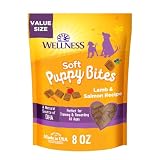
- GRAIN-FREE PUPPY TREATS: These bite-sized, soft puppy training treats are the perfect reward during training sessions or any time you want to thank your dog for good behavior. Puppy bites contain 6 calories per individual treat!
- SUPPORTS BRAIN DEVELOPMENT: Soft dog treats are crafted with salmon, a healthy source of DHA to promote healthy brain development.
- HEALTHY INGREDIENTS: These treats for dogs are made with minimal ingredients focused on quality proteins: made with lamb and salmon, with added vitamins specifically for puppies.
- NO CORN, WHEAT, OR SOY: Treats for dogs do not contain wheat, wheat gluten, corn, soy, or artificial colors.
- MADE IN USA: Our dog treats are quality-assured, made in USA, and crafted from the finest globally-sourced ingredients. Treats are tender, healthy, and bite-sized for small, medium, and large dogs of all lifestages, and activity levels.
Do not allow a child to chase the dog, corner it, pull on a toy, reach into its mouth, hug it during play or retrieve an object the dog is guarding. These actions can convert ordinary excitement into conflict. Children should also be taught to leave the dog alone while it is eating, sleeping, resting or seeking distance.
Warning signs that end the exercise
Stop the game and create separation if the dog:
- stiffens over the toy or becomes suddenly still;
- guards a toy, food or another object;
- growls, snaps, lunges or shows any attempt to bite;
- has a known bite history or has previously threatened a child;
- appears uncomfortable, frightened or unable to disengage;
- grabs at a child’s hands or clothing rather than taking the toy cooperatively.
Do not scold, hit, forcibly pry open the dog’s mouth or have the child pull harder. Punishment can increase conflict and may suppress warning signals without changing the underlying risk. Move the child away, place a barrier between child and dog, and allow an adult to manage the dog. If separation cannot be achieved safely, call for immediate assistance rather than reaching into a struggle.
Resource guarding changes the plan completely
Resource guarding is not simply a dog being “stubborn.” It is a safety issue when a child is nearby. ASPCA states: “However, if children live in a home with a resource-guarding dog, the situation becomes unacceptably risky.” (ASPCA, Food Guarding)
Rank #4

- BIG MOTIVATION IN EACH MINI BITE. Each of these 3 calorie treats are packed with flavor from pork liver, real bacon, and added botanicals that will keep dogs focused and eager to learn!
- TRAIN. ENRICH. TREAT. These low calorie training rewards are great for training sessions, enrichment activities such as puzzle toys and snuffle mats, and every day treating occasions.
- GREAT FOR DOGS OF ALL SIZES. These bite-sized treats are the perfect size for training and every day treating for dogs of all sizes. Each 20 oz bag includes approximately 500 treats.
- REWARD THE EVERYDAY Pet Botanics healthy training rewards are perfect for training and treating every day in every way. These soft & chewy treats have no artificial flavors, colors or preservatives.
- PROUD MEMBER THE CLOUD STAR FAMILY. With Cloud Star products, you can spend less time worrying about what to feed your pet and spend more time Living Life with Your Dog by Your Side.
Never make a child retrieve a guarded toy, trade for it, reach toward it or prove that the dog will surrender it. Keep high-value objects out of shared play areas, use physical separation when necessary and arrange professional assessment. The same rule applies if guarding appears for food, chews, stolen household items or a person.
Independent reader supportYour contribution helps us test, update, and keep practical guides available for everyone.When to get professional help
Arrange help before further child involvement if there is aggression, likely bite risk or resource guarding. ASPCA identifies Certified Applied Animal Behaviorists, board-certified veterinary behaviorists and appropriately experienced Certified Professional Dog Trainers as possible resources. (ASPCA, Food Guarding)
Crashes, No Sound, or Screen Glitches?
Random freezes, missing sound and display glitches usually trace back to one bad driver. Find and replace yours safely.Free scan · under a minutePC Slower Than It Used to Be?
A free scan shows the junk files, broken settings and background clutter dragging Windows down - then fixes them in one click.Free scan · Windows 10 & 11Ask a prospective provider about credentials, experience with children and guarding cases, and whether they will observe the dog in the home or another appropriate setting. Until an assessment and plan are in place, keep the dog and child separated. Do not rely on online demonstrations or a generic “drop it” exercise when a bite may be possible.
Best Value
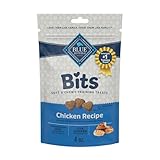
- REAL CHICKEN FIRST: BLUE Bits dog training treats are made with delicious real chicken as the first ingredient making them an ideal reward for your best friend’s best behavior
- SOFT TRAINING TREATS: For dogs that love a soft treat, BLUE Bits are tender, bite-sized morsels that are the perfect size for training; plus, with DHA to help support cognitive development, they’re an ideal puppy treat
- WHOLESOME INGREDIENTS: These dog treats don’t contain any chicken (or poultry) by-product meals and are free from corn, wheat, and soy; plus, they’re free from artificial preservatives like Propylene Glycol and colors like Red Dye 40
- HEALTHY DOG TREATS: Blue Buffalo natural dog treats feature the healthy, wholesome ingredients you’ll love feeding as much as they’ll love eating
- Contains: One (1) 4-oz bag of BLUE Bits Natural Soft-Moist Training Dog Treats, Chicken Recipe
A veterinarian may also help identify pain or medical problems that affect irritability. A behavior professional can then design a plan suited to the individual dog and household, including management rules that prevent the child from becoming part of a guarding confrontation.
Useful supplies—and what they cannot do
A plain fetch toy and small reward-based training treats can support adult-led practice. Choose items the adult can handle comfortably and inspect them for damage. These are training aids, not safety equipment. No toy, treat or product can make an unsupervised child-to-dog exchange safe, and the cited sources do not endorse a particular brand, toy design or treat formula.
House rules that protect both child and dog
- An adult supervises every interaction; babies and young children are never left alone with the dog.
- Adults, not children, start, pause and end toy games.
- Children do not take toys from the dog’s mouth or approach a dog that is holding, eating or guarding something.
- Dogs have a separate resting area where children are not allowed to disturb them.
- Any growl, snap, stiffening, guarding or bite ends the activity and triggers a safety review.
- Visitors and other children follow the same rules; do not assume a familiar dog will behave identically with every child.
What success should look like
The realistic goal is not a trick in which a dog automatically accepts a toy from any child. Success means the dog can participate in an adult-controlled game without guarding, threatening behavior or pressure, while the child remains safe and the adult can stop the interaction immediately. For some dogs and families, the safest long-term choice is adult-only fetch and no direct handoff at all.
Because the available guidance supports fetch as preparation rather than a validated child-to-dog transfer protocol, families should favor management and supervision over testing the dog’s limits. If the dog’s behavior changes or any warning sign appears, stop the game, separate the participants and seek qualified help.
Quick Recap
Product prices and availability are accurate as of the date/time indicated and are subject to change. Any price and availability information displayed on Amazon at the time of purchase will apply.




