
Some links on this page are affiliate links: if you buy through them we may earn a commission, at no extra cost to you.
Teach the behavior before naming it: make a comfortable mat predict rewards, reinforce your dog for moving toward it and lying down, then add a cue such as go to bed as the movement becomes reliable. Build duration, distance, and distractions separately, and end every stay with a release word such as free. Your dog should choose the mat, not be dragged, pushed, or held there.
What “go to bed” should mean
A useful bed cue is a sequence, not just a location: your dog hears the cue, travels to a particular mat or bed, gets all four paws onto it, lies down, remains there calmly, and leaves only after a release cue. The station should be valuable in its own right. When the mat predicts food, play, praise, or rest, your dog can participate voluntarily instead of complying to avoid pressure.
As an Amazon Associate I earn from qualifying purchases.
Free tools Windows power users keep installed
One-click scans. No signup required.
Choose one verbal cue and use it consistently. Go to bed, bed, and place can all work; the word matters less than the training history attached to it. A separate release word—free, release, or okay—tells your dog exactly when the behavior has ended.
Set up the lesson
Choose the station
Use a comfortable mat or bed that will not slide or collapse when your dog steps on it. A portable, washable mat is useful for carrying the same station to another room, a trip, or a veterinary clinic. Put it in a quiet area for the first sessions, away from traffic and competing food or toys.
Popular on Amazon

- 【Thin and portable】:A lightly padded travel dog mat for camping and outings, designed to roll up easily rather than provide the cushioning of a thick dog bed.
- 【Roll up and carry】:This portable dog mat folds into a compact bundle with a built-in handle and snap closure for storage and travel.
- 【Fabric on both sides】:No non-slip backing; may slide on smooth floors. For use as a dog settle mat or place training mat, choose a stable surface and supervise your dog.
- 【Water-resistant and washable】:Oxford fabric handles light splashes. Wipe clean or machine wash cold on a gentle cycle; air dry. Not intended for soaking or standing water.
- 【Size and unpacking】:Medium measures 37.4 x 25.5 inches. Check your dog's lying space before ordering. Vacuum packaging may leave creases; unroll and smooth flat before use.
Prepare rewards and a marker
Use pea-sized pieces of whatever your dog genuinely values: kibble, soft treats, a toy, praise, or a brief play session. Keep pieces small so you can reinforce many attempts. A clicker or a short marker word such as yes can identify the instant your dog performs the step you want; the reward follows the marker.
Lower the difficulty before you start
If your dog is too excited to eat gently or focus, reduce distractions or use a less valuable reward. VCA veterinary guidance recommends quiet reward delivery and watching for relaxed body language. Begin when your dog can notice the mat without becoming frantic or worried.
What’s actually slowing this PC down?
Pick the symptom - the matching free tool is one click away.
Step-by-step training protocol
-
Make the mat interesting
Stand near the mat and wait for your dog to look at it. Mark that glance and deliver the reward on the mat. Next, reinforce a head turn, a step, and then several steps toward it. Do not call, pull, or push your dog onto the station. You are shaping the final behavior through small, successful approximations.
-
Reinforce contact with the mat
Reward one paw on the mat, then two, three, and finally all four paws. Place each reward on the mat rather than tossing it away, so staying near the station continues to pay. If your dog steps off, simply wait for another approach and reinforce an easier action.
-
Add the down
Once your dog readily stands on the mat, lure a down with a treat or shape it by marking a lowered head, bent elbows, and then the full down. Deliver the reward between the front paws. Release your dog after the reward and repeat. Do not add the verbal cue yet if the movement is still uncertain; the cue should name a behavior your dog already understands.
-
Name the behavior
When your dog is predictably moving to the mat and lying down, say go to bed, bed, or place as the movement begins. Mark completion and reward on the mat. Say the cue once. Repeating it while your dog is ignoring it can teach that the word has no consequence.
Recommended: Update Every Outdated Driver on Your PC in One Scan - Free →Recommended: PC Feels Slow? A Free Scan Shows What's Dragging Windows Down →Recommended: Crashes or Glitches? A Free Driver Scan Usually Finds the Culprit →Special offer. See more information about Outbyte and uninstall instructions. Please review EULA and Privacy policy. -
Build calm duration
At first, reinforce frequently for remaining down. Gradually wait longer between rewards, changing only a small amount at a time. Pay for softer postures—such as a hip shift, chin down, or side-lying—rather than rewarding frantic treat-seeking. If your dog gets up, the interval was too difficult; shorten it and try again.
Also popular on Amazon
 Catalonia Classic Waterproof Dog Mat, Portable Reversible Pet Travel Mat, Pet Cushion Pad with Handle for Small Medium Dogs Cats, Indoor or Outdoor
- WATERPROOF & REVERSIBLE: Dog travel mat is a double layer waterproof blanket with waterproof oxford on one side and high quality flannel on the reverse. Very soft and comfortable without worrying about leaks.
- OUTDOOR AND INDOOR USE:Dog mats for sleeping can be used as a car seat mat, picnic/camping mat when outdoors. Also great for use as an indoor dog pad, ideal for crate pads, kennel pads.
- PORTABLE & LIGHTWEIGHT: portable dog mat with handles can be easily folded into a tote bag. Very lightweight to carry around. The extra-long handle makes it easy to roll over your shoulders on the go.
- SUITABLE SIZE:portable dog bed is 31.5 inch * 23.6 inch. Perfect size for small and medium-sized dogs, cats, pets. High quality durable dog pad is soft and comfy.
- EASY CARE: Waterproof dog travel pads can be hand-washed or machine-washed. Machine washable in cold water, tumble dry. Water or rain drops can be easily wiped off the mat instantly.
-
Teach the release
Say free, release, or okay, then invite your dog off the mat with a quiet movement or a tossed reward. The release is part of the behavior: without a clear ending, your dog has to guess whether leaving is allowed. Do not use the release word to lure your dog off before you have reinforced the stay.
-
Add distance separately
Begin standing close to the mat. Take one small step away, return, and reward your dog for remaining down. Increase distance only when the current step is easy. If your dog follows you, go back to the last successful distance instead of repeating the cue or physically replacing the dog.
-
Add distractions one at a time
After distance is reliable, introduce a single mild distraction, such as turning your body, walking past, opening a door, hearing a doorbell, or having one visitor move nearby. Keep distance and duration easier while the new distraction is present. Progress to busier situations only after your dog can succeed at the simpler level.
DriversCrashes, No Sound, or Screen Glitches?PerformancePC Slower Than It Used to Be?DriversOutdated Drivers Are Slowing You DownSpecial offer. See more information about Outbyte and uninstall instructions. Please review EULA and Privacy policy. -
Generalize the station
Practice in different rooms, because a cue learned in one location does not automatically transfer everywhere. Later, take the portable mat to other safe environments. Start each new place with easy rewards for looking at and stepping onto the mat before expecting a full down and stay.
How to increase duration, distance, and distractions
These are separate challenges. Changing all three at once is why a dog that seemed reliable suddenly leaves the bed. Use the progression below as a decision guide rather than a fixed timetable.
| Training goal | What you change | What to reinforce | If your dog fails |
|---|---|---|---|
| Station value | Mat is present in a quiet room | Glances, approaches, and paws on the mat | Move closer and lower distractions |
| Down on the station | Ask for a down after all four paws are on it | Elbows down, then a relaxed posture | Return to the last easy contact step |
| Duration | Wait slightly longer before each reward | Remaining down, hip shift, chin down, or side-lying | Shorten the interval and deliver rewards between the paws |
| Distance | Take one additional step away | Staying down while you move and return | Reduce distance; keep duration easy |
| Distraction | Add one movement, sound, person, or event | Orienting to the distraction and settling back down | Remove or soften the distraction and return to the last successful level |
| Generalization | Change room or safe location | Recognizing the mat and repeating the routine | Rebuild value in the new environment before adding difficulty |
Advance one variable at a time. A dog that can stay for a long period at your feet may not be ready for the same period while you leave the room or answer the door.
Choosing a mat or bed for training
The best station is one your dog can enter and leave comfortably and that you can use consistently. A flat training mat makes the target visually clear and is easy to carry. A soft bed may be more inviting for resting, but it should still remain stable when the dog steps on and off. Washability matters because rewards, hair, and outdoor use can make the station dirty. Portability matters if you want the same cue to work during travel or a veterinary visit.
Quick wins for a faster PC:
Scan for outdated or missing drivers - takes under a minuteDriver Scan →Repair Windows errors before they cause bigger problemsFix Now →Fix the driver behind crashes, sound loss and screen glitchesFind Drivers →Also popular on Amazon

- WATERPROOF & REVERSIBLE: Dog travel mat is a double layer waterproof blanket with waterproof oxford on one side and high quality flannel on the reverse. Very soft and comfortable without worrying about leaks.
- OUTDOOR AND INDOOR USE:Dog mats for sleeping can be used as a car seat mat, picnic/camping mat when outdoors. Also great for use as an indoor dog pad, ideal for crate pads, kennel pads.
- PORTABLE & LIGHTWEIGHT: The portable dog pad with a handle can be easily folded into a handbag shape (and cannot hold anything), making it very lightweight to carry.
- SUITABLE SIZE:portable dog bed is 31.5 inch * 23.6 inch. Perfect size for small and medium-sized dogs, cats, pets. High quality durable dog pad is soft and comfy.
- EASY CARE: Waterproof dog travel pads can be hand-washed or machine-washed. Machine washable in cold water, tumble dry. Water or rain drops can be easily wiped off the mat instantly.
| Feature | Why it helps | What to check |
|---|---|---|
| Non-slip base | Gives the dog confidence while stepping on and lying down | It stays in place on the floor rather than bunching or sliding |
| Washable surface | Keeps a frequently rewarded station clean | The cover or entire mat can be cleaned without losing its shape |
| Portable design | Supports practice in other rooms, trips, and clinics | It is easy to carry and recognizable when placed in a new setting |
| Comfortable padding | Encourages relaxed postures and longer stays | The dog can shift a hip, lower the chin, or lie on a side without discomfort |
No special brand is required. A portable dog training mat or washable dog bed is the clearest physical product for this exercise; small soft treats and an optional clicker are useful supporting items. Select by stability, comfort, washability, and portability rather than by a promise of faster training.
Marker timing and reward placement
The marker bridges the instant your dog performs the correct step and the moment food or play arrives. Mark a glance when you are building orientation, a paw touch when you are shaping contact, and the completed down once that is the current goal. Follow every marker with the promised reward so the word or click remains meaningful.
Reward placement changes what happens next. Food between the front paws supports a down and makes remaining on the mat easy. A reward tossed away can be useful after the release, but tossing it after every repetition may teach the dog to spring up as soon as food appears. Keep the delivery quiet, especially when you are trying to reinforce a soft posture.
Use the reward your dog can work for in that setting. Kibble may be sufficient in a quiet room; a soft treat, toy, praise, or brief play may be more valuable around a visitor or doorbell. If a high-value reward creates frantic behavior, reduce its value or make the environment easier. The goal is relaxed participation, not maximum excitement.
Crashes, No Sound, or Screen Glitches?
Random freezes, missing sound and display glitches usually trace back to one bad driver. Find and replace yours safely.Free scan · under a minuteWindows Errors? Fix Them Before They Spread
Repair common Windows errors and clear accumulated junk for a smoother, more stable PC - no reinstall needed.Free scan · no reinstallCommon mistakes that slow progress
- Naming too soon: Saying “place” before the dog understands the mat can turn the cue into background noise. Shape the movement first, then name it as it begins.
- Repeating the cue: Multiple calls do not clarify the instruction. Say it once, help the dog succeed with an easier setup, and reinforce the response.
- Increasing several criteria together: A longer stay, greater distance, and a ringing doorbell are three new challenges. Keep two easy while changing one.
- Rewarding frantic behavior: Rapid grabbing, staring, or popping up is information that the interval or reward delivery is too exciting. Wait for or create a calmer repetition.
- Replacing the dog physically: Dragging or pushing the dog back teaches that the mat predicts pressure. Reduce the distance or distraction and rebuild voluntary movement.
- Ending unpredictably: Without a consistent release, the dog cannot tell whether a shift in posture is allowed. Use the same release word and then invite the dog away.
- Assuming generalization: A behavior learned beside the sofa may not appear in a kitchen, hallway, car, hotel, or clinic. Rebuild from easy steps whenever the location changes.
Keeping the training force-free
The American Veterinary Society of Animal Behavior (AVSAB) stated in its 2025 board statement: “This statement clearly recommends that only reward-based training methods be used for all aspects of dog training and behavior modification.” The same statement says: “Aversive methods (including but not limited to electronic collars, prong collars, choke chains, leash corrections, and other forms of physical or psychological punishment) should not be used under any circumstances.”
For this exercise, force-free means you do not drag your dog to the bed, push the body into a down, pin the dog in place, block an escape route, or punish an attempt to leave. VCA’s guidance is direct: “Do not force your dog to remain still.” If your dog moves away, the answer is to make the next repetition easier, not to increase restraint.
Watch for tension, avoidance, freezing, tucked posture, repeated lip licking, or refusal of food. Stop increasing criteria when these signs appear. Give your dog space and return to a step that produces relaxed behavior. Persistent distress, guarding of the mat, or inability to take food warrants help from a qualified, reward-based behavior professional or a veterinary behaviorist.
Also popular on Amazon

- 【Travel Dog Bed】 Give your dog a clean, familiar base on grass, concrete, or rocky trails. This travel dog mat creates instant insulation and security during camping, RV trips, or motel stays – their den-on-the-go in unfamiliar places. Note: Slim profile for durability, not plush comfort
- 【Pack & Go Camping Dog Bed】 Weighing under 1 lbs, it folds into a shoebox-sized snap-closure pack. Tucks in backpacks, or RV corners taking zero usable space – unfurls a smell-of-home sanctuary anywhere. Modern colors blend indoors while calming anxious pups on the move.
- 【Washable Dog Bed Mat】 The Teflon-coated Oxford fabric repels water, oil, and mud on contact. Its smooth surface resists fur buildup and wipes clean in seconds. Toss it in the washing machine for effortless deep cleaning – no scrubbing needed.
- 【Daily Wear Durability】 Scratch-resistant fabric handles daily wear, but NOT chew proof dog bed. Pro tip: Pair with chew toys to redirect energy. Avoid sharp objects and aggressive digging to extend portable dog bed life
- 【Ready for Adventure】 Packed compressed outdoor dog bed– unfolds to full size within 72 hours. Three sizes (S/M/L) fit all breeds, available in earthy Sprout Green, Denim Blue, and Dark Gray. For Pets Only.
Using the cue around real-life distractions
Practice the pieces of daily life separately. Ask for the mat while you turn your body, walk a short distance, open a door, or move through the room. Then rehearse a doorbell or a visitor at an intensity your dog can handle. Keep the stay short and the distance close when a new sound or person appears. Reward the dog for orienting briefly and settling back down, rather than expecting the dog to ignore every event immediately.
Recommended Free Tools
When guests arrive, arrange the mat before opening the door and keep rewards available. If the dog leaves, avoid a confrontation: reduce the distraction, return to an easier distance, and reinforce the next voluntary approach. A portable mat can provide the same recognizable station during a visit, trip, or veterinary appointment, but the new environment still requires easy warm-up repetitions.
Keeping the mat valuable between lessons
Leave the station available as a comfortable resting option when practical. If your dog chooses it independently, occasional quiet rewards can maintain its value. Do not turn every use into a demand for a long stay. The release word should reliably end formal repetitions, while ordinary resting remains voluntary.
Rotate reinforcers so the behavior does not depend on one food. Kibble, soft treats, praise, a toy, or a brief play opportunity can all follow a successful response when the dog values them. Keep rewards small and calm, and adjust their value to the environment rather than assuming the same reward works everywhere.
Independent reader supportYour contribution helps us test, update, and keep practical guides available for everyone.Troubleshooting common failures
| What you see | Likely training issue | What to do next |
|---|---|---|
| Your dog will not approach the mat | The station is unfamiliar or the environment is too difficult | Move closer, lower distractions, and reward a glance or a single step toward it. Keep rewards on the mat. |
| Your dog lies down, then pops up | The interval is too long or reward delivery is exciting | Shorten the interval, place rewards between the paws, and use calmer delivery. |
| Your dog leaves when you step away | Distance was increased before the stay was ready | Return close to the mat and add only a very small step. Build distance separately from duration and distractions. |
| Your dog ignores the verbal cue | The word was added before the behavior was predictable, or it has been repeated too often | Stop repeating the cue. Use a quiet lure to recover the behavior, reward it, and practice the foundational mat steps before naming it again. |
| Your dog becomes tense or stops eating | Pressure, distraction, or criteria are too high | Stop increasing difficulty, remove pressure, and return to an easier behavior. Seek professional help if worry persists. |
| Your dog leaves before the release | The duration was stretched too quickly or the ending is unclear | Use shorter stays, reinforce more often, and teach a consistent release word that always ends the exercise. |
When to get additional help
Consult a qualified reward-based trainer or veterinary behavior professional if your dog shows sustained fear, aggression, guarding, pain-related difficulty lying down, or repeated inability to relax despite easier criteria. A professional can check whether discomfort, anxiety, or another behavior problem is interfering with the station exercise. Training should remain voluntary and should not substitute for addressing an underlying medical or behavioral cause.
There is no guaranteed number of sessions or universal success rate for this skill. Progress is measured by relaxed, repeatable behavior at the current level—not by how quickly a dog can be made to stay.
Frequently Asked Questions
Should I say “go to bed” before my dog moves?
Not at first. Shape attention, approach, paws on the mat, and the down without the cue. Once the sequence is predictable, say the cue as your dog begins moving, then mark and reward completion.
Also popular on Amazon
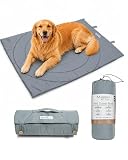
- DESIGNED FOR MODERN LIVING: A refined dog travel mat created to integrate seamlessly into contemporary homes and daily routines. Thoughtfully designed for dog owners who value both comfort and considered design - because life with dogs should feel effortless
- SUPPORTS PLACE & SETTLE TRAINING: Use as a dog training mat or dog place mat to create a familiar settle space anywhere. Encourages calm, confident behavior at home, in cafés, in the car, or while traveling
- SLIMLINE, DURABLE & WATERPROOF: Crafted from tough 600D Oxford fabric, this waterproof dog mat features an intentionally slimline profile for easy portability without unnecessary bulk. Designed to handle muddy paws, damp grass, and repeated washing while providing practical comfort for travel and everyday use
- FOLDABLE, ROLL UP & EASY TO STORE: This foldable dog bed rolls up neatly for convenient storage in your car or crate. Compact when packed, generously sized at 39” x 30” for medium and large dogs - also ideal for smaller breeds who enjoy extra space
- VERSATILE FOR HOME, CAR, CRATE & OUTDOOR: Use as a dog crate mat, car travel dog bed, or outdoor dog mat. One thoughtfully designed portable dog bed that supports everyday routines, weekend outings, and modern life with dogs
What if my dog refuses to step onto the mat?
Lower distractions, move closer, and reward a glance or one step toward it. Place rewards on the mat and never pull or push your dog onto the station.
How do I stop my dog from leaving when I walk away?
Return to a distance your dog can handle, take one small step, come back, and reward the stay. Keep duration and distractions easy while you build distance.
The Tool Desk
Outbyte PC Repair FREERepair Windows errors before they cause bigger problemsFix Now →Outbyte Driver Updater FREEScan for outdated or missing drivers - takes under a minuteDriver Scan →Can I use a toy instead of treats?
Yes, if your dog genuinely values the toy and can engage without becoming frantic. Kibble, soft treats, praise, play, or a toy are all possible rewards; match value to the difficulty.
Why does my dog get up after every reward?
Reward placement or delivery may be exciting. Put food between the front paws, deliver it quietly, shorten the interval, and reinforce softer body language.
Do I need a clicker?
No. A clicker is optional. A brief marker word such as “yes” works when it consistently identifies the desired step and is followed by a reward.
What release word should I use?
Choose one clear word—such as “free,” “release,” or “okay”—and use it consistently to invite your dog off the mat. A clear ending prevents guessing.
Do these 3 things before closing this tab:
1Clear out junk files and repair common Windows errors2Fix the driver behind crashes, sound loss and screen glitches3Repair Windows errors before they cause bigger problemsCan I hold my dog on the bed until they settle?
No. Do not drag, push, pin, physically hold, or punish the dog for leaving. Make the setup easier and seek qualified behavior help if the dog remains worried or tense.
Will the cue work in every room automatically?
No. Practice in different rooms and later in other safe environments. In each new place, rebuild value with easy rewards for looking at and stepping onto the portable mat.
How long should my dog stay on the mat?
There is no universal timeline or guaranteed duration. Increase the interval gradually, reinforce calm postures, and reduce it whenever your dog leaves or becomes tense.
The Bottom Line
Make the mat rewarding before naming the behavior, shape the approach and down in small steps, and reinforce calm staying with rewards delivered on the station. Add duration, distance, and distractions one at a time, use a consistent release word, and lower the criteria instead of using physical or psychological coercion.





Leave a Reply