
Some links on this page are affiliate links: if you buy through them we may earn a commission, at no extra cost to you.
Teach “drop it” as a rewardable trade, not a contest. Begin indoors with a soft, low-value puppy-safe toy. Let your puppy hold it briefly, then place a better treat at its nose or make a second toy exciting. The instant your puppy opens its mouth, mark the release with a click or cheerful word, deliver the reward, and pick up the first toy. Give that toy back often so releasing does not always end the fun. Only add the spoken cue after the puppy is releasing reliably for the visible reward, then gradually remove the lure. Move to a stick outdoors only after the behavior works with several safe toys, and always supervise closely.
What “drop it” means—and what it does not
“Drop it” tells a puppy to release an object already in its mouth. “Leave it” is a different behavior: it means do not pick up or investigate an object that is still on the floor or within reach. Teach the cues separately and use the one that matches the situation. Ask for “drop it” when your puppy has already grabbed a toy, ball, stick, sock, or other item. Ask for “leave it” before the puppy takes something.
As an Amazon Associate I earn from qualifying purchases.
Do these 3 things before closing this tab:
1Repair Windows errors before they cause bigger problems2Scan for outdated or missing drivers - takes under a minute3Clear out junk files and repair common Windows errorsA successful release is your puppy opening its mouth and allowing the object to fall or be placed down without a chase, jaw-prying, scolding, or wrestling match. The goal is a cooperative response that can be used during play and that reduces the chance of swallowing a dangerous object.
Why a trade is safer than taking the stick
Puppies quickly learn from what follows their behavior. If releasing an object makes a person grab it and end all interaction, the puppy has a reason to clamp down, run away, or guard it. A trade changes that consequence: releasing earns food, another toy, praise, or the return of the original game.
Popular on Amazon

- REAL CHICKEN FIRST: Baby BLUE Training Treats are made with delicious real chicken as the first ingredient, plus DHA for cognitive development, making them the ideal reward for your puppy’s best behavior
- MEATY TRAINING TREATS: For puppies that love a meaty treat, Baby BLUE training dog treats are tender, bite-sized morsels that make them perfect for training
- WHOLESOME INGREDIENTS: These dog treats contain NO chicken (or poultry) by-product meals and are free of corn, wheat and soy; Plus, they’re free of artificial preservatives and colors
- HEALTHY DOG TREATS: Blue Buffalo natural dog treats feature the healthy, wholesome ingredients you’ll love feeding as much as they’ll love eating
- Contains One (1) 4-oz bag of Blue Buffalo Baby BLUE Training Treats Natural Puppy Soft Dog Treats, Savory Chicken
Do not chase a puppy that has a stick, pry open its jaws, or punish it for holding something. Those responses can increase the risk of swallowing the object and can contribute to guarding. With a wooden stick, exchange it rather than forcing it away, and supervise every repetition. A stick is not an appropriate first training item because splinters, sharp ends, and swallowing are harder to control than with a purpose-made puppy toy.
Prepare the first training setup
- Use a low-value, soft toy. Choose something safe for a puppy to hold and less exciting than the reward. Do not start with the puppy’s most prized toy or with a dangerous object.
- Have tiny, high-value treats ready. Small pieces let you make many repetitions without turning the lesson into a meal. If food is not motivating, prepare a second toy or a tug game instead.
- Use a marker if helpful. A clicker is optional. You can use one consistent word, such as “yes,” spoken happily, to identify the exact instant the mouth opens.
- Choose a quiet area. Begin indoors with few distractions and enough room for you to pick up the released toy calmly.
- Plan to return the toy. Keep the first toy in your hand while your puppy eats, then offer it again for another short play period. This is part of the lesson, not an extra.
The step-by-step “drop it” lesson
1. Let the puppy hold a safe toy
Offer the low-value toy and allow a few seconds of engagement. Do not immediately pull against it or repeatedly say the cue. At this stage you are arranging an easy opportunity to reward a release, not testing obedience.
Recommended Free Tools
2. Present the better reward
Hold a tiny treat directly at the puppy’s nose, or animate a second toy so it is more interesting than the one in the mouth. Keep the reward close enough that the puppy can notice it without you reaching for the first toy. The puppy should discover that opening its mouth makes the better option available.
3. Mark the instant the mouth opens
The moment the puppy releases, click or say your marker and immediately give the treat or begin the second toy game. Timing matters: mark the opening of the mouth, not the moment you manage to pick up the object. This makes it clear which action earned the reward.
4. Pick up the toy while the puppy is occupied
As the puppy eats, calmly retrieve the first toy. Avoid snatching it before the reward, which can make the puppy grab it again. Once the treat is finished, return the toy for another brief play period. Frequent returns teach that “drop it” predicts rewards and more opportunities to play, rather than permanent loss.
Also popular on Amazon
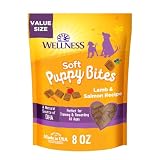
- GRAIN-FREE PUPPY TREATS: These bite-sized, soft puppy training treats are the perfect reward during training sessions or any time you want to thank your dog for good behavior. Puppy bites contain 6 calories per individual treat!
- SUPPORTS BRAIN DEVELOPMENT: Soft dog treats are crafted with salmon, a healthy source of DHA to promote healthy brain development.
- HEALTHY INGREDIENTS: These treats for dogs are made with minimal ingredients focused on quality proteins: made with lamb and salmon, with added vitamins specifically for puppies.
- NO CORN, WHEAT, OR SOY: Treats for dogs do not contain wheat, wheat gluten, corn, soy, or artificial colors.
- MADE IN USA: Our dog treats are quality-assured, made in USA, and crafted from the finest globally-sourced ingredients. Treats are tender, healthy, and bite-sized for small, medium, and large dogs of all lifestages, and activity levels.
5. Add the spoken cue only after the trade is easy
When your puppy releases promptly whenever the visible treat or second toy appears, say “drop it” immediately before presenting that reward. Use one cue consistently; “out” can be used instead, but do not alternate words during the learning stage.
Quick wins for a faster PC:
Fix the driver behind crashes, sound loss and screen glitchesFind Drivers →Clear out junk files and repair common Windows errorsFree Scan →If the puppy still needs to see the treat, say the cue, wait about one second, and then show the treat. As releases become reliable, lengthen the interval gradually. Reward the release, not a repeated cue or a grab for the food. If the puppy does not release, make the exercise easier rather than repeating “drop it” several times.
6. Fade the visible lure
Once the puppy responds to the cue with a short pause before the treat appears, keep treats in a pocket or nearby container rather than in the hand that approaches the nose. Say “drop it,” wait briefly, and mark the release before delivering the reward from the other hand. Increase the delay and vary whether the reward is food, another toy, praise, or a restart of play.
Do not remove rewards abruptly. The puppy should continue to receive reinforcement often enough that releasing remains worthwhile, especially in new places or with more exciting objects.
7. Build the behavior through play
Practice the same sequence with several safe toys. Move from a simple stationary trade to releasing after a short toss and return. The RSPCA progression is to begin with a treat on the floor, develop a response to the verbal cue, and then wait for the next toy toss. Keep each increase in difficulty small enough that the puppy can succeed without grabbing and running.
What’s actually slowing this PC down?
Pick the symptom - the matching free tool is one click away.
Also popular on Amazon

- Lots of flavor, not fillers: Just three simple, all-natural ingredients mean low calories and high nutritional value, making a tasty but healthy treat that your pup will actually love
- Ready for training, wherever you are: The best training is consistent training. Our small treats are lightweight and perfectly sized for quick rewards so they are ready to go whenever there is a training opportunity
- Mess free treats: No oily, greasy, crumbly messes here, Pupford treats keep your hands and pouches clean. You can even keep some in your pocket for walks, classes, or mini adventures without worrying about them getting grimy or stale
- Motivate even the pickiest of pups: A wide range of flavors makes it easy to find the perfect fit for your pup’s tastes
- Pupford Promise: We strive to always provide simple, high-quality, healthy pup essentials. If you or your pup aren't happy with a purchase, let us know so we can help find the right fit!
Three ways to reward a release
Food is often the clearest starting reinforcer, but the best method depends on what motivates your individual puppy. Compare the options before choosing a default.
| Method | Best fit | Safety and swallowing considerations | Fading the visible lure | Use during fetch | When to change approach |
|---|---|---|---|---|---|
| Treat trade | Puppies strongly motivated by food | Use tiny treats and a toy that is safe to release; do not grab for the object before the puppy opens its mouth | Say the cue, wait about one second, then reveal the treat; later keep it out of sight until after the mark | Works well when the puppy returns with a toy and can pause to eat | Raise reward value or switch methods if the puppy ignores food or runs away |
| Toy-for-toy trade | Puppies that prefer play to food | Use two puppy-safe toys and keep the exchange calm; avoid turning it into a tugging struggle | Animate the second toy, then gradually make it less conspicuous while keeping play rewarding | Natural for retrieving: the released toy can be followed by another toss | Use a less valuable first toy or a more exciting second toy if the puppy will not release |
| Pause in tug | Food-unmotivated puppies that enjoy tug | Stop moving the toy and wait silently rather than pulling harder or prying at the mouth | The pause itself becomes the signal; add the verbal cue immediately before the pause once the drop is predictable | Useful for teaching release between short tug rounds, then transfer to a retrieved ball | Return to an easier toy or food trade if the puppy stiffens, guards, or becomes frustrated |
For the tug version, stop the game and wait without pulling. When the puppy drops the toy, praise and restart tug. The American Veterinary Society of Animal Behavior and the American Kennel Club also describe using another toy or a retrieved ball as the reinforcer.
Progress from indoor toy to outdoor stick
Start with several safe toys
Teach the release with different shapes and textures so your puppy learns the cue rather than memorizing one particular object. Change only one difficulty at a time: toy type, room, distance, movement, or distraction.
Add a short fetch
Toss a toy a short distance. When the puppy returns, wait for the release, mark it, and reward with the next toss, a treat, or both. This makes the cue useful in the exact sequence in which many owners need it: retrieve, return, release, and chase again.
Practice outdoors on leash
Before introducing a stick, work in a quiet outdoor area with the puppy on leash. A leash gives you time to scatter or toss several treats away from the toy if the puppy runs, allowing you to pick up the object without a chase. Do not use a dangerous item as a test of whether training worked.
Also popular on Amazon

- High Value, Irresistible Flavor: Pups love the taste and aroma, making training sessions more effective and enjoyable
- High-Quality Ingredients: Made in the USA with clean, simple ingredients, starting with chicken - nothing artificial and no fillers
- Low-Calorie: Less than 2 kcal per treat and high in protein, perfect for frequent rewarding without worry
- Perfectly Sized: Small enough for one-bite rewards, which helps prevent overfeeding while keeping training sessions flowing smoothly
- Soft & Chewy: Perfect texture for quick rewarding during training, and great for pups with sensitive teeth like senior dogs
Introduce a stick only under close supervision
A wooden stick may be used for a controlled exercise, but it is less predictable and less safe than a puppy toy. Choose a clear area, keep the interaction short, and exchange the stick for a treat or another toy. Watch for splintering, sharp ends, chewing, or attempts to swallow pieces. If any of those occur, end the exercise and remove access to sticks; return to safer equipment.
Independent reader supportYour contribution helps us test, update, and keep practical guides available for everyone.Keep sessions short and measurable
American Kennel Club puppy guidance recommends roughly five to ten minutes per session. Several short practices are preferable to one frustrating lesson. End after an easy release, mark it enthusiastically, and allow the puppy to keep a safe toy or finish with a simple game.
- First minute: offer a low-value toy and reward one or two voluntary releases for a visible treat or second toy.
- Middle repetitions: say “drop it” just before the reward, wait briefly, and mark only the release. Return the toy frequently.
- Final repetition: choose an easy toy and distraction level, reward promptly, and stop while the puppy is still willing to play.
Record which reward worked, how long the puppy paused before releasing, and whether the toy was returned. This helps you lower difficulty when progress stalls without adding pressure.
The Tool Desk
Outbyte PC Repair FREEClear out junk files and repair common Windows errorsFree Scan →Outbyte Driver Updater FREEScan for outdated or missing drivers - takes under a minuteDriver Scan →Troubleshooting common problems
| What you see | Likely training issue | What to do next |
|---|---|---|
| The puppy runs away with the toy | The person approaching predicts pursuit or loss of the object | Practice on leash in a safe area. Toss several treats away from the toy to create time to pick it up, then return a safe toy instead of chasing. |
| The puppy will not trade for food | The toy is too valuable, the reward is too weak, or the environment is too distracting | Use a lower-value toy, increase the reward value, move indoors, or switch to a second toy or tug pause. |
| The puppy releases only when the treat is visible | The lure has not yet been converted into a cue | Say “drop it,” wait about one second, then show the treat. Gradually lengthen the delay and later keep the treat out of sight until after the marker. |
| The puppy grabs the toy again while you reach for it | The object is being taken before the reward is delivered or the toy is never returned | Mark the mouth opening, deliver the reward, pick up the toy while the puppy eats, and give it back for another short game. |
| The puppy ignores the cue in a new place | The behavior has not generalized beyond the original room or toy | Reduce distractions, use a familiar safe toy, and rebuild the sequence before increasing distance or adding outdoor objects. |
| The puppy becomes frustrated during tug | The person is pulling or waiting too long | Stop moving the toy and wait silently. Reward the first small release by praising and restarting tug; if frustration continues, use a food or toy trade. |
Guarding, growling, and dangerous objects
Stop trying to take the stick if your puppy stiffens, growls, snaps, or actively guards it. Back away, manage the area so the puppy cannot rehearse the behavior, and contact a qualified reward-based trainer or a clinical animal behaviourist. Do not test the cue with a hazardous object.
If a puppy swallows a stick fragment or another dangerous item, seek veterinary help promptly. Training cannot make an unsafe object safe, and a severe guarding response requires an individualized behavior and safety plan rather than repeated home attempts to seize the item.
Mistakes that slow learning
- Repeating the cue: Saying “drop it” again and again teaches the puppy to wait through the words. Give the cue once, then adjust the reward or difficulty.
- Starting with the stick: A stick is more hazardous and often more exciting than a soft toy. Establish the behavior with safer objects first.
- Always ending play: If every release removes the toy, the puppy has a reason not to cooperate. Return it frequently.
- Making the reward predictable: Visible food is useful initially, but the cue should eventually work before the puppy sees the treat. Fade the lure gradually while continuing to reinforce.
- Practicing too long: Stop after a successful repetition within the five-to-ten-minute guideline instead of pushing through frustration.
- Using force: Chasing, prying, and punishment can increase swallowing risk and guarding. Arrange a trade and get professional help when guarding appears.
What reliable progress looks like
At first, your puppy releases only when it sees a high-value reward in a quiet room. Next, it releases after hearing “drop it” with a short pause before the reward, then with the reward out of sight. A dependable behavior transfers to different safe toys, rooms, short fetches, and calm outdoor practice on leash. Only after those stages should you consider a closely supervised stick exchange, and even then the safer choice is to use a purpose-made toy whenever possible.





Leave a Reply