
Some links on this page are affiliate links: if you buy through them we may earn a commission, at no extra cost to you.
An emergency recall is a special cue that tells your dog to turn and come to you immediately when safety matters. Teach it by pairing one unique word or whistle with an unusually valuable reward, beginning in a quiet room and adding distance and distractions only after your dog responds eagerly. Keep the cue separate from ordinary recall and use a leash, long line or secure enclosure whenever a mistake could put your dog in danger.
The method below follows positive-reinforcement guidance from Veterinary Partner, VCA Animal Hospitals and the UC Davis School of Veterinary Medicine. It gives you a practical progression, explains when a spoken cue or whistle is preferable, and shows how to recover if your dog hesitates or ignores the signal.
As an Amazon Associate I earn from qualifying purchases.
PC Slower Than It Used to Be?
A free scan shows the junk files, broken settings and background clutter dragging Windows down - then fixes them in one click.Free scan · Windows 10 & 11Crashes, No Sound, or Screen Glitches?
Random freezes, missing sound and display glitches usually trace back to one bad driver. Find and replace yours safely.Free scan · under a minuteWhat an emergency recall is—and why it must be different
An emergency recall is a conditioned response to a signal reserved for genuinely urgent returns. The signal can be a short spoken word or a whistle. When your dog hears it, the learned sequence is: stop what you are doing, run toward the handler and stay close enough to be secured. The reward must be so predictable and worthwhile that the dog chooses you over a competing smell, animal or movement.
It is not simply your dog’s name, the everyday word “come,” or a louder version of an ordinary recall. Those cues are used frequently and can become background noise. Veterinary Partner describes emergency recall as an important management skill around other dogs, people and places. Typical situations include a gate left open, a leash dropped, a dog moving toward a road, wildlife appearing on a trail, or a play session becoming unsafe.
Popular on Amazon

- Various Size&Dia. Long Dog Leash: 10FT, 16FT, 30FT, 50FT,and 100FT , various sizes can meet different training purpose. Our Dog Leash available in diameter 1/3 inch, 3/8 inch, 1/2inch. The diameter of 1/3 inch can meet small dogs, cats or other small animals. The diameter of 3/8 inch and 1/2 inch is the best choice for training leashes for large dogs or medium dogs.
- Dog Tie Out Cable: Both ends of our rope dog leash leash have a heavy duty stainless steel swivel hook that can rotate 360 degree. You can tie one end of this training leash to your body or trees etc.,so that you can free your hands when traning, hiking,walking,etc.
- Reflective for Night Safety: We’ve added a reflective stitching around this strong training lead to make sure it is visible in low light. Your pup’s safety is always our highest priority.
- Durable and Lightweight Dog Rope Leash: This training Lead is made of high strenth wear-resistant polyeste which is lightweight and environmentally friendly, not easy to pull off, and has strength, will not be entangled with trees, grass, etc.The pull is up to 8-10 KN by professional tensile test which allow for total control of your dog and also allow it the freedom to do its business.
- Excellent Outdoor Dog Leash: Great dog leash for outside sports such as hiking, camping, training, hunting, backyard, beach, mountain climbing, walking, running, and so on.Any problem don't hesitate to contact with us.
Positive reinforcement is the foundation. UC Davis emphasizes that recall is never 100% effective, even after careful training. The emergency cue gives you a powerful additional behavior; it does not replace physical management near traffic, cliffs, unfamiliar dogs or other high-risk areas.
Choose the signal, reward and equipment before you start
Pick a cue your dog will not hear accidentally
Choose a short word that is uncommon in your household, such as a made-up sound, or select a whistle pattern. Do not use your dog’s name as the emergency cue: the name should remain useful for attention, while the emergency signal needs to stay rare and emotionally charged. Tell every household member exactly which signal to use and how to deliver the reward.
Free tools Windows power users keep installed
One-click scans. No signup required.
Keep the cue exclusive. Do not test it casually, repeat it when your dog is unlikely to respond, or use it for routine events such as a bath, nail trim, crate time or leaving the park. Every unnecessary repetition spends some of the cue’s value.
Compare a spoken cue and a whistle
| Choice | Strengths | Limitations and best use |
|---|---|---|
| Spoken word | Available without equipment, easy to pair with an upbeat tone, and simple for several people to learn. | Voice can be masked by wind, distance or panic. Choose a word you can say clearly when stressed. |
| Whistle | Consistent pitch and volume carry farther than a normal voice and remain usable when you are out of breath. | You must have the whistle with you, and everyone handling the dog must know the exact pattern. Introduce it at a comfortable volume. |
Neither option is inherently superior. Memorability, audibility and availability in a stressful moment matter more than the format. If you choose a whistle, use one distinctive blast or pattern rather than a signal that could be confused with other people’s whistles.
Match the reward to your individual dog
Use the reward your dog values most in that setting. Many dogs work hardest for tiny pieces of warm meat, cheese or another favorite food; others prefer a brief tug game, a thrown toy or enthusiastic social play. Food is easy to deliver rapidly and repeatedly. A toy can be excellent for dogs that become more animated by movement, but it must be ready immediately and may be impractical near other dogs.
Also popular on Amazon
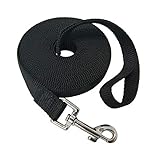
- Dog Leash Dimensions: training leash measures 3/4 inch width by 20 feet length, offering you dog for more wandering area and freedom.
- Nylon Long leash: long lead is made of strong wear-resistant nylon, available in Black, Blue, Red,Green color.
- Dog training leashes: suitable for teaching your dog/puppy recall and other obedience skills, great for small, medium, large dogs.
- Easy on and Easy off: Swivel-style bolt snap resists twisting. 360 degree tangle free swivel heavy duty clasp gives your dog best freedom.
- The dog training leash is built to last. If you have any question, please contact us, we will solve the problem until you are satisfied.
| Reward option | Use it when | Practical detail |
|---|---|---|
| High-value food | Your dog is strongly food motivated or you need several rapid reinforcers. | Prepare pea-sized pieces in a pouch. Reserve the best food for the emergency cue. |
| Toy or tug | Your dog reliably chooses play over food. | Carry a durable toy and keep the game short enough that you can regain control. |
| Food followed by play | Your dog enjoys both and the environment is safe. | Give the food first, then a brief game, so the dog learns that arriving close is worthwhile. |
You will also need a collar or harness that your dog can comfortably wear, a standard leash, and a long line for staged outdoor practice. A long line is a management tool, not permission to let the dog drag equipment near roads or other hazards. Check that the line cannot tangle around people, trees or furniture.
Teach the emergency recall in six stages
1. Load the cue indoors
Stand close to your dog in a quiet room. Say the emergency word once in a bright, inviting voice, or give the chosen whistle signal. Immediately deliver the exceptional reward. Do not wait for the dog to move and do not add a second command. At this stage you are creating an association between the sound and an excellent outcome.
Veterinary Partner recommends five to 10 cue-and-reward pairings spread through the day for two weeks. Keep each interaction calm and brief. You can perform a few pairings in the kitchen, then put the reward away and return to normal life. If the dog startles at a whistle, move farther away, lower the volume or choose a spoken cue.
VCA describes an alternative loading routine: scatter 10–20 delicious treats around your feet, briefly touch the collar or attach a leash while the dog eats, and repeat the emergency word during this controlled exercise. The handling component matters because a dog that runs toward you but avoids being secured is not yet safe.
2. Build movement from another room
Once your dog visibly anticipates the reward when the signal sounds, ask for a short return. Have a helper hold the dog, or begin when the dog is only a few steps away and already relaxed. Give the cue once. As soon as the dog turns and reaches you, pay with several treats or a short game.
The Tool Desk
Outbyte PC Repair FREERepair Windows errors before they cause bigger problemsFix Now →Outbyte Driver Updater FREEScan for outdated or missing drivers - takes under a minuteDriver Scan →Also popular on Amazon

- Dimensions - This dog leash measures 3/4in wide by 15 feet long. Great for hiking, camping, training, hunting, backyard, beach, recall training, outdoor play with tennis balls, and swimming!
- Long Leash: This training leash is great for teaching your dog recalls. It has the length needed to allow them to wander and ensure your command to come! is obeyed.
- Nylon Training Lead - This durable, long, nylon dog training leash will outlast cotton leashes. All stitching is reinforced and the nickel plated clip swivels to resist twisting. Our long dog leash is great for medium and large dogs. You'll love using it as a backyard dog leash, for off leash dog training, and more.
- Allows you to teach your dog recalls and other obedience skills.
- Swivel-style bolt snap resists twisting
Gradually call from a doorway, hallway or another part of the home. Keep your body open, move backward a few steps if that encourages pursuit, and crouch rather than leaning over the dog. If the dog does not respond, do not repeat the cue. Reduce the distance or remove the distraction, then rebuild success. Repetition after a nonresponse teaches the dog that the first signal can be ignored.
3. Make arriving and being handled part of the behavior
Deliver the reward close to your legs, then gently touch the collar or harness. When the dog accepts that contact, clip on a leash, reward again and release the dog to continue a safe activity. Practice the sequence in small pieces: approach, hand to collar, brief hold, leash attachment and release.
Use a separate release cue such as “go play” or “all done.” Releasing after the reward prevents the emergency recall from predicting that every return ends freedom. Sometimes reward and release immediately; sometimes hold the collar for a few seconds before releasing. The dog should learn that coming to you never causes punishment and often leads back to something enjoyable.
4. Add distance and distractions in measured steps
Move outdoors only inside a securely fenced area or while the dog is attached to a long line. Increase one challenge at a time: distance, then mild distraction, then a more difficult environment. If performance drops, go back to the last level at which the dog was fast and enthusiastic.
| Stage | Example setup | Advance when |
|---|---|---|
| Quiet indoor | One room, short distance, no competing activity. | Your dog turns promptly and reaches you repeatedly. |
| Whole home | Call through a doorway or from another room while a family member is present. | The dog can find you without seeing you first. |
| Secure yard | Use a leash or long line; add sniffing, toys or a mild sound. | The dog disengages from the mild distraction and runs in. |
| Familiar quiet outdoor area | Long line attached, greater distance, limited foot traffic. | Returns remain fast while the dog explores. |
| More challenging setting | Only after success at easier levels; keep the line attached where safety requires. | Your dog can respond despite stronger smells, movement or distance. |
There is no universal number of repetitions or guaranteed success rate. Progress depends on the dog, the environment and the value of the reward. A few excellent responses are more useful than many rushed attempts. Never practice unsecured off-leash near a road, parking area, open water, livestock, unfamiliar dogs or any other hazard.
Also popular on Amazon
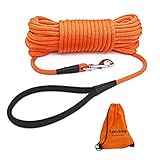
- SUITABLE THICKNESS CHECK CORD: To find a balance between weight and strength. 3/8” is a suitable thickness for long training dog leash, it has both strength and portability
- NO TANGLE LONG ROPE LEASH: the round climbing rope and 360 degree rotating clasp design long training leash will not tangle whether it is in use or when you roll it up, great for hiking, camping, training, hunting, backyard, beach, recall training, outdoor play with tennis balls, and swimming
- LIGHTWEIGHT AND NOT ABSORB WATER: soft and lightweight Non-absorbent material won't get more and more heavy in the water and won’t sink, it will float when submerged and highly visible against any background.
- SOFT AND DURABLE DOUBLE LAYER WOVEN HANDLE: check cord has a comfortable woven double layer handle, the joint of the rope is sewn by the machine and is very strong.
- SIZE: 3/8" (9.5 mm) in diam ,Size of this one is 30foot,color orange, by 10 foot 15 foot, 30 foot and 50 foot three length for different training purpose
5. Practice a complete emergency return
When your dog is reliable on a long line, give the cue while the dog is mildly occupied. Move away from the line’s slack, keep your voice cheerful and reward the instant the dog commits to you. When the dog arrives, touch the collar, attach the leash and deliver the main reward. Then release the dog if the location is safe.
Do not yank the line to manufacture a return. If you need to prevent the dog from reaching danger, manage the line for safety and then return to easier training. The cue should predict voluntary movement toward you, not a correction.
6. Maintain the response every week
Emergency recall is a skill that fades when it is never reinforced. Veterinary Partner advises one or two maintenance practices weekly. Use ordinary, safe moments: call from the garden, reward generously, touch the collar, clip on the leash and release. Keep the signal rare enough that it retains meaning, while making the reward history rich enough that the dog remains eager.
Do these 3 things before closing this tab:
1Fix the driver behind crashes, sound loss and screen glitches2Clear out junk files and repair common Windows errors3Scan for outdated or missing drivers - takes under a minuteRefresh the behavior after a move, illness, long break, stressful event or change in household routine. Start again at an easier level rather than assuming a dog that succeeded in a quiet yard will respond at a busy trailhead.
Build reliability around real distractions
Use a distraction ladder
List the distractions your dog is likely to encounter and arrange them from easiest to hardest. A household member walking past may be easier than a toy on the ground; a squirrel, running child or unfamiliar dog may be harder still. Train below the point where your dog becomes fixated. The goal is to rehearse choosing you before the dog is over threshold, not to test the cue against the strongest temptation on the first attempt.
Also popular on Amazon

- 2 Swivel Hooks Design:There are 2 Swivel Hooks in both ends of the long leash, one is the unique lockable bone-shaped hook which added locked latch to make sure that the clasp of the rope leash is secure and will not open unexpectedly. You can tie one end of this training leash to your body or trees,so that you can free your hands when traning, hiking,walking,etc.
- Static Climbing Rope Material: Strong dog leash is made of high strength wear-resistant polyesterr, and outer 48 strands, which is moderate softness and strong binding ability, twisting outer skin, more wear-resistant and durable. The pull is up to 6-10 KN by professional tensile test which allow for total control of your dog and also allow it the freedom to do its business.
- Soft Rubber Handle: The handle of long leash is made of a soft and sturdy rubber, which is super soft to the touch but resistantis for amazing comfortable shock grip, protects your hand from rope burn, and will afford you and your dog many enjoyable walks together hassle-free.
- Heavy Duty Reflective Dog Leash: Strong dog leash added reflective thread stitched along the length of the leash to help visibility at night in front of approaching vehicles with headlights on. And allow for total control of your puppy or dog and also allow it the freedom to do its business.
- Perfect Outdoor Dog Cord :15 feet, 20 feet, 30 feet and 100 feet, various sizes can meet different training purpose. Great large dog leash for outdoor sports such as hiking, camping, training, hunting, backyard, beach, mountain climbing, walking, running, and so on. Now you can take your pets with you on all kinds of adventures.
- Begin with stationary smells and quiet movement.
- Add a person walking, a toy at a distance or a familiar dog behind a barrier.
- Increase proximity, motion and unpredictability one variable at a time.
- Use a long line or secure enclosure throughout outdoor progression.
- Return to an easier level immediately after a slow response.
Watch the dog’s body language
Soft eyes, loose movement and the ability to take food indicate that the dog can learn. Staring, stiff posture, frantic sniffing, tucked posture, barking or refusal of a normally prized reward signal that the setting is too difficult or emotionally loaded. Increase distance, lower the distraction and reward calm orientation toward you before attempting the emergency cue again.
Make the handler easy to approach
Turn sideways, bend your knees and use an inviting voice. Avoid grabbing over the dog’s head, chasing, shouting or blocking the only escape route. If your dog has learned that hands predict restraint, spend separate sessions pairing gentle collar touches with food. A dog that feels safe being caught is more likely to complete the return.
Quick wins for a faster PC:
Repair Windows errors before they cause bigger problemsFix Now →Fix the driver behind crashes, sound loss and screen glitchesFind Drivers →Clear out junk files and repair common Windows errorsFree Scan →Safety rules and common training mistakes
- Do not punish a slow return. Even if the dog took several seconds, reward the arrival and analyze why the setup was too hard. Punishment can make the dog reluctant to approach next time.
- Do not spend the cue on unpleasant chores. Call for a bath, nail trim, medication or an immediate end to every outing with an ordinary cue instead. Keep the emergency signal linked to safety and exceptional reinforcement.
- Do not repeat the signal. One cue followed by a simpler setup is better than a series of increasingly loud calls.
- Do not remove physical management too early. Recall training is never completely dependable. Near roads and other high-risk locations, use a leash, long line or secure enclosure even when practice has been excellent.
- Do not make every return end the fun. Reward, secure briefly and release when safe so the dog does not learn to avoid you at the end of every walk.
- Do not let several people improvise. Agree on the exact word or whistle pattern, reward standard and handling sequence.
Troubleshoot a missed or weakening recall
| What you see | Likely reason | What to do next |
|---|---|---|
| The dog does not turn toward the cue indoors. | The association is not established, the sound is unclear or the reward is not valuable enough. | Return to close-range loading. Use a better reward, one cue, immediate delivery and five to 10 pairings spread through the day. |
| The dog turns but stops before reaching you. | Distance increased too quickly or the dog is uncertain about handling. | Shorten the distance, reward several steps of approach, then separately condition collar touches and leash attachment. |
| The dog responds in the house but not outside. | Outdoor smells and movement create a much harder distraction level. | Use a secure yard and long line, begin at a very short distance and advance one distraction at a time. |
| The dog comes once and then slows on later repetitions. | The reward is losing value, sessions are too long or every return ends an enjoyable activity. | Stop after a successful response, use a larger or more varied reward and release back to safe exploration. |
| The dog runs away when you reach for the collar. | Hand contact predicts restraint or an unpleasant event. | Pair gentle touches with food, progress to holding the collar, then clip the leash and release. Seek professional help if fear persists. |
| The dog ignores the cue around a major trigger. | The situation is beyond the dog’s current learning ability or the dog is distressed. | Manage distance immediately, end the test and rebuild in an easier environment. Do not keep calling. |
Use an emergency plan outside training sessions
Training works best alongside prevention. Check gates and latches, fit identification, and keep a leash or long line available before opening doors or unloading at a trail. Tell visitors not to call the emergency cue. If a dog slips out, avoid chasing; move away from the dog, use the trained signal once when there is a reasonable chance of success, crouch, show the reward and secure the collar or harness when the dog arrives.
If the dog is already moving toward immediate danger, physical management takes priority. Block access, close a gate, use a barrier or safely control the leash. Do not rely on a newly trained cue to stop a dog that has never practiced under comparable conditions.
When to involve a qualified professional
Ask a qualified positive-reinforcement trainer or veterinary behavior professional for help when the dog shows fear of handling, persistent avoidance, aggression, severe chase behavior or no progress despite returning to easy setups. A professional can identify whether pain, anxiety, predatory behavior, poor equipment fit or an overly difficult environment is interfering with learning. Veterinary input is especially appropriate when a previously reliable response changes suddenly.
Choose help that explains management and reinforcement clearly, protects the dog from dangerous exposure and does not promise a guaranteed recall. The objective is a safer, stronger response—not a test that forces the dog to fail.
Quick Recap
Key takeaways for a dependable emergency cue
- Select one unique word or whistle and reserve it for emergencies.
- Load it indoors with an exceptional reward; Veterinary Partner’s starting schedule is five to 10 pairings throughout each day for two weeks.
- Build movement, collar contact and leash attachment before adding outdoor distractions.
- Use a long line or secure enclosure while increasing distance and difficulty.
- Reward generously, release when safe and maintain the skill one or two times each week.
- If the dog ignores the cue, lower the difficulty rather than repeating or punishing.
- Keep physical management in place because no recall is guaranteed in every situation.





Leave a Reply