
Outdated Drivers Are Slowing You Down
One free scan finds every outdated or missing driver and matches the right update for your exact hardware.Free scan · exact hardware matchWindows Errors? Fix Them Before They Spread
Repair common Windows errors and clear accumulated junk for a smoother, more stable PC - no reinstall needed.Free scan · no reinstallSome links on this page are affiliate links: if you buy through them we may earn a commission, at no extra cost to you.
Teach one concrete need at a time: pair a consistent spoken word with one distinct hand signal or recorded button, deliver the related outcome immediately, and reward the dog for correct responses and small steps toward them. Start with practical needs such as going outside, play, food, or water. Buttons can teach reliable word-to-outcome associations, but current evidence does not show that dogs are holding fluent, human-like conversations.
What button and hand-signal communication really is
A button or gesture is a learned cue. The dog learns that a particular sound or movement predicts an outcome, such as the door opening or a game beginning. This is a form of augmentative communication between species: it can give a dog another way to request something, especially when ordinary behavior is easy for people to miss.
As an Amazon Associate I earn from qualifying purchases.
The Tool Desk
Outbyte Driver Updater FREEFix the driver behind crashes, sound loss and screen glitchesFind Drivers →Outbyte PC Repair FREEClear out junk files and repair common Windows errorsFree Scan →It is not established proof that the dog understands human grammar, can name abstract ideas, or is producing human speech. Treat every response as useful information that must still be interpreted alongside timing, body language, routine, and what is actually available.
What a 2024 study found
A 2024 peer-reviewed study tested words related to food, play, and going outside. Owners or unfamiliar people presented the words either by speaking them or by producing them through soundboard buttons. Dogs showed contextually appropriate play- and outside-related behavior across presenters and presentation methods. Food responses were not preferentially demonstrated in the same way.
Popular on Amazon

- 【30 Second Clear Recording】The Record button allows you to record up to 30 seconds of clear sound. You record other sounds or sound effects. The sound is clear. At the same time you can repeat the different sounds recorded. And it's very portable with its small size. Perfect for families to get together and play games when they go out on picnics and outings. Very practical and fun!
- 【Interactivity】By recording simple words or sentences such as "want to play", "want to eat", "want to drink", "daddy ", "mum", or any other word you want to say. Lead your pet to interact with you. Or have a snatch-and-grab game with a friend. The record button provides more fun in your life.
- 【Easy To Use】Press the 'REC' button and start recording when you hear a beeping sound. Release the 'REC' button when recording is complete and hear 2 beeps to signify the end of recording. Press the button to hear your recorded sound.
- 【A Fun Gifts】This button offers a lot of unexpected entertainment and interaction. This includes interaction with family or colleagues in snatch and grab games, pranks between friends, communication training with pets, and much more. Provides lots of very creative communication and interaction. Also makes a creative birthday/holiday gift to make unforgettable memories!
- 【Package Include】Includes 4 colors of buttons, rose, orange, blue, red. (Note: batteries not included) Note: This product is not recommended for children under 12 years of age.
The study concluded that owners can teach pet dogs to associate words recorded on soundboard buttons with real-world outcomes, and that dogs can respond appropriately when the word is presented without the owner’s body language. That finding supports learned associations; it does not establish fluent conversation or prove that every press is intentional.
Why a press is not automatically a sentence
An accidental paw tap, a request that has already been satisfied, or a button pressed because it is novel can look like a meaningful message. The AKC’s evidence summary cautions that there is no scientific proof that button-pressing dogs conduct human-like conversations and notes the possibility of random presses and inadvertent owner cues. Record what happened immediately before and after a press instead of assigning an elaborate meaning to it.
Choose between buttons and hand signals
Neither system is universally better. Reliability depends on the dog’s hearing and vision, the distance between dog and person, household consistency, mobility, and whether the setup fits daily life.
| Factor | Recorded button | Hand signal |
|---|---|---|
| How the dog detects it | An audible recorded word plus the button’s fixed location | A visible movement that must be in the dog’s line of sight |
| Distance | Can be heard from another room if the sound is loud enough and background noise is low | Usually requires the person to be visible and close enough for the dog to see the gesture |
| Hearing or vision limitations | Useful only if the dog can hear the recording; a dog with hearing loss may not benefit from the sound | Useful only if the dog can see the gesture; a dog with poor vision may need another cue |
| Hardware and cost | Requires a sturdy, reachable, recordable button and a stable location | Requires no hardware |
| Portability | Less portable because the button must be carried and placed safely | Can be given almost anywhere |
| Hands-free communication | The dog can activate it without the owner standing beside the dog | The owner must make the gesture |
| Quiet communication | The recording is audible and may disturb other people or animals | Can be delivered silently |
| Consistency risk | Everyone must use the same recorded word and honor the same meaning | Everyone must make the same movement with the same meaning |
| Best practical fit | A dog that can reach a fixed station and a household that wants an independent request system | A dog that watches people closely or a family that needs a low-equipment, portable cue |
You can use both. For example, teach a hand signal for a quiet request during a walk and a button for “outside” at home. Keep each cue distinct and do not expect one system to compensate for a sensory or mobility limitation the dog has.
Prepare the first communication cue
Pick one need with an immediate, safe outcome
Choose something the dog already wants and that you can deliver predictably. Going outside and play are practical first targets because the result can follow within seconds. Food and water can also be useful, provided you control portions, maintain a normal feeding schedule, and never let a communication exercise replace medical care.
Use the word your household naturally uses. If people alternate among “outside,” “potty,” and “go out,” the dog receives an inconsistent target. PetMD specifically emphasizes keeping the spoken label and button meaning consistent.
Do these 3 things before closing this tab:
1Fix the driver behind crashes, sound loss and screen glitches2Clear out junk files and repair common Windows errors3Scan for outdated or missing drivers - takes under a minuteDefine exactly what the cue means
Write a one-sentence rule before training. For example: “Outside” means an opportunity to go outdoors now; “Play” means a brief interactive game with the named toy. Do not make one button mean several unrelated things. If the dog needs to ask for a walk, a bathroom break, and outdoor sniffing separately, begin with the single outcome you can deliver most reliably.
Also popular on Amazon

- 【30 Second Clear Recording-Teach Your Dog to Communicate More Clearly】.Wish your dog could tell you when they need to go outside, want water, or are ready to play? Record your own voice with up to 30 seconds of clear playback and help your dog express everyday needs through consistent communication training. Every successful press builds confidence, understanding, and a stronger bond.
- 【Interactivity】By recording simple words or sentences such as "want to play", "want to eat", "want to drink", "daddy ", "mum", or any other word you want to say. Lead your pet to interact with you. Or have a snatch-and-grab game with a friend. The record button provides more fun in your life.
- 【Easy To Use】Never trained with communication buttons before? No problem. Simply press REC, record your word, and reward your dog for every successful press. The intuitive design makes it easy for first-time dog owners to start training with positive reinforcement and build lasting habits step by step.
- 【8 Color Buttons Make Learning Easier】Why settle for only a few commands? This 8-button communication set gives your dog plenty of room to build a growing vocabulary. Assign different words like Outside, Food, Water, Walk, Play, Treat, Bed, and more. Bright colors make each command easy to recognize while keeping training organized and engaging.Note: This product is not recommended for children under 12 years of age.
- 【A Fun Gifts】This button offers a lot of unexpected entertainment and interaction. This includes interaction with family or colleagues in snatch and grab games, pranks between friends, communication training with pets, and much more. Provides lots of very creative communication and interaction. Also makes a creative birthday/holiday gift to make unforgettable memories!
Set up the location
- For a button, select a sturdy recordable unit with a non-slip base. Place it where the dog can approach and press without squeezing past furniture, another animal, or a person.
- For a hand signal, choose one visible movement that is not used casually for another purpose. A gesture directed toward the door might mean outside; a hand movement toward a toy area might mean play. These are training choices, not universal dog-language signs.
- Keep the cue in the same place or use the same gesture during the early learning period.
- Make the outcome genuinely available. Do not place an “outside” button by a door that is routinely blocked or inaccessible.
Step-by-step training sequence
1. Pair the label with the outcome
Say the chosen word immediately before showing the hand signal or pressing the button, then provide the outcome. For “outside,” say the word, present the gesture or press the button, and open the door. For “play,” say the word, show or press the cue, and begin the game. The close timing lets the dog connect the sound or movement with what follows.
2. Model the cue repeatedly
Modeling means that you demonstrate the cue in the relevant context rather than waiting for the dog to discover the button by chance. Each time you are about to provide the target activity, use the same word and cue. The study literature and practical guidance describe this repeated owner modeling as the common teaching procedure.
3. Shape small approximations
Do not demand a perfect press or a dramatic gesture on the first attempt. Reward successive steps:
Recommended Free Tools
- Orienting toward the button or watching the hand.
- Moving closer to the button or tracking the gesture.
- Sniffing or touching the button, or copying a small part of the movement.
- Applying enough pressure for the button to sound, or performing the complete hand signal.
Use the requested activity, a small food reward, or another safe reinforcer the dog values. AVSAB describes capturing, luring, and shaping as reward-based training procedures. Deliver the reward promptly so the dog can identify which action earned it.
4. Reinforce the functional response
Once the dog presses or gives the signal, respond consistently when the requested outcome is practical and safe. For a bathroom request, take the dog out; for play, start the game; for water, check and refresh the bowl. The functional result is often the strongest reinforcement because it is exactly what the dog requested.
If you cannot provide the outcome at that moment, do not punish the dog or force another press. Manage the immediate need safely, then make future practice easier by presenting the cue when you can follow through.
5. Verify the context
Before treating a response as a clear request, check what happened before it. Is the dog standing by the door, staring at the toy, pacing near the water bowl, or repeatedly pressing because the button is under a paw? Look at posture, gaze, movement, and routine. A press that occurs immediately after the dog watched you pick up the leash carries more context than an isolated tap during energetic play.
Quick wins for a faster PC:
Clear out junk files and repair common Windows errorsFree Scan →Fix the driver behind crashes, sound loss and screen glitchesFind Drivers →Also popular on Amazon
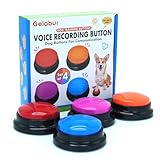
- Dog Communication Buttons: Our talking buttons for dogs make it easy for your pet to express their needs. Use these customizable, recordable buttons to teach your dog to say "Outside," "Treat," or any command you prefer
- Voice Recording Buttons for Classroom: These record buttons for classroom activities are a fun and interactive way to enhance student engagement. Students can record their voices and play them back, adding a dynamic learning experience
- Customizable Sound & Easy to Use: Each of these dog talk buttons allows you to record up to 30 seconds of sound, making them perfect for both dog training and classroom activities
- Dog Training Buttons That Talk: Ideal for pet owners looking to improve communication with their dogs. These training buttons for dogs offer a rewarding way to teach commands through sound association
- Durable & Safe Design: Made from pet-safe materials, these dog training buttons are durable enough to withstand repeated use by both dogs and children in classrooms
6. Add cues slowly
Wait until the first cue is reliable in ordinary situations before introducing another. Add one button or one gesture at a time, keep labels and locations distinct, and continue modeling each cue. Do not require combinations or infer abstract statements before the basic word-to-outcome associations are stable. More buttons can increase choice, but they also increase accidental presses and household inconsistency.
Teaching hand signals in detail
Make the movement easy to see
Use a simple gesture with a clear start and finish. Keep it at a comfortable distance from the dog’s face and avoid movements that resemble everyday reaching, pointing, or waving. If the dog is small, elderly, visually impaired, or in dim light, adjust the size, contrast, and position of the gesture.
Fade lures without changing the signal
If you use a treat or toy to guide the dog into the desired response, gradually remove the lure while preserving the same hand movement. Reward the response after the gesture rather than showing the reward first. Otherwise, the dog may follow the visible food or toy instead of learning the signal.
Build distance and distractions gradually
First practice when the dog is close and the environment is quiet. Then increase distance, change rooms, and work around mild distractions one variable at a time. If the dog stops responding, return to the last successful distance or environment rather than making the gesture larger, faster, or more forceful.
What’s actually slowing this PC down?
Pick the symptom - the matching free tool is one click away.
Keep every handler synchronized
Post a short household reference showing the exact gesture and its meaning. Family members should use the same movement, spoken label, and response. A signal that means “outside” to one person and “walk” to another cannot become a dependable communication channel.
Teaching recorded buttons in detail
Choose placement for access and clarity
Put the first button on a stable surface along the route to the relevant outcome. A button near the exit is easier to understand for “outside” than one hidden among unrelated objects. Leave enough room for the dog to approach, turn, and withdraw without slipping or being crowded.
Record one natural, consistent label
Use the same word you say aloud. Avoid changing the recording from one session to the next, and keep household members from casually re-recording it with different words or tones. The important property is a stable auditory cue, not a particular speaker.
Also popular on Amazon

- 🐾【Dog Buttons For Communication】- Help your pet learn words, you can record commands such as "Open Door", "Play", "Food", "Play", "Yes", "No", etc. to let your pet communicate with you Communication; with a little patience, you can understand your pet's mind. Great for training pets.
- 🐾 【Perfect Set】 - 6 product accessories set, 8 ready-to-use high quality buttons + 24 scene patterns + 1 dog button pad + 12 AAA batteries + 40 double-sided stickers+Training manual. Clear sound, repeatable recording, the perfect gift set for pet toys.
- 🐾【Easy to use】-You just need to press and hold the REC button to use, start recording after hearing a "beep", release the REC button after the recording is complete, you can hear the "beep beep" sound, click the button, You will hear your recorded sound.
- 🐾【Environmental protection material】-The keys are made of ABS plastic, which is natural and environmentally friendly. It is powered by two AAA batteries (Free 16 batteries, no need to buy batteries) and has low power consumption for long-term use.
- 🐾【Quality Assurance】-Your 100% satisfaction is our highest goal, if you find any quality problems during use, please contact us and we will give you a satisfactory answer.
Demonstrate, then deliver
At the moment you are ready to provide the outcome, say the word, press the button yourself, and immediately follow through. This models the action and prevents the button from becoming an isolated noise. Repeat the demonstration during naturally occurring opportunities rather than creating so many artificial presses that the sound loses meaning.
Teach the press without forcing the paw
Reward looking at, approaching, and touching the button before expecting enough pressure to activate it. You can place a reward near the unit or use a target to encourage movement, but do not grab, push, or pin the dog’s paw onto the button. Forced contact can create avoidance and does not show that the dog chose the cue.
Prevent accidental activation
Use a non-slip base, keep the button away from bedding or high-traffic paths, and provide enough spacing if more buttons are added. If the dog repeatedly activates it while rolling, chewing, or racing past, temporarily make the setup easier to discriminate and return to rewarding deliberate approaches.
Use reward-based training only
AVSAB’s position statement recommends reward-based methods for all dog training, including behavior problems. Use food, play, access to the requested activity, praise, or another reinforcer the dog actually values. Mark the correct response promptly and deliver the reward without adding pressure.
Do not use shock, prong, choke, leash-jerk, intimidation, or other aversive methods to force a button press or hand signal. Veterinary behavior literature links aversive procedures with stress-related behavior and risks to the dog-human relationship. Controlled research has found positive-reinforcement training effective for the tested tasks, so there is no training advantage in making the communication exercise frightening.
Interpret requests without over-reading them
Use an antecedent-behavior-consequence record
For several days, note:
- What happened immediately before the cue, such as picking up a leash or preparing a meal.
- What the dog did, including which button was pressed, where the dog looked, and the rest of the body language.
- What followed, including whether the requested outcome was available and whether the dog settled afterward.
Patterns across repeated, contextually appropriate responses are more informative than one isolated press. This record also reveals when a button is being reinforced for attention, exploration, or access to an outcome other than the label you intended.
Check the real-world availability
A dog may continue pressing “play” because the first game was rewarding, not because it is making a complex statement about the quality of the game. A dog may press “outside” when it needs a bathroom break, wants to sniff, or simply noticed the door. Respond safely, observe the accompanying behavior, and avoid claiming a more specific meaning than the evidence supports.
Also popular on Amazon

- 【Clear Recording】 The record button can record up to 30 seconds with clear and loud sound. You can repeat the sound you recorded or re-record it. Small size, easy to carry. Very practical and fun!
- 【Pet Training Buzzer】 You can record action-related words such as "eat", "drink", "outside", "yes", "no" and other commands to develop your pet's habit of communicating with you; with a little patience, you can get to know your pet's mind. Great for training dogs, cats and other pets. Different color buttons can be used as options for different training.
- 【As a gift】Recordable buttons are perfect for entertaining interactions with family or friends, pranks, messages and more. It is the most creative birthday or holiday gift. We believe this recordable button will give you fun memories!
- 【Easy to use】 1. Click the record button and start recording voice messages after you hear the beep; 2. Release the record button after recording and you can hear the beep again; 3. No tools are needed for battery installation and removal.
- 【Environmental friendly material】The button is made of ABS plastic, natural and environmental friendly. It is powered by two AAA batteries (batteries are not included in the package), low power consumption, can be used for a long time.
Troubleshooting common problems
| What you see | Likely issue | Adjustment |
|---|---|---|
| The dog stops responding | The environment is too distracting, the approximation is too difficult, the reward is weak, or the outcome is unavailable | Reduce distractions, return to an easier step, improve the reinforcer, and practice only when you can follow through. |
| The dog repeatedly presses at random | The button is in a high-traffic area, the dog has learned that any press produces a reward, or several buttons are too close together | Move or stabilize the button, reinforce deliberate approaches more selectively, and simplify the layout. |
| The dog will not touch the button | The surface is unstable, the sound is startling, or the dog has not been shaped through small approximations | Stabilize the unit, lower the sound exposure, reward looking and approaching, and progress gradually. |
| Different people get different responses | Handlers use different words, gestures, timing, or consequences | Agree on one label, one cue, and one response for each need; practice the same sequence. |
| The dog signals when the outcome cannot happen | The cue has been taught without a clear availability rule, or the dog is exploring the system | Check context and body language, avoid punishment, meet the immediate need another safe way, and resume modeling during available opportunities. |
| A button is activated during rough play or walking past | The placement allows incidental contact | Increase clearance, use a non-slip base, and reinforce intentional approaches in a quieter setting. |
| Communication changes suddenly | Pain, illness, sensory loss, stress, or another behavior change may be involved | Arrange veterinary assessment, especially with changes in appetite, mobility, elimination, sleep, or general behavior. |
When a communication change needs veterinary help
A training plateau is usually handled by making the task easier. A sudden change in how a dog communicates is different. New reluctance to move, altered appetite or drinking, unusual vocalizing, confusion, withdrawal, irritability, or a sharp increase in pressing can accompany a medical or sensory problem. AAHA guidance emphasizes medical evaluation and qualified behavior support when health and behavior intersect.
Do not use a button system to diagnose pain, anxiety, gastrointestinal disease, or another condition. A dog can learn to request water or outside time, but the cue does not tell you why the dog needs it. Veterinary assessment remains necessary when the underlying reason is uncertain or the behavior has changed.
Free tools Windows power users keep installed
One-click scans. No signup required.
Expand the system without creating confusion
Add one new need at a time
When the first cue works reliably, introduce the next need with a different word, button location, or hand movement. Continue modeling both cues in their proper contexts. If the dog begins pressing indiscriminately, remove the newest complexity temporarily and rebuild the earlier distinction.
Generalize deliberately
A dog may learn “outside” at the kitchen door but not recognize the same button in a new room. Practice in additional locations and with different household members only after the original setup is working. Change one factor at a time so you can tell whether the difficulty comes from the person, place, distance, or distraction.
Keep labels concrete before attempting abstractions
Outside, play, food, and water refer to observable, repeatable outcomes. Words such as “later,” “funny,” “yesterday,” or names for complicated emotions require interpretations that have not been established by the button evidence. Build dependable concrete associations first and remain cautious about assigning abstract meanings.
A practical decision checklist
- Choose a button if the dog can hear the recording, can reach a stable station, and your household wants the dog to initiate a request from another room.
- Choose a hand signal if portability, quiet communication, or minimal equipment matters and the dog can see the person clearly.
- Use both when the contexts differ, such as a fixed home button and a portable signal outdoors.
- Pause and reassess if the dog shows fear, frustration, avoidance, or a sudden behavior change. Lower the difficulty and seek veterinary or qualified behavior help when appropriate.
The most dependable system is not the one with the most buttons or the most elaborate gestures. It is the one whose cue, outcome, timing, and household response remain stable enough for the dog to learn.





Leave a Reply