
Do these 3 things before closing this tab:
1Fix the driver behind crashes, sound loss and screen glitches2Clear out junk files and repair common Windows errors3Scan for outdated or missing drivers - takes under a minuteSome links on this page are affiliate links: if you buy through them we may earn a commission, at no extra cost to you.
Start with the ears. A sea lion has a small external ear flap; a true seal has no visible flap, only a small opening. Then check the flippers and posture: sea lions have long foreflippers and can rotate their hind flippers forward beneath the body, while true seals have smaller front flippers and rear flippers that stay pointed backward. A dog has obvious legs, paws and a projecting muzzle. These clues are more dependable than a quick, dog-like face seen at the surface.
If the view is brief, distant or obscured by glare, identify it conservatively as a pinniped—possibly a seal or sea lion—rather than forcing a species-level answer. Watch from your position, use binoculars, and never move closer to investigate.
As an Amazon Associate I earn from qualifying purchases.
The quickest way to separate the three
Use several features together rather than relying on size, color or a single head shape. The most useful order is ears, foreflippers, rear-flipper position, swimming stroke and then behavior.
- External ears: A visible flap on each side of the head strongly favors a sea lion or another eared pinniped such as a fur seal. A true seal has an ear opening without a projecting flap. A dog has a true pinna, usually triangular or floppy, attached to a four-legged body.
- Front limbs: Sea lions have long, broad, leathery foreflippers. True seals have shorter, smaller front flippers, often with visible claws. Dogs have articulated legs ending in paws, not paddle-shaped flippers.
- Rear limbs: A sea lion can rotate its hind flippers forward and support its body while moving on land. A true seal’s rear flippers extend behind it and cannot swing underneath for walking.
- Swimming: True seals usually drive themselves with side-to-side strokes of the rear flippers, using the front flippers mainly to steer. Sea lions generate most thrust with their large foreflippers. Dogs paddle with their legs, commonly alternating the forelegs, although stroke patterns vary.
- Posture and profile: A sea lion often holds its head and neck more upright and may show a large foreflipper. A seal’s head and back can appear low and rounded at the surface. A dog generally shows a snout, neck and repeated head movement above a four-legged body.
None of these marks is guaranteed to be visible every time. Wet fur, waves, low light, distance, age and species differences can hide the decisive feature. Treat the combination as a field identification aid, not a substitute for a clear photograph or expert confirmation.
Popular on Amazon
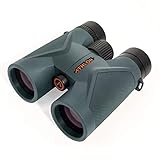
- ED Glass - ED glass gives you an image with little or no chromatic fringe so the final result brings a clearer and sharper image to your eyes
- ESP Dielectric Coating is a multi layer prism coating that reflects over 99% of the light to your eyes bringing you a clear, bright image that displays accurate color reproduction.
- Advanced FMC - Advanced Fully Multi-Coated lenses gives you better light transmission to bring optimum brightness and true color across the entire light spectrum.
- Argon Purged - Argon purging gives you better waterproofing and thermal stability and Field of view Angular -8.1 degree
- Long eye relief can be particularly important for eyeglass wearers because longer eye relief allows them to still see the entire field of view.Field Of View M @1000 METERS:144 m
What the ears tell you
Sea-lion ear flaps
Sea lions belong to the eared-pinniped group, often called otariids. Their small external ear flaps sit behind the eyes and can be visible when the animal turns its head or raises it above the water. The flap may look like a tiny tab rather than a large dog-style ear, so it is easy to miss at a distance. A fur seal also has this otariid ear structure, meaning an ear flap identifies an eared pinniped but does not, by itself, prove “sea lion.”
True-seal ear openings
True seals, or phocids, do not have projecting external ears. You may see a small opening or a smooth side of the head, but there is no flap extending beyond the outline. When a seal is wet and only its head is visible, the lack of a flap is often more useful than trying to judge facial expression.
Why a dog’s ears can mislead
Dogs have obvious pinnae, but breed variation is enormous. A Labrador-type dog may show floppy ears; a terrier may show upright triangular ears; a short-haired dog can look smooth at a distance. Look for the entire body and the way the head connects to it. If you see a muzzle projecting from a neck and a leg-and-paw stroke, you are likely looking at a dog even if the ears are hard to resolve.
Flippers, legs and the shape of the body
Foreflippers
A sea lion’s foreflippers are long and powerful, with a broad, mostly skin-covered surface. They may flash above the water during a stroke or be obvious when the animal hauls out. A true seal’s front flippers are comparatively small and are often held close to the body. Claws can be visible on a seal’s foreflippers, especially on land or in a close, stationary view.
A dog’s forelimbs bend at an elbow and wrist and end in separate paws. In the water, the paw may disappear, but the alternating, bent-leg motion often gives the animal a choppy or asymmetrical rhythm unlike a pinniped’s smooth flipper stroke.
Rear flippers
The rear end is decisive when it is visible. True-seal hind flippers remain directed backward. They work together from side to side like a fish tail, producing thrust while the small front flippers help steer. A sea lion can swing its hind flippers underneath its body because its hip and ankle arrangement allows rotation forward. That ability lets it raise its chest and walk or run in a four-flipper gait on a beach, dock or rock.
Quick wins for a faster PC:
Clear out junk files and repair common Windows errorsFree Scan →Scan for outdated or missing drivers - takes under a minuteDriver Scan →Dogs retain hind legs with knees, hocks and paws. Their rear legs may kick behind them or paddle alternately, but they do not fold into a pair of broad rear flippers.
Head, neck and surface profile
At the surface, a sea lion often presents a more upright head and visible neck. A true seal may look like a rounded head attached directly to a low, sleek body. Whiskers occur on both seals and sea lions, so whiskers alone do not identify the animal. A dog’s snout is usually longer and more obvious, and its head often bobs as it breathes between strokes.
Also popular on Amazon

- Through Calm and Clarity - Mornings take on a different kind of calm when you lift the Hontry binoculars and bring the world closer. With 8x magnification, the view feels steady and real—colors stay gentle, shapes stay true, and even distant wings or quiet movement in the grass seem closer to you, like the day is quietly unfolding at its own pace.
- When the Journey Calls – Some days it’s a cruise morning wrapped in mist, other days it’s a trail after the rain. These waterproof binoculars stay clear through it all, and if they touch the water, they float back like they belong there, waiting for you to keep going.
- Rugged and Reliable – The rubber body feels familiar, like something made to be used and trusted. It sits steady in your hands through wind or cold, ready for adults who spend their weekends outside, chasing sunrises and open air more than comfort.
- Comfort All Day Long – The eyecups twist up gently, meeting your face like a soft rhythm. You can wear glasses or not—it never feels in the way. Hours pass easily when you’re lost in bird watching, sport watching, or simply tracing the horizon until dusk.
- Thoughtful for Every Nature Lover – There’s something simple and kind about sharing a view. Whether it’s for someone who loves bird watching, exploring trails, or finding quiet places, these binoculars feel like a small way to connect with what matters most.
Side-by-side field comparison
| Feature | True seal (phocid) | Sea lion (otariid) | Dog in water |
|---|---|---|---|
| External ear | No external flap; a small opening may be visible | Small visible external ear flap | Visible pinna, triangular or floppy depending on breed |
| Front limbs | Short, small flippers; claws may show | Long, broad foreflippers, mostly skin-covered | Legs and paws; joints remain apparent when visible |
| Rear limbs | Extend behind the body; cannot rotate forward for walking | Rotate beneath the body and can support walking on land | Hind legs and paws remain articulated legs |
| Surface profile | Rounded or sleek head; body often low in the water | More upright head and neck; foreflippers may be prominent | Snout, neck and head movement usually visible above a four-legged body |
| Main propulsion | Rear flippers move side to side; front flippers steer | Large foreflippers provide most thrust; hind flippers assist maneuvering | Legs paddle; stroke pattern varies with breed and conditions |
| Sound and grouping | Often quiet or limited to grunts, growls or hisses; commonly less social in the water | Can bark loudly and often gathers in groups | May bark, but sound alone is unreliable at distance |
The dog column is a practical observation aid, not a taxonomic comparison. Dog size, coat, swimming confidence and stroke style vary widely.
A step-by-step identification check
- Pause where you are. Do not enter the water, send a dog toward the animal or approach along the shore. First establish whether you can observe safely from your current position.
- Find the head. Wait for a turn or a slightly higher lift above the surface. A clear side view is more useful than a front-facing glimpse.
- Check for an ear flap. A small flap favors a sea lion or fur seal. A smooth side of the head with only an opening favors a true seal. A large, floppy or sharply triangular pinna attached to a legged body favors a dog.
- Check the foreflippers or front legs. Long, broad flippers point toward a sea lion; small front flippers toward a true seal. Separate paws and bent elbows indicate a dog.
- Watch the rear end during a stroke or haul-out. Side-to-side tail-like movement favors a seal. A sea lion may bring both hind flippers forward when climbing onto land. Kicking legs and paws favor a dog.
- Use sound and social behavior only as supporting evidence. Loud barking and a dense haul-out group can support a sea-lion identification. A quiet, solitary or loosely grouped animal can support a seal identification, but neither pattern is absolute.
- Use binoculars instead of moving closer. NOAA Fisheries’ viewing guidance specifically recommends binoculars so observers can inspect details while maintaining distance.
- State uncertainty honestly. If the ears and flippers never become visible, “pinniped, likely seal or sea lion” is a better conclusion than an overconfident species name.
How swimming styles differ
True seals: rear-flipper propulsion
A true seal normally swims by flexing its rear flippers from side to side. The motion can resemble a fish-tail beat, with the body following in a smooth, low profile. The small front flippers help with steering, braking and fine adjustments. In a choppy sea, you may see only the head and a section of back, so the stroke can be hidden; wait for several surfacings before deciding.
Free tools Windows power users keep installed
One-click scans. No signup required.
Sea lions: foreflipper power
Sea lions use their large foreflippers as the primary propulsive surfaces. Their stroke can look like underwater flying: the front flippers sweep down and back while the hind flippers help with direction and balance. When a foreflipper breaks the surface, its size is usually more obvious than a seal’s small front flipper.
Dogs: alternating paddles
Most dogs paddle with alternating forelegs, often keeping the head high and the muzzle pointed forward. Some dogs use a more coordinated “dog paddle,” while others splash, roll or kick strongly with the rear legs. Excitement, cold water, a life jacket and fatigue can change the pattern, so swimming style should confirm anatomical clues rather than replace them.
What happens on land or a haul-out site
Sea lions can walk on all four flippers
Because sea lions rotate their hind flippers forward, they can lift the front of the body and move with a walking or bounding motion. They may climb over rocks, maneuver around other animals or travel between the water and a haul-out area with the chest raised. This ability is especially useful when the animal is fully visible on a beach, pier or rocky ledge.
True seals wriggle on the belly
A true seal cannot rotate its rear flippers underneath its body for walking. On land it usually moves by flexing the body and pushing with the front flippers in a belly-down “caterpillar” or wriggling motion. It may look surprisingly mobile, but the hind flippers remain trailing behind rather than becoming supporting feet.
Dogs walk with legs, not flippers
A dog may climb out, shake water from its coat and trot away on four clearly jointed legs. Paw placement, elbow and knee bends, and a visible tail are useful confirmations when the animal is close enough to see without approaching. Never use a dog or person to force a marine mammal to move for a better view.
Behavior, calls and group size
Behavior can break a tie after anatomy has narrowed the possibilities. Sea lions are capable of loud barking and are often seen in conspicuous social groups. A crowded haul-out with repeated barking and animals raising their heads can therefore support a sea-lion identification.
Also popular on Amazon

- 【20x56 High Power Binoculars for Adults】 High-powered binoculars feature massive 56mm lenses that capture abundant light for bright, vivid images even at dawn/dusk. Perfect for long-distance observation, scanning landscapes, or tracking sports targets with ease.
- 【Crystal-Clear Clarity with BAK4 Roof Prisms & FMC Lenses】 Premium BAK4 roof prisms and fully multi-coated lenses deliver 99.8% light transmission. Enjoy sharp, true-color, distortion-free views—ideal binoculars for stargazing and low-light conditions where clarity matters most.
- 【Effortless Focus and Comfortable Viewing】 Precision center focus wheel enables smooth adjustments from near to infinity. Anti-slip knob and right-eye diopter ring compensate for vision differences. Stable, vibration-free imaging for concerts, sports, or binoculars for bird watching.
- 【Lightweight, Rugged, and Waterproof】 O-ring sealed chassis resists moisture, dust, and shock. Durable rubber armor ensures non-slip grip. Despite large 56mm lenses, these binoculars for adults weigh only 1.2 lbs—easy to carry on any adventure.
- 【Complete Binocular Kit for Every Adventure】 Includes portable box, neck strap, lens covers, and cleaning cloth. Whether you need binoculars for adults high powered for hunting, travel, or nature exploration, this binocular kit has everything to start exploring today.
True seals are often quieter, with softer grunts, growls or hisses, and may be solitary or loosely grouped in the water. These are tendencies, not rules. A seal can vocalize, a sea lion can be quiet, and a dog can bark from the shore or while swimming. Wind, boat noise and distance also distort sound. Treat calls and group size as secondary clues.
When the animal is far away
Distance removes the very details that matter most, so change your method rather than guessing. Look for repeated surfacings, not one frame. A sea lion’s upright head, large foreflipper or ear flap may appear for only a moment. A seal’s low profile and tail-like rear stroke may become apparent only across several body lengths. A dog usually reveals a more persistent muzzle, neck and alternating-leg rhythm.
Recommended Free Tools
Glare can erase an ear flap, while wet fur can make a dog look sleek and a pinniped look dark. Young animals are smaller and may have less obvious proportions; sex and species also change body size. Steller sea lions, for example, can be very large, but size varies with species, age, sex and viewing distance, so it is only a supporting clue.
Binoculars are preferable to digital zooming from a phone because they let you inspect ears and flippers without reducing the safety buffer. If the animal disappears before you obtain a decisive view, record the location, time and broad description rather than approaching for another look.
Species terminology and limits of a quick identification
In everyday speech, “seal” may be used for any pinniped. In a field comparison, “true seal” means a phocid, while sea lions and fur seals are otariids, the eared-pinniped group. Fur seals share the external-ear flap, large foreflippers and forward-rotating hind flippers associated with sea lions. If your goal is simply to distinguish a marine mammal from a dog, “sea lion-type pinniped” may be sufficient; species identification requires more marks and often a regional guide.
Do not infer species from a dog-like face. Pinnipeds have whiskers and rounded heads that can look canine when seen briefly. Lighting, waves and the angle of the head can conceal the ears. A cautious description such as “likely a seal” or “likely a sea lion” is scientifically more responsible than naming a species from an indistinct surface glimpse.
Windows Errors? Fix Them Before They Spread
Repair common Windows errors and clear accumulated junk for a smoother, more stable PC - no reinstall needed.Free scan · no reinstallOutdated Drivers Are Slowing You Down
One free scan finds every outdated or missing driver and matches the right update for your exact hardware.Free scan · exact hardware matchSafe and responsible viewing
NOAA Fisheries advises staying at least 50 yards (150 feet) from seals and sea lions, both in the water and on shore, and keeping pets at that distance. Local rules can be stricter for particular species, beaches, haul-out sites or states, so follow posted signs and local wildlife authorities.
- Keep every dog on a leash and prevent it from entering the water to investigate.
- Never feed, touch, chase, corner, pursue or attempt to relocate a marine mammal.
- Do not swim with, ride, pet, touch or otherwise interact with a wild marine mammal.
- Use binoculars from a stable viewing point instead of closing the gap.
- If the animal stares at you, fidgets, repeatedly changes position or flees, increase your distance immediately.
- Keep groups quiet and avoid blocking the animal’s route between land and water.
Marine mammals can bite, carry pathogens and suffer stress when people or pets approach. A dog can also be injured even when the animal appears calm. The safest observation is one that leaves the animal’s behavior unchanged.
Also popular on Amazon

- THE PERFECT BINOCULARS FOR EVERY ADVENTURE: Nature DX 8x42 offers sharp, detailed views in a compact, lightweight frame—ideal for birdwatching, hiking, and everyday adventures.
- 8X MAGNIFICATION: Get detailed views of birds, wildlife, and distant landscapes. 8x power strikes the perfect balance between image stability and the ability to spot fine features from afar.
- 42MM OBJECTIVES LENS: Compact yet capable, the 42mm lenses offer a balance of portability and bright, detailed views for outdoor adventures.
- BRIGHT, SHARP, TRUE-TO-LIFE VIEWS: Fully multi-coated lenses maximize light transmission, while phase-coated BaK-4 prisms enhance contrast and resolution for crisp, color-accurate images in any lighting.
- RUGGED, WEATHER-READY BUILD: The rubber-armored polycarbonate housing shields against bumps and drops. It’s also waterproof and nitrogen-purged to resist fogging in rain, snow, or humidity.
Common identification mistakes
Judging by size alone
Large animals are not automatically sea lions, and small ones are not automatically seals. Species, age and sex create wide size ranges, and distance makes an animal’s scale difficult to judge.
Using the face as the main test
A rounded pinniped head can appear dog-like, especially in a single photograph. Ear structure, flippers and locomotion are stronger field marks.
What’s actually slowing this PC down?
Pick the symptom - the matching free tool is one click away.
Assuming every barking animal is a sea lion
Sound travels unpredictably over water, and dogs can bark nearby. Confirm a bark with an ear flap, large foreflippers or a sea-lion swimming stroke.
Expecting a seal to walk like a dog
True seals can wriggle quickly on land, but their rear flippers remain behind them. A sea lion’s ability to rotate the hind flippers forward is the relevant distinction.
Approaching for a better photograph
Closing the distance can cause a marine mammal to abandon a haul-out site or enter the water. A blurry but safely obtained observation is preferable to a sharp image made by disturbing wildlife.
Practical examples
A dark head surfaces beside a kayak
You see whiskers and a rounded head but no clear ears. Do not decide from the face. Hold your position, watch several surfacings and use binoculars if available. If the animal remains low and you never see a flap, “likely true seal” is reasonable; if the view stays incomplete, retain the broader “pinniped” label.
An animal climbs onto a dock
Look at how it gets out. A chest-raised animal that swings the hind flippers under the body is consistent with a sea lion. A belly-down animal that wriggles forward while the rear flippers trail behind is consistent with a true seal. Keep at least 50 yards away even when the dock makes the animal look accessible.
A swimmer splashes and barks near shore
First rule out a dog by looking for a muzzle, neck, legs and paws. If the animal shows a small ear flap and long foreflippers, the evidence favors a sea lion. If the sound is the only clue, do not identify it confidently.
A group rests on rocks
Dense social grouping and loud barking support sea lions, while quiet, loosely spaced animals support true seals. Still check ear flaps and flipper shape because behavior varies and mixed pinniped groups can occur.
A compact checklist for future sightings
- Can you see a projecting ear flap?
- Are the front limbs long and broad, small and clawed, or clearly jointed legs with paws?
- Does the rear end sweep side to side, rotate forward under the body, or kick as legs?
- Is the head held upright with a visible neck, low and rounded, or attached to a dog-like muzzle?
- Do repeated observations show foreflipper-powered swimming, rear-flipper propulsion or alternating-leg paddling?
- Do barking, quietness or group size support the anatomical identification without being used as the sole test?
- Can you keep at least 50 yards (150 feet) away while observing?
If the answer to the last question is no, stop trying to identify the animal and create more distance. Correct identification is useful, but protecting the animal, your dog and yourself comes first.
The Tool Desk
Outbyte Driver Updater FREEFix the driver behind crashes, sound loss and screen glitchesFind Drivers →Outbyte PC Repair FREEClear out junk files and repair common Windows errorsFree Scan →




Leave a Reply