
Free tools Windows power users keep installed
One-click scans. No signup required.
Some links on this page are affiliate links: if you buy through them we may earn a commission, at no extra cost to you.
Dental disease is a strong possibility when a cat’s eating change is accompanied by mouth-pain behaviors: dropping food, chewing on one side, turning the head while chewing, swallowing kibble without chewing, suddenly preferring wet food, drooling, bad breath, red or bleeding gums, pawing at the mouth, facial swelling, or weight loss. However, eating difficulty alone cannot identify the cause. Cats with kidney disease, diabetes, pancreatitis, gastrointestinal illness, fever, or stress can also eat poorly, so a veterinarian should evaluate any persistent or sudden change.
What eating pattern suggests dental pain?
Many cats continue approaching the food bowl despite painful teeth or gums. The most useful clue is not simply how much food disappears, but what your cat does while trying to eat. Dental pain often changes the mechanics of chewing or the type of food a cat chooses.
As an Amazon Associate I earn from qualifying purchases.
Recommended Free Tools
| What you observe | Why it can fit dental disease |
|---|---|
| Food falls from the mouth | Pain, a loose tooth, or difficulty positioning food can interrupt the bite. |
| Chewing on one side, turning, or tilting the head | The cat may be keeping food away from a painful tooth or inflamed area. Cornell identifies head-turning while chewing as a sign seen with periodontitis and tooth resorption. |
| Swallowing kibble whole | A cat may avoid the painful chewing step and compensate by gulping pieces. |
| Refusing dry food but eating wet food | Hard pieces can place pressure on diseased teeth; moist food is often easier to manage. |
| Taking much longer to finish a meal | Repeatedly repositioning food or stopping when a tooth hurts can slow eating. |
| Sudden food preference change | A new preference for soft food can be a response to oral discomfort rather than fussiness. |
One sign is not diagnostic. A cat can drop food because of weakness, nausea, poor coordination, or another illness, and some cats with dental disease show only a subtle change. Look for a cluster of chewing changes and oral signs, and note whether the behavior is new for that individual cat.
Other mouth signs to watch for
Inspect what you can observe without forcing your cat’s mouth open. Dental disease may produce:
Popular on Amazon
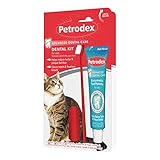
- Complete Oral Care System: Enzymatic toothpaste plus toothbrush cleans teeth and fights bad breath in one kit
- Reduces Plaque & Tartar Buildup: Patented enzyme formula works without rinsing required
- Malt-Flavored Formula Cats Tolerate Well: Makes at-home brushing easier to stick with
- Everything Needed to Start a Dental Routine: Ideal for new kittens or first-time brushers
- Formulated Specifically for Pets: Non-foaming, no-rinse enzymatic formula that's safe if swallowed
- Persistent bad breath (halitosis).
- Drooling or saliva with a pink or red tinge.
- Red, swollen, or bleeding gums.
- Pawing at the face or rubbing the mouth.
- A loose, broken, or visibly damaged tooth.
- Swelling of the cheek, muzzle, or area beneath an eye.
- Weight loss despite approaching food.
Cats commonly hide pain. A cat that still seeks attention, purrs, or eats some food can nevertheless have severe oral disease. A mouth that looks normal during a quick awake inspection also does not rule it out: important lesions can be below the gumline, where you cannot see them safely at home.
Why a normal appetite does not rule out dental disease
Some cats adapt their behavior instead of stopping meals. They may swallow kibble with little chewing, choose only gravy or pâté, eat more slowly, or chew with a different part of the mouth. The 2025 FelineVMA guidance notes that appetite changes are uncommon in some feline oral diseases and recommends watching normal eating and chewing behavior, including food dropping and one-sided chewing. In other words, “my cat is still eating” is not a reliable dental screening test.
The Tool Desk
Outbyte PC Repair FREEClear out junk files and repair common Windows errorsFree Scan →Outbyte Driver Updater FREEScan for outdated or missing drivers - takes under a minuteDriver Scan →Population figures show why subtle signs deserve attention, but they do not diagnose an individual. Cornell University College of Veterinary Medicine reports that published studies find some form of dental disease in 50% to 90% of cats older than four years. Daniel Carmichael, DVM, quoted by Cornell, has stated that only about 10% of cats reach the end of life without some dental problem. These are prevalence estimates across populations, not a prediction about your cat’s condition or the severity of any lesion.
Dental disease versus other reasons a cat eats poorly
Eating difficulty alone has a broad differential. Cornell lists kidney disease, diabetes, pancreatitis, gastrointestinal disease, fever, and psychological causes among possible reasons for anorexia. The pattern below can help you describe what is happening, but it cannot replace an examination.
| Clue | More suggestive of a mouth problem | Clue that warrants investigation beyond the mouth |
|---|---|---|
| Chewing mechanics | Food dropping, one-sided chewing, head turning, swallowing kibble whole, or avoiding dry pieces. | No chewing change, but a general loss of interest in all food. |
| Food preference | New preference for wet or soft food while showing interest in eating. | Refusal of both wet and dry food, or inability to keep food down. |
| Visible signs | Bad breath, drool, bloody saliva, red or bleeding gums, pawing, a loose or broken tooth, or facial swelling. | No oral signs, or signs dominated by vomiting, marked lethargy, fever, or other body-wide changes. |
| Other body changes | Weight loss can occur when chewing is painful, especially if the cat eats less than it appears to. | Changes in thirst or urination, repeated vomiting or diarrhea, pronounced lethargy, or rapid weight loss require a wider medical work-up. |
| Pain trigger | Discomfort appears when biting, chewing, swallowing, or when the face is touched. | Poor appetite is constant and unrelated to contact with food or chewing. |
| What confirms the cause | Veterinary oral examination followed, when indicated, by anesthetized probing, charting, and full-mouth dental radiographs. | Additional examination and tests directed at systemic, gastrointestinal, metabolic, infectious, or behavioral causes. |
These categories can overlap. A cat can have dental disease and another illness at the same time, and a painful mouth can cause secondary weight loss. Tell the veterinarian about every change rather than assuming one explanation accounts for all of it.
A safe way to document what happens at meals
Useful observations help the veterinarian decide how urgently to examine your cat and what to look for. Keep a short record for one or two meals if your cat is otherwise stable; do not delay care to complete a log.
- Record the food offered. Note whether it was dry, canned, a treat, or a different texture than usual, and whether the cat approached willingly.
- Watch the first bites. Look for food falling out, chewing only on one side, head turning, sudden pauses, lip movements, or swallowing pieces without chewing.
- Measure what is actually eaten. A bowl that looks disturbed does not show how much was consumed. Record approximate amounts and how long the meal took.
- Check for associated signs. Note drooling, bad breath, blood-tinged saliva, pawing, facial rubbing, swelling, vomiting, diarrhea, lethargy, thirst or urination changes, and body-weight trends.
- Take a short video if safe. A phone recording of chewing or food dropping can show a behavior that does not occur in the clinic. Never restrain your cat or provoke pain for a video.
- Give the veterinarian the timeline. State when the change began, whether it is worsening, and whether wet food is easier than kibble.
Looking at your cat’s mouth without causing harm
If your cat is relaxed, you may gently lift the lip for a brief look at the outer gumline. Stop at the first sign of fear or pain. Do not pry the jaws apart, probe beneath the gums, pull on a loose tooth, or scrape tartar. A painful cat may bite, and home inspection cannot reveal disease under the gumline.
Do not start vigorous brushing when the gums are severely inflamed or bleeding. Cornell recommends asking a veterinarian first in that situation because brushing can hurt. Human toothpaste is not appropriate for cats and can be toxic; use only toothpaste or gel made for cats if your veterinarian approves a home-care plan.
Also popular on Amazon

- The long handle's grip helps guide the 0.28-inch-wide head steadily along outer tooth surfaces toward the back. Fine, ultra-soft PBT bristles span 0.18 inches and flex for gentle brushing near the gumline
- The thumb brush fits snugly for position and pressure control. Its small head fits in 0.2–0.4 in. of space, and ultra-soft silicone bristles flex to follow tooth contours. An option for cats new to brushing or wary of a handled brush
- Coconut oil naturally contains lauric acid, a fatty acid studied for slowing the growth of some oral bacteria. The formula’s lysozyme enzyme can weaken certain bacterial cell walls. Brushing lifts soft plaque as the toothpaste helps freshen breath
- We paired chicken flavor with a coconut aroma to create a mild Coconut Chicken blend that cats can enjoy. The formula helps freshen breath during everyday brushing. Each kit includes one 2.5 oz tube
- Each three-piece kit includes one mini-head toothbrush with soft bristles for everyday brushing, one soft silicone finger brush as a second option, and one tube of toothpaste
When your cat needs prompt veterinary attention
Arrange prompt care for any of the following:
- Refusal to eat or a marked reduction in food intake.
- Obvious mouth pain, repeated food dropping, or inability to chew.
- Severe drooling or saliva containing blood.
- Facial swelling, a visibly broken tooth, or a loose tooth.
- Trouble swallowing.
- Weight loss associated with the eating change.
The American Veterinary Medical Association advises a dental check for reduced appetite or refusal to eat, abnormal chewing, drooling, oral pain, bleeding, swelling, and broken or loose teeth. A cat that stops eating also needs assessment for serious non-dental causes of anorexia, even when the mouth looks suspicious.
How a veterinarian confirms dental disease
An awake examination can identify odor, gum inflammation, swelling, or a visibly damaged tooth and can establish how urgently your cat needs care. It cannot reliably show the full extent of feline dental disease. Cats often resist probing, and lesions may sit below the gumline.
What’s actually slowing this PC down?
Pick the symptom - the matching free tool is one click away.
Cornell states that definitive diagnosis and treatment planning require general anesthesia, periodontal probing and charting, and full-mouth dental radiographs. Under anesthesia, the veterinary team can examine every tooth, measure periodontal pockets, identify bone loss or tooth-resorption lesions, and take images of roots and structures hidden by the gums. Radiographs are important because a tooth can look acceptable above the gumline while being diseased below it.
Ask the clinic what the proposed examination includes and how findings will be recorded. Useful questions include:
- Will every tooth receive a periodontal assessment and chart entry?
- Will full-mouth dental radiographs be taken rather than only images of an obviously painful area?
- How will you contact me if an extraction or another procedure is needed?
- What pain-control plan will be used before and after treatment?
Conditions that may be found and how they are treated
Periodontal disease
Periodontitis damages the tissues supporting a tooth. Cornell describes reluctance or inability to eat, drooling, halitosis, and head-turning while chewing as possible effects. Treatment may include professional scaling and polishing, periodontal surgery, pain management, and extraction of teeth that cannot be preserved.
Tooth resorption
Tooth resorption can be intensely painful even when the crown appears nearly normal. When a lesion extends into the crown, extraction is commonly recommended. Dental radiographs help identify the extent and the roots involved so the veterinarian can choose an appropriate procedure.
PC Slower Than It Used to Be?
A free scan shows the junk files, broken settings and background clutter dragging Windows down - then fixes them in one click.Free scan · Windows 10 & 11Crashes, No Sound, or Screen Glitches?
Random freezes, missing sound and display glitches usually trace back to one bad driver. Find and replace yours safely.Free scan · under a minuteInflammatory oral disease and other lesions
Some cats develop severe inflammatory disease affecting the gums and surrounding oral tissues. Jennifer Rawlinson, DVM, chief of dentistry and oral surgery at Cornell, explains that an overreactive immune response to plaque can begin around an affected tooth and rapidly involve nearby tissue. Painful stomatitis, fractures, tumors, and other disorders can also alter eating. These conditions require a veterinary diagnosis rather than an assumption that routine tartar is the only problem.
Depending on the findings, treatment can include scaling and polishing, periodontal surgery, root-canal therapy, fillings, extraction of diseased teeth, and prescribed pain relief. The appropriate choice depends on the tooth, the tissue damage, radiographic findings, and your cat’s overall health. A “dental cleaning” is therefore not one standardized procedure; it may range from preventive scaling to complex surgery.
Also popular on Amazon

- FOR DOGS AND CATS: Enzymatic toothpaste specifically formulated using an enzyme system for dogs and cats to reduce plaque, freshen breath, and ensure a clean mouth. Poultry flavor pets love
- 100% SAFE: Includes no foaming agents, so this toothpaste is safe for pets to swallow
- VET RECOMMENDED: Virbac is the #1 Recommended dental brand by Veterinary professionals; Made in the USA
- USE WITH A TOOTHBRUSH: Use a soft-bristled toothbrush such as the C.E.T. Dual-Ended Toothbrush. Apply daily or as directed by your veterinarian. Your veterinarian may give you specific directions; follow this professional advice closely
- SATISFACTION GUARANTEED: Virbac is committed to your experience of great satisfaction with our products. Let us help with your questions and we would love to hear your comments at 1-844-484-7222
What to expect after treatment
Follow the discharge instructions for food texture, medication, and activity. Your cat may need softer food temporarily after oral procedures, but the veterinary team should specify what is appropriate for the treated teeth and gums. Contact the clinic if pain appears uncontrolled, your cat will not eat, bleeding persists, swelling worsens, or swallowing becomes difficult.
Do not judge success only by whether your cat finishes a meal immediately. Improvements can include chewing normally, no longer dropping food, tolerating dry pieces again when cleared by the veterinarian, reduced drooling, and gradual stabilization of body weight. Report any return of one-sided chewing or food avoidance.
Preventing future plaque and catching problems early
Prevention begins after painful disease has been assessed and treated. Cornell recommends regular plaque removal with a toothbrush and toothpaste or gel made for cats. Introduce brushing gradually and stop if your cat shows pain or distress. If gingivitis is severe, ask the veterinarian before brushing because the action may be painful.
The FelineVMA and AVMA identify dental foods, treats, chews, and water additives carrying the Veterinary Oral Health Council (VOHC) seal as possible preventive aids. Availability varies by market, and a seal indicates a product has met the relevant plaque or tartar claim; it does not diagnose disease. These products cannot treat painful periodontitis, tooth resorption, stomatitis, fractures, tumors, or other established oral disorders.
- Have your cat’s mouth checked during routine veterinary visits, even when appetite seems normal.
- Watch chewing behavior, not just the amount left in the bowl.
- Use only cat-specific toothpaste or gel and products your veterinarian considers suitable.
- Keep a weight record so gradual loss is noticed early.
- Seek care promptly when drooling, bleeding, swelling, food dropping, or refusal of food appears.
Common questions about eating and dental disease
Can a cat have dental disease and still eat?
Yes. Cats may compensate by swallowing kibble whole, chewing on one side, eating more slowly, or selecting soft food. A normal appetite does not exclude oral pain.
Is swallowing kibble whole proof that a tooth hurts?
No. It is a warning sign that can occur with dental pain, but it is not diagnostic by itself. The veterinarian must examine your cat and consider other medical causes.
Why does my cat eat wet food but reject kibble?
Dry pieces can increase pressure on a painful tooth or gum. A preference for moist food is therefore compatible with dental disease, although texture preference and other illnesses can produce the same pattern.
Does bad breath always mean dental disease?
Bad breath commonly accompanies oral disease, but odor alone does not establish which condition is present or whether the problem is limited to the mouth. It warrants a veterinary oral assessment, especially when chewing changes occur.
Can I tell from looking at the teeth whether a cleaning is needed?
Not reliably. Disease below the gumline can be hidden, and definitive planning requires anesthesia, periodontal probing, charting, and full-mouth radiographs. A professional recommendation should be based on those findings rather than visible tartar alone.





Leave a Reply