
Some links on this page are affiliate links: if you buy through them we may earn a commission, at no extra cost to you.
Gradual weight gain or loss is easy to miss under a coat, especially when you see your dog or cat every day. The safest approach is to establish a baseline weight, check body shape and ribs, record changes, and involve a veterinarian before making major diet or exercise changes.
Start with a baseline, not a guess
A single weigh-in cannot tell you whether an individual pet is healthy. Record your pet’s current weight and the range in which they normally remain, then repeat the measurement on a regular schedule. Using the same scale, time of day and conditions makes small changes easier to spot. Home weighing is useful for monitoring, but it does not replace a veterinary examination or a body-condition assessment.
As an Amazon Associate I earn from qualifying purchases.
Crashes, No Sound, or Screen Glitches?
Random freezes, missing sound and display glitches usually trace back to one bad driver. Find and replace yours safely.Free scan · under a minutePC Slower Than It Used to Be?
A free scan shows the junk files, broken settings and background clutter dragging Windows down - then fixes them in one click.Free scan · Windows 10 & 11How to weigh a dog or cat at home
- Use a stable, readable scale that can safely support the animal and gives a consistent result.
- For a small pet, weigh yourself, then weigh yourself while holding the pet and subtract the first number. A platform scale is usually easier for larger dogs.
- Place the scale on a hard, level surface and let the display settle before recording the result.
- Write down the date, weight and any changes in appetite, activity, stools, vomiting or medication.
If your pet will not stand calmly, do not force the measurement. Ask your veterinary practice whether it offers a weigh-in visit.
Use body condition as well as the number
Healthy weight is proportional to the animal’s frame, not a universal number on a chart. From above, you should see a definite waist behind the ribs. An exaggerated hourglass shape can indicate that the pet is too thin. Along the rib cage, ribs should be easy to feel beneath a thin layer of fat; they should not be buried under a thick pad, but they also should not be sharply visible in a normally coated animal.
Popular on Amazon

- 🔧 No Assembly Required: The all-in-one design enhances stability and durability, requiring no assembly. Ready to use right out of the box, it’s ideal for busy pet owners who want convenience and reliability in one product
- ⚖ Accurate Weighing for Small Pets:30g‑40kg (88LB) weighing range with 5g precision.Ideal for whelping breeders, track weight gain of newborn puppies and kittens in litter, monitor health for each newborn pet, ensuring accurate weight readings every time for all types of pets
- 🚀 Convenient Hold Function: The Hold function captures your pet’s weight even when they move, making the process stress-free and simple. No need for your pet to stay still-just place them on the scale and get an accurate result
- 📺 Clear LED Display: The bright LED display ensures easy reading even in dim light, making it ideal for senior users. Track your pet’s weight day or night with effortless clarity
- 🌍 Multi-Unit Options for Versatility: Switch seamlessly between g, kg, oz, lb, and lb oz with the push of a button. This feature is perfect for global users and varying pet measurement needs
| What you notice | What it can mean | What to do |
|---|---|---|
| Waist visible; ribs easy to feel but not plainly visible | Typical healthy body condition | Keep the current routine and continue periodic checks |
| Ribs difficult to feel; broad back or rounded abdomen | Possible excess body fat | Arrange a veterinary assessment before changing portions |
| Ribs, backbone or hip bones prominent; little padding | Possible underweight or muscle loss | Contact a veterinarian rather than simply adding food |
| Sudden change in shape or weight | Could reflect illness, fluid change or altered intake | Call your veterinary practice promptly |
Breed, age, muscle mass, coat and medical history all affect appearance. A veterinarian can score body condition, assess muscle, and decide whether the change is fat, muscle or something else.
Warning signs that need veterinary advice
Visible ribs or backbone are not the only concerns. Seek veterinary guidance if weight change occurs with reduced or increased appetite, vomiting, diarrhea, unusual tiredness, a dull coat, loss of muscle, or a pronounced paunch. Do not assume that the average serving printed on a food label is correct for every animal; calorie needs vary with size, activity, age, reproductive status and disease.
Free tools Windows power users keep installed
One-click scans. No signup required.
Also popular on Amazon

- HIGH ACCURACY MEASUREMENT: Accurately weigh up to 44 lbs in pounds, kilograms, or ounces, this scale features an easy-to-read backlit LCD display and non-slip, abrasion-resistant rubber feet for enhanced stability
- MULTI-FUNCTIONAL: Versatile functionality ideal for weighing babies, puppies, kittens, and small animals, it also features a safe, edge-free design
- HOLD FUNCTION: The automatic and manual hold records stable weight measurements, while the auto-lock feature ensures accurate readings once the scale is fully stabilized
- TARE FUNCTION: Equipped with a tare function that allows you to zero out the scale and deducts the weight of a baby's blanket or other items - this helps achieve accurate readings
- WEIGHING PLATFORM: The curved design provides a secure, comfortable surface for weighing babies and pets, with an easy-to-clean surface for added convenience
When weight loss is the problem
Unplanned loss can result from inadequate intake, difficulty eating, digestive disease, parasites, metabolic illness or other conditions. Keep a record of what your pet actually eats, including treats and chews, and bring that information to the appointment. A veterinarian may recommend an examination, laboratory tests or a different feeding plan instead of simply increasing the portion.
When weight gain is the problem
Extra weight usually accumulates gradually. Count every source of calories: meals, training rewards, table scraps, dental treats and food used to give medication. Changes should be supervised so that reducing calories does not leave the diet nutritionally incomplete or worsen another condition.
Also popular on Amazon
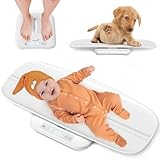
- 𝐀𝐜𝐜𝐮𝐫𝐚𝐭𝐞 𝐚𝐧𝐝 𝐏𝐫𝐞𝐜𝐢𝐬𝐞 𝐌𝐞𝐚𝐬𝐮𝐫𝐞𝐦𝐞𝐧𝐭: The built-in high-precision sensor and smart chip of this infant scale make it reliable and accurate for measuring your baby's weight and height. It offers five different display units to choose from (lb: oz, oz, lb, g, and kg), so you can select your preferred unit to ensure precise and reliable readings every time.
- 𝐋𝐚𝐫𝐠𝐞 𝐂𝐚𝐩𝐚𝐜𝐢𝐭𝐲 𝐔𝐩 𝐭𝐨 𝟑𝟑𝟎 𝐥𝐛𝐬: This smart weighing scale made of ABS material, which is not just for weighing babies, but also puppies, cats and even adults up to 330 lbs. It's a practical and useful addition to any home, whether you're a pet owner or a parent.
- 𝐒𝐚𝐟𝐞𝐭𝐲 𝐚𝐧𝐝 𝐂𝐨𝐦𝐟𝐨𝐫𝐭𝐚𝐛𝐥𝐞 𝐇𝐞𝐢𝐠𝐡𝐭 𝐌𝐞𝐚𝐬𝐮𝐫𝐞𝐦𝐞𝐧𝐭: The baby weight scale adopts patented design, with non-slip, hard-wearing rubber feet and a platform for 27 inch height and weight measurement.It is simple installation and no tool required, ensuring your baby or pet feels safe and comfortable while being measured, providing a complete picture of their growth.
- 𝐇𝐨𝐥𝐝 𝐅𝐮𝐧𝐜𝐭𝐢𝐨𝐧 𝐢𝐧 𝐌𝐨𝐭𝐢𝐨𝐧: Even if your baby is moving or wiggling, you can obtain accurate measurements with the automatic or manual hold function.
- 𝐄𝐚𝐬𝐲 𝐭𝐨 𝐔𝐬𝐞 𝐚𝐧𝐝 𝐒𝐭𝐨𝐫𝐞: With a touchscreen button, auto-off function after 2 minutes of no operation, and detachable design, this digital scale is easy to assemble, use, and store. Grownsy's baby scale is the perfect companion for monitoring your baby's growth and development with ease.
How a safe weight-reduction plan works
Do not make a drastic cut on your own. A veterinarian-directed plan normally combines several modest changes:
- Measured portions: Use a measured amount rather than free-feeding, and adjust it according to progress and the veterinarian’s target.
- Treat limits: Keep treats inside the daily plan. Everyone in the household should follow the same rule.
- Gradual activity: Add play or exercise in steps that fit the pet’s age, joints, breathing and existing health.
- Appropriate food: A lower-calorie or therapeutic weight-management diet may be useful when it is nutritionally complete and suitable for the animal’s medical needs.
- Regular monitoring: Reweigh on the agreed schedule and report plateaus, renewed gain, poor appetite or lethargy.
The objective is steady progress without hunger, weakness or loss of essential muscle. Never substitute a homemade crash diet or human weight-loss product for veterinary advice.
Also popular on Amazon

- NOTE: Only fit for SMALL BREED Puppies, such as Chihuahua, Pomeranian, Yorkshire Terrier, Dachshund, Papillon. If not the above breed, we do not recommend buying
- Portable and Convenient: Designed for pet owners on the go, this compact puppy scale is lightweight and easy to carry. Whether you're traveling or simply need to weigh your pet at home, the portable design ensures hassle-free weighing anytime, anywhere
- Auto Shut Off: With the auto shut-off feature, the scale conserves battery life by automatically turning off after a period of inactivity. This ensures that your scale is always ready for use and prolongs the battery lifespan
- Versatile Weight Units: The LYTDMSKY puppy scale supports four different weight units, including pounds (lb), milliliter (ml), ounces (oz), and grams (g). You can choose the unit that best suits your preference and needs. Suitable for pet owners, veterinarians, pet groomers, animal shelters
- Auto Shut Off: With the auto shut-off feature, the scale conserves battery life by automatically turning off after a period of inactivity. This ensures that your scale is always ready for use and prolongs the battery lifespan
Seasonal changes can alter calorie needs
Cold weather may change requirements, particularly for animals that spend substantial time outdoors. Oregon State University Extension advises keeping pets in a healthy range through winter and notes that outdoor pets may need more calories to generate body heat. Ask your veterinarian whether your pet’s food or portion should change as temperatures, shelter, activity or time outside changes. Do not automatically increase food for an indoor pet that becomes less active during winter.
Independent reader supportYour contribution helps us test, update, and keep practical guides available for everyone.Choosing monitoring tools and food with your veterinarian
For a home scale, prioritize accuracy across your pet’s size, adequate maximum capacity, a display you can read while handling the animal, a tare or hold function, easy cleaning and a platform on which the pet can stand calmly. A scale that is technically precise but frightening or too small will produce unreliable readings.
Also popular on Amazon
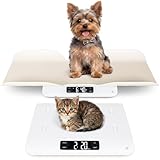
- 𝗗𝗲𝘀𝗶𝗴𝗻𝗲𝗱 𝗳𝗼𝗿 𝗚𝗿𝗼𝘄𝗶𝗻𝗴 & 𝗔𝗴𝗶𝗻𝗴 𝗣𝗲𝘁𝘀: Easily monitor your pet’s weight from kitten and puppy growth to adult care and senior health. Ideal for multi-pet homes, foster families, and anyone who wants a simple way to support pet wellness between vet visits.
- 𝗪𝗶𝗴𝗴𝗹𝗲-𝗣𝗿𝗼𝗼𝗳 𝗪𝗲𝗶𝗴𝗵𝗶𝗻𝗴 𝗬𝗼𝘂 𝗖𝗮𝗻 𝗧𝗿𝘂𝘀𝘁: Pets don’t always sit still, so the scale is built to account for natural movement and stabilize readings as they move. A paw icon appears on the display when the weight is locked in, making it easy to read with confidence.
- 𝗡𝗼𝘁𝗶𝗰𝗲 𝘁𝗵𝗲 𝗦𝗺𝗮𝗹𝗹 𝗖𝗵𝗮𝗻𝗴𝗲𝘀: With 0.1 lb precision and a 44 lb capacity, this scale helps you see subtle changes in your pet’s weight over time. Ideal for breeders monitoring puppies and for pet owners supporting a healthy weight at home.
- 𝗠𝗮𝗱𝗲 𝗳𝗼𝗿 𝗘𝘃𝗲𝗿𝘆𝗱𝗮𝘆 𝗨𝘀𝗲: The tare function lets you weigh your pet with a bowl, blanket, or favorite spot—just zero it out for an accurate reading. The 24 x 11.5 in removable tray makes cleanup simple and adds flexibility for different pets and setups.
- 𝗔 𝗥𝗲𝗹𝗶𝗮𝗯𝗹𝗲 𝗧𝗼𝗼𝗹 𝘄𝗶𝘁𝗵 𝗥𝗲𝗮𝗹 𝗦𝘂𝗽𝗽𝗼𝗿𝘁: Built around a single-sensor design that keeps readings consistent from one weigh-in to the next. Switch seamlessly between lb, lb:oz, and kg, start right away with 4 AAA batteries included, and count on our St. Louis team for support, backed by 5-year product coverage.
If a veterinary weight-management diet is recommended, compare its calorie density, nutritional completeness, palatability, cost and fit with diagnosed conditions. The right category depends on the individual pet; a product that suits one animal may be inappropriate for another.
Quick Recap
A simple weight-watch checklist
- Record a baseline weight and your pet’s usual range.
- Check the waist, ribs and abdominal profile from above and from the side.
- Use the same weighing method at regular intervals and log the result.
- Note appetite, activity, stool, vomiting, coat quality and muscle changes.
- Call a veterinarian for unexplained loss, rapid gain, visible bones or other warning signs.
- Make portion, treat, exercise or food changes as part of a supervised plan.





Leave a Reply