What’s actually slowing this PC down?
Pick the symptom - the matching free tool is one click away.
Train a Catahoula Leopard Dog with rewards, consistency, thoughtful management, and activities that give the dog an appropriate job. Start with everyday skills—coming when called, settling, walking on leash, and greeting politely—while making new experiences safe and positive. Catahoulas are working-bred, energetic dogs, but breed descriptions are tendencies, not a prediction of how any individual dog will behave.
What to expect from a Catahoula
The Catahoula Leopard Dog was bred for work. The American Kennel Club (AKC) describes the breed as needing space, exercise, attention, and a job or other mental activity. It lists walks, backyard play, swimming, hiking, retrieving, and dog sports as possible outlets. A dog whose activity and attention needs are not met may find its own outlets, including destructive behavior.
As an Amazon Associate I earn from qualifying purchases.
That description is a useful starting point, not a diagnosis. A Catahoula may be energetic, independent, protective, or reserved with unfamiliar people, but no breed profile can tell you exactly what your dog will do. The United Kennel Club (UKC) also describes independence and protective or territorial tendencies, and notes that some Catahoulas may be aloof with strangers. Let your dog’s behavior, comfort, health, and learning history guide your plan rather than assuming every dog of the breed needs the same approach.
The Tool Desk
Outbyte PC Repair FREEClear out junk files and repair common Windows errorsFree Scan →Outbyte Driver Updater FREEScan for outdated or missing drivers - takes under a minuteDriver Scan →AKC says Catahoulas may work like adults early but are not fully mature until around two years old. A young dog can look capable and still need gradual, age-appropriate activity and patient instruction. Keep work fun; do not treat early enthusiasm or apparent stamina as a reason to push repetitive or excessive exercise.
#1 Best Overall

- New communication tool about you and your puppy.
- Pet Dog Training Clickers for Puppy, Cat, Potty, Bird, Horse, Pet, Trainer Training Tools, Behavior Aids
- Just press to mark desired behavior, then reward for faster learning.
- The spring wrist length : 16cm/6.3inches and can strength to 25cm/9.84inches.
- Package include : Black + Blue,each color 1 pcs.
Training is not about overpowering an independent dog. It is about teaching useful behaviors, rewarding the choices you want to see again, and arranging the home and outings so your dog can succeed while learning.
Choose reward-based training
The American Veterinary Society of Animal Behavior (AVSAB) recommends reward-based methods for dog training and behavior modification, and advises against aversive methods. Its 2021 position statement says: “Based on current scientific evidence, AVSAB recommends that only reward-based training methods are used for all dog training, including the treatment of behavior problems.”
In practice, reward-based training means noticing and reinforcing a behavior you want—such as checking in, coming toward you, or resting on a mat—rather than punishing the dog for failing to understand what you expect. Rewards can include small pieces of food, play, access to a sniff or other activity, or warm social attention, depending on what your dog values in that moment. A clicker is one optional way to mark the instant a behavior happens; a consistent spoken marker can serve the same purpose. You do not need special equipment to begin.
PC Slower Than It Used to Be?
A free scan shows the junk files, broken settings and background clutter dragging Windows down - then fixes them in one click.Free scan · Windows 10 & 11Outdated Drivers Are Slowing You Down
One free scan finds every outdated or missing driver and matches the right update for your exact hardware.Free scan · exact hardware matchKeep practice short enough that your dog can remain interested and successful. Work in a quiet place before adding distractions, and make each new challenge modest. If a behavior falls apart, the answer is usually to make the exercise easier, increase distance from a distraction, or improve the reward—not to repeat a cue more loudly or apply force.
Set up your home for learning
A predictable routine helps a new dog understand when to rest, go outside, eat, play, and practice. It also makes it easier to notice patterns: for example, whether your dog is more likely to chew household items when under-stimulated, tired, or left without an appropriate activity.
Rank #2

- ▼Come in 4 pack button clickers with wrist strap in 4 different colors:Black, Green, Orange, Yellow, each color 1 PCS
- ▼Can be used to train the dog basic obedience, small trick, and correct the bad behavior; Scientific method of training your pet safely and easily.
- ▼Stop barking and dog obdeience. Train your dog quiqly just by simply pressing the clicker and command.
- ▼Well constructed and durable, metal clicker will not rust or break.
- ▼Big button for easy clicking and loud sound. Easy to use in any position.
- Manage access. Put tempting or unsafe items out of reach, close doors to rooms the dog has not learned to navigate safely, and use gates or a pen when you cannot supervise closely.
- Provide a rest area. A crate or pen may offer a secure place to rest if introduced gradually and used positively. It is not a punishment, and confinement does not replace exercise, attention, or appropriate bathroom breaks.
- Reward the behavior you want. When your dog settles, checks in with you, or chooses an appropriate toy, calmly reinforce that choice. Do not wait until the dog is making a nuisance of itself before giving attention.
- Plan transitions. Before a visitor arrives or you take the leash out, have rewards ready and decide where you want the dog to wait. Preventing a chaotic greeting is easier than trying to correct it once the dog is already excited.
Management is part of humane training, not a shortcut or a sign that training has failed. It reduces opportunities for unwanted habits to become rewarding while you teach an alternative.
Teach practical foundation skills
The skills below are useful for many dogs and apply reward-based principles; they are not a tested Catahoula-specific curriculum. Introduce them one at a time, in easy settings first. Give your dog time to understand each cue before expecting it around people, animals, or other distractions.
Do these 3 things before closing this tab:
1Repair Windows errors before they cause bigger problems2Fix the driver behind crashes, sound loss and screen glitches3Clear out junk files and repair common Windows errors1. Name response and check-ins
- In a quiet room, say your dog’s name once in a friendly voice.
- When your dog turns toward you or makes eye contact, mark the moment with a click or a short word such as “yes,” then give a reward.
- Repeat in brief sessions. Gradually practice in different rooms and at a comfortable distance from mild distractions.
The name should become a useful invitation to attend to you, not a warning that something unpleasant is about to happen. If your dog does not respond, move closer or reduce the distraction and try again rather than repeating the name over and over.
2. Recall foundations
- Begin indoors or in another secure, low-distraction space. Say a recall cue once in an upbeat voice, then move a few steps away to encourage your dog to follow.
- When your dog reaches you, mark and reward generously. Make coming to you worthwhile, even if it took a moment.
- Practice at short distances before trying a larger room or a quiet outdoor area. Add distractions gradually, and return to an easier setup if your dog struggles.
Until recall is reliable in a particular setting, use a secure enclosed area or an appropriate leash arrangement rather than relying on a cue to prevent a dangerous dash. Avoid calling your dog only to end fun or deliver something unpleasant; when practical, reward the return and then release the dog back to the activity.
3. Settling on a mat
- Place a mat in a calm area and reward your dog for looking at it, approaching it, or stepping onto it.
- Once your dog chooses to rest there, deliver rewards calmly and at intervals that encourage staying relaxed.
- Build duration gradually. Later, practice while you sit nearby or carry out a quiet household task.
A mat can give your dog a predictable place to settle while you eat, work, or welcome a visitor. If your dog repeatedly leaves, lower the difficulty: shorten the time, choose a quieter room, or reward more frequently.
Rank #3
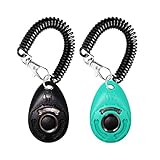
- EASY TO USE - Simple push button with distinct clicking sound.
- Comes with an elastic wrist band so you can leave it on your wrist or clip it to the leash or your pants.
- Not only train the dog but also the cat, bird, chicken, sheep a new behaviors like sit, fetch, roll over, lie down.
- For effective pet training ALWAYS reward with a treat after clicking.
- Can be used to train the dog basic obedience, small trick, and correct the bad behavior; Scientific method of training your pet safely and easily.
4. Loose-leash walking
Start somewhere with few distractions. Reward your dog for being near you with a loose leash, and take a few steps before pausing to reinforce another check-in. If the leash tightens, stop or change direction calmly and resume when your dog can reconnect with you. Avoid jerking the leash. Build up to busier walks in small stages, using distance from people, dogs, and activity to keep your dog able to learn.
Quick wins for a faster PC:
Fix the driver behind crashes, sound loss and screen glitchesFind Drivers →Repair Windows errors before they cause bigger problemsFix Now →Scan for outdated or missing drivers - takes under a minuteDriver Scan →5. Polite greetings
Decide what a successful greeting looks like for your dog. It may be calmly standing near a person, sitting, or simply watching from a comfortable distance. Reward that behavior. Ask visitors to avoid reaching over, crowding, or insisting on contact. If your dog jumps or becomes overexcited, create space and try again when the dog is calmer; do not force a greeting to prove that the dog is friendly.
6. Comfortable handling
Briefly touch an easy area, such as a shoulder, then reward. Gradually work toward routine care—paws, ears, collar, and brushing—only while your dog remains comfortable. Keep early sessions very short and stop if the dog pulls away, stiffens, or shows other signs of distress. Handling skills should make grooming and veterinary care easier, not teach a dog to endure frightening contact.
Make socialization positive and gradual
Socialization is not simply putting a puppy close to as many people, dogs, and places as possible. The goal is to help the dog have manageable, positive experiences and learn that new things can be approached without pressure. A dog that is overwhelmed or forced to greet may become less comfortable, not more social.
Offer varied, low-pressure exposure to people, animals, surfaces, sounds, and places. Let your dog observe from a distance, reward calm attention or voluntary exploration, and leave while the dog is still coping well. Do not lure a worried dog closer to something it wants to avoid or allow a stranger or another dog to crowd it. If your dog is fearful, increase the distance and ask your veterinarian for guidance.
Free tools Windows power users keep installed
One-click scans. No signup required.
Rank #4

- MANUAL AUDIBLE CLICKER: Produces an audible click when manually pressed. The clicker contains no electronics, batteries, remote-control functions, or Electronic Stimulation features.
- INDIVIDUAL RESPONSE TO SOUND MAY VARY: Dogs and other animals may respond differently to audible clicker sounds. Introduce the clicker gradually and discontinue use if the animal shows discomfort or fear.
- COMPACT HANDHELD DESIGN: Small finger-clicker design is intended to be carried and operated by the user. Review the product images and compact size before ordering to confirm it meets your expectations.
- 5-INCH VELCRO FINGER STRAP: Includes an approximately 5-inch adjustable Velcro strap designed to position the clicker on the user's finger or hand. The strap is worn by the user and is NOT intended to be worn by the pet.
- TEAL CLICKER ACCESSORY: Includes one Teal manual finger clicker and training instructions. Remote transmitter, receiver collar, batteries, and other training-system components are NOT included.
AVSAB notes that well-run classes can provide organized socialization. Before enrolling, ask about the instructor’s methods, class size and setup, and health and vaccination precautions. Consult your veterinarian about what is appropriate for your puppy’s health and vaccination status. A class should allow puppies to learn safely; it should not require direct interaction with every dog or person.
Give your Catahoula an appropriate job
Exercise and mental work belong in the same plan. A walk that allows sniffing, a retrieving game, or a short training session can all be useful, but the right mix depends on the dog’s age, health, temperament, and interests. AKC identifies walks, backyard play, swimming, hiking, retrieving, and dog sports as possible activities. Scent games and obedience practice are also practical ways to engage a dog’s attention.
Try several suitable activities and observe how your dog responds. Some dogs enjoy searching for food hidden in easy places; others prefer retrieving, learning new cues, or walking in a quiet area where they can investigate scents. Alternate active play with calmer work and rest. Increase difficulty or intensity gradually, and stop if your dog appears tired, uncomfortable, or increasingly over-aroused.
There is no universal daily exercise-minute target established by the breed guidance cited here. A fixed quota would ignore differences in age, health, weather, conditioning, and individual behavior. A young dog’s activity should be appropriate to development rather than built around repetitive or excessive work. If you are unsure what level is safe for your dog, ask a veterinarian, especially before starting strenuous activity.
Choose a class or trainer that fits your dog
A reward-based group class may be useful when your dog can remain comfortable learning around other dogs and people, and when your goals include general skills or structured social experiences. Private training may suit a dog that needs more space, has specific household challenges, or cannot yet focus safely in a group. Neither format guarantees an outcome; the instructor’s methods and ability to adapt matter.
Best Value

- Stronger Bark Control with 3X Ultrasonic Emitters: Unlike single-emitter devices, our upgraded dog bark deterrent features three synchronized ultrasonic heads—delivering 3X the coverage to quickly stop barking, biting, and jumping behaviors. Ideal for anti barking training, safer than bark collar, more effective than a dog whistle, offers a humane, high-performance dog training solution
- 6-in-1 Safe & Humane Training Modes:Our dog bark deterrent device features dual ultrasonic frequencies (fixed 25kHz and variable 20-30kHz), combining 4 ultrasonic modes plus an audible beep and LED flashlight for versatile training. Whether for daily training or stubborn, persistent barking, this anti bark device adapts to different dogs providing effective bark control without causing pain or distress. Perfect for training at home or to stop neighbors dog bark that disturbs your peace
- 23 FT Extended Range & Night Safety: Bark Control Anytime, Anywhere: Stop barking and bad behavior from up to 23 feet away with our powerful dog bark deterrent device — perfect for your yard, neighbor’s yard, outdoor walks, and off-leash areas. Whether you're relaxing at home or out for a stroll, enjoy safe, long-distance control to correct disruptions quickly. The built-in LED flashlight adds safety for evening walks, and low-light training
- Fast Charge & Long Battery Life – Always Ready for Training:With a Type-C fast charging port, our dog bark deterrent device reaches a full charge in just 2 hours and provides up to 30 days of regular use on a single charge, along with 180 days of standby time. Whether you're correcting anti barking behavior or training your dog in public places, you’ll always be prepared for any situation. Forget the hassle of frequent charging and enjoy reliable, long-term barks no more support
- Ultra-Compact Design for Everyday Convenience:50% smaller than standard dog bark deterrent devices, our anti barking device is ultra-compact and lightweight, fitting effortlessly into your pocket, bag, or hand. Whether you're on daily walks, outdoor adventures, or dealing with unexpected situations in public places, this portable design helps you stop barking and encourage good behavior anywhere, anytime. Say goodbye to constant noise and enjoy a barks no more experience with your dog
| Consideration | Group class | Private training |
|---|---|---|
| Your dog’s comfort | Consider it if your dog can stay settled enough to learn around other dogs and people. | Can provide more space and an individual pace for a dog that is worried or distracted in a group. |
| Your goals | May suit foundation skills and practice with ordinary distractions. | May suit specific home routines, individual handling needs, or behavior concerns requiring tailored work. |
| Health precautions | Ask what vaccination and health rules apply; consult your veterinarian about your puppy. | Ask how the trainer manages health and safety during in-home or outdoor sessions. |
| Methods and adaptation | Check that the instructor uses rewards and can adjust exercises to each dog. | Confirm that the trainer uses reward-based methods and will tailor the plan to your dog and household. |
Ask a prospective trainer to explain how they respond when a dog is fearful, overexcited, or unable to perform a cue. Look for clear, humane instruction that rewards desired behavior and uses management to prevent problems. Avoid approaches based on intimidation, pain, or claims that a dog must be dominated into obedience. For serious behavior concerns, seek help from a veterinarian and a qualified behavior professional rather than trying to solve a safety problem in a general class.
When to involve a veterinarian or behavior professional
Get professional guidance early if your dog shows aggression, marked fear, or behavior that creates a safety risk. A veterinary visit can help assess whether health or discomfort may be affecting behavior. AVSAB notes that serious behavior concerns can call for behavior modification and environmental management, and sometimes medication as part of care. Medication decisions belong with a veterinarian; they are not a substitute for an individualized plan.
Seek help as well if training difficulty is sudden or accompanied by changes in activity, handling tolerance, or daily behavior. Keep people and animals safe while you arrange support: use distance, barriers, secure equipment, and management rather than setting up situations your dog cannot handle. Do not punish a growl or other warning signal; increase space and get advice on what the behavior means in context.
Keep health and maturity in the training plan
AKC lists occasional hip dysplasia, deafness, and eye problems among health concerns associated with Catahoulas. These breed-level notes do not establish that an individual dog has a condition. If you notice mobility difficulty, trouble responding to sound, changes in vision, or discomfort during activity or handling, ask a veterinarian to evaluate your dog. Training plans should take any individual health guidance into account.
Continue building skills as your dog grows. A behavior learned in a quiet room may need patient practice in a yard, on a walk, or around visitors before it becomes dependable there. Keep expectations realistic for the dog in front of you: progress comes from clear cues, achievable practice, safe management, and rewards that make cooperation worthwhile.
Quick Recap
Product prices and availability are accurate as of the date/time indicated and are subject to change. Any price and availability information displayed on Amazon at the time of purchase will apply.




