The Tool Desk
Outbyte PC Repair FREEClear out junk files and repair common Windows errorsFree Scan →Outbyte Driver Updater FREEFix the driver behind crashes, sound loss and screen glitchesFind Drivers →The safest way to travel with a cat by car is to keep the cat inside a properly sized, securely closed carrier for the entire journey. Fasten the carrier on the back seat so it cannot slide, and never place it in the front passenger seat, an enclosed trunk, or a hot parked car. A loose cat can distract the driver, escape through an open door, or get under the pedals.
Most cats do not need to become enthusiastic road-trippers. Travel is often stressful, so the practical goal is to make an unavoidable trip—such as a veterinary visit, move, or relocation—as safe, controlled, and comfortable as possible.
As an Amazon Associate I earn from qualifying purchases.
Before you leave: the non-negotiable safety rules
- Keep your cat contained. Do not allow the cat to ride loose, sit on your lap, or roam inside the vehicle.
- Secure the carrier on the back seat. Use the vehicle’s seat belt according to the carrier’s design so the carrier cannot shift during braking or a turn. Securing a carrier with a seat belt is not the same as proving that it is crash-tested.
- Keep the carrier away from active airbags. Do not put it on the front passenger seat.
- Do not use an enclosed trunk or poorly ventilated cargo area. If your vehicle has an open, properly ventilated cargo space, follow the carrier and vehicle manufacturer’s safety instructions; the back seat is the straightforward general recommendation.
- Never leave the cat alone in a parked car. This applies in shade, with a cracked window, with water available, and even when you expect to be away for only a few minutes.
CDC guidance says a crate or carrier should allow the animal to stand, sit, lie down, and turn around, provide good ventilation, and be secured so it cannot slide or shift. Cats Protection specifically recommends placing a carrier on the back seat and fastening it with the seat belt.
What’s actually slowing this PC down?
Pick the symptom - the matching free tool is one click away.
If you are buying or replacing the main travel carrier, start with a cat carrier for car that has the right dimensions, ventilation, closures, and restraint compatibility rather than choosing by appearance alone.
#1 Best Overall

- High Quality Design:Sturdy steel cage structure and wooden support board maintain good spatial stability and shape. Breathable mesh windows on four sides,which can ensure good air circulation and views,make pets have a comfortable and safe travel.It can also be easy for you to check on your pets.There is a front pocket to store pet toys,treats,etc.
- Dimension and Weight:Made of durable tear-resistant fabric.Four easy entrances for pets. Dimensions: 17 inch x 11 inch x 11 inch (L*W*H), suitable for pets up to 16 lbs.Please don't choose your carrier based on weight only,consider your pet's length and height when choosing a carrier.
- Airline Approved & Safty:Can be placed under the seats of most airplanes(Four non-slip feet on the bottom to prevent movement), and comfortably on the seat next to you in a car or bus.It has a adjustable shoulder strap.Can also be fastened to the car seat with a safety belt or shoulder strap to keep your pet safe.
- Easy to Clean :You can clean the stains and dirt on the surface with a soft cloth.Soft mat inside the pet carrier is removable and washable.You can take it out and wash it easily to solve all stains.
- Easy to Collapsible & Lightweight:When not in use,fold it into a flat,space saving and easy to store.Only 2.2lbs,it's easier to carry around.It can also used as a toy of pet house,allowing pets to play in a safe space to relax and rest.
Choose the right carrier
A good car carrier is sturdy, washable, well ventilated, and difficult for a frightened cat to open. Its base should be rigid or semi-rigid and leak resistant, with an absorbent liner or pad that can be replaced after an accident.
What to look for
- Enough room for normal posture: your cat should be able to stand, sit, turn around, and lie down naturally.
- Not excessive empty space: an oversized carrier can allow the cat to be thrown around during sudden braking.
- Ventilation on multiple sides: never cover vents with bedding or a blanket.
- Secure doors and closures: latches or zippers should not be easy to open accidentally.
- A stable base: it should remain level when placed on the seat.
- Washable surfaces: removable liners make vomit, urine, and spilled water easier to clean.
- Useful access points: top access can help with cats that resist being guided through a front door.
- Handles or straps that do not interfere with restraint: check how the seat belt passes around the carrier before travel day.
Hard-sided carriers are a strong general-purpose choice for car travel because they hold their shape and are usually easy to clean. A correctly sized soft-sided carrier can also work, particularly for a short trip, provided its closures are secure, ventilation remains open, and it can be restrained without collapsing. Neither type should automatically be described as safer or crash-tested without evidence for that exact model from the manufacturer or a recognized testing body.
Some manufacturers describe particular carriers or bowls as useful for car travel. Those descriptions do not, by themselves, establish independent crash testing. Also treat phrases such as “airline approved” cautiously: airline rules vary, and the phrase is not a substitute for checking the current requirements of the airline you will use.
Quick wins for a faster PC:
Repair Windows errors before they cause bigger problemsFix Now →Scan for outdated or missing drivers - takes under a minuteDriver Scan →Clear out junk files and repair common Windows errorsFree Scan →How to secure the carrier
- Place the carrier on the back seat, ideally where it sits flat and does not press against a door.
- Route the seat belt around the carrier only where the carrier’s instructions permit. Do not crush a soft carrier or place the belt across a door that could open.
- Pull the belt tight enough to limit movement without deforming the carrier or blocking ventilation.
- Close and latch every access point.
- Test the setup before putting the cat inside: push the carrier gently from several directions. It should not slide, tip, or open.
- Keep the carrier level and clear of loose luggage that could fall against it.
Never attach a leash to a cat inside the carrier unless a veterinarian or the carrier manufacturer specifically supports that arrangement. A leash can snag or create an entanglement hazard.
Prepare your cat days or weeks ahead
Do not introduce a carrier for the first time on the morning of a long drive if you can avoid it. Cats Protection, CDC, ASPCA, and AVMA all support gradual acclimation and short practice rides.
- Leave the carrier open at home. Put it in a quiet, familiar room several days or weeks before the journey.
- Make it worth investigating. Add familiar bedding, a toy, or treats. Feed occasional treats or meals near the carrier and, if your cat chooses to enter, inside it.
- Practice closing the door. Close it briefly while your cat is calm, then reopen it. Increase the time gradually; do not wait for panic before ending the exercise.
- Carry the closed carrier around the home. Keep movements smooth and brief at first.
- Practice in the parked car. Secure the carrier on the back seat, sit with your cat, and return indoors before either of you becomes overwhelmed.
- Start the engine without driving. If your cat remains reasonably calm, try a very short drive.
- Increase distance gradually. Repeat short trips before attempting a longer journey.
Do not force the cat to remain in the carrier for extended practice sessions. The objective is to build familiarity, not to make the carrier another source of fear.
Rank #2
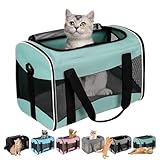
- [PRODUCT DIMENSIONS] Pet travel carrier size : 17x11x11 inches, recommended up to 15 lb pets, it is suitable for large, medium cats and small dogs. Please don't choose your airline cat carrying case based on weight, please refer to your pet's length and height when choosing a pet carrier size.
- [AIRLINE APPROVED] This cat carrier is designed with airline approved, it can fit comfortably under most flight seats, we can take our pets wherever we want. Dog travel carrier offers two attachment loop handles that can be used as a dual harness or as a luggage strap for balanced carry and secure transport.
- [EXCELLENT MATERIAL] Collapsible cat carrier is made of polyester fabric, supported by a steel ring, washable, wear-resistant and durable. The three sides and the top of this pet carrier are nylon mesh, scratch-resistant and not easy to damage, it can not only check your pet in real time, but also ensure enough air circulation.
- [SAFE AND COMFORTABLE] Dog travel bag has metal zippers on the top and side entrances, durable and not easy to deform, it allows your pets to enter and exit easily. The cat carrying case is equipped with an anti-escape safety buckle, which can effectively prevent pets from accidentally falling. It is suitable for car rides and vet rides.
- [PORTABLE AND FOLDABLE] Pet travel carrier comes with a detachable and hand washable wool pet bed, it can provide a comfortable sleeping space for your traveling pet. The cat travel case comes with an adjustable shoulder strap and handle for easy portability. When not in use, you can fold it up for storage.
Printable cat car-travel packing list
Every trip
- Secure, correctly sized carrier
- Familiar blanket or bedding
- Absorbent pad or washable carrier liner
- Spare pads and bedding
- Water your cat already tolerates
- Portable or collapsible travel bowl
- Your cat’s normal food
- Waste bags and cleaning wipes
- Current identification and emergency contact details
- Recent photograph of your cat
For cleaning and accident management, useful options include carrier liners for cats, disposable puppy pads for the carrier, and a pet travel cleanup kit. These are convenience items, not substitutes for a leak-resistant carrier base.
Longer journeys
- Portable cat litter tray
- Familiar litter in a sealed bag
- Extra food and water
- Prescribed medication and dosing instructions
- Basic pet first-aid supplies
- Veterinary contact information
- Vaccination and medical records
- Microchip registration details
- Collar with identification, if your cat normally wears one
A portable cat litter tray and collapsible travel bowl are particularly useful for a long stop or at a secure destination. A collar can provide another identification layer, but it does not replace a microchip or a closed carrier.
Food, water, litter, and breaks
Feeding immediately before a moving car ride can increase the chance of vomiting. CDC guidance suggests feeding around three to four hours before departure. FELIWAY gives a longer, product-specific recommendation of at least six hours to help avoid nausea and vomiting, while advising not to restrict water beforehand. These are not universal fasting instructions: age, health, diabetes, kidney disease, pregnancy, trip length, and previous motion sickness all matter.
Ask your veterinarian for an individualized food and water plan, especially if the cat is young, elderly, ill, takes medication, or has previously vomited in the car. Do not impose a prolonged fast on your own.
- Offer water during a long journey at planned, safe stops or when you reach a secure destination.
- Do not force food or water while the vehicle is moving.
- Do not open the carrier outdoors or in an unsecured parking area to let the cat stretch.
- For a long trip, prepare a secure indoor room or other enclosed space where the carrier can be opened safely.
- If a litter break is needed, use a closed room or another fully secure location, not a roadside verge or open parking lot.
Plan fuel, food, and bathroom stops in advance. If two adults are traveling, one can remain with the cat while the other goes inside. If you are alone, choose pet-appropriate stops and never leave the cat unattended in the vehicle.
Do these 3 things before closing this tab:
1Repair Windows errors before they cause bigger problems2Fix the driver behind crashes, sound loss and screen glitches3Clear out junk files and repair common Windows errorsRecognize stress and motion sickness
Travel-related distress can look like:
- persistent meowing or unusual vocalization;
- hiding, crouching, trembling, or tense body posture;
- restlessness or agitation;
- drooling or repeated lip licking;
- vomiting;
- urinating or defecating in the carrier; or
- unusual lethargy.
These signs can reflect fear, motion sickness, or both. A familiar blanket, gradual practice, a stable carrier, smooth driving, and reduced visual stimulation may help. You can cover part of the carrier if your cat settles better that way, but keep all ventilation openings clear and monitor temperature.
Rank #3

- Multiple Cats: Two large cat carriers that connect in a snap—plus, the side windows can be rolled up or down whenever you need! Ideal for traveling with multiple fur babies.
- Spacious 2-in-1 Design: The carrier transforms into a secure playpen or travel crate, suitable for pets up to 35 lbs. Ideal for cats, dogs, and other small to medium pets, it offers comfort and flexibility.
- Enhanced Travel Convenience: Comes with a collapsible travel bowl and a litter box. Perfect for car rides, vacations, or camping trips, ensuring your pet's basic needs are met.
- Secure and Safe: Features locking zippers to prevent escapes, reinforced stitching, and a stable base to keep your pet secure during travel.
- Easy Setup and Storage: Simple assembly with pipe connectors, designed to be safe and user-friendly. The foldable design allows for convenient storage when not in use, saving space.
Optional stress support
If your cat shows travel anxiety rather than simply nausea, you may consider FELIWAY Classic Spray as an optional stress-support product. The manufacturer’s instructions say to spray the carrier at least 15 minutes before the cat enters, never spray directly on the cat, and never spray while the cat is inside. It is not a motion-sickness treatment and is not a guarantee that a cat will remain calm.
Do not give tranquilizers, antihistamines, human anti-nausea medicine, or another calming product without veterinary direction. A veterinarian may recommend a prescription medication for some cats, but the drug and dose must be based on that individual cat’s health history. Ask about a trial dose before departure if medication is prescribed; do not wait until the longest leg of the journey to discover how your cat reacts.
Temperature, ventilation, and escape prevention
Never leave a cat alone in a parked vehicle. A vehicle can become dangerously hot within minutes, even when the outside temperature does not feel extreme. Cold weather can also expose an animal to freezing conditions. Shade, a cracked window, a bowl of water, air conditioning left running, or a remote-start system is not a reliable unattended-pet safety plan. Some jurisdictions also prohibit leaving animals in dangerous vehicle conditions.
Keep the carrier out of direct sun and away from heating or cooling vents that could make the cat too hot or cold. Check that the carrier remains ventilated and that blankets do not block its openings.
Escape prevention matters at every stop. Keep the carrier fully closed until it is inside a secure room or enclosed destination. If the carrier has been damaged, soiled, or opened accidentally, move the cat only in a secure indoor area or use a replacement carrier—not an open parking lot.
What to do if something goes wrong
If your cat vomits or has an accident
Pull over only where it is safe. Keep the cat inside the closed carrier while you assess the situation. If you can do so without creating an escape risk, replace the pad or bedding inside a secure location. Continue only if the cat recovers and the journey remains appropriate. Repeated vomiting may require veterinary advice rather than simply a shorter break.
Rank #4

- AIRLINE APPROVED CARRIER - With airline-approved design, you can take your pet to go to everywhere. This pet carrier provides two connecting loop handles for balanced carrying as a dual seat belt or luggage strap to secure transport
- SAFETY DESIGN - The adjustable shoulder strap help you hands-free carrying and makes it more safe and convenient pet carrier bag for your travel
- DURABLE - This cat carrier is made of durable and lightweight polyester fabric. The four-side mesh will not only give a safe and comfortable travel for your pet, but also easy for you to check on your pet
- PORTABLE & FOLDABLE - This dog carrier is easy to carry and store, which has a padded shoulder strap and handles
- BOTH SIZES AND WEIGHTS - The mediun cat carrier is designed for small and medium pets within 15" x 9" x 9"(smaller than product) and 15 lbs. Please do not choose your carrier only based on weight. Reference your pets' length and height in selecting a carrier size.If carried on board, the maximum dimensions should not exceed 18IN*11IN*11IN.
If the cat escapes
Close all vehicle doors and windows before attempting to handle the cat. Do not chase a frightened cat toward traffic. Use food, a familiar blanket, or the carrier to encourage a controlled return, and ask for help if the location is unsafe. Keep identification and a recent photo available for this reason.
Free tools Windows power users keep installed
One-click scans. No signup required.
If the cat becomes seriously unwell
Stop in a safe place and contact a veterinarian promptly if your cat has breathing difficulty, repeated vomiting, cannot keep water down, becomes unusually lethargic, collapses, or shows severe distress. In a heat or cold emergency, prioritize immediate veterinary care and do not delay while trying home remedies.
Independent reader supportYour contribution helps us test, update, and keep practical guides available for everyone.Interstate and international travel paperwork
Travel within the United States
For travel between U.S. states or territories, the destination’s rules control. Depending on the destination, requirements may include a health certificate, current vaccinations, diagnostic testing, or specific treatments. Contact the destination state or territory’s animal-health authority and your veterinarian well before departure. USDA APHIS does not regulate interstate movement of pets by their owners, so do not assume that one federal checklist covers every state.
International travel
International requirements are set by the destination country and can include a microchip, vaccinations, tests, treatments, import permits, and a health certificate. Some destinations require USDA endorsement. When endorsement is required, the certificate must be completed by a USDA-accredited veterinarian and submitted through the applicable APHIS process.
Airline rules are separate from road-travel rules. If any part of the journey involves flying, check the airline’s current carrier, documentation, temperature, and booking requirements directly with the airline. Start early: tests, vaccinations, permits, and endorsed certificates may have specific timing windows.
A simple departure-day checklist
- Confirm the cat’s food, water, medication, and paperwork plan with your veterinarian.
- Place an absorbent pad and familiar bedding in the carrier.
- Check the carrier’s door, latches, ventilation, and base.
- Load luggage so nothing can fall against the carrier.
- Secure the carrier on the back seat and test that it cannot slide or tip.
- Keep the cat inside the carrier before opening any vehicle door.
- Drive smoothly and keep the car comfortably ventilated.
- Make stops only at safe, planned locations.
- Never leave the cat unattended in the parked car.
- Open the carrier only inside a secure, enclosed destination.
Frequently Asked Questions
Can my cat ride loose in the car if it stays calm?
No. A calm cat can still distract the driver, escape when a door opens, or get under the pedals. Keep the cat in a closed, properly secured carrier for the entire drive.
Best Value
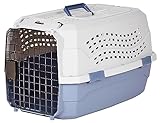
- Hard sided pet carrier with 2 doors for front and top entry; suitable for cat or medium size dog weighing 12 - 20 pounds
- Durable plastic construction with steel wire doors; screws keep the top and bottom sections securely connected
- Spring load latches ensure easy one-handed door opening and closing; top door swings open to the left or right and includes a top carry handle
- Plenty of air ventilation on the sides, top, and back of the carrier
- Note: Be sure to measure the size of the pet when choosing carrier size
Should I cover my cat’s carrier in the car?
A partial cover may help some cats feel less exposed, but it must not block ventilation or cause overheating. Leave ventilation openings clear and monitor the temperature.
How long can a cat travel in a car?
There is no single safe maximum for every cat. Trip length depends on health, age, weather, previous travel experience, and access to safe stops. For long journeys, arrange water, food as advised by your veterinarian, litter facilities, and regular welfare checks without opening the carrier outdoors.
Can I give my cat medication for a car trip?
Only use medication prescribed and dosed by a veterinarian who knows your cat. Do not give human medicines or improvised sedatives. Ask whether a trial dose is appropriate before the journey.
Recommended Free Tools
Do cats need a litter box during a car ride?
For a short trip, many owners simply bring an absorbent pad and spare bedding. For a long journey, bring a portable litter tray and familiar litter, but offer it only in a secure indoor location or at the destination—not beside the road or in an open parking area.
The Bottom Line
For a safer cat car trip, use a correctly sized, well-ventilated carrier; secure it on the back seat; acclimate your cat gradually; plan food, water, litter, and paperwork in advance; and never leave the cat unattended in a parked vehicle. Call your veterinarian before travel if your cat has motion sickness, severe anxiety, medical conditions, or any unusual symptoms.
Quick Recap
Product prices and availability are accurate as of the date/time indicated and are subject to change. Any price and availability information displayed on Amazon at the time of purchase will apply.




