
Free tools Windows power users keep installed
One-click scans. No signup required.
A dog weight-loss calculator can estimate a calorie starting point and show the arithmetic behind a target, but it cannot determine your dog’s healthy weight from scale weight alone. A veterinarian should establish or confirm the ideal weight using a body-condition assessment, then adjust food and activity as your dog responds.
The most useful plan combines an ideal-weight target, a calorie estimate based on that target, nutritionally complete food, controlled treats, consistent activity and repeated checks of weight, body condition and muscle.
As an Amazon Associate I earn from qualifying purchases.
What a dog weight-loss calculator can—and cannot—tell you
A calculator is an estimating tool. It can apply a published energy equation to an ideal body weight and make assumptions visible. It cannot examine your dog, identify disease, assess muscle loss, decide whether a diet is nutritionally complete or prescribe a treatment plan.
Current body weight is only one input. A veterinary assessment should consider body-condition score (BCS), muscle condition, age, neuter status, medical history, activity, environment, current food and treats. The American Animal Hospital Association (AAHA) lists those elements as part of nutritional screening.
#1 Best Overall

- WIDE WEIGHING PLATFORM: This electronic scale has a large 33 x 19 inch (840 x 480mm) tempered glass weighing platform with a 0.3 inch (8mm) extra thickness, fitting most dog and cat breeds and super easy for maintenance.
- MULTIPURPOSE SCALE: This scale is versatile and can be used for weighing various items such as food, postal items, luggage, and more. It has an animal weighing mode to ensure stable readings when animals move.
- EASY TO USE: The scale has a large, backlit LCD display that makes it easy to read measurements even in low-light conditions. It has a simple, user-friendly interface with intuitive buttons for easy operation.
- PRECISE WEIGHING: This electronic scale features high-precision strain sensor technology for accurate weight readings. It offers unit conversion between pounds and kilograms, making it suitable for various applications.
- CONVENIENT FEATURES: The scale has a voice announcement (VA) feature that audibly indicates weight readings. The scale has a zero/tare function to easily reset the weight to zero. It also has a 2-minute auto shutdown feature to conserve battery life. Additionally, it has a low power alarm, an anti-interference indicator, and a USB connectivity port for easy data transfer.
Do not treat the number on a calculator as a promise about how quickly your dog will lose weight. The AAHA equation is a clinical starting estimate. Individual dogs may need adjustments for appetite, lifestyle, medical conditions and actual change on the plan. The available veterinary guidance does not establish one universal safe rate or timeline for every dog.
What is my dog’s ideal weight?
Ask your veterinarian to set an initial target. Cornell University College of Veterinary Medicine uses a nine-point BCS system in which a score of 4 or 5 is considered ideal. An ideal dog generally has ribs that can be felt but not seen, a tucked abdomen when viewed from the side and a visible waist when viewed from above.
These physical findings matter because two dogs with the same scale weight can have very different amounts of fat and muscle. A calculator that accepts only pounds or kilograms cannot detect that difference.
The Tool Desk
Outbyte PC Repair FREERepair Windows errors before they cause bigger problemsFix Now →Outbyte Driver Updater FREEFix the driver behind crashes, sound loss and screen glitchesFind Drivers →Using the BCS estimate cautiously
Cornell gives a rough rule that each BCS point away from ideal approximates 10% of current body weight. Its example is a 75-pound dog with a BCS of 7: the dog is estimated to be about 20% overweight, producing an approximate 60-pound target. This is an estimation approach for discussion with a veterinarian, not a precise formula to apply without an examination.
Rank #2
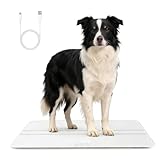
- DOG WEIGHING SCALE SIZE :27.16 x 12.99 inches, lighter and easier to carry. This dog scale size is easier to weigh dogs. Medium-sized dogs are very easy to weigh, but weighing large dogs sometimes requires good cooperation with the owner. NOTE: Not suitable for weighing giant dogs
- DOG SCALE SCALE LINE :There is a 68 cm/26.77 inch length scale line on the weighing platform to track the length of the pet's body. LARGE DOG SCALE CAPACITY 7oz-220 lbs, Measurement MEASUREMENT ACCURACY 0.35oz/10g, TARE Function, 3 UNITS: kg, lb, st
- HIGH QUALITY :The pet scale is designed with a glass weighing surface, which not only looks elegant, but also ensures that the surface is durable and easy to clean.
- RECHARGEABLE DIGITAL ANIMAL SCALE :The digital pet scale is powered by a 3.7V, 200mAh rechargeable battery. It saves the trouble of buying batteries.
- WIDELY USED: This dog weighing scale suitable for families, pet grooming care, pet clinics, pet stores and other places, it can track the weight and height of pets and monitor the health of cats and dogs,you can also keep a close eye on your child's weight and height, and continuously monitor whether your child maintains healthy standards.
Target weight can change as your dog loses fat or if a clinician identifies a different body-composition goal. Rechecks are how the veterinary team confirms that the dog is approaching a healthy condition rather than simply chasing a number.
How many calories should my dog eat to lose weight?
AAHA’s 2021 guideline gives the resting energy requirement (RER) equation:
RER = 70 × body weight in kilograms0.75
For canine weight loss, the guideline’s table uses a factor of 1.0 applied to RER. Calculations should use ideal body weight, not automatically the current weight, and then be adjusted for the individual dog’s intake and lifestyle. In simplified form, a calculator may therefore display:
Windows Errors? Fix Them Before They Spread
Repair common Windows errors and clear accumulated junk for a smoother, more stable PC - no reinstall needed.Free scan · no reinstallCrashes, No Sound, or Screen Glitches?
Random freezes, missing sound and display glitches usually trace back to one bad driver. Find and replace yours safely.Free scan · under a minuteEstimated daily weight-loss calories = 70 × ideal weight (kg)0.75 × 1.0
Rank #3

- 880lbs Capacity Pet Scale: This is a multi-use and heavy-duty digital scale to weigh small and large items. Max. 880lbs weighing capacity.
- Stainless Steel Digital Scale: Made of the high-quality stainless steel materials, our 103 x 53cm(40.6x20.9") scales are as durable as they are functional.
- Powerful Function: 3 weighing units switch: kg/oz/lb. Over-load and low power indication. Count function support. Wall mountable or desktop free-standing digital display.
- Convenient & Portable: Four adjustable feet for uneven terrain can be easily re-calibrated at any time. Portable lifting handle for easy carrying and hidden room to storage.
- Wide Application: The pet scale is great for a veterinary office or to have on the farm. they can also be utilized in a variety of places, including postal, shipping, warehouse or it can be used as an athlete or aviation scale.
The result is an estimate for discussion with your veterinarian. The equation does not account by itself for illness, medications, activity differences, pregnancy, growth, muscle condition or whether the chosen food supplies adequate nutrients in the proposed portion.
Inputs a responsible calculator should show
| Input | Why it matters |
|---|---|
| Current body weight | Provides the starting measurement and allows progress to be tracked. |
| Ideal body weight | AAHA’s weight-loss calculation is based on the intended healthy weight. |
| Weight unit | The RER equation requires kilograms; the calculator should display the unit it is using. |
| Body-condition score | Helps distinguish excess fat from a scale number and supports target-setting. |
| Age, neuter status and health history | May change energy needs or require veterinary supervision. |
| Activity and environment | Helps explain why two dogs may need different calorie adjustments. |
| Current food and treats | Reveals the actual calorie intake and whether rewards are being counted. |
If a calculator does not ask for these details, regard its output as a rough arithmetic result rather than a complete plan.
How to calculate a safe weight-loss goal
- Record the starting facts. Write down current weight, the veterinarian’s ideal-weight estimate, BCS, food name and amount, treats, supplements, feeding frequency, activity and any medical conditions.
- Confirm the target. Have the veterinarian check the BCS and muscle condition and explain why the proposed ideal weight is appropriate.
- Run the RER estimate. Enter ideal weight in kilograms and apply
70 × BWkg^0.75. If a calculator applies the canine weight-loss factor, verify that it is 1.0 and that the result is labeled an estimate. - Translate calories into a measured portion. Use the food’s stated calorie density and the portion your veterinary team approves. Measuring by volume can be inconsistent; a kitchen scale may improve repeatability when the clinician has prescribed a gram amount.
- Allocate rewards. Include treats, chews, table food and food used for medication in the daily calorie budget.
- Set a review point with the veterinary team. Reassess weight, BCS, muscle and behavior at the interval recommended for your dog, then adjust the plan if progress or condition is not appropriate.
Why simply feeding less of the old food can backfire
Reducing a maintenance diet by a large amount may lower calories but also reduce protein, vitamins, minerals and other nutrients. VCA Animal Hospitals warns that cutting ordinary food can lead to micronutrient deficiencies over time. Cornell likewise recommends veterinary advice before restricting a maintenance diet or switching foods.
A veterinary-formulated weight-management diet may provide fewer calories per cup and more fiber, helping some dogs feel satisfied while receiving required nutrients in the prescribed portion. VCA describes therapeutic weight-reduction diets, specific portions and meal frequency as components of a veterinary-guided plan. The appropriate food depends on the individual dog; no single diet is suitable for every patient.
Rank #4

- ✔【37" x 20" Heavy Duty Stainless Steel Platform】- Constructed with a robust stainless steel platform that is resistant to corrosion, and it includes a heavy duty mat. This combination provides durability and a non-slip surface for animals, ensuring their comfort and safety during weighing.
- ✔【660 lbs Weight Capacity in 0.2 lb / 100g increment】- Specifically designed to handle animals with a maximum weight of 660 pounds, making it suitable for a wide range of animals, including dogs, cats, smaller livestock, and more.
- ✔【Digital Wall-Mount Display】- The scale is equipped with a digital wall-mount display for easy reading and convenient operation. The large, clear digital display features high-contrast numerals for quick and accurate weight readings, and it can be mounted at a comfortable eye level for the user.
- ✔【Hygienic and Easy to Clean】- Both the stainless steel platform and the mat are easy to clean and disinfect, maintaining a sanitary environment in the veterinary clinic. This helps prevent the spread of infections and ensures the safety of animals.
- ✔【Plug in or use 4 x 1.5V AA Battery】- This setup ensures that veterinarians can confidently and consistently weigh animals without being dependent solely on electrical power. In case of power outages or when the scale needs to be moved to locations with limited access to electrical outlets, the battery backup guarantees that weighing procedures can continue without interruption.
Questions to ask before changing food
- Is the proposed diet complete and balanced for my dog’s life stage and medical needs?
- What calorie density and daily gram amount should I use?
- Should meals be divided into more than one feeding?
- How should the plan change if appetite, stool quality, energy or muscle condition changes?
How many treats can my dog have while losing weight?
VCA Animal Hospitals states: “Treats or snacks should comprise no more than 10% of your dog’s daily calorie intake.” That ceiling includes every extra calorie outside the planned meals.
Practical ways to stay within the allowance include reserving part of the measured daily food for training, using small portions of the wet version of the prescribed diet or offering suitable low-calorie options such as peas, as Cornell describes. Confirm any human food with your veterinarian, especially if your dog has allergies, diabetes, gastrointestinal disease or another condition requiring dietary control.
Count dental chews, pill pockets, scraps and treats given by several family members. A written daily log prevents “invisible” calories from defeating an otherwise accurate portion.
Do these 3 things before closing this tab:
1Repair Windows errors before they cause bigger problems2Scan for outdated or missing drivers - takes under a minute3Clear out junk files and repair common Windows errorsActivity and feeding tools that can support the plan
Consistent activity is part of the management plan, but the right amount depends on fitness, age, joint health and medical status. Ask the veterinary team what type and duration of exercise are appropriate before increasing activity in a very overweight, painful or medically fragile dog.
Best Value

- ✔【Accurate Weighing】- This highly precise digital scale is designed to deliver accurate weight measurements for a variety of items, with an impressive capacity of up to 400 lbs (180 kg). Its precision is fine-tuned to 10g/0.02lb, ensuring that even small variations in weight are captured. The large, easy-to-read LCD display provides clear and immediate weight readings, reducing the chance of errors and making it simple to monitor weights at a glance. Whether you're weighing light packages or heavy items, this scale guarantees precise results, making it perfect for professional settings where accuracy is critical.
- ✔【32" x 16" Weighing Platform】This pet scale features a spacious tempered glass weighing platform measuring 32 x 16 inches, specifically designed to accommodate large-breed dogs comfortably. The generous size provides ample room for pets to sit or stand securely during the weighing process. The sturdy construction ensures durability and stability, while the smooth, tempered glass surface is not only elegant but also easy to clean, making it ideal for maintaining hygiene.
- ✔【Anti-Slip Mat】This pet scale is equipped with a high-quality anti-slip mat, ensuring that animals can stand securely and comfortably during weighing. The mat provides excellent traction to prevent slipping, giving your pets a sense of stability and confidence. Additionally, the anti-slip surface is gentle on pets' paws, enhancing their comfort.
- ✔【Built in Display】- The built-in display offers unparalleled convenience and efficiency, combining functionality with a sleek, space-saving design. The integrated display provides instant, accurate readings, eliminating the need for separate attachments and reducing clutter in busy veterinary clinics or homes.
- ✔【Multiple Measurement Units】- The scale provides the flexibility to switch between different units in pounds or kilograms, allowing veterinarians to work with the units they are most comfortable with or that best suit their practice.
AAHA notes that “Food puzzles, silicone mats, and slow-feeding bowls can encourage your pet to focus on their food and help them feel full.” These are optional meal-engagement tools, not proven substitutes for calorie control. Introduce them gradually and ensure your dog can eat comfortably.
A digital pet scale, measuring cup or kitchen scale can help you record weight or reproduce a prescribed portion. These tools do not diagnose obesity or establish an ideal weight; body condition still requires observation and veterinary guidance.
How to monitor progress and adjust the goal
Use the same measurement method each time and record the date, weight, food amount, treats, activity and notable changes in appetite or energy. At veterinary reassessments, review both the scale and the BCS. A dog can lose weight while also losing muscle, so muscle condition belongs in the review.
Recommended Free Tools
Contact the veterinary team if your dog refuses food, develops persistent vomiting or diarrhea, becomes unusually lethargic, shows pain, or has a sudden change in thirst or urination. Those signs need medical assessment rather than a further calorie cut.
If the dog is not changing as expected, bring the food log and packaging to the appointment. The clinician may check actual calorie intake, treat calories, portion accuracy, activity, medications or an underlying illness before changing the target.
Common calculator mistakes
- Using current weight as the final target: current weight describes where the dog is now; ideal weight is a clinical goal.
- Entering pounds into a kilogram equation: confirm the calculator’s unit and conversion before accepting the result.
- Treating the calorie output as a prescription: AAHA presents RER as a starting estimate requiring individual adjustment.
- Ignoring food calorie density: equal cup measures can contain different calories, so follow the prescribed amount for the selected food.
- Cutting portions without nutrient review: a maintenance diet may become nutritionally inadequate when heavily restricted.
- Leaving treats outside the plan: keep snacks at or below 10% of daily calories and log all extras.
- Changing several variables at once: record what changed so the veterinary team can identify what helped or caused a problem.
A simple worksheet for your appointment
| Record | Bring or discuss |
|---|---|
| Current weight and date | Scale method and any recent changes |
| Veterinarian-set ideal weight | Reason for the target and whether it may be revised |
| BCS and muscle-condition observations | Rib feel, waist, abdominal tuck and muscle coverage |
| Daily food | Food name, calorie density, grams or measured portion and feeding times |
| Daily extras | Treats, chews, scraps, supplements and medication carriers |
| Activity | Typical exercise, environment and changes since the last review |
| Calculator result | Equation, units, ideal-weight input and the veterinarian’s approved adjustment |
Bottom line for using a dog weight-loss calculator
Use the calculator to make the math transparent, not to replace an examination. Establish ideal weight with BCS and veterinary input, calculate calories from ideal weight using the AAHA RER equation, choose a nutritionally adequate plan, keep treats within 10% of daily calories and monitor weight, body condition and muscle over time. The veterinarian should decide when the target or calorie allotment needs to change.
Quick Recap
Product prices and availability are accurate as of the date/time indicated and are subject to change. Any price and availability information displayed on Amazon at the time of purchase will apply.
Quick wins for a faster PC:
Fix the driver behind crashes, sound loss and screen glitchesFind Drivers →Repair Windows errors before they cause bigger problemsFix Now →




Leave a Reply