Transport programs can reduce infection risks by first identifying the diseases and exposures relevant to a specific project, then connecting affected workers and communities with appropriate health services and adding protections suited to the pathogen and setting. There is no single transport-sector package that fits every disease: measures for HIV and sexually transmitted infections (STIs) differ from operational steps used to reduce respiratory-virus exposure on public transit.
Start with local disease and exposure risks
A program should be based on local disease conditions, the transport activity, and the people who may be affected—not on an assumption that every transport project creates the same risk. The World Bank’s 2009 transport-sector HIV synthesis recommends considering country epidemic conditions, project-specific risks, and the attitudes and practices of potentially affected groups. It distinguishes construction projects, transport corridors, and projects focused on subsectors such as ports, rail, or air transport.
As an Amazon Associate I earn from qualifying purchases.
For a current program, turn that risk-assessment approach into a local picture of the disease burden, routes of exposure, relevant populations, and services already available. Depending on the project, the assessment may need to consider transport workers, passengers, worksites, hubs, border stops, and nearby communities. Their inclusion in an assessment does not mean each location is a disease hotspot; it means the program should determine whether a relevant exposure or service gap exists there.
What’s actually slowing this PC down?
Pick the symptom - the matching free tool is one click away.
- Identify the pathogen or pathogens of concern and how they spread.
- Map the affected worker groups, passengers, project sites, and communities.
- Review current health services and public-health requirements in the project’s location.
- Consult the competent health authority and relevant local partners before choosing interventions.
For corridors, the World Bank guidance discusses factors such as passenger and freight volume relative to corridor length, existing prevention work, and national epidemic conditions. These are inputs to local assessment, not a formula that predicts disease or proves an intervention will work.
#1 Best Overall
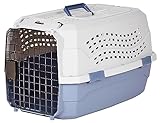
- Hard sided pet carrier with 2 doors for front and top entry; suitable for cat or medium size dog weighing 12 - 20 pounds
- Durable plastic construction with steel wire doors; screws keep the top and bottom sections securely connected
- Spring load latches ensure easy one-handed door opening and closing; top door swings open to the left or right and includes a top carry handle
- Plenty of air ventilation on the sides, top, and back of the carrier
- Note: Be sure to measure the size of the pet when choosing carrier size
Match the intervention to the disease
Transport programs can contribute through different kinds of measures: operational changes to a transport service, behavior-focused communication, or connections to clinical and public-health services. Which are appropriate depends on the pathogen and the people at risk. The sources below describe HIV/STI approaches and COVID-era transit guidance; they do not establish a universal package for tuberculosis, malaria, diarrheal disease, or other infections.
| Program focus | Measures described in the sources | Evidence boundary |
|---|---|---|
| HIV and STIs in transport settings | Education and behavior-change communication; peer counseling; condom use and distribution; links to STI treatment; and referrals for testing and counseling. | The World Bank’s 2009 synthesis describes these as components of a program package and documents examples; it does not show that one component is best for every project or setting. |
| Respiratory infection risk on public transit | COVID-era guidance included ventilation, hygiene, cleaning, spacing where feasible, employee training, procedures for ill staff, and communication with health authorities. | The WHO and CDC materials cited here were issued in the COVID-19 context in 2020–2021. They are not current universal transit policy; check applicable local rules and current public-health advice. |
Connect HIV and STI prevention to existing services
The World Bank synthesis describes transport-related HIV prevention as a combination of communication and service links. Examples include peer counseling, condom distribution, links to local STI treatment, and referrals of workers and vulnerable groups to voluntary testing and counseling. It also discusses approaches such as roadside clinics, trucker wellness centers, health passports, targeted communication, and corridor programs combining condoms, STI treatment, and HIV education.
Rank #2

- High Quality Design:Sturdy steel cage structure and wooden support board maintain good spatial stability and shape. Breathable mesh windows on four sides,which can ensure good air circulation and views,make pets have a comfortable and safe travel.It can also be easy for you to check on your pets.There is a front pocket to store pet toys,treats,etc.
- Dimension and Weight:Made of durable tear-resistant fabric.Four easy entrances for pets. Dimensions: 17 inch x 11 inch x 11 inch (L*W*H), suitable for pets up to 16 lbs.Please don't choose your carrier based on weight only,consider your pet's length and height when choosing a carrier.
- Airline Approved & Safty:Can be placed under the seats of most airplanes(Four non-slip feet on the bottom to prevent movement), and comfortably on the seat next to you in a car or bus.It has a adjustable shoulder strap.Can also be fastened to the car seat with a safety belt or shoulder strap to keep your pet safe.
- Easy to Clean :You can clean the stains and dirt on the surface with a soft cloth.Soft mat inside the pet carrier is removable and washable.You can take it out and wash it easily to solve all stains.
- Easy to Collapsible & Lightweight:When not in use,fold it into a flat,space saving and easy to store.Only 2.2lbs,it's easier to carry around.It can also used as a toy of pet house,allowing pets to play in a safe space to relax and rest.
These are documented approaches, not comparative trial results showing which will be most effective in a particular place. Transport agencies should coordinate with national HIV strategies and existing local services, including nongovernmental organizations, and build on providers with relevant clinical expertise. A transport program can help workers and communities reach appropriate care; it should not be treated as a substitute for clinical services.
Use layered measures for respiratory risks on public transit
In its 2020 COVID-19 reopening checklist, the CDC described measures for bus and rail operators, maintenance staff, and station workers. The checklist included promoting hygiene; increasing cleaning and disinfection; improving ventilation; increasing passenger and employee spacing where feasible; training staff; encouraging ill people to stay home; planning for employee illness and monitoring absences; and communicating with public-health authorities. It also called for local officials and partners to determine suitable actions for local conditions. The CDC checklist is a historical pandemic-era resource, not a statement of current universal policy.
Rank #3

- Pet Carrier: 17.5” L x 11” W x 11” H, Recommended max load of 16 lbs cats small dogs. Please do not choose your carrier based on weight--please reference your pet's length and height in selecting a pet carrier size.
- Fits for under-seat dimensions of most airlines. Every airline has a specific set of rules and regulations, please contact with airline before flying with your cats small dogs.
- Mesh windows for ventilation, top and side entry with locking zippers for safety. Carrying handles, adjustable shoulder strap which can also be used as seatbelt, and back strap can fasten the pet carrier to your luggage.
- Pet carrier comes with a removable base insert, which creates a solid surface for your pet to stand on, along with a removable & hand washable cozy fleece pet bed, which offers a cozy sleeping space for your traveling cats small dogs.
- "Toys for pets, of textile materials". Mostly used as a Toy of Fabric Pet Home for pets playing and relaxing.
The WHO’s 2020 publication on healthy urban transport and mobility in the context of COVID-19 addressed national and local governments, transport operators, and commuters. It also connected safer public transport with support for safe walking and cycling. Its recommendations likewise need to be read in their COVID-19 context and alongside current local guidance.
Treat ventilation as one layer, not a guarantee
Ventilation can reduce the concentration of airborne particles, but it does not eliminate infection risk. WHO’s 23 December 2021 ventilation and air-conditioning guidance says ventilation should be part of a broader package, which may include distancing, avoiding crowds, masks, hand cleaning, staying home when unwell, respiratory etiquette, and vaccination. For vehicles, WHO recommends using fresh-air settings when available.
Rank #4

- SECURE AND COZY DEN: The Petmate Two-Door portable dog crate provides easy access with top or front-loading doors, offering a safe and comfortable space for your pet's natural denning instincts
- AIRLINE-APPROVED: This small dog carrier airline approved meets most airline cargo specs. Ventilation holes provide fresh air and 360-degree visibility for your pet
- IDEAL FOR SMALL PETS: Designed as a puppy carrier for small dogs 0-15 lbs, the 24-inch crate offers room for pets to stand, turn, and lie comfortably; with space for a cushion to enhance comfort
- EASY ASSEMBLY AND MAINTENANCE: The plastic dog crate shell is simple to clean; a stay-dry moat directs fluids away from pets
- CONVENIENT: Featuring steel doors with easy-squeeze latches and a foldable handle, this USA-made pet carrier for dogs & cats provides a less stressful travel experience
WHO notes that most airplanes use HEPA filtration with a mix of outdoor and filtered recirculated air. That description should not be generalized to buses, trains, or other vehicles. The CDC’s archived ventilation guidance also identifies public transport as a setting where improvements can reduce exposure to airborne viruses, while cautioning that ventilation measures do not eliminate risk and may offer less protection at close range. HVAC changes need to fit the specific building or vehicle; technical changes may require qualified professionals.
Build a program that can be implemented and reviewed
Choose measures by weighing the pathogen and transmission route, the affected population and setting, local disease and exposure evidence, available health services, feasibility, acceptability, worker protections, and the quality and date of the supporting evidence. A useful implementation sequence is:
Best Value
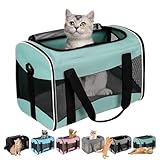
- [PRODUCT DIMENSIONS] Pet travel carrier size : 17x11x11 inches, recommended up to 15 lb pets, it is suitable for large, medium cats and small dogs. Please don't choose your airline cat carrying case based on weight, please refer to your pet's length and height when choosing a pet carrier size.
- [AIRLINE APPROVED] This cat carrier is designed with airline approved, it can fit comfortably under most flight seats, we can take our pets wherever we want. Dog travel carrier offers two attachment loop handles that can be used as a dual harness or as a luggage strap for balanced carry and secure transport.
- [EXCELLENT MATERIAL] Collapsible cat carrier is made of polyester fabric, supported by a steel ring, washable, wear-resistant and durable. The three sides and the top of this pet carrier are nylon mesh, scratch-resistant and not easy to damage, it can not only check your pet in real time, but also ensure enough air circulation.
- [SAFE AND COMFORTABLE] Dog travel bag has metal zippers on the top and side entrances, durable and not easy to deform, it allows your pets to enter and exit easily. The cat carrying case is equipped with an anti-escape safety buckle, which can effectively prevent pets from accidentally falling. It is suitable for car rides and vet rides.
- [PORTABLE AND FOLDABLE] Pet travel carrier comes with a detachable and hand washable wool pet bed, it can provide a comfortable sleeping space for your traveling pet. The cat travel case comes with an adjustable shoulder strap and handle for easy portability. When not in use, you can fold it up for storage.
- Assess: Establish the relevant disease burden and exposure pathways for the project’s location and workforce.
- Consult: Coordinate with health authorities, transport stakeholders, service providers, and community partners.
- Select: Choose interventions that fit the pathogen, setting, and service gaps; do not treat a measure designed for HIV/STIs as respiratory infection control, or vice versa.
- Assign responsibility: Specify which transport operator, health provider, public authority, or community partner delivers each activity.
- Review: Reassess the program as local disease conditions, services, regulations, and evidence change.
The available sources are strongest as descriptions of program components and operational guidance, not as a comparative ranking of effects. The transport-specific HIV synthesis dates to 2009, while the transit materials cited here focus on COVID-19 guidance from 2020–2021. They do not provide a current cross-pathogen estimate of how much transport programs reduce infectious-disease incidence. Programs therefore need current, location-specific disease information and applicable public-health advice when they are designed and updated.
Quick Recap
Product prices and availability are accurate as of the date/time indicated and are subject to change. Any price and availability information displayed on Amazon at the time of purchase will apply.




