
Some links on this page are affiliate links: if you buy through them we may earn a commission, at no extra cost to you.
The Indian Ringneck is the Asian form of the rose-ringed parakeet, a long-tailed, highly intelligent parrot known for its striking adult neck ring and impressive vocal ability. It is also an active, sometimes independent companion bird—not a low-maintenance alternative to a budgie.
Before choosing one, prospective owners should understand the difference between the species’ reputation and the individual bird in front of them. Some Ringnecks become excellent talkers; others prefer whistles and flock calls. Some enjoy handling; others are affectionate on their own terms. Good care depends on providing space, enrichment, training, a suitable diet, and routine avian veterinary care.
As an Amazon Associate I earn from qualifying purchases.
Indian Ringneck quick facts
| Fact | Details |
|---|---|
| Common names | Indian Ringneck, Ringneck Parakeet, Ring-necked Parakeet, and Rose-ringed Parakeet |
| Scientific name | Psittacula krameri; some taxonomic references use Alexandrinus krameri |
| Family | Psittaculidae |
| Adult length | Approximately 36–42 cm (14–16.5 in), including the tail |
| Weight | About 100–182 g, depending on subspecies and population |
| Typical captive lifespan | About 20 years on average, with some individuals living longer |
| Conservation status | Least Concern on the IUCN Red List |
| Distinctive feature | A black-and-pink or reddish neck ring in mature males |
Is an Indian Ringneck a separate species?
No. “Indian Ringneck” is an avicultural name for the Asian form of the rose-ringed parakeet. It is not a formally separate species. The species has traditionally been classified as Psittacula krameri, although some current taxonomic treatments use Alexandrinus krameri.
Four traditionally recognized subspecies are associated with different parts of the African and Asian range:
Popular on Amazon

- [Portable Rolling Stand] - 360°rotating swivel casters, you can roll the bird cages in all directions and set it up anywhere in the room. And Rolling Stand is super , allowing your feathered friend to move quickly, quietly, and safely
- [Ultra-strong Construction Birdcage] - Extra bird cage is made of premium welded steel and painted with non-toxic hammer paint. The welded-coated , Sturdy structure, quality craftsmanship, and rust and water resistance make this parrot cage a durable and safe high-quality pet home
- [Easy Cleaning & Assemble] - A pull-out plastic Waste Tray can be removed and cleaned with water, making cleaning a breeze, and the seed guard can prevent the food from falling out of the Bird cage and keep your space clean. Wrought iron flight cage sembly easy, can be done in 30 minutes
- [Well Thought-out Design] - The 0.6 inch wide distance between the bars prevents birds from being trapped. Bird cages with play tops, open design provides good way for you cultivate intimacy with birds. The wooden bird stand provide more authentic perches.
- [Large Bird Cage] - Flight Cage - Internal Dimension of this parrot cage is 24" L x 22" W x 37.4" H inches, which can accommodate 2-3 small to medium-sized like canaries, cockatiels, ringneck and golden parakeets.
- A. k. krameri—western and central Africa
- A. k. parvirostris—northeastern Africa
- A. k. borealis—northern areas of the Asian range
- A. k. manillensis—the Indian-subcontinent form commonly called the Indian Ringneck
Captive birds may be hybrids, selectively bred lines, or color mutations, so appearance alone does not always identify a subspecies reliably. Blue, lutino, albino, cinnamon, grey, and pied birds are color varieties of the same species, not different species.
Appearance and identification
A wild-type rose-ringed parakeet is mostly bright green, with a long pointed tail, a red or reddish bill, and darker markings on the wings. The tail can account for roughly half of the bird’s total length, which helps give the species its distinctive slender silhouette.
Windows Errors? Fix Them Before They Spread
Repair common Windows errors and clear accumulated junk for a smoother, more stable PC - no reinstall needed.Free scan · no reinstallOutdated Drivers Are Slowing You Down
One free scan finds every outdated or missing driver and matches the right update for your exact hardware.Free scan · exact hardware matchMature males develop a dark facial and throat marking that extends into a pink, rose-colored, or reddish collar around the neck. Females generally lack a complete ring, although some can show a faint collar. Immature males resemble females, so the absence of a ring does not prove that a young bird is female.
The adult neck ring usually develops at approximately two to two and a half years, although timing varies. DNA sex testing is more dependable than trying to sex a juvenile by appearance.
Natural range and habitat
Rose-ringed parakeets are native to two broad regions:
- Africa: parts of West and central Africa, extending into areas around Sudan, Ethiopia, and Uganda.
- Asia: from Afghanistan and Pakistan through India, Nepal, Bangladesh, Sri Lanka, and nearby parts of southern Asia.
They use open woodland, savanna, forest edges, cultivated land, gardens, parks, and urban areas. Their ability to find food and nesting cavities around people has helped them adapt successfully to towns and cities.
Introduced populations also occur in several countries. In the United States, sightings or introduced populations have been reported in Alabama, California, Florida, Hawaii, Louisiana, Texas, and Virginia. A sighting in a state does not necessarily mean that a large, self-sustaining population is present. A free-flying flock may result from escaped or released captive birds.
Behavior and vocalizations
These are social parrots that commonly forage, travel, and roost in groups. Flocks can number from a few birds to hundreds, and urban communal roosts may create substantial noise at particular times of day.
Also popular on Amazon

- ★ Sturdy enough to handle your birds’ bites and harsh weather conditions! This Bird Cage from us is made of wrought iron that makes it a sturdy and durable bird cage. Powder coated with non-toxic and lead free paint
- ★Form a bond with feathery friends using the versatile play area above the cage! A layered structure for the most climb, perches, ladders and feeder bowls. Top playing area with an ascent ladder. Encourage activity outside of the bird cage with an expanded, ladder playtop design
- ★ 5 stainless steel bowls and 2 perch - 1 Interior long wooden perch for resting. 4 Industrial casters: easy to move around without noise
- ★ Bottom Removable sand tray and grille for easy cleaning! It helps keep the mess inside of the cage and off of your floor. Easily washed when dirty to keep your bird’s home fresh and clean at all times
- ★ Heavy duty lockable door keeps your bird securely inside the cage when the playtime is over. It is the ideal choice for your pet bird. Warm Note: Due to the unpredictable transport, part damage issue may happen. Feel free to contact seller to get free replacement if you have received any damaged/bented part/missing part
The typical call is harsh, shrill, and often descending, sometimes written as “kee-ak.” A Ringneck’s household noise can include calls, whistles, contact sounds, and learned imitations. This is not a quiet species, and apartment living requires careful consideration of neighbors and building rules.
As pets, Indian Ringnecks are intelligent, alert, active, and often quick to learn routines. They can learn human speech, but talking ability varies widely. Some individuals learn a large vocabulary, while others mainly whistle or imitate environmental sounds. A bird that speaks well is not automatically tame, cuddly, or easy to handle.
What’s actually slowing this PC down?
Pick the symptom - the matching free tool is one click away.
Are Indian Ringnecks good pets?
They can be rewarding companions for an owner prepared to work with a clever, energetic parrot. They are not ideal for someone seeking a bird that will reliably enjoy constant physical contact.
Many Ringnecks are independent and prefer interacting through training, play, talking, or sitting near their person rather than being held continuously. Fear, boredom, inadequate socialization, rough handling, and hormonal behavior can contribute to biting or screaming. Even a tame bird can bite, particularly when it is frightened, overstimulated, guarding a cage, or being handled against its wishes.
A good match usually includes an owner who can provide:
- Daily social interaction and positive-reinforcement training
- Supervised out-of-cage exercise in a bird-safe room
- Durable toys that can be chewed, dismantled, and rotated
- Foraging opportunities rather than food presented in only one bowl
- Patience during fearful, hormonal, or defensive periods
- Access to an avian veterinarian
Housing and daily care
The enclosure should allow the bird to fully extend its wings, climb, turn around comfortably, and use toys without its tail constantly striking the bars. Bigger is better when the design is safe and practical. The cage should contain varied perches, appropriate chewable materials, feeding areas, and toys arranged so that the bird still has room to move.
Daily supervised time outside the enclosure is important for exercise and mental stimulation. Before allowing free flight, secure windows and doors, switch off ceiling fans, cover or remove hazards, and prevent access to other pets. Kitchens are especially dangerous because of hot surfaces, fumes, open water, and overheated nonstick cookware.
Rotate enrichment rather than leaving the same toys in place indefinitely. Food puzzles, shreddable toys, safe wood, climbing opportunities, and short training sessions can help meet the Ringneck’s need to investigate and manipulate its environment.
Also popular on Amazon
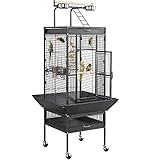
- Playground on top: The ladder and the wooden dowel on the cage roof give your feathered friends a comfortable place to stand and stretch wings. There are 2 feeding bowls for seeds and water and a slide-out tray for catching spilled seeds and droppings
- Lockable Doors & Easy Feeding System: Both the front door and the feeding doors are secured with locks to prevent your beloved bird from escaping. The external feeding doors let you refill food and water without opening the main cage door, avoiding disturbing your birds
- Designed for small/medium birds: With dimensions of 18''L x 18'W x 30.5''H (cage only) and 0.6'' bar spacing, this birdcage can accommodate small to medium-sized birds like cockatiels, conures, parakeets, lovebirds, canaries, finches. The overall dimension including play top & stand & seed guard is 26"L x 26"W x 61.5"H
- Effortless cleaning: Slide-out tray and detachable mesh bottom grate can be removed for easy cleaning. The mesh grate between birds and the tray can prevent birds from walking/perching directly in their excrement, which ensures your pets' health and the tidiness of the cage
- Smooth Indoor & Outdoor Mobility: This parrot cage sits on four 360-degree ball casters that ensure its free and smooth movement. You can effortlessly roll this birdcage anywhere—from your living room to the patio, backyard or balcony
Diet
In the wild, rose-ringed parakeets eat seeds, grains, fruits, nuts, nectar, vegetables, flower buds, and other plant material. Their food changes with season and local availability.
A captive bird should not be maintained on an all-seed diet. Seed-heavy feeding can be nutritionally unbalanced and overly fatty, especially when sunflower seeds make up a large proportion of the diet. A companion bird’s feeding plan should be discussed with an avian veterinarian or another qualified avian-care professional and should generally include an appropriate formulated food, measured fresh produce, clean water, and controlled treats.
Recommended Free Tools
Sudden diet changes can lead to food refusal, so transitions should be gradual and monitored. Owners should also watch droppings, appetite, body condition, and activity, since changes may be early signs of illness.
Breeding and nesting
Rose-ringed parakeets are secondary cavity nesters. They use existing holes in trees or structures rather than excavating a completely new cavity, although they may modify an entrance and reuse a cavity in later years. Urban birds may nest in buildings, nest boxes, and other structures.
| Reproductive detail | Typical information |
|---|---|
| Broods | One brood per year is usual; second clutches have been documented |
| Clutch | About 3–4 eggs, with variation between populations |
| Incubation | Approximately 22–24 days |
| Nest care | The female performs most incubation; the male helps feed the female and young |
| Fledging | Chicks leave the nest at approximately 6–7 weeks |
Breeding commonly begins during winter in much of the Northern Hemisphere, but captive birds can follow a different schedule depending on lighting, temperature, diet, and access to a nest box. Breeding should not be undertaken casually: it requires planning for veterinary care, chick development, emergency support, and suitable homes.
Independent reader supportYour contribution helps us test, update, and keep practical guides available for everyone.Health, safety, and lifespan
Indian Ringnecks commonly live for around 20 years in captivity, and some live longer. That makes acquiring one a long-term commitment rather than a short-term pet decision. Claims that every Ringneck will live 30–40 years should not be treated as a normal or guaranteed lifespan.
Free tools Windows power users keep installed
One-click scans. No signup required.
Schedule care with an avian veterinarian and learn the bird’s normal appetite, droppings, breathing, posture, and activity. Birds often hide illness, so a noticeable decline can require prompt attention.
Keep the bird away from smoke, aerosols, toxic plants, unsafe household chemicals, and overheated nonstick cookware. Windows, mirrors, open doors, electrical cords, ceiling fans, standing water, and other pets also require active management. A bird-safe room is created through prevention, not simply by supervising from across the room.
Also popular on Amazon
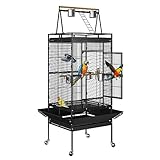
- 🍃【Durable & Sturdy】This bird cage is constructed of strong wrought metal frame and wires with epoxy coated finish, durable for years of use. Smooth surface and non-toxic material offer your birds a safe and healthy environment.
- 🍃【Spacious Space】This 68’’ bird cage with large space suitable for accommodating several birds. It's the ideal size for Lovebirds, Cockatiels, Parakeets, and other medium sized birds. Simple and stylish design matches well with all the furniture. It’s also an attractive decoration in flower shops.
- 🍃【Additional Top Play Area】 Play top with ladder design provides your birds with an out-of-cage play time, you could better interaction with your birds. Further more, birds can stand on top perch for relax, training purpose, also have 2 cups on the tops for eating and drinking. Large Front Door allow quick access to your bird.
- 🍃【Thoughtful Design】5 Stainless steel cups, 3 feeder doors with locks for easy feeding. Heavy-duty push button door lock keeps your bird secure. 2 hardwood perches to stand on for resting and more exercise. Tall stand for higher cage situation where birds love to stay.
- 🍃【Easy Cleaning and Moving】Top and bottom removable plastic slide-out trays for easy cleaning! 4 strong swivel casters help you to move around without noise, it makes the place of the bird is flexible.
Conservation and legal considerations
The species is globally classified as Least Concern because it has a large range and substantial population. That status does not remove concerns about local habitat loss, trapping, illegal trade, welfare, or the effects of introduced populations.
In places where it has been introduced, rose-ringed parakeets may compete with native cavity-nesting birds or damage crops. The scale of those effects varies by location and should not be assumed from reports in another country.
The Tool Desk
Outbyte PC Repair FREEClear out junk files and repair common Windows errorsFree Scan →Outbyte Driver Updater FREEFix the driver behind crashes, sound loss and screen glitchesFind Drivers →Psittacula krameri is currently excluded from the CITES appendices, but CITES status is not the same as a universal ownership permit. Importation, sale, release, transport, and possession may still be regulated by national, state, provincial, or local law. Check the rules where you live before buying or moving a bird, and never release a pet parrot outdoors.
Common Indian Ringneck misconceptions
| Claim | What is actually true |
|---|---|
| “Indian Ringneck is its own species.” | It is a common name for the rose-ringed parakeet, especially the Asian form and captive birds. |
| “No neck ring means the bird is female.” | Young males and females can look alike until mature plumage develops. |
| “The species comes only from India.” | It is native to both Africa and Asia. |
| “Every Ringneck will talk.” | Speech ability varies; some birds talk extensively and others do not. |
| “Seeds are a complete diet.” | An all-seed diet is not a generally safe or balanced feeding plan. |
| “A feral flock proves the birds are native.” | Introduced populations can originate from escapes or releases. |
| “Color mutations are different species.” | Blue, lutino, albino, pied, and other colors are captive varieties of the same species. |
FAQ
How can you tell whether an Indian Ringneck is male or female?
A mature male usually develops a black-and-pink or reddish neck ring, while females generally do not. However, juvenile males resemble females, and the ring may not appear until roughly 2–2.5 years. DNA testing is the more reliable option for sexing a young bird.
Do Indian Ringnecks make good talking pets?
They are capable of learning human speech, but no individual bird is guaranteed to talk. Some develop large vocabularies, while others mainly use whistles, contact calls, and household sounds. Talking ability also does not guarantee that a bird will enjoy being handled.
What should an Indian Ringneck eat?
Do not feed an Indian Ringneck an all-seed diet. Work with an avian veterinarian or qualified avian-care professional to provide an appropriate formulated food, measured fresh produce, clean water, and limited treats.
How long do Indian Ringneck parakeets live?
A captive lifespan of about 20 years is a reasonable typical figure, although individual birds may live longer. Their care needs, veterinary costs, and social requirements make them a long-term commitment.
The Bottom Line
The Indian Ringneck is an intelligent, noisy, long-lived parrot—not a separate species and not a guaranteed talking or cuddling pet. It can thrive with spacious housing, daily exercise, enrichment, a balanced diet, patient training, and avian veterinary care. Choose one for its individual temperament and your ability to meet its needs, not simply for its color or reputation as a talker.





Leave a Reply