
Quick wins for a faster PC:
Clear out junk files and repair common Windows errorsFree Scan →Scan for outdated or missing drivers - takes under a minuteDriver Scan →There is no single spray, fogger, or air purifier that can make an occupied veterinary clinic, shelter, boarding facility, or grooming business sterile. A safer environment comes from a layered program: remove soil, disinfect surfaces with an EPA-registered product exactly as its label directs, clean shared animal-care items, provide appropriate ventilation, supplement it with well-selected filtration when useful, and train staff to prevent chemical exposure and cross-contamination.
“Complete disinfection” is therefore an operational goal rather than a guarantee. The right program depends on the animals, room uses, surfaces, pathogens of concern, building systems, and local requirements.
As an Amazon Associate I earn from qualifying purchases.
What complete indoor disinfection really means
In an animal-care facility, infection control has two connected but different jobs:
Free tools Windows power users keep installed
One-click scans. No signup required.
- Surface control: remove organic soil and disinfect touch points, cages, equipment, and other items that can carry contamination.
- Air-quality control: dilute and remove airborne particles through ventilation and, where appropriate, recirculating filtration.
Neither job replaces the other. A filtered room can still have contaminated exam tables, cage latches, bowls, or hands. Conversely, spotless surfaces do not remove airborne dander, respiratory particles, or allergens. CDC environmental-control guidance emphasizes cleaning based on the area, surface, and amount of soil, while EPA describes ventilation as a way to dilute and remove biological pollutants.
#1 Best Overall

- Used by Vets, Loved by Pets - Kill pathogens in as little as 60 seconds with Rescue. Prevents outbreaks and kills a broad-spectrum of pathogens - including canine parvovirus
The CDC recommendation to “Select EPA-registered disinfectants, if available, and use them in accordance with the manufacturer’s instructions” applies to environmental surfaces; the current label determines the organisms, materials, application method, wet contact time, personal protective equipment (PPE), ventilation, rinsing, and animal re-entry directions that are actually supported (CDC Environmental Services).
CDC also advises, in guidance about animals treated in human healthcare facilities, to “Allow sufficient ACH to clean the air and help remove airborne dander, microorganisms, and allergens.” That wording is not a universal numeric HVAC standard for veterinary facilities. A clinic or shelter should obtain facility-specific advice from a qualified HVAC professional and comply with applicable local rules.
Start with a facility-specific risk map
Before selecting products or setting a schedule, identify where contamination is most likely and how people, animals, equipment, and air move through the building. Put the result in a written cleaning and infection-control procedure.
Divide the building into operational zones
- Routine-care areas: reception, waiting rooms, general exam rooms, treatment rooms, grooming tables, kennels, and common exercise areas.
- Higher-risk areas: isolation rooms, surgery or procedure spaces, quarantine areas, intake rooms, laundry, waste-handling points, and locations where feces, urine, blood, vomit, or respiratory secretions may be present.
- Shared-equipment routes: scales, carriers, leashes, muzzles, thermometers, clippers, transport carts, keyboards, phones, and restraint equipment that move between rooms.
For each zone, record the surfaces present, the likely soils, the animals’ access, the staff responsible, and the required sequence of cleaning, disinfection, drying, and re-entry. A schedule should be based on use and contamination risk rather than a copied “one-size-fits-all” interval; CDC does not establish one universal interval for every animal-care setting.
Rank #2
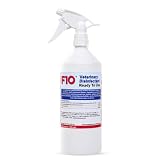
- READY TO USE DISINFECTANT: F10 Ready To Use Disinfectant is a pre-diluted veterinary disinfectant spray that requires no measuring or dilution. Simply apply directly to compatible hard surfaces for convenient daily hygiene.
- BROAD SPECTRUM VETERINARY DISINFECTANT: EPA registered formula designed to support effective control of bacteria, viruses, fungi, and spores as specified on the approved label. Ideal for professional animal care environments.
- MULTI PURPOSE PET & ANIMAL AREA CLEANER: Suitable as a kennel disinfectant, cage cleaner, terrarium disinfectant, bird cage cleaner, and animal habitat cleaner for veterinary practices, breeders, shelters, and pet owners.
- LONG LASTING SURFACE PROTECTION: F10 formula remains effective after application and air drying, helping maintain hygienic surfaces without requiring rinsing when used according to label directions.
- TRUSTED ANIMAL CARE FORMULA: Widely used by veterinary professionals, zoological institutions, reptile keepers, avian breeders, and exotic animal owners for routine hard surface disinfection and biosecurity.
Mark high-touch points
Environmental transfer to patients is largely associated with hand contact, so pair surface work with hand hygiene. Include exam tables, cage doors and latches, doorknobs, faucet handles, sinks, light switches, counters, computer input devices, treatment carts, and frequently handled storage bins. CDC veterinary material specifically calls out cages, toys, food and water bowls, exam tables, cage latches, doorknobs, faucets, and sinks (CDC Carbapenem-resistant Enterobacterales and Veterinarian Basics).
Use a label-directed surface-disinfection sequence
The following sequence is a framework. The product label and your facility procedure control the details. Never infer a dilution, organism claim, contact time, or re-entry rule from a retailer description or the phrase “hospital grade” or “natural.”
- Control access. Remove animals, food, water, bedding, and unnecessary equipment when the label or your risk assessment requires it. Prevent people and animals from touching wet product.
- Put on the label-specified PPE. Check gloves, eye protection, protective clothing, respiratory protection, ventilation, and first-aid instructions before opening the container.
- Remove visible soil. Pick up feces, hair, bedding, and other debris and clean the surface when the directions require pre-cleaning. Organic material can interfere with disinfectant performance.
- Prepare the product exactly as directed. Use the labeled concentration, water quality, container, and mixing method. Do not mix disinfectants, detergents, acids, or bleach products unless the label expressly permits the combination.
- Apply only by an authorized method. Use a wipe, cloth, mop, spray, or other application method named on the label. Avoid aerosolizing liquid around animals or staff.
- Keep the surface visibly wet for the full labeled contact time. Reapply if it dries early. Contact time is not the same as the time needed to spray or wipe.
- Rinse, wipe, or dry as directed. Some surfaces or animal-contact items require a potable-water rinse; others must remain undisturbed until dry. Follow the label rather than assuming rinsing is harmless or unnecessary.
- Restore the room only when permitted. Observe animal re-entry, ventilation, and odor requirements. Replace clean bedding, food, and water after the surface is safe and dry.
- Finish with hand hygiene and documentation. Wash or sanitize hands as appropriate, remove PPE safely, and record the room, product, concentration, start time, and any exception or spill.
CDC’s broader environmental-infection-control recommendations provide additional principles for selecting and using registered products (summary recommendations and full recommendations). The CDC facility-cleaning guide also explains when cleaning and disinfection are needed (When and How to Clean and Disinfect a Facility).
PC Slower Than It Used to Be?
A free scan shows the junk files, broken settings and background clutter dragging Windows down - then fixes them in one click.Free scan · Windows 10 & 11Crashes, No Sound, or Screen Glitches?
Random freezes, missing sound and display glitches usually trace back to one bad driver. Find and replace yours safely.Free scan · under a minuteHow to compare surface disinfectants
Choose a category such as an EPA-registered veterinary disinfectant, then verify the current label for the exact job. Two products that appear similar may differ substantially in organisms covered, material compatibility, fumes, and animal-safety instructions.
Rank #3

- Fast-Acting Disinfectant Concentrate – Dilute 1:16 to kill Ringworm, Influenza, Feline Calicivirus, Kennel Cough, and Parvovirus in just 5 minutes with trusted veterinary-grade disinfecting power.
- Versatile for Every Setting – Ideal for litter boxes, kennels, cages, counters, grooming tools, vet clinics, rescues, and homes needing a dependable, pet-friendly disinfectant cleaner.
- Trusted Around Pets – Rescue disinfectant is veterinarian-recommended for use around animals, staff, and families when used as directed, helping disinfect pet spaces while controlling odors.
- Clean Scent, No Harsh Residue – This disinfecting cleaner eliminates odors without overpowering chemical smells, leaving surfaces fresh and safe for daily use in animal care spaces.
- Hard & Soft Surface Cleaner – Disinfect hard, nonporous surfaces and use as a spot cleaner on fabrics and other soft surfaces after pet accidents for dependable everyday cleaning.
| Label detail | What to verify before use |
|---|---|
| Target organisms | Whether the label includes the bacteria, viruses, fungi, or other pathogens relevant to your facility; registration does not mean effectiveness against every organism. |
| Site and surface | Whether the product is approved for floors, stainless steel, plastics, fabrics, cages, food-contact items, or other materials you intend to treat. |
| Application method | Whether wiping, mopping, spraying, soaking, or another method is authorized; broad-area application may have additional restrictions. |
| Dilution and wet contact time | The exact mixing ratio and the time the surface must stay wet under the stated conditions. |
| Worker protection | Required gloves, eye protection, clothing, ventilation, storage, spill response, and disposal instructions. |
| Animal precautions | Whether animals must be removed, whether surfaces need rinsing, and when animals may return. |
Keep the label and safety data sheet accessible in the cleaning area. Review them whenever the manufacturer changes instructions or you switch formulations.
Clean cages, bowls, toys, and reusable equipment
Animal-care items are part of the environment, not an exception to it. Clean and disinfect cages, carriers, toys, feeding and water bowls, litter tools, grooming tools, examination equipment, and restraint devices between uses and whenever visibly dirty, using a product and method compatible with the item.
Use a one-way workflow
- Move used items to a designated dirty holding point in closed or otherwise controlled containers.
- Clean them in a way that does not splash contamination onto clean supplies.
- Disinfect, observe the full wet contact time, rinse when required, and allow complete drying.
- Store finished items separately from used items and identify them clearly.
Porous, cracked, rusted, or damaged materials may be impossible to disinfect reliably. Remove them from service when they cannot be cleaned according to the label. Do not return food or water containers until all chemical residues and odors are addressed as directed.
Improve indoor air without overpromising
Ventilation is the first layer
Ventilation introduces outdoor air and removes or dilutes indoor contaminants. Work with an HVAC professional to assess outdoor-air supply, exhaust, pressure relationships, filtration, humidity, maintenance, and the special needs of isolation or procedure rooms. The correct setting depends on the building and use; no single air-change rate is established here for every veterinary clinic, shelter, boarding facility, or grooming business.
Rank #4

- PROFESSIONAL VETERINARY DISINFECTANT CLEANER - EPA-registered multi-surface cleaner designed for veterinary clinics, animal shelters, boarding facilities, and kennels. Ideal for routine cleaning of floors, crates, kennels, litter boxes, and pet carriers.
- HELPS CONTROL CONTAGIOUS PATHOGENS - Formulated to target animal-related pathogens, including canine parvovirus, bacteria, and fungi. Supports strict biosecurity practices in animal hospitals, shelters, and professional pet care environments.
- SAFE FOR DAILY FACILITY USE - Designed to clean and disinfect high-contact surfaces while being gentle on equipment and facility areas. Helps maintain hygienic environments without harsh, damaging cleaning agents.
- CONCENTRATED FORMULA FOR HIGH-VOLUME CLEANING - A powerful kennel cleaner concentrate that creates large volumes of ready-to-use solution. Helps reduce product usage and supports cost-effective cleaning routines for veterinary and shelter operations.
- DEODORIZES WITH FRESH WINTERGREEN SCENT - Cleans, sanitizes, and helps neutralize stubborn odors in kennels, shelters, and veterinary facilities. Leaves animal care areas smelling fresh and professionally maintained.
Do not block supply or return grilles with cages, storage, curtains, or stacked bedding. Keep exhaust pathways clear, maintain filters on the building’s schedule, and investigate rooms that remain stuffy, damp, smoky, or odorous despite normal operation.
Use filtration as a supplement
A properly selected portable air cleaner or upgraded HVAC filter can reduce airborne particles in a room, but it does not disinfect tables, cages, bowls, or hands and does not guarantee pathogen-free air. When comparing devices, check:
- Whether the unit adds outdoor air or only recirculates room air through a filter.
- Room-size assumptions and independently documented clean-air delivery performance.
- Filter replacement frequency, cost, access, and disposal.
- Noise, airflow, tipping risk, cord placement, and animal interaction.
- Whether the device emits ozone or other by-products.
EPA discusses air cleaners and HVAC filters as supplementary measures for respiratory-virus particles (EPA Air Cleaners, HVAC Filters, and Respiratory Viruses). EPA also describes biological contaminants and the roles of source control, ventilation, and filtration (EPA Biological Contaminants and Indoor Air Quality).
The Tool Desk
Outbyte PC Repair FREEClear out junk files and repair common Windows errorsFree Scan →Outbyte Driver Updater FREEFix the driver behind crashes, sound loss and screen glitchesFind Drivers →Reject ozone and unsupported fogging claims
Ozone generators should not be presented as a way to sanitize occupied animal-care rooms. EPA states that ozone concentrations within public-health standards do not effectively remove viruses, bacteria, mold, or other biological pollutants. If a bipolar-ionization device is considered, EPA recommends looking for UL 2998 certification as validation of zero ozone emissions; that certification still does not make the device a substitute for cleaning and ventilation.
Best Value

- PROFESSIONAL VETERINARY DISINFECTANT: F10 SC is an EPA registered concentrated veterinary disinfectant formulated for use in animal care environments. Its broad spectrum formula helps support effective hygiene on compatible hard, non porous surfaces when used according to label directions.
- BROAD SPECTRUM PERFORMANCE: Effective against bacteria, viruses, fungi, and spores. The fast acting formula is designed for routine infection control in veterinary clinics, kennels, shelters, and other professional animal care facilities.
- HIGHLY CONCENTRATED & ECONOMICAL: Designed for efficient daily disinfection, F10 SC uses a 1:250 standard dilution ratio (4 mL per liter), providing a practical and cost effective solution for veterinary clinics, kennels, shelters, and other animal care facilities.
- NON CORROSIVE & ODORLESS: Designed for compatible hard, non porous surfaces, the non corrosive, odorless formula leaves no harmful residues when used according to label directions. Suitable for use in environments where animals are present after proper dilution.
- IDEAL FOR PROFESSIONAL ANIMAL CARE: Suitable for veterinary clinics, animal hospitals, kennels, shelters, bird cages, reptile habitats, small animal enclosures, litter box areas, and compatible hard surfaces. Can also be used for approved fogging applications in hospitals and theaters according to label directions.
CDC states plainly, “CDC does not support disinfectant fogging” for disinfecting room air or decontaminating environmental surfaces (CDC Disinfection and Sterilization recommendations). Do not fog or spray broad areas by default. Use a particular application only when its current label authorizes it and the facility can meet every access, PPE, ventilation, exposure, and residue precaution.
Protect staff, animals, and visitors
Assign responsibility for each area and shift. Training should cover label reading, measuring and mixing, PPE, ventilation, spill response, first aid, hand hygiene, dirty-to-clean movement, sharps and waste, and what to do when an animal enters a wet or restricted area.
- Keep concentrates in their original, labeled containers; never transfer them to an unmarked bottle.
- Store chemicals away from food, medications, bedding, and animal access.
- Provide a sink or other appropriate hand-hygiene station near work areas.
- Do not eat, drink, or handle personal items while cleaning.
- Report symptoms, spills, damaged containers, and ventilation failures promptly.
- Coordinate with occupational-safety and veterinary professionals when products or procedures change.
Written procedures should identify who cleans, who verifies completion, how exceptions are recorded, and how often supervisors audit the process. Compliance matters as much as the chosen product.
Check performance and correct failures
Use simple, observable checks rather than assuming a room is safe because it smells clean.
- Visible soil remains: stop and repeat the cleaning step before disinfecting.
- Surface dries before contact time: apply enough product, improve technique, or select a label-approved method that can stay wet for the required time.
- Animals react to fumes or residues: remove them, ventilate as directed, consult the label and a veterinarian, and reassess the product or application.
- Repeated contamination between rooms: review staff movement, glove changes, equipment transport, laundry, and hand hygiene.
- Persistent odors, condensation, or respiratory complaints: have ventilation and moisture conditions evaluated rather than relying on more disinfectant.
- Unclear product instructions: pause use and obtain the current manufacturer label or professional advice.
Document corrective actions and review trends. A safer facility is one in which the routine is practical, verifiable, and adapted when animals, rooms, products, or building systems change.
Quick Recap
Product prices and availability are accurate as of the date/time indicated and are subject to change. Any price and availability information displayed on Amazon at the time of purchase will apply.





Leave a Reply