Quick wins for a faster PC:
Clear out junk files and repair common Windows errorsFree Scan →Scan for outdated or missing drivers - takes under a minuteDriver Scan →“Asian carp” is a common collective name for four different introduced fish: bighead, silver, grass, and black carp. They can harm freshwater ecosystems in different ways, become abundant in suitable rivers, and make boating unsafe when silver carp leap near boats. The risks depend on the species and location; one sighting alone does not prove a reproducing population is established.
Which fish are called Asian carp?
The U.S. Geological Survey adopted “invasive carp” as its collective term in 2021. The four species have different diets and concerns:
| Species | Main food | Primary concern |
|---|---|---|
| Bighead carp | Plankton | Competition with native fish for microscopic food |
| Silver carp | Plankton | Food-web impacts and dangerous jumping around boats |
| Grass carp | Aquatic plants | Loss of vegetation that provides habitat and protects shorelines |
| Black carp | Mollusks, including mussels and snails | Pressure on freshwater mussels and other native shellfish |
Common carp are a separate, long-established nonnative species and are not one of these four. USGS explains the distinction and terminology.
Why invasive carp harm native ecosystems
Bighead and silver carp compete for plankton
Bighead and silver carp filter-feed on plankton, tiny plants and animals that form the base of many freshwater food webs. Young native fish often depend on plankton as they develop, so dense carp populations can change how much food is available and which plankton species remain.
Free tools Windows power users keep installed
One-click scans. No signup required.
#1 Best Overall

- QUIET AQUARIUM FILTER: The Tetra Whisper IQ Power Filter with Stay Clean technology contains a sound shield for quiet filtration less than 40 dB.
- SELF PRIMING: Submerged motor starts up with no priming required.
- CAPACITY: The Tetra Whisper IQ 20 Power Filter works in filters up to 20 gallons (130 GPH).
- STAY CLEAN TECHNOLOGY: By maintaining healthy pH levels, creates easier maintenance for healthier fish.
- CARTRIDGE REFILLS: Change cartridges monthly; uses large-sized Tetra Whisper Bio-Bag Filter Cartridges (refills sold separately).
These fish do not simply consume every available food particle or automatically eliminate native fish. Impacts vary by river, habitat, food supply, carp density, and the species already living there. Studies of invaded rivers have documented changes in fish-community structure, including lower abundance of some sportfish and other native groups. USGS research and its strategic framework describe these food-web concerns.
Grass carp remove aquatic vegetation
Grass carp eat aquatic plants. Vegetation can provide nursery and hiding habitat for fish, support waterfowl, and help protect shorelines from erosion.
Heavy grazing by numerous grass carp can reduce plant cover, simplify habitat, and remove places where native animals feed, shelter, or reproduce. Grass carp have also been detected across a wider geographic area than some other invasive carp species, making prevention and local monitoring important.
Black carp threaten freshwater mussels
Black carp primarily eat mollusks such as freshwater mussels and snails. North America has unusually diverse freshwater mussel populations, many of which are imperiled. A reproducing black carp population could add pressure to those animals.
Black carp are captured less often than bighead, silver, and grass carp in many areas, but lower detection is not proof of low risk. Early detection matters because removing a small or newly established population is more realistic than controlling one spread throughout a major river system.
Rank #2

- QUIET AQUARIUM FILTER: The Tetra Whisper IQ Power Filter with Stay Clean technology contains a sound shield for quiet filtration less than 40 dB.
- SELF PRIMING: Submerged motor starts up with no priming required.
- CAPACITY: The Tetra Whisper IQ 45 Power Filter works in tanks up to 45 gallons (215 GPH).
- STAY CLEAN TECHNOLOGY: By maintaining healthy pH levels, creates easier maintenance for healthier fish.
- CARTRIDGE REFILLS: Change cartridges monthly; uses large-sized Tetra Whisper Bio-Bag Filter Cartridges (refills sold separately).
Why do invasive carp spread so effectively?
Invasive carp can grow quickly and reproduce successfully in suitable rivers. Bighead, silver, grass, and black carp spawn in turbulent rivers; their eggs drift downstream before hatching, and the larvae must reach suitable nursery habitat. Successful reproduction depends on river conditions, so entering a waterway does not automatically result in a self-sustaining population.
Managers look for repeated captures of young and adult fish from multiple year classes as evidence that a population is reproducing. Suitable flow, temperature, spawning habitat, and nursery areas matter. Once these conditions are present, high reproduction and few effective population-level controls can allow numbers to increase. Connected rivers and canals can provide routes into new waters. The Invasive Carp Regional Coordinating Committee FAQ explains how establishment is assessed.
How did they get into the United States?
Bighead, black, grass, and silver carp were imported during the 1970s and, in some cases, the 1980s for uses including aquaculture, algae control, vegetation control, and management of nuisance organisms. Fish escaped or were released from confinement, including during floods, and spread through the Mississippi River Basin and connected waterways.
The history is more complicated than a single deliberate release by one agency or organization. Documented pathways include legitimate commercial or management introductions, escapes, flood-related movement, and additional human-assisted spread. USGS provides background on their introduction.
Never release an aquarium fish, pond fish, or bait into a river, lake, or storm drain. A fish that seems harmless in captivity can become an ecological problem if it survives and reproduces in local waters. Follow state rules for possession, transport, and disposal of unwanted fish.
Rank #3
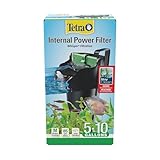
- INTERNAL POWER FILTER: Tetra Whisper Internal Power Filter for 5- to 10-gallon aquariums uses medium Whisper BioBag filter cartridges that are easy to change.
- QUIET 85 GPH MOTOR: The internal pump efficiently filters up to 85 gallons per hour.
- POWERFUL FILTRATION: Water flows through the cartridge floss, trapping debris and fish waste, while Ultra-activated carbon helps remove odor and discoloration.
- SPACE-SAVING DESIGN: Your aquarium can be 1” from the wall with the internal filter designed to clip directly on your aquarium wall and be hidden by décor.
- EASILY ADJUSTABLE: Adjustable clip allows for a variety of setups to easily adjust to high or low water levels.
Why silver carp are dangerous to boaters
Silver carp can leap from the water when startled by boat motors and other disturbances. Large fish may hit people, damage boats, and cause falls or collisions. In heavily infested areas, boating, fishing, and other water recreation can become unsafe.
This is primarily a silver carp problem, not a behavior shared equally by all four species. The Invasive Carp Regional Coordinating Committee FAQ describes the risk.
What’s actually slowing this PC down?
Pick the symptom - the matching free tool is one click away.
Where are they found?
Bighead and silver carp are established through much of the middle and lower Mississippi River Basin and major tributaries, including the Illinois River. Black carp have been captured in the lower Mississippi River and some tributaries, including the lower Illinois River. Grass carp have been detected in many waters outside the Mississippi Basin. The Invasive Carp Regional Coordinating Committee distribution maps provide current distribution information.
Why are the Great Lakes a major concern?
The Chicago Area Waterway System connects the Mississippi River Basin with Lake Michigan, creating a potential pathway into the Great Lakes. The Great Lakes support major commercial and recreational fishing and boating economies, so managers are trying to prevent establishment rather than wait for a large population to develop.
The Great Lakes situation requires careful wording:
Rank #4

- Powerful Pump: 300 GPH water pump effectively filters 55-150 gallons; ideal for large aquariums, turtle tanks, and ponds.
- Enhanced Aeration: Equipped with an adjustable valve to increase oxygen levels, promoting healthier, more active fish and turtles.
- Double Deep Filtration: Dual-stage black biochemical sponge removes odors and impurities; keeps water clear and fresh.
- Dynamic Water Flow: Boosts wave size and surface movement; improves circulation for a healthier aquatic environment.
- Adjustable Body: The aquarium filter features a detachable design. For tanks under 15 inches tall, you can lay the filter flat or remove the lower half of the filter sponge for a better fit.
- There is currently no evidence of self-sustaining bighead, black, or silver carp populations in the Great Lakes.
- Grass carp have been detected in every Great Lake except Lake Superior.
- A grass carp population currently exists in western Lake Erie.
- One detected fish does not by itself prove that a reproducing population is established.
The committee FAQ provides details on detections and population status.
How are managers controlling invasive carp?
Eradicating a species broadly established in a large, open river system is generally considered impractical. Management focuses on suppressing populations where they are abundant, preventing movement into uninvaded waters, and detecting new populations early.
- Targeted removal: Commercial fishers and agencies capture carp, particularly where suppression can reduce adult abundance.
- Monitoring: Nets, electrofishing, telemetry, and environmental DNA help locate fish and assess whether a population may be reproducing.
- Deterrents and barriers: Electric barriers and other technologies can discourage movement through selected pathways; barriers are also used at selected tributary pathways.
- Research: Scientists are testing acoustic, bubble, electric, and other behavioral deterrents.
- Prevention: Regulations, inspections, and public education aim to prevent new introductions and transport.
In 2025, partners removed more than 7 million pounds of invasive carp from the Illinois River, according to the Invasive Carp Regional Coordinating Committee’s 2025 annual update. The upper-river effort is intended to suppress adult populations, reduce reproduction, and limit movement toward electric dispersal barriers near Lake Michigan.
The Brandon Road Interbasin Project near Joliet, Illinois, is under construction as of 2026. Its planned layered defenses include an automated barge-clearing deterrent, bubble curtain, acoustic deterrent, flushing lock, engineered channel, and electric deterrent. The project is designed to reduce upstream movement of invasive carp and other aquatic nuisance species while maintaining navigation. See the U.S. Army Corps of Engineers project page.
Independent reader supportYour contribution helps us test, update, and keep practical guides available for everyone.How much does the problem cost?
A 2025 USGS study estimated that federal and state agencies had spent nearly $592 million on cumulative invasive-carp management costs by 2020. The study also estimated more than $10 million in recreational-fishing value lost over 10 years in a heavily invaded section of the Illinois River.
The Tool Desk
Outbyte PC Repair FREERepair Windows errors before they cause bigger problemsFix Now →Outbyte Driver Updater FREEFix the driver behind crashes, sound loss and screen glitchesFind Drivers →Best Value

- WITH ROTATING BIO-WHEEL: Patented Bio-Wheel technology provides excellent wet/dry biological filtration.
- MULTI-STAGE FILTRATION: Delivers mechanical, chemical and biological aquarium filtration to maintain a clean aquatic environment.
- MARINELAND FILTRATION PRODUCTS: Count on Marineland brand for the most reliable, technically advanced aquariums and accessories on the market.
- COMPATIBILITY: Use with Marineland Rite-Size Filter Cartridges (see individual filter for sizing recommendations).
- FIVE SIZES: Available in 75 GPH, 100 GPH, 150 GPH, 200 GPH and 350 GPH sizes.
Those figures do not represent every ecological or economic effect. They illustrate why prevention can be less expensive than managing a large, established population.
FAQ
Are Asian carp dangerous to people?
They are not generally a human health threat, but jumping silver carp can strike boaters, damage boats, and cause injuries in heavily infested waters. The safety risk is mainly associated with silver carp and boat disturbance.
Are Asian carp established in the Great Lakes?
There is currently no evidence of self-sustaining bighead, black, or silver carp populations in the Great Lakes. Grass carp have been detected in all Great Lakes except Lake Superior, and a grass carp population exists in western Lake Erie. Individual detections alone do not prove an established reproducing population.
Can invasive carp be eradicated?
Once a species is broadly established in a large, open river system, complete eradication is generally considered impractical. Managers focus on population suppression, early detection, and preventing movement into uninvaded waters.
Windows Errors? Fix Them Before They Spread
Repair common Windows errors and clear accumulated junk for a smoother, more stable PC - no reinstall needed.Free scan · no reinstallCrashes, No Sound, or Screen Glitches?
Random freezes, missing sound and display glitches usually trace back to one bad driver. Find and replace yours safely.Free scan · under a minuteWhat should pet and pond owners do with unwanted fish?
Never release aquarium or pond fish into natural waterways, storm drains, or nearby lakes. Contact local wildlife or fisheries authorities for legal disposal and surrender options, and check state rules before transporting or giving away a fish.
The Bottom Line
Invasive carp are a problem because the four species can place different kinds of pressure on freshwater ecosystems: bighead and silver carp consume plankton, grass carp remove aquatic vegetation, and black carp eat mussels and snails. They can become abundant in suitable rivers, interfere with boating, and threaten connected waters such as the Great Lakes. Their impacts are real but vary by species and location; “Asian carp” is not one fish, and a single sighting does not prove a reproducing population is established.
Quick Recap
Product prices and availability are accurate as of the date/time indicated and are subject to change. Any price and availability information displayed on Amazon at the time of purchase will apply.




