Recommended Free Tools
RO/DI water can be good for freshwater fish, but it is not automatically ready for an aquarium. Reverse osmosis and deionization remove much of the dissolved material, including minerals that affect hardness and buffering. You may need to add minerals and set the water chemistry for your particular fish. If your conditioned tap water is already stable and suitable, switching to RO/DI is not necessarily an improvement.
What RO/DI water does—and what it does not do
RO/DI means water processed by reverse osmosis and deionization. The treatment removes much of the water’s dissolved content, giving you a more controlled starting point than a variable tap supply. That control can help if your tap water is too hard, inconsistent, or otherwise unsuitable for the fish you keep.
As an Amazon Associate I earn from qualifying purchases.
But low-mineral water is not a finished aquarium recipe. The Ornamental Aquatic Trade Association (OATA) notes that RO water contains little to no minerals and may need remineralizing and buffering to suit the species. Its RO guidance appears on a brackish-fish page, so it is useful for this general chemistry point—not as a freshwater species-care target. OATA’s RO-water guidance
Do not assume that clear water is safe or that RO/DI alone solves aquarium problems. Water chemistry is only one part of husbandry; it cannot compensate for an uncycled filter or unsuitable stocking.
#1 Best Overall
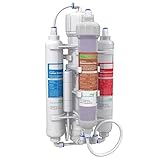
- CLEAN, FILTERED WATER FOR AQUARIUMS: The Aquatic Life RO Buddie 4-Stage RO/DI water filter system for aquarium uses reverse osmosis to remove debris from tap water to give you clean water for your fish tanks, humidifiers, fountains, and more.
- WHAT THE SEDIMENT FILTER DOES: Water is filtered through a sediment filter in this reverse osmosis aquarium filter system that catches dirt like sand, silt, and more, which affects the quality and appearance of water.
- REMOVES CHLORINE AND ODORS: The carbon block filter in this water filter helps take out chlorine and unpleasant smells, so water is safer for fish and plants (Note: it won’t remove chloramines).
- THE RO MEMBRANE FILTER: The RO membrane filter in this RO water filtration system for aquariums filters almost everything else, removing most total dissolved solids, turning tap water into much cleaner water which is gentler for sensitive aquatic life.
- FINAL POLISH: After the RO membrane, water passes through a color-changing deionizing resin in this RO/DI reverse osmosis system to remove the remaining TDS, and changes color from blue to tan so you can see when it needs replacing; If you want full performance specs, download the product’s technical PDF for info
Choose water for the fish, not a universal number
Freshwater species differ in their preferred water conditions. Before choosing a target, identify the requirements of your fish—and plants, if you keep them—and use species-specific husbandry guidance. There is no single ideal freshwater pH or hardness value for every aquarium. OATA’s freshwater care guidance discusses species requirements, while its water-testing guidance covers monitoring and water quality.
In particular, consider general hardness (GH), carbonate hardness (KH), and pH together. GH reflects dissolved minerals; KH relates to buffering capacity, which helps resist pH changes. Which values are appropriate depends on the livestock. Do not chase a particular pH by making abrupt changes: OATA warns that sudden pH shifts can make water too acidic or too alkaline for fish.
Rank #2
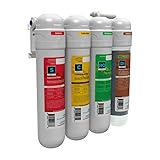
- COMPLETE 4-STAGE SYSTEM – The Aquatic Life Twist-In 4-Stage RO/DI water filter combines Sediment, Carbon, RO Membrane, and Color-Changing DI Resin stages to produce up to 75 gallons per day of purified water for aquariums and other applications.
- SEDIMENT & CARBON FILTRATION – Removes dirt, sand, rust, and chlorine that can cloud water or stress fish. (Note: this system does not remove chloramines.)
- HIGH-EFFICIENCY RO MEMBRANE – The reverse osmosis membrane reduces Total Dissolved Solids (TDS) at a 1:10,000 ratio, creating very pure water that’s gentler on sensitive aquatic life.
- FINAL DI RESIN POLISH – Mixed-bed deionization resin removes the last traces of total dissolved solids. Resin changes from blue to tan so you always know when it’s time to replace.
- EASY TWIST-IN CARTRIDGES – Quick-change cartridges twist in and out with no tools required, making filter maintenance fast and simple.
Compare your practical water options
| Water option | When it may fit | What to manage |
|---|---|---|
| Conditioned tap water | When its chemistry is stable and suits the species | Test it, account for local treatment or contaminant concerns, and condition it appropriately before use. |
| Tap/RO blend | When straight tap water is too hard or otherwise misses the target, and blending can produce suitable water | Test the blend rather than relying on an assumed ratio; local source water can vary. |
| Remineralized RO/DI water | When you need a controlled starting point, such as when tap water is unsuitable | Restore minerals and buffering as needed, then test the prepared water and reproduce the same target for future changes. |
No option is best for every keeper. RO/DI can add equipment, ongoing expense, preparation, and testing without a clear benefit if tap water already meets the fish’s needs.
Prepare RO/DI replacement water consistently
- Check the livestock’s requirements. Establish a suitable target for GH, KH, and pH from species-specific care information before mixing water.
- Test your source water. Measure the tap water or RO/DI water you intend to use. Do not infer mineral content from appearance.
- Remineralize or blend to the target. Use a product or blending approach appropriate to the species, following the product’s directions. There is no universal dose or tap-to-RO ratio.
- Test the prepared replacement water. Confirm its chemistry before adding it, and use the same preparation routine at later water changes.
- Monitor the aquarium. Check relevant parameters regularly and avoid sudden shifts. OATA says ammonia and nitrite should always be zero; its water-quality advice also identifies pH and hardness as useful tests.
For a sense of how specific a recipe can be, a 2024 published husbandry protocol reports that its laboratory remineralizes RO water with Tropic Marin Re-mineral Tropic to a TDS of 95–105 ppm. In that laboratory’s protocol for soft-water Amazonian fish, typical readings are pH 6.5–7.2, GH 71.2–89 ppm, and potassium 35.6–53.4 ppm. Those are the authors’ laboratory conditions, not a general target for freshwater aquariums. 2024 Corydoras and Amazonian species husbandry protocol
Rank #3
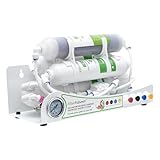
- Professional 4-Stage Precision Filtration for Sensitive Aquatic Creatures: Adopts 4-stage filtration with PP cotton, activated carbon, RO reverse osmosis membrane and DI deionization resin. The front filter elements efficiently remove sediment, chlorine and organic matter; the RO membrane filters out up to 99% of soluble impurities and heavy metals; the DI resin adsorbs residual ions to produce ultra-pure water, suitable for sensitive creatures such as corals and crystal shrimp
- TDS Monitoring for Aquatic Health: RO+DI dual-core filtration process continuously outputs ultra-pure water with TDS value close to 0, fundamentally eliminating harmful minerals and pollutants, preventing algae growth and fish diseases, and safeguarding the stable ecology of marine tanks, breeding tanks and high-end planted tanks
- Wall-Mounted Design for Space Efficiency: Equipped with a sturdy metal wall-mounted bracket, it can be easily installed on walls, fish tank cabinets or workrooms, stably supporting the main unit and DI unit, saving countertop space, keeping the work area tidy, and suitable for various scenarios such as homes, fish rooms and aquarium stores
- Efficient Water Saving with High Performance: High-efficiency RO membrane combined with 0.0001-micron precision filtration, with a daily flow of 100 gallons, balances top-level water output quality and low waste water ratio, more water-saving than traditional models, and more economical for long-term use
- Visual Maintenance with Quick-Change Filter Cartridges: The transparent shell allows intuitive observation of the color change of the purple DI resin (it will darken when the resin is exhausted), ensuring the filtration efficiency is always at its peak; the filter cartridges adopt a standard 10 inch quick-change design, allowing you to complete the replacement quickly and easily without professional operation, reducing the cost and time of later maintenance
Testing matters more than water looking clear
Some relevant water-quality problems are invisible. OATA recommends regular testing and says ammonia and nitrite should be zero. Its freshwater testing guidance lists test kits for pH, ammonia, nitrite, nitrate, phosphates, and hardness. At minimum, use tests suited to the parameters you are trying to control; a test kit supports good preparation but does not replace it.
Independent reader supportYour contribution helps us test, update, and keep practical guides available for everyone.Do remineralizers make RO/DI water safe?
They can help restore minerals, but the right formulation and amount depend on the livestock, starting water, and intended target. A remineralizer does not remove the need to test the prepared water. For example, Seachem describes Equilibrium as a product for RO/DI or mineral-deficient water that raises GH, and Replenish as a mineral blend for restoring GH in RO/DI water. These are manufacturer descriptions, not independent evidence that either product is superior or suitable for every aquarium.
Quick Recap
Best Value

- 6 Stage Home Water Filtration System: Max Water 6-stage RO-DI (reverse osmosis deionization system) filteres particles down to 1/10,000 of a micron effectively filter out 99.99% of impurities after DI (deionization) stage. This includes improvement against bad odors, lead, fluoride, copper, cysts (cryptosporidium, giardia, entamoeba & toxoplasm) and other metallic ions from water leaving you with clean, clear water.
- Safe Aquarium Use: A RO/DI system filter out contaminants from tap water, making it safe for use in your aquarium fish tank. When it comes to water filtration, you're going to either have an RO or RO/DI system. An RO and RO/DI are almost identical except the RO/DI system has an extra filtration stage called the "DI or Deionization" stage which brings the water down to 0 TDS (total dissolved solids) after the DI stage.
- TDS Note: After the DI stage, the TDS drops to 0, however your water output may still have a TDS value. This is a result of the final stage of filtering using an inline carbon filter. Any unfavourable taste or odour left behind will be eliminated by this inline carbon. It's possible that the process will leave behind small, harmless carbon particles (60 PPM/TDS), which will gradually filters.
- Simplified Installation: Our systems are designed to help installing and maintaining them easier. Quick Connects are color coded to make knowing how to install the system quick and easy. All filter housings are labeled for easy filter replacement.
- BPA free components: Our RODI water filter system doesn't contain Bisphenol A or other toxic plastic materials. If you need float valve in installation of this system then search this ASIN number B07DRWLB92 in amazon to buy separate.
Rank #4

- 100 GPD OF FILTERED REVERSE OSMOSIS WATER - The Aquatic Life 4-Stage 100 GPD RO/DI water filter system provides up to 100 Gallons Per Day of filtered reverse osmosis water.
- COMPREHENSIVE FILTRATION SYSTEM - This RO reverse osmosis system features a sediment cartridge, Carbon Plus cartridge, 100 GPD membrane, and a refillable 10-inch color-changing resin deionization water filter cartridge for superior filtration.
- CARBON PLUS FILTER CARTRIDGE - The Carbon Plus filter cartridge in this RO reverse osmosis filter is designed to remove up to 98% of chloramines and 99% of chlorine, ensuring your water is clean.
- BUILT-IN PRESSURE GAUGE - The liquid-filled pressure gauge on this RO reverse osmosis water filter allows you to monitor system performance easily, indicating when it’s time to replace the membrane for optimal functionality.
- AUTOMATIC SHUT OFF AND FLUSH - This reverse osmosis water filtration system is equipped with an Auto Shutoff Solenoid (ASO) and flush valve, ensuring efficient operation and providing reliable and consistent filtration. Please Note: this filter system is not intended for filtering water for drinking
Product prices and availability are accurate as of the date/time indicated and are subject to change. Any price and availability information displayed on Amazon at the time of purchase will apply.




