Free tools Windows power users keep installed
One-click scans. No signup required.
Axolotls are aquatic salamanders with demanding environmental needs, despite their quiet nature and simple-looking setup. They need cool, clean water, a mature biological filter, safe flooring, a carnivorous diet, and an owner prepared to monitor conditions rather than simply top up a tank.
An axolotl can be a rewarding display pet, but it is not a fish, a handling animal, or a suitable choice for an uncycled aquarium. With proper care, captive axolotls commonly live for 10–15 years and reach about 9–10 inches long.
As an Amazon Associate I earn from qualifying purchases.
Before buying an axolotl
The axolotl (Ambystoma mexicanum) is a fully aquatic salamander. It retains its feathery external gills and normally does not transform into a land-dwelling adult. “Mexican walking fish” is only a nickname; it is not a fish and should not be kept under ordinary tropical-fish conditions.
What’s actually slowing this PC down?
Pick the symptom - the matching free tool is one click away.
Most axolotls sold as pets in the United States are captive-bred, but you should still check the rules that apply where you live. Contact your state wildlife agency before purchasing, and check local regulations as well. In January 2025, the U.S. Fish and Wildlife Service added the genus Ambystoma, which includes axolotls, to federal injurious-salamander rules intended to help prevent the spread of Bsal, a potentially lethal salamander fungus. Importing a listed salamander into the United States requires prior authorization; ordinary pet ownership is not the purpose of those federal permits. Movement between states in the continental United States is not generally prohibited by that federal rule, but state laws may be stricter. See the U.S. Fish and Wildlife Service FAQ for current federal information.
#1 Best Overall

- [ Multi-filtration Functions ] this sponge aquarium filter combines bio-filtration, oxygenation and physical filtration in 1 and also makes small water flow, which can ensure the excellence of the water quality. Helps your small fish or shrimp to live a happy, healthy life. Note: NOT come with air pump
- [ Filter Demension ] plus the sponge filter with media balls takes up no more room. Small filter is 6" in width and 9" to 13." in height, the sponge inside circle diameter is 0.39 inch, suggest for 10 to 40 gallon fish tank. Medium filter is 6.3" in width and 9' to 13 in height, the sponge inside circle diameter is 0.59 inch, suggest for 15 to 55 gallon fish tank. For larger tank you may need 2 of this filter
- [ Package Includes ] 1 double sponge filter with 2 containers +1 bag of ceramic media balls + 2 pare sponges(packed in the 2 containers). This aquarium filter must be used with an air pupm and a standard size 4mm air hose, please note pump and air hose are not included. Please choose a powerful enough air pump according to your fish tank size for this filter
- [ Detachable Fine Sponges ] you can easy to take down the 2 sponges from the filter to clean or replace it, the 2 sponges are fine 60ppi not coarse, which means more surface area for beneficial little creatures to live on. Don't use tap water to clean it, just rinse or squeeze the sponges by using the aquarium water
- [ Easy to Use ] all the parts of this filter are detachable, you can easily to assemble them together, with 2 strong suction cups you can stick the filter firmly to any tank position under water, withouting floating. The water oulet tube can be extended and rotated, you can adjust the outlet to above or below the waterline
Buy from a reputable captive breeder or rescue that can explain the animal’s feeding history and provide clear information about its age and health. Avoid an axolotl with obvious fungal growth, wounds, severe lethargy, persistent floating, or a poor appetite. Never release an unwanted axolotl into a pond, stream, or other outdoor waterway.
Choose the right aquarium
For one adult, a 20-gallon-long aquarium is a practical minimum. A 29-gallon or 40-gallon tank is preferable because it offers more floor space and more stable water conditions. A veterinary-reviewed care sheet from Chewy recommends a 40-gallon breeder aquarium, so the 20-gallon long should be treated as a minimum rather than an ideal target.
Length and floor area matter more than height. Axolotls spend most of their time on or near the bottom, and a long tank gives the animal room to move without forcing you to create a deep, high-flow environment.
Do these 3 things before closing this tab:
1Fix the driver behind crashes, sound loss and screen glitches2Repair Windows errors before they cause bigger problems3Scan for outdated or missing drivers - takes under a minuteSet up the aquarium with:
- A secure lid, since axolotls can escape through openings or jump when disturbed.
- Smooth hides, caves, and other visual cover.
- No sharp rocks, ornaments, or rough edges that can tear skin or gills.
- Dim lighting or ordinary ambient room light. Axolotls do not need bright illumination.
- A reliable thermometer that can be checked every day.
The safest arrangement is generally one axolotl per aquarium. Another axolotl may bite a tank mate, particularly when the animals are different sizes. Fish can nip external gills, compete for food, carry disease, or be swallowed.
Keep the water cold
Axolotls are cold-water amphibians. Aim for approximately 60–64°F (16–18°C), and keep the aquarium below 75°F (24°C). Prolonged overheating can cause lethargy, poor appetite, uncontrolled floating, and greater susceptibility to bacterial or fungal disease.
Rank #2
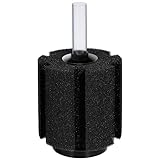
- Sponge filter provide both mechanical and bio filtration, also, the air infusion chamber produces minute bubbles which increase the oxygen solubility
- Safe for fish: soft sponge material, traps floating debris and won't suck up your fish
- Easy to set up & clean: simply install an airline into the unit and turn on the air pump, simply rinse and squeeze sponge in tank water
- Recommend tank size: 40 to 60 gallon, excellent for small size fish like betta, dwarf cichlid, guppy, killifish etc., or for hatcheries, maternity tanks, nano tanks and fry tanks, as the filter produces minimal current and has almost no way to suck the fish through the filter
- Includes: 1 PC of Sponge Filter. Dimension: 4.5"D X 8.0"H
An aquarium heater is usually unnecessary and can create a dangerous temperature spike. If the room is warm, first move the aquarium away from direct sunlight and heat-producing equipment. Room cooling, a fan blowing across the water surface, or an aquarium chiller may be needed in hot weather. Do not use repeated additions of ice or frozen bottles as a permanent solution; rapid temperature changes can be stressful and unstable.
Check the thermometer daily, with extra attention during summer heat, unusually warm weather, and power failures.
Cycle the aquarium before adding the animal
A clear-looking aquarium is not necessarily safe. Before an axolotl enters the tank, the aquarium must be fully cycled so its biological filter can convert toxic ammonia into nitrite and then nitrate. Cycling with the axolotl already inside exposes it to waste products while the bacterial colony is developing.
Use a liquid test kit or another dependable testing method. Before introduction, aim for these readings:
| Parameter | Target |
|---|---|
| Ammonia | 0 ppm |
| Nitrite | 0 ppm |
| Nitrate | Preferably below 10 ppm |
| pH | Approximately 7.4–7.6 |
Use gentle-flow filtration. A sponge filter is often a practical choice; a standard aquarium filter can also work if its output is baffled. Strong currents stress axolotls and may damage their external gills. Filtration does not eliminate the need for water changes.
Rank #3

- ULTRA QUIET AIR-POWERED FILTRATION - This aquarium sponge filter operates with an external air pump (not included) to deliver whisper-quiet performance that won't disturb your fish. The gentle water flow is ideal for betta, shrimp, fry, and other delicate aquatic life. Please prepare a suitable air pump and 4mm air hose for your tank size.
- DUAL-STAGE CLEAN WATER SYSTEM - The vertical-pattern sponge traps debris, uneaten food, and fish waste for effective mechanical filtration. The built-in ceramic media ball chamber provides ample surface area for multi-stage filtration, keeping your aquarium water crystal clear.
- 3-IN-1 AQUARIUM FILTER - Combines filtration, water circulation, and aeration in one compact corner design with a built-in air stone. Creates gentle surface agitation to keep water circulating, while the small footprint saves valuable tank space.
- EASY MAINTENANCE WITH SPARE PARTS - Includes 2 replaceable sponges and 1 bag of washable ceramic media balls. Simply remove and rinse the sponge in tank water for quick cleaning. Swap out filter media anytime to match your tank needs — no complicated steps required.
- FITS 5-20 GALLON FRESHWATER AND SALTWATER TANKS - Perfect for breeding tanks, nano aquariums, shrimp tanks, and betta setups. Squeeze the sponge fully in tank water before first use so the filter sinks securely to the bottom.
As a starting routine, change approximately 30% of the water weekly. Test more frequently and adjust the schedule if nitrate rises, the animal produces substantial waste, or the aquarium is heavily stocked. Treat replacement tap water to remove chlorine and chloramine, and bring it close to the aquarium’s temperature before adding it.
Do not wash biological filter media under chlorinated tap water. Gently rinse it in water removed from the aquarium instead; chlorine can damage the beneficial bacteria that support the nitrogen cycle.
Select substrate that cannot be swallowed
Axolotls gulp food and may accidentally swallow gravel, pebbles, or other loose objects. An ingested substrate can cause intestinal blockage or impaction. Avoid any gravel or ornament small enough to fit in the animal’s mouth.
A bare-bottom aquarium is the simplest low-risk option. Some keepers use fine sand or another smooth, nonabrasive substrate, but sand is not automatically safe in every setup. Swallowed material, compacted debris, and poor cleaning can still cause problems. If you use a substrate, choose it carefully and watch the axolotl’s behavior and condition.
Axolotls produce considerable waste. Remove feces and uneaten food promptly with a siphon or turkey baster rather than allowing organic waste to remain in the tank.
Rank #4
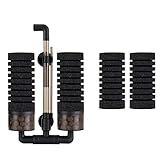
- 【Multi-filtration functions】this sponge aquarium filter combines bio-filtration, oxygenation and physical filtration in 1 and also makes small water flow, which can ensure the excellence of the water quality. Helps your small fish or shrimp to live a happy, healthy life
- 【Filter Demension】plus the sponge filter with media balls takes up no more room. Small filter is 6" in width and 9" to 13." in height, the sponge inside circle diameter is 0.39 inch, suggest for 10 to 40 gallon fish tank. Medium filter is 6.3" in width and 9' to 13 in height, the sponge inside circle diameter is 0.59 inch, suggest for 15 to 55 gallon fish tank. For larger tank you may need 2 of this filter
- 【Package Includes】1 double sponge filter with 2 containers +1 bag of ceramic media balls + 2 pare sponges(packed in the 2 containers). This aquarium filter must be used with an air pupm and a standard size 4mm air hose, please note pump and air hose are not included. Please choose a powerful enough air pump according to your fish tank size for this filter
- 【Detachable Fine Sponges 】you can easy to take down the 2 sponges from the filter to clean or replace it, the 2 sponges are fine 60ppi not coarse, which means more surface area for beneficial little creatures to live on. Don't use tap water to clean it, just rinse or squeeze the sponges by using the aquarium water
- 【Easy to use】all the parts of this filter are detachable, you can easily to assemble them together, with 2 strong suction cups you can stick the filter firmly to any tank position under water, withouting floating. The water oulet tube can be extended and rotated, you can adjust the outlet to above or below the waterline
Feed a carnivorous diet
Axolotls are carnivores. Suitable foods include:
- Appropriately sized earthworms or night crawlers.
- Blackworms.
- Frozen bloodworms or brine shrimp.
- Species-appropriate sinking axolotl pellets.
- Other prey recommended by an amphibian veterinarian.
Young axolotls generally need food daily. Adults commonly eat every two to three days. Offer only what the animal can eat in approximately two to five minutes, then remove leftovers. Feeding amounts vary with age, body condition, food type, and temperature, so monitor the axolotl’s shape rather than following a large fixed portion.
Do not make feeder fish the staple diet. Fish can injure an axolotl, introduce parasites or disease, and some species contain thiaminase, an enzyme that can interfere with thiamine nutrition. Earthworms or a nutritionally complete axolotl pellet are more controllable staple foods.
Overfeeding can produce obesity, which is a recognized health problem and may shorten lifespan. A healthy feeding plan includes regular observation of appetite and body condition.
Independent reader supportYour contribution helps us test, update, and keep practical guides available for everyone.Handle as little as possible
Axolotls are best treated as display animals. Their skin and protective mucus are delicate, and unnecessary handling causes stress and can result in injury. Observe them in the aquarium instead of removing them for routine interaction.
Recommended Free Tools
When relocation is necessary for tank maintenance, quarantine, or medical care, use a soft fine-mesh net or a clean container. Do not grab the animal with bare hands, and never assume that its ability to regenerate limbs makes injuries harmless. Regeneration takes time and does not prevent infection, tissue damage, or death caused by poor water quality.
Best Value
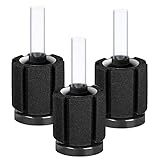
- Sponge filter provide both mechanical and bio filtration, also, the air infusion chamber produces minute bubbles which increase the oxygen solubility
- Safe for fish: soft sponge material, traps floating debris and won't suck up your fish
- Easy to set up & clean: simply install an airline into the unit and turn on the air pump, simply rinse and squeeze sponge in tank water
- Recommend tank size: up to 10 gallon, excellent for small size fish like betta, dwarf cichlid, guppy, killifish etc., or for hatcheries, maternity tanks, nano tanks and fry tanks, as the filter produces minimal current and has almost no way to suck the fish through the filter
- Includes: 3 pcs of sponge filter. Dimension: 2.0"D X 4.75"H
Recognize illness early
Warning signs include:
- White, cotton-like growths on the gills, body, or limbs.
- Red skin, ulcers, or inflamed gills.
- Bloating, persistent abnormal floating, or gasping.
- Unusual lethargy or a loss of appetite.
- A sudden change in behavior or appearance.
At the first sign of a problem, test the temperature, ammonia, nitrite, nitrate, and pH. Excessive heat and poor water quality are common underlying causes, although injury, infection, parasites, and other conditions are possible. White growths are consistent with fungal disease but should not be treated based on appearance alone.
Contact an amphibian-experienced veterinarian promptly. Do not add aquarium salt, antibiotics, antifungal products, or other medication without veterinary guidance. Amphibians absorb substances through their skin, and a treatment’s safety depends on the diagnosis, drug, dose, concentration, and water chemistry.
Protect people in the household
Axolotls and their aquarium water can carry Salmonella even when the animal looks healthy. Wash your hands after touching the axolotl, tank water, decorations, nets, or maintenance equipment. Keep aquarium equipment away from kitchen counters and food-preparation areas, and clean contaminated surfaces appropriately. The CDC advises extra caution when a household includes children under five, adults over 65, or people with weakened immune systems; these groups are more likely to develop serious illness from germs carried by reptiles and amphibians.
A realistic care schedule
- Every day: Check the temperature, observe appetite and behavior, and remove visible waste or uneaten food.
- On feeding days: Offer an appropriate portion and remove leftovers after two to five minutes.
- Weekly: Test water parameters, inspect the filter and equipment, and perform about a 30% conditioned-water change as needed.
- Regularly: Inspect hides and décor for sharp edges, check the lid, and rinse biological media only in removed aquarium water when maintenance requires it.
- Whenever illness is suspected: Test water immediately and arrange veterinary advice rather than experimenting with medication.
FAQ
Are axolotls good beginner pets?
They can suit a careful keeper who wants a display animal, but they are not effortless beginner pets. They require cool water, a fully cycled aquarium, regular water testing, controlled feeding, gentle filtration, and access to an amphibian-experienced veterinarian.
Can an adult axolotl live in a 10-gallon tank?
A 10-gallon aquarium is not an appropriate general recommendation for an adult. Use a 20-gallon-long tank as a practical minimum for one adult, with a 29- or 40-gallon aquarium preferred for greater floor space and more stable water conditions.
Does an axolotl need a heater or bright aquarium light?
Usually neither. Axolotls prefer approximately 60–64°F (16–18°C), and overheating is a greater concern than cool water. Use ambient room light or dim lighting, since they do not require intense illumination.
Can axolotls live with fish or other axolotls?
The safest arrangement is one axolotl per aquarium. Fish may nip gills, transmit disease, compete for food, or be eaten. Axolotls can bite one another, especially when they are different sizes.
Quick wins for a faster PC:
Repair Windows errors before they cause bigger problemsFix Now →Fix the driver behind crashes, sound loss and screen glitchesFind Drivers →The Bottom Line
Successful axolotl care is mainly environmental care: keep the water cool, cycle the aquarium before adding the animal, test regularly, use a gentle filter, avoid swallowable substrate, and feed a controlled carnivorous diet. Keep handling and tank mates to a minimum, and treat changes in appetite, skin, gills, or buoyancy as reasons to test the water and contact an amphibian veterinarian.
Quick Recap
Product prices and availability are accurate as of the date/time indicated and are subject to change. Any price and availability information displayed on Amazon at the time of purchase will apply.




