
What’s actually slowing this PC down?
Pick the symptom - the matching free tool is one click away.
The safest car ride keeps your pet restrained in the back seat, prevents access to toxic products, and treats every parked vehicle as an unsafe place to wait. Use either a harness-style seat belt attached to the seat buckle or a well-ventilated crate secured against sliding. Keep the animal’s head inside, prepare the required records and supplies, and know whom to call if illness, injury or poisoning occurs.
The ASPCA Animal Poison Control Center (APCC) reports that on an 80°F day, a car interior can reach 114°F in less than 30 minutes. A cracked window does not make that environment safe, and cold conditions can cause hypothermia too.
As an Amazon Associate I earn from qualifying purchases.
The parking rule that prevents the most serious emergencies
A parked vehicle can become dangerous rapidly, even when the outside temperature feels moderate. The ASPCA APCC’s 2016 alert gives a concrete example: on an 80°F day, the interior may reach 114°F in under 30 minutes. Sunlight, vehicle materials and limited airflow can raise the cabin temperature faster than a person expects. Opening a window slightly does not provide reliable protection.
Cold weather presents a different hazard. A stationary car can become cold enough to contribute to hypothermia, particularly for small, elderly, ill or short-coated animals. Shade, cloud cover and a comfortable temperature when you leave the vehicle do not guarantee safe conditions later in the day.
#1 Best Overall

- DURABILITY - No matter how well-trained your pup is, there’s no guarantee they won’t tug, pull, or chew on the seat belt during the ride. Our seat belts are crafted from heavy-duty nylon webbing with reinforced stitching for maximum durability. The sturdy metal components are designed to prevent unbuckling or snapping at the worst possible moment.
- ELASTIC BUFFER DESIGN - Featuring a durable elastic bungee buffer, our seat belt absorbs sudden movements and jerks while driving, reducing the risk of choking. This design allows your pet to move freely within a set space, ensuring greater comfort during the ride.
- TANGLE-FREE & ADJUSTABLE - The quick-release metal buckle easily clips into your car's seat belt receptacle. A swivel clip attachment prevents tangling and allows natural movement, providing instant security and peace of mind. The dog seat belt can be adjusted from 24 to 31 inches to suit your pet's needs. The sturdy aluminum alloy clasp rotates 360 degrees for added comfort, whether your dog wants to sit, stand, or lie down.
- EASY & UNIVERSAL MOUNTING - Ensure compatibility by checking your buckle's size before ordering. The tab on the seatbelt clip is 0.79 inches wide, designed to work with most vehicle seat belt buckles. It can easily be attached to any dog harness featuring a D-ring or similar attachment point.
- SATISFACTION GUARANTEE- You'll receive a value pack of 1 dog seat belts. Our commitment is to design premium-quality pet supplies that enhance comfort and convenience for pets and their families. Your satisfaction is our highest priority.
Plan errands so your pet is not waiting alone in a parked car. If an appointment, store or stop does not allow animals, leave the pet at home or arrange a person who can remain with the animal in a genuinely safe environment. “A few minutes” is not a dependable safety margin because temperature and delays can change quickly.
Choose a restraint for the back seat
ASPCA travel guidance supports two basic approaches: a harness-style seat belt connected to the seat buckle, or a well-ventilated crate or carrier secured so it cannot move during abrupt braking. The right choice depends on your pet’s size, behavior, tolerance of confinement and the space available in your vehicle.
| Factor | Harness-style seat belt | Crate or carrier |
|---|---|---|
| Containment and escape prevention | Limits wandering when the harness fits correctly and remains attached to the buckle. | Provides an enclosed boundary and can be useful for animals that try to climb into the front seat or exit through an open door. |
| Fit and movement | The harness should sit securely without restricting breathing or movement; the animal should remain comfortable while sitting and lying down. | The interior must allow the pet to stand, sit, lie down and turn around. An oversized or poorly shaped crate can slide more easily. |
| Attachment security | Connect the restraint to the vehicle seat-belt buckle as directed; check that the buckle is fully latched. | Use the vehicle’s available tie-down points or another appropriate method to prevent the crate from shifting during a sudden stop. |
| Ventilation | Keep the pet’s body and head inside the cabin; do not rely on an open window for ventilation. | Use a crate or carrier with adequate ventilation on multiple sides, while keeping airflow unobstructed by luggage. |
| Loading and cleaning | Usually allows direct access to the rear seat and can be wiped down after a trip. | Requires loading the animal into the enclosure, but contains fur, dirt and accidents in one cleanable space. |
| Driver distraction | Restricts movement when correctly fitted, reducing access to the steering area and controls. | Creates a physical barrier that can be especially helpful for restless animals, provided the enclosure is secured. |
Neither option is safe merely because it is labeled for travel. Inspect stitching, clips, buckles, doors and tie-down points before every trip. The ASPCA guidance does not certify particular brands or products, so evaluate construction and fit for the individual animal.
Free tools Windows power users keep installed
One-click scans. No signup required.
Set up the vehicle before loading your pet
- Use the rear seat. Position the harnessed pet or secured crate behind the front seats. This keeps the animal away from the driver and from front-seat air-bag deployment zones.
- Check the restraint while the car is stationary. Fasten the harness connection to the seat buckle, or attach the crate so it cannot slide, tip or rotate. Pull gently on each connection and test the doors.
- Keep windows controlled. Windows should be closed enough that the animal cannot put its head outside. Flying grit, insects and other debris can injure the eyes, ears or mouth, and a sudden brake or collision can throw an exposed head against the vehicle or outside object.
- Clear the seating area. Remove loose objects that could become projectiles. Store bags, tools and luggage so they cannot fall onto the pet or block ventilation around a crate.
- Load and unload deliberately. Attach the leash before opening a door. Keep the pet restrained until you are in a secure location, then release the vehicle restraint only after the leash is in your hand.
Prepare a pet for a long drive
Build tolerance with short practice trips
Start with brief rides that end calmly, then increase distance as your pet remains comfortable. Practice entering the vehicle, settling in the restraint and waiting while the engine starts. Short sessions reveal whether the harness rubs, the crate is too warm or the animal becomes distressed before a long journey makes the problem harder to manage.
Feed before departure, not in a moving vehicle
ASPCA road-trip guidance recommends feeding before setting off rather than serving food while the car is moving. Bring the usual diet and offer water during planned stops. Keep bowls stable so spilled water cannot soak bedding or create a slipping hazard.
Rank #2
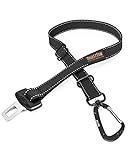
- Keep Your Pets Safe: Your dog loves car rides, but roaming dogs can lead to distractions and dangerous conditions. Keep both you and your pup secure with our car dog harness seat belt, which easily buckles into any seatbelt outlet in your vehicle.
- Premium Metal Buckle for Ultimate Protection: Our dog car leash seat belt for large dogs, medium breeds and small pets isn't just any seat belt. Its built Mighty Strong with only the high quality materials so you can travel with peace of mind.
- Aircraft-Grade Aluminum Carabiner: Built to withstand over 850 lbs of force, the durable aviation aluminum carabiner ensures maximum safety. The tangle-free swivel clip keeps your dog secure and comfortable without getting tangled!
- Adjustable Length for Perfect Fit: Made with durable nylon, our dog car seat belt adjusts from 16 to 26 inches, ensuring a comfortable fit for your pup whether they prefer to sit, stand, or lie down during the ride.
- Safety Regulations Compliance: For maximum security, pair our dog car harness seat belt with an approved vehicle dog harness. Drive with confidence and keep your furry friend safe and secure. They are perfect dog car accessories for peace of mind!
Assemble records and contacts
Carry the pet’s rabies documentation and other travel records requested for your route. Requirements differ by state and by itinerary, so check the authorities governing both the departure and destination locations before leaving. Save the phone number for a veterinary clinic at the destination and the ASPCA Animal Poison Control Center (888-426-4435) where it can be reached without searching while driving.
What to pack for a pet road trip
| Category | Items | Why it matters |
|---|---|---|
| Restraint and control | Harness-style seat-belt connection or travel crate, leash, and a spare leash if available | Maintains control in the vehicle and during stops. |
| Food and water | Usual food, water, bowls and a way to keep supplies from spilling | Preserves the normal diet and supports hydration without feeding in motion. |
| Cleanup | Waste bags, paper towels, disposable gloves and a washable towel or blanket | Handles bathroom breaks, shedding, spills and accidents. |
| Health supplies | Prescribed medication, a basic pet first-aid kit and any care instructions from the veterinarian | Keeps routine treatment and simple wound care available between clinics. |
| Documents | Rabies record, other vaccination or medical records, identification details and travel documents required for the route | Helps meet jurisdictional rules and gives a veterinarian useful history. |
| Emergency information | Destination veterinary number, your regular clinic’s number and APCC at 888-426-4435 | Speeds professional advice when an injury, illness or poisoning is suspected. |
Pack medication in its labeled container and keep documents and emergency numbers accessible to the adult responsible for the pet. Do not bury them under luggage in the cargo area.
Remove common toxins before the engine starts
Pets investigate unfamiliar objects with their mouths. Secure the following items in a closed compartment or outside the passenger area:
- Xylitol-containing gum and sweets: Some sugar-free products contain xylitol, which can be dangerous to dogs.
- Human and pet medicines: Bottles and pill organizers can spill or be opened, and a pet’s own prescription is not safe for another animal.
- Cigarettes and chewing tobacco: Tobacco products and discarded packaging should never be within reach.
- Windshield-wiper fluid: Keep containers upright and sealed; a leak can expose an animal to a toxic liquid.
Check door pockets, floorboards, seat-back compartments and luggage before loading. If a pet may have licked, chewed or swallowed one of these products, call a veterinarian or APCC immediately and follow the professional’s instructions. Do not wait to see whether signs develop.
Drive in a way that limits injury and distraction
Start only after the pet is fully secured and the doors are closed. Keep the animal’s head inside the vehicle throughout the trip. Wind, road grit and sudden changes in speed can injure an exposed head, and a pet leaning through a window can distract the driver.
Rank #3

- DURABILITY - No matter how well-trained your pup is, there’s no guarantee they won’t tug, pull, or chew on the seat belt during the ride. Our seat belts are crafted from heavy-duty nylon webbing with reinforced stitching for maximum durability. The sturdy metal components are designed to prevent unbuckling or snapping at the worst possible moment.
- ELASTIC BUFFER DESIGN - Featuring a durable elastic bungee buffer, our seat belt absorbs sudden movements and jerks while driving, reducing the risk of choking. This design allows your pet to move freely within a set space, ensuring greater comfort during the ride.
- TANGLE-FREE & ADJUSTABLE - The quick-release metal buckle easily clips into your car's seat belt receptacle. A swivel clip attachment prevents tangling and allows natural movement, providing instant security and peace of mind. The dog seat belt can be adjusted from 24 to 31 inches to suit your pet's needs. The sturdy aluminum alloy clasp rotates 360 degrees for added comfort, whether your dog wants to sit, stand, or lie down.
- EASY & UNIVERSAL MOUNTING - Ensure compatibility by checking your buckle's size before ordering. The tab on the seatbelt clip is 0.79 inches wide, designed to work with most vehicle seat belt buckles. It can easily be attached to any dog harness featuring a D-ring or similar attachment point.
- SATISFACTION GUARANTEE- You'll receive a value pack of 2 dog seat belts and 1 collapsible water bowl. Our commitment is to design premium-quality pet supplies that enhance comfort and convenience for pets and their families. Your satisfaction is our highest priority.
Use planned stops for water, toileting and a calm check of the restraint. Before opening a door, attach the leash and look for traffic, other animals and escape routes. Never allow the pet to roam between seats or sit on the driver’s lap, even during a slow maneuver in a car park.
Do these 3 things before closing this tab:
1Repair Windows errors before they cause bigger problems2Fix the driver behind crashes, sound loss and screen glitches3Clear out junk files and repair common Windows errorsKeep the cabin environment stable. Direct vents away from the face, ensure a crate’s ventilation panels are not covered by bags and watch for signs that the animal is becoming overheated, chilled or unusually distressed. If the pet’s condition worries you, stop in a safe location and contact a veterinarian.
Independent reader supportYour contribution helps us test, update, and keep practical guides available for everyone.Troubleshoot common travel problems
The pet struggles against the harness
Stop and inspect the fit rather than tightening it repeatedly. The harness should be secure without pressing on the throat or restricting normal breathing. Resume only after the attachment is correctly positioned; persistent resistance is a reason to return to short practice sessions and ask a veterinary professional for advice.
The crate shifts when the car moves
Pull over safely, remove loose items around it and retie the crate using a method that prevents forward, sideways and rotational movement. A crate that still slides is not ready for highway travel.
The pet becomes anxious
End the practice ride calmly, identify whether noise, motion, confinement or heat is the trigger, and reintroduce trips at a shorter duration. A veterinarian can help distinguish behavioral stress from a medical problem.
The Tool Desk
Outbyte Driver Updater FREEScan for outdated or missing drivers - takes under a minuteDriver Scan →Outbyte PC Repair FREERepair Windows errors before they cause bigger problemsFix Now →Rank #4

- Crash-Tested Safety & Comfort: The Kurgo Enhanced Strength Tru-Fit Dog Car Harness offers a crash test-certified fit with all-steel buckles
- Fit for Walks & Travel: Designed as a daily use harness fit, it features five points of adjustment and a padded chest plate for secure comfort during rides or walks
- Durable & Travel Ready: Built with an enhanced strength build, includes a 10-inch seatbelt tether with steel carabiner, making it an ideal pet travel safety harness
- Designed for Real-World Adventures: Kurgo gear is built to solve everyday challenges with dogs, making travel, walks, and outdoor play safer, easier, and more fun for both of you
- Durable Gear, Lifetime Promise: Engineered for longevity and reliability, every Kurgo product is crafted with rugged materials and backed by our industry-leading lifetime warranty
The pet vomits or refuses food
Do not feed in the moving vehicle. Offer the normal diet before departure and discuss repeated vomiting, refusal to drink or other concerning changes with a veterinarian before attempting another long journey.
What to do after an accident or suspected poisoning
Move the vehicle to a safe position, keep the pet restrained and assess whether immediate veterinary care is needed. A frightened or injured animal may bite, so avoid putting your face near the mouth. Call the destination emergency clinic or your regular veterinarian for instructions.
For possible ingestion of gum, medicine, tobacco, wiper fluid or another chemical, contact APCC at 888-426-4435 or a veterinarian without delay. Have the product container, estimated amount and time of exposure available if known. Follow the professional’s directions about transport and treatment rather than attempting an unapproved home remedy.
For travel outside your usual area, save the nearest emergency-veterinary contact before departure and confirm the clinic’s location and hours. This preparation matters because a roadside search can delay care when every minute counts.
Quick wins for a faster PC:
Fix the driver behind crashes, sound loss and screen glitchesFind Drivers →Clear out junk files and repair common Windows errorsFree Scan →Scan for outdated or missing drivers - takes under a minuteDriver Scan →Quick Recap
Product prices and availability are accurate as of the date/time indicated and are subject to change. Any price and availability information displayed on Amazon at the time of purchase will apply.





Leave a Reply