The Tool Desk
Outbyte Driver Updater FREEFix the driver behind crashes, sound loss and screen glitchesFind Drivers →Outbyte PC Repair FREEClear out junk files and repair common Windows errorsFree Scan →Shelter and rescue kitten programs are being asked to rethink how they care for the youngest kittens, and the changes start with medical protocols. Best Friends Animal Society’s “Kitten programs 2.0, part 1” gathers the views of several veterinarians and kitten-care leaders on feeding, supplies, diagnostics, ringworm treatment and necropsies. The main lesson is that many protocol choices are program decisions rather than universal rules: what works depends on the organization’s staff, budget and caseload, and every change should be checked with a veterinarian first.
What the article covers, and what it does not
The article is written for organizations that already run kitten programs or plan to start one. It collects expert perspectives on neonatal kitten care and invites program leaders to ask which practices are essential, which are optional, and which deserve a second look. It is not a veterinary standard of care. Its opening note tells readers: “Always consult your veterinarian before making changes to your medical protocols.” Treat every practice below as something an organization described for its own program, not as a prescription for an individual kitten.
Because expert views change as practice evolves, the article’s recommendations reflect the time of publication and may not match later guidance from Best Friends Animal Society or other authorities.
Feeding: bottle or syringe first, tube-feeding as a trained skill
Neonatal kittens are usually fed by bottle or syringe, and that is the baseline the article starts from. Tube-feeding appears as a skill that several interviewed experts value, but the article does not present it as a casual alternative. Its use depends on training and veterinary direction, and the experts do not agree on how it compares with bottle feeding for safety and efficiency.
#1 Best Overall
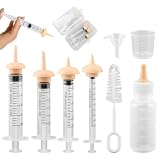
- One-Stop Scientific Feeding: Designed specifically for newborn kittens, puppies, and various small animals, this kit includes a 50ml professional feeding bottle, four precision syringes of different capacities (1ml, 3ml, 5ml, 10ml), four biomimetic nipples, as well as a funnel and measuring cup. From precise feeding immediately after birth to supplemental feeding during the transition period, this single kit meets all your care needs.
- Precise Measurement for Safe Feeding: Recognizing that newborn pets are extremely sensitive to feeding amounts, the kit includes four syringes of different sizes, each featuring clear, durable graduations. This allows you to control feeding with milliliter-level precision based on your pet’s weight and age, effectively preventing choking or digestive strain caused by overfeeding.
- Bio-Mimetic Nipples: Made from ultra-soft, food-grade silicone, these bio-mimetic nipples replicate the natural feel of a mother dog or cat’s mouth. They are bite-resistant and gentle on the mouth. Multiple nipple shapes are available to suit pets of different sizes and developmental stages, increasing the success rate of feeding.
- Easy to Clean, Comes with a Dedicated Storage Case: The included cleaning brush easily reaches the bottom of bottles and syringes, ensuring no milk residue remains. All accessories are neatly stored in a transparent storage jar/container, making it convenient for home storage and keeping your tools organized and ready to use—whether you’re traveling with your pet or on the go.
- Essential Professional Tools for Young Pets: Whether caring for orphaned puppies or kittens, administering medication to sick adult pets, or providing nutritional support for frail premature pets, this multifunctional kit offers the most professional support. The included measuring cup and funnel make the process of mixing formula more precise and spill-free, making it the ideal assistant for pet owners and animal rescuers.
Bottle and syringe feeding
Bottle or syringe feeding is the typical method described for neonates. A kitten nursing bottle is the category of equipment the article’s feeding discussion refers to; the article does not recommend any brand or model. Feeding technique, volumes and schedules should come from a veterinarian or a caregiver who has been trained for the job.
Tube-feeding and when it is considered
Several experts quoted in the article see tube-feeding as a useful tool for particular kittens. Erin Katribe, DVM, MS, medical director for Best Friends Animal Society, described it as “a tool you should have in your toolbox for those kittens likely going to die otherwise.” Andee Bingham, founder and executive director of Esther Neonatal Kitten Alliance, said: “I prefer tube-feeding if the kitten doesn’t want to swallow or is totally refusing to latch.” Heather Kennedy, DVM, director of feline operations at Kansas City Pet Project, went further: “Tube-feeding is a lot safer than bottle feeding.” That claim is one expert’s view; the article presents it alongside other perspectives rather than as settled fact.
Programs weighing tube-feeding should note the article’s emphasis on staff and volunteer training. Tube-feeding is discussed as something to be taught and supervised, not improvised by whoever is available on a given evening.
Rank #2

- SQUEEZE BOTTLE - 60ml nursing bottle for newborn kittens and puppies, 2.1 ounce capacity, small animal feeding bottle is easy to squeeze and easy to control the amount of milk.
- SMALL ANIMAL FEEDER SET - 1ml for small nipples, 3ml, 5ml, 10ml for medium and large nipples, 60ml feeding bottles can be freely combined with (small, medium, large) nipples.
- 5 REPLACEABLE NIPPLES - Different sized nipples to meet the needs of small animal at every stage, the soft rubber-tipped nipple prevents scratching the gums of newborn kittens and puppies.
- 5ML BROWN FEEDER - The brown 5ml syringe is made of light-safe material to prevent photosynthesis of medication, use a separate dedicated feeder for better use when your pet is sick.
- NEWBORN KITTENS & PUPPIES GIFT - Suitable for newborn and not yet teething small animals, kittens, puppies, hamsters, chinchillas, squirrels, rabbits, etc. you will be a very gentle owner, take care of it, love it and grow with it.
Supplies: essentials first, comfort items and incubators second
The article’s central budgeting principle is stated plainly by Hannah Shaw, “Kitten Lady” and founder of Orphan Kitten Club: “What’s possible and there is what’s practical.” Programs often face a list of tempting equipment. The article asks them to put basic care and diagnostic testing ahead of costly extras when money is limited.
Recommended Free Tools
| Item | Position described in the article | Evidence the article cites |
|---|---|---|
| Stuffed animals (for singleton kittens) | Optional comfort item; Erin Katribe reports positive experience with them, especially for singleton kittens | Anecdotal only. Katribe says she has not seen data showing they reduce disease or mortality. |
| Incubators | Increasingly common in kitten nurseries; experts advise considering them only if the purchase does not take money from essentials | Expert opinion. Hannah Shaw says they may suit programs caring for many kittens under three weeks if the budget allows; Andee Bingham describes using them for preemies or very cold babies. |
| Essential care and diagnostic testing | Priority when funds are limited | Expert consensus in the article, not a measured comparison |
Stuffed animals
Stuffed animals are presented as a low-cost comfort measure with a personal track record behind them. The article does not claim they improve survival or prevent illness, and it says so directly. A program that uses them should treat them as a supplement to warmth, feeding and monitoring, not a substitute.
Incubators
Incubators are the most expensive item in the discussion. The article gives a rough price range of several hundred dollars to about $1,500. That range is an approximate figure from the article itself; it is not tied to a named published price survey or a specific year, so it should be checked against current supplier quotes before budgeting. Shaw and Bingham describe different kinds of kittens who may benefit, which is why the article frames incubators as conditional rather than universal.
Rank #3
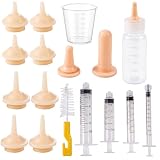
- All-in-One Complete Pet Feeding Kit : Comes with 60cc large-capacity nursing bottle, 4 multi-size oral feeders in 1ml, 3ml, 5ml and 10ml, 10 soft silicone replacement nipples and a dedicated cleaning brush. One fully equipped set meets all daily milk and liquid feeding needs for newborn puppies, kittens and small pets.
- Multi-Capacity Design for Precise Feeding :All feeding parts are made of premium food-grade material, odorless, non-toxic and durable. The ultra-soft silicone nipple fits the mouth of newborn pets naturally, flexible and bite-resistant, effectively avoiding choking and bringing a comfortable feeding experience.
- Multi-Capacity Design for Precise Feeding :Multiple capacity combinations cover tiny to regular feeding demands, easy to control feeding flow and portion accurately. Perfect for supplementary milk feeding, liquid nutrition supply and gradual ration feeding for fragile newborn small animals.
- Equipped with Special Cleaning Brush : The matched dedicated cleaning brush easily cleans the inner wall of the nursing bottle and small feeding tools, removes milk residue thoroughly. Keep the whole feeding set clean, hygienic and reusable for long-term daily use.
- Ergonomic & Portable Easy to Use : Lightweight body design is easy to grip and operate with one hand, labor-saving for daily feeding. Suitable for family pet owners and pet breeders, it is a must-have daily care supply for newborn puppies, kittens, rabbits and hamsters.
Persistent diarrhea and parasite testing
Diarrhea is the symptom the article returns to most often. Hannah Shaw says: “Diarrhea is a major cause of suffering, sickness and deaths in kittens.” The article describes some organizations changing how they spend testing money as a result. Instead of routine FIV and FeLV testing across every kitten, some programs were reducing that testing and directing funds toward fecal testing for kittens whose diarrhea does not resolve.
When fecal testing is warranted
The experts do not agree on when fecal PCR testing is justified. The article also cautions that finding an organism in a stool sample does not necessarily establish that it caused the diarrhea. A program that tests should plan to interpret results with a veterinarian, who can weigh the test against the kitten’s history, exam findings and response to care.
Routine parasite control
The article says the interviewed experts treat kittens prophylactically for roundworms and other common parasites. That is a description of these organizations’ practices, not a general treatment instruction. Dosing decisions for a specific kitten belong to a veterinarian.
Rank #4

- Need a complete feeding kit for newborn pets? This 16-in-1 pet nursing kit includes a 50ml graduated bottle, 4 precision syringes (1ml, 3ml, 5ml, 10ml), 4 soft silicone nipples (2 long, 2 short), a cleaning brush, a 30ml measuring cup, a funnel, and 4 syringe stoppers—all organized for easy access.
- Worried about choking during feeding? Our curved tip syringe directs liquid toward the inner cheek rather than straight down the throat, helping fragile newborns swallow safely at their own pace. A good choice for weak or orphaned neonates.
- Looking for nipples that tiny mouths can latch onto? Made from ultra-soft, food-grade silicone, these nipples mimic the feel of a mother's natural teat. The slender shape encourages natural latching, making feeding smoother for kittens, puppies, and even squirrels.
- Need precise control for formula or medicine? The syringes have clear measurement markings (as small as 1ml) for accurate dosing. The smooth‑glide plunger allows drop‑by‑drop feeding, giving you precise control to avoid overfeeding.
- Concerned about materials and safety? All parts are BPA‑free and made from food‑grade or high‑quality materials. The bottle is food‑grade PP, and the nipples are high‑quality silicone. These materials are heat‑resistant and can be cleaned with hot water.
Ringworm: organization-specific protocols, not a single answer
The article describes ringworm care through the protocols of two organizations rather than naming a universal treatment. Both approaches are veterinary-directed, and neither should be copied without one.
| Organization | Approach described in the article |
|---|---|
| Kansas City Pet Project | Stopped using lime sulfur baths; relies on oral itraconazole, which the article names Itrafungol. The article notes this is part of a protocol being studied by Karen Vernau, DVM, at UC Davis. |
| Orphan Kitten Club | Uses topical miconazole and KetoHex shampoo baths, along with supportive supplements. |
The practical takeaway is that the right ringworm approach depends on the organization’s facilities, the kitten’s condition and the veterinarian’s judgment. Medication and bathing decisions for an individual kitten should not be made from a published example.
Necropsies and learning from losses
Heather Kennedy and Hannah Shaw favor necropsies when an organization can afford them. The reasoning is that a finding about why a kitten died can change how the next kitten is treated. The article recounts a case in which the findings from one kitten’s necropsy led to evaluation and care for a surviving littermate. It also acknowledges that not every organization has the money, staff time or practical access to perform them, so the value of necropsy has to be weighed against capacity.
Free tools Windows power users keep installed
One-click scans. No signup required.
Best Value

- KITTEN MILK REPLACEMENT - When mom can’t nourish them, KMR can. Scientifically the next best to mother’s milk, KMR provides all the nutritional elements necessary for kittens; newborn to six weeks old.
- COMPLETE, BALANCED NUTRITION - Our formula is closest to mother's milk in protein, fat and carbohydrates. We’ve also added vitamins, minerals and trace nutrients; plus prebiotics and probiotics for healthy immunity and digestion.
- EASY TO DIGEST - KMR is highly palatable and formulated with a special fiber blend for easy digestion and Improved gut health.
- EASY-TO-MIX FORMULA - Whisk or Shake 1 part powdered KMR into 2 parts warm water. Do not mix more KMR than can be consumed in 24 hours. Do not use a blender.
- ABOUT US - PetAg is a trusted leader in pet wellness, with science-backed formulas in our milk replacers, health supplements, and grooming products helping pet owners to proactively enhance the lives of their pets, for more healthy years together.
Questions to settle before changing a protocol
- Has a veterinarian reviewed the proposed change for your kittens’ ages, weights and caseload?
- Do staff and volunteers have documented training for any feeding method being added, including tube-feeding?
- Are essential care and diagnostic testing funded before optional equipment such as incubators or comfort items?
- If you change testing, do you have a plan for kittens whose diarrhea persists and for interpreting fecal results?
- Would a necropsy, if affordable, give you information that changes the next kitten’s care?
Answering these questions gives a program a defensible basis for its own protocol. The article’s experts disagree on several points, and that disagreement is part of what the article offers: a starting list for discussion with the veterinarian who will carry the responsibility for each kitten’s care.
Sources: Best Friends Animal Society, “Kitten programs 2.0 part 1: Re-examining medical protocols for neonates,” written by Liz Finch, Senior Writer, Best Friends Network. Related Best Friends foster-program guidance includes “The kittens are coming! Preparing your foster program ahead of kitten season” and “Empowering Neonatal Kitten Finders to Foster This Kitten Season.”
Quick Recap
The Bottom Line
“”
Product prices and availability are accurate as of the date/time indicated and are subject to change. Any price and availability information displayed on Amazon at the time of purchase will apply.




