
Free tools Windows power users keep installed
One-click scans. No signup required.
The easiest freshwater fish for a beginner are not maintenance-free. They are comparatively forgiving when the aquarium is large enough, filtered, biologically stable, stocked with compatible fish and maintained consistently. The safest approach is to choose the aquarium and its water conditions first, then select fish whose adult size, social needs, activity and temperament fit that system.
This guide covers 11 commonly suggested beginner choices, with the limitation that several are broad groups rather than one interchangeable species. Treat every entry as a starting point, not permission to put any fish in any small tank.
| # | Preview | Product | Price | |
|---|---|---|---|---|
| 1 |
|
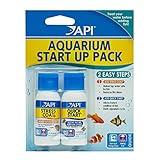
API AQUARIUM START UP PACK Water Conditioner 1.25-Ounce Bottle 2-Pack | $6.99 | Buy on Amazon |
| 2 |

|
API TAP WATER CONDITIONER Aquarium Water Conditioner 16-Ounce Bottle | $8.48 | Buy on Amazon |
As an Amazon Associate I earn from qualifying purchases.
What “low-maintenance” really means
Hardy fish can tolerate a reasonable range of conditions, but they still suffer in overcrowded, unfiltered or unstable aquariums. OATA’s stocking guidance considers adult size, species requirements, water parameters and compatibility; it also warns that a home aquarium should not be stocked as heavily as a retailer’s display tank.
Do these 3 things before closing this tab:
1Scan for outdated or missing drivers - takes under a minute2Clear out junk files and repair common Windows errors3Fix the driver behind crashes, sound loss and screen glitchesLow-maintenance therefore means a manageable care routine: an appropriately sized aquarium, effective filtration, safe water, suitable food, compatible companions and regular observation. It does not mean a bowl, skipped water checks or feeding whenever convenient.
#1 Best Overall
- Contains one (1) API AQUARIUM START UP PACK Water Conditioner 1.25-Ounce Bottle 2-Pack
- Makes tap water safe for fish and reduces fish stress.
- Starts aquarium cycle and allows instant addition of fish.
- Comes with two API products, STRESS COAT and QUICK START, for a healthy start-up aquarium.
- Use when starting a new aquarium, changing water, or adding fish. Add STRESS COAT first and then QUICK START.
Choose the aquarium before choosing the fish
- Measure the tank and usable footprint. Swimming length matters for active shoaling fish, while bottom-dwellers need floor area and hiding places. A volume label alone does not describe the habitat.
- Check the adult size and social requirement of the exact species. “Tetra,” “rasbora,” “corydoras” and “gourami” each cover multiple species with different needs. Confirm the adult size, group size, water parameters and compatibility before buying.
- Install filtration and condition the water. OATA describes a filter as essential for danios and white cloud mountain minnows. A water conditioner is needed when tap water contains substances harmful to fish.
- Establish biological filtration before stocking. Test the aquarium and do not add fish until ammonia and nitrite are zero. Keep testing after fish arrive because a new biological filter can be overwhelmed by a sudden full stocking.
- Plan the population, not just the first purchase. Mixed-sex livebearers can produce fry quickly. Leave capacity for the adults and decide in advance how offspring would be managed.
- Add fish gradually and watch behavior. Quarantine where practical, introduce compatible groups rather than isolated schooling fish and monitor breathing, appetite, fin damage and aggression.
At-a-glance comparison
| Fish or group | Social pattern | Tank guidance in the reviewed care sources | Important beginner caveat |
|---|---|---|---|
| Zebra danio | Active shoaling fish | OATA recommends at least 45 litres for a small shoal of smaller danios; larger danio species reaching 5 cm or more are given a 120-litre recommendation. | Needs swimming length, filtration and a proper group; one fish is not an appropriate desktop pet. |
| White cloud mountain minnow | Shoaling fish; OATA recommends at least five | Included with smaller danios in OATA’s 45-litre small-shoal guidance. | Check that the aquarium’s temperature suits the species you select. |
| Guppy | Community livebearer | Aqueon’s guide includes guppies among fish that may suit aquariums under 10 gallons, subject to stocking and species checks. | Mixed sexes produce fry, creating a population-growth problem. |
| Platy | Community livebearer | Aqueon discusses platies as a possible smaller-tank livebearer. | Mixed-sex groups can reproduce; plan for adult numbers. |
| Molly | Community livebearer | Aqueon distinguishes common mollies from sailfin mollies in its small-tank discussion. | Do not apply the common-molly suggestion to sailfin mollies without checking adult requirements. |
| Swordtail | Community livebearer | Aqueon cautions against keeping swordtails in aquariums under 10 gallons. | Needs a sufficiently spacious setup and population planning if sexes are mixed. |
| Corydoras catfish | Group-oriented bottom fish | Aqueon’s 5–10 gallon discussion applies only to smaller Corydoras species and recommends a group. | They require sinking food; they are not a substitute for a cleaning routine. |
| Tetra | Usually schooling; exact group depends on species | Exact tank and group values are species-specific in the reviewed guidance. | Do not place a few isolated neon or cardinal tetras in a community and assume that is adequate. |
| Rasbora | Schooling fish | Exact adult size, group size and tank requirements depend on the rasbora species. | Identify the species before buying rather than treating “rasbora” as one care profile. |
| Betta | Often kept singly | OATA recommends at least 20 litres for one male. | Provide a filtered, appropriate aquarium; tankmates require careful selection and a betta is not an unheated-bowl fish. |
| Gourami | Species-dependent; males may be territorial | Aqueon discusses common gouramis in a larger 20–50 gallon context. | Choose a named species and verify its adult size, group structure and aggression risk. |
11 beginner-friendly freshwater fish, with the conditions attached
1. Zebra danio
Zebra danios are active, resilient community fish and are often suggested for first-time keepers because they tolerate a range of temperature and water chemistry. Their hardiness does not remove their behavioral needs: they are shoaling fish that need several companions and enough uninterrupted length to swim.
OATA recommends at least 45 litres for a small shoal of smaller danios. If you choose a larger danio species reaching 5 cm or more, its guidance rises to 120 litres. Use a tight-fitting cover, strong but not excessive circulation and open swimming space. A single danio in a tiny tank is not a low-maintenance setup; it is an unsuitable social arrangement.
2. White cloud mountain minnow
White cloud mountain minnows are another undemanding shoaling option covered alongside danios by OATA. Keep at least five and provide filtration, swimming space and stable water. Their suitability depends on the temperature of the room and aquarium, so compare your actual conditions with the requirements of the exact fish before purchase.
The 45-litre recommendation for a small shoal of smaller danios or white clouds is a husbandry recommendation, not a universal stocking formula. A longer aquarium is preferable to a cramped tall one when the fish spend much of their time moving through open water.
3. Guppy
Guppies are familiar, colorful community fish and Aqueon includes them among beginner choices. Its tank-size guide discusses guppies as a possible option for aquariums under 10 gallons, but that does not override filtration, adult numbers, water quality or the space required by a growing population.
The central complication is reproduction. A mixed-sex group can produce fry, and repeated broods can outgrow the aquarium. Decide whether you will keep one sex, separate sexes, rehome young fish or provide a larger system before bringing guppies home. Confirm the proposed stocking with a local specialist because varieties differ in adult size and shape.
4. Platy
Platies are generally peaceful community livebearers and appear in Aqueon’s starter-fish guidance. They can be attractive first fish because they are active, visible and adaptable when their water and tankmates are appropriate.
As with guppies, mixed sexes can produce fry. A tank that looks lightly stocked on purchase day may become crowded after several broods. Choose a population plan first, then select the aquarium size and number of fish. Avoid treating a small-tank suggestion as permission to keep an expanding colony in a minimally filtered aquarium.
5. Molly
Mollies are commonly sold as beginner community fish, but “molly” covers forms with different adult requirements. Aqueon distinguishes common mollies from sailfin mollies in its discussion of smaller aquariums. Do not transfer any small-tank suggestion for common mollies to sailfin varieties.
Check the adult size, swimming space and water conditions for the exact variety. Mixed sexes may produce fry, so population growth is part of the maintenance decision. Mollies are a sensible choice only when the aquarium can support the adult fish and the keeper has a plan for offspring.
6. Swordtail
Swordtails are active community livebearers, but they are not a choice for a very small aquarium. Aqueon specifically cautions against keeping swordtails in tanks under 10 gallons. Their swimming behavior and adult size call for a more spacious setup than the smallest beginner tanks provide.
They also reproduce when males and females are kept together. Before purchase, verify the adult requirements of the variety, provide adequate swimming length and decide how you would handle fry. A peaceful reputation does not make an undersized aquarium appropriate.
7. Corydoras catfish
Corydoras are social bottom-dwelling catfish that can be excellent community residents when kept in a suitable group. Aqueon’s 5–10 gallon discussion applies only to smaller Corydoras species, so identify the species rather than buying a fish labeled only “cory cat.”
They need food that reaches the bottom, such as an appropriate sinking formulation. Corydoras are not “cleanup crews” that live on leftovers, algae or waste. Keep the substrate and water quality suitable for bottom fish, feed deliberately and provide enough floor area for the group to forage without competition.
Rank #2
- Contains one (1) API TAP WATER CONDITIONER Aquarium Water Conditioner 16-Ounce Bottle
- Neutralizes chlorine, chloramines and other chemicals to make tap water safe for fish
- Prevents tap water chemicals from causing gill destruction, tissue irritation and fish death
- Super strength, high concentration formula
- Use when adding or changing water and when adding new fish to freshwater and saltwater aquariums
8. Tetra
Tetra is a broad category, not one care sheet. OATA names tetras among beginner tropical groups, and Aqueon includes them in community-fish guidance, but the exact species determines adult size, temperature range, group size and tank length.
Recommended Free Tools
Small aquariums can constrain schooling choices. Aqueon cautions against keeping only a few neon or cardinal tetras scattered through a community. Select one appropriate species, buy a socially adequate group and verify that the aquarium can provide the required swimming space before adding other fish.
9. Rasbora
Rasboras are another beginner-friendly schooling group in Aqueon’s guidance. The name includes species with different adult sizes and behavior, so the useful question is not “Are rasboras easy?” but “Which rasbora fits this aquarium?”
Confirm the exact species’ adult length, minimum group, water parameters, filtration and footprint. A small, peaceful rasbora may suit a different setup from a larger or more active relative. Keeping a proper school is more important than collecting a few individuals from several schooling species.
10. Betta
A single betta can be a manageable first fish when housed in an appropriate aquarium. OATA recommends at least 20 litres for one male. Use filtration with gentle flow, maintain stable conditions and provide cover and resting places; a decorative bowl is not an adequate substitute.
Outdated Drivers Are Slowing You Down
One free scan finds every outdated or missing driver and matches the right update for your exact hardware.Free scan · exact hardware matchPC Slower Than It Used to Be?
A free scan shows the junk files, broken settings and background clutter dragging Windows down - then fixes them in one click.Free scan · Windows 10 & 11Tankmates need careful selection because individual bettas vary in territorial behavior and may be stressed by active or fin-nipping companions. Keeping one male alone removes many compatibility problems, but it does not remove the need for water testing, conditioning, feeding and regular maintenance.
11. Gourami
Gourami is too broad a label for a blanket small-tank recommendation. OATA includes gouramis among broad beginner tropical examples, while Aqueon discusses common gouramis in a larger 20–50 gallon context and notes that male aggression may require more females.
Choose a named species and check its adult size, social structure, temperature and water requirements. Provide a tank large enough for the group and escape routes if aggression occurs. If the retailer cannot identify the species, postpone the purchase until its care needs are clear.
Independent reader supportYour contribution helps us test, update, and keep practical guides available for everyone.How to build a stable, compatible community
Start with one social plan rather than assembling a random assortment. Danios and white cloud mountain minnows are shoaling fish; OATA recommends groups of at least five, while Aqueon’s general fishkeeping guidance says schooling fish do best in groups of six or more. Use the species-specific recommendation and do not assume that one number applies to every schooling fish.
The Tool Desk
Outbyte PC Repair FREEClear out junk files and repair common Windows errorsFree Scan →Outbyte Driver Updater FREEScan for outdated or missing drivers - takes under a minuteDriver Scan →Match activity levels and adult size. Fast swimmers can outcompete slow fish for food, while territorial fish may make a nominally peaceful community stressful. Keep bottom fish supplied with their own food and do not count them as waste processors. Recheck compatibility whenever you add a species, not only when setting up the first community.
The equipment and routine that make “easy” fish easier
- Filtered aquarium: OATA calls filtration essential for danios and white clouds. Select a filter rated for the aquarium and avoid flow that prevents fish from swimming normally.
- Freshwater aquarium water test kit: OATA describes testing kits as essential for routine checks. Test ammonia and nitrite and confirm both are zero before adding fish.
- Water conditioner: Use a conditioner appropriate for the source water and follow its label instructions.
- Aquarium siphon or gravel vacuum: Aqueon’s danio guidance names a siphon vacuum gravel cleaner as useful equipment for removing debris during maintenance.
- Species-appropriate food: Feed each fish according to its behavior and mouth size, including sinking food for Corydoras.
- Temperature control where required: Tropical species and bettas need stable, suitable temperatures; do not assume an unheated room or bowl is adequate.
Observe the aquarium between maintenance sessions. Changes in breathing, appetite, posture, color, waste or aggression can reveal a water-quality or compatibility problem before it becomes an emergency. Test whenever fish are added, equipment changes or behavior shifts, rather than relying on a calendar alone.
Beginner mistakes that create avoidable work
- Buying fish first and trying to make the tank fit afterward.
- Using a universal fish-per-gallon rule instead of considering adult size, footprint, group behavior and filtration.
- Keeping one shoaling fish or a few isolated tetras because the aquarium looks full.
- Assuming every molly, gourami, tetra or corydoras has the same requirements.
- Adding fish before ammonia and nitrite are zero.
- Relying on fish to consume waste instead of siphoning debris and testing water.
- Buying mixed-sex livebearers without a plan for fry.
- Putting a betta in an unheated, unfiltered bowl.
A practical buying checklist
Before purchase, write down the aquarium’s volume and footprint, filter model, water source, test results, temperature and the exact species name. Ask the retailer or a specialist fish shop about adult size, group requirements, water parameters, compatibility and expected breeding. Buy a freshwater aquarium water test kit, aquarium starter kit with filter, aquarium water conditioner and aquarium siphon only when each item matches the tank and species plan.
The best beginner fish is the one that fits the aquarium you can maintain consistently. If the tank cannot provide the required group, swimming length, adult capacity or stable water, choose a different species or a larger aquarium rather than trying to make a hardy fish tolerate an unsuitable home.
Quick Recap
Product prices and availability are accurate as of the date/time indicated and are subject to change. Any price and availability information displayed on Amazon at the time of purchase will apply.





Leave a Reply