
Do these 3 things before closing this tab:
1Repair Windows errors before they cause bigger problems2Fix the driver behind crashes, sound loss and screen glitches3Clear out junk files and repair common Windows errorsIf fish are gasping at the surface, start aeration immediately: run an air pump and air stone or another bubbler, restore safe filter flow, and create gentle surface movement. Then test dissolved oxygen (DO) if you can and check temperature, ammonia, nitrite, pH, and equipment. Gasping can indicate hypoxia, but the same behavior can result from toxic water, overheating, or disease, so treatment must address both oxygen and the underlying cause.
What to do first when fish are gasping
Low oxygen can deteriorate quickly, especially in warm, heavily stocked or heavily planted aquariums. Do not wait for a test result before adding aeration when fish are in distress. UF/IFAS identifies turning on an aerator as the most important immediate action when fish are dying from low dissolved oxygen; the U.S. Geological Survey likewise describes a bubbler as important equipment in a home aquarium.
As an Amazon Associate I earn from qualifying purchases.
- Start continuous aeration. Plug in an air pump with an air stone, sponge-filter airlift or other bubbler. If an existing pump is running but the surface is still flat, add a second air outlet or increase safe flow.
- Increase surface gas exchange. Aim a filter return toward the surface so it makes a broad ripple, not a jet that exhausts fish. Open or remove a tightly sealed lid only if doing so is safe for the species and prevents jumping.
- Restore water turnover. Check that the filter intake is clear, the impeller is turning and tubing is not kinked. A failed filter can remove both circulation and biological filtration.
- Test while the event is occurring. Measure DO with an electronic meter or chemical kit if available. Also test temperature, ammonia, nitrite and pH; oxygen stress is not proven by surface behavior alone.
- Remove immediate oxygen demand. Net out dead fish, decaying leaves and uneaten food. Pause feeding during the emergency so new waste does not increase bacterial oxygen consumption.
- Consider a partial water change only as support. Use dechlorinated water close to the aquarium’s temperature. A water change can dilute wastes and add oxygenated water, but there is no universal emergency percentage; avoid an abrupt temperature or chemistry swing and continue aeration.
Watch the fish continuously after aeration starts. Improvement in breathing and swimming is encouraging, but it does not identify the cause or make the tank safe to stock heavily again.
What’s actually slowing this PC down?
Pick the symptom - the matching free tool is one click away.
How to tell whether oxygen is actually low
Common warning signs include repeated surface gasping, unusually rapid gill movement, lethargy, crowding near an outlet or waterfall, and reduced feeding. A sudden loss of equilibrium or deaths can occur in a severe event. These signs overlap with ammonia or nitrite poisoning, high temperature, pH injury, gill disease and other problems, so use them to trigger testing and aeration rather than as a diagnosis.
#1 Best Overall
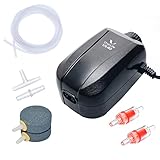
- Steady Output: Max Air Flow Rate: 64 GPH; Pressure: 0.016 MPa; Power: 4 W. Perfect for aeration in 10 - 100 gallon fresh water and marine aquariums.(The data is measured with experimental equipment and may deviate slightly from the actual data. The air volume may be insufficient due to the blocked air intake cotton. Please replace the cotton yourself if the air volume is insufficient.)
- Adjustable Air Flow: Feature a rotary knob to control the amount of air for dual outputs, allowing for your desired air flow to fully oxygenate your fish tank.
- Quiet Operation: The pump emits 25 dB sound under the “Low” mode and maximum 45 dB noise like the hum of a refrigerator under the highest air flow.
- 2 Air Stone Discs: Produce lots of dense medium bubbles bursting into the surface of water steadily. A great way to aerate your tanks and enliven the aquatic life.
- Pump Accessories: Include 2 air stones, 6.5-foot airline tubing, 2 check valves and 2 connectors. Complete accessories to build the basic aeration setup in your tank.
Measure dissolved oxygen when possible
An electronic DO meter gives a direct reading after appropriate calibration. A chemical test kit estimates oxygen through a timed reagent reaction. Follow the instrument or kit instructions exactly, take the sample from the swimming area rather than a bubble stream, and record the time because oxygen changes through the day.
Published guidance provides warning points, not a single target for every ornamental species. UF/IFAS reports that most fish become distressed at approximately 2–4 mg/L, that levels below 5 mg/L may be harmful, and that piping (surface gulping) may occur below 2 mg/L. It advises emergency aeration below 4 mg/L or when conditions favor depletion. The U.S. Environmental Protection Agency describes DO below 5 mg/L as generally stressful for fish and below 3 mg/L as too low to support fish, while emphasizing that tolerance varies by organism.
| DO reading or observation | How to use it | Important qualification |
|---|---|---|
| Below 5 mg/L | Treat as a warning; increase aeration and investigate. | UF/IFAS says it may be harmful; EPA calls it generally stressful. Neither value is a universal ornamental-fish limit. |
| Below 4 mg/L | Use emergency aeration, especially if fish are distressed or depletion conditions exist. | This is UF/IFAS emergency guidance for fish-production situations, applied here as a conservative action trigger. |
| About 2–4 mg/L | Expect distress in many fish and look for piping or rapid gill movement. | UF/IFAS describes this approximate distress range for most fish; species and acclimation affect tolerance. |
| Below 3 mg/L | Consider the situation critical and seek expert help if fish do not respond. | EPA states this is too low to support fish generally; individual species responses differ. |
There is no evidence-based oxygen number that is ideal for every aquarium species, salinity, temperature or life stage. Use the reading alongside behavior, species requirements and the trend from evening to morning.
Why aquarium oxygen falls
Too little aeration or surface movement
Oxygen enters mainly where air and water meet. A still surface, clogged air stone, undersized or failed air pump, blocked intake, or filter return directed below the surface can leave the tank under-aerated even when the water looks clear. An air stone does not manufacture oxygen; its bubbles help by moving oxygen-poor water to the surface and improving mixing.
Rank #2

- Steady Output: Max Air Flow Rate: 50 GPH; Pressure: 0.013 MPa; Power: 1.25 W. The pump supplies steady air flow with low power consumption. Work great for fish tanks or buckets up to 60 gallons.
- Adjustable Air Flow: There is a rotatable knob on the top to manually adjust the air volume. Greatly meet your desired air flow to keep fish or roots healthy.
- Quiet Operation: With 4 shockproof rubber feet to minimize vibration, the pump greatly reduces noise to less than 30 dB like a soft speaking voice. No disturbance to your daily life.
- Reliable Construction: The fish tank pump is well constructed with a sturdy ABS shell and a heavy-duty inner structure. Really lightweight and space-saving.
- Pump Accessories: Contain 6.5-foot 3/16" airline tubing (ID: 4 mm), 2 small air stone cylinders, 2 connectors (straight & T-shape) and 2 check valves. All build the basic aeration setup in your fish tank.
Overstocking, overfeeding and biological oxygen demand
Every fish consumes oxygen, and so do the bacteria decomposing waste. Excess fish, large meals, uneaten food and a sudden increase in organic matter can consume oxygen faster than the surface replaces it. Rehoming or reducing stock is the durable fix; adding equipment indefinitely is not a substitute for a biologically appropriate population.
Dirty filters, substrate and decaying material
Mulm, dead leaves, algae die-off and trapped food support oxygen-consuming bacteria. A filter packed with sludge can have poor flow and high internal oxygen demand. Remove obvious debris and service filter media according to the system design. Do not sterilize all biological media at once, because that can damage the bacteria needed for ammonia and nitrite control.
Warm water
Warm water holds less dissolved oxygen, while fish metabolism and oxygen demand generally rise as temperature increases. Check the actual temperature with a reliable thermometer, keep it within the species’ recommended range, and address room or equipment heat. Cool the aquarium gradually and safely; sudden temperature changes add another stressor.
Nighttime and weather-related dips
Plants and algae release oxygen in light but respire in darkness. In a heavily planted or algae-rich system, DO can be lowest just before daybreak, particularly after cloudy weather that limits daytime photosynthesis. Heavy plant or algae die-off can create an additional oxygen demand. Observe the tank before lights come on, not only in the afternoon.
Rank #3

- POWERFUL AERATOR PUMP & ENERGY CONSERVATION - AQQA fish tank air pump 3 watt equipped with a high-quality pump, the pump delivers stable output while conserving energy for optimal performance. Air volume for up to 80 gallon tank, the max pressure is 18Kpa and max air volume is 100GPH, can be easily connected to different type air stones, can be used for larger fish tanks, aquariums.
- NOISE REDUCTION ULTRA QUIET FUNCTION - The aquarium air pump features a sturdy double-layer structure with a built-in air pump and thickened casing, the bottom of the pump is designed with four soft rubber pads, which not only reduce noise, the max noise does not exceed 35dB but also prevent the pump from moving excessively during operation.
- DURABLE STAINLESS STEEL DUAL OUTLET DESIGN - The fish air pump designed with 2 stainless steel outlets, long service life, that can be used in multiple fish tanks or aquariums, making it suitable for both freshwater and seawater setups.
- ADJUSTABLE AIR FLOW SWITCH - The air pump aquarium is equipped with a knob on top, allowing you to easily adjust the air volume or switch without the need for frequent unplugging and plugging, making it more user-friendly.
- PACKAGE INCLUDED - 1 × Aquarium air pump with 5.91ft power cord; 2 × Air stones; 2 × 4.92ft Air tubes; 2 × Check Valves; 1 × User Manual. And you will get a 1-year after-sale product service and 7*24H lifetime customer service.
Weak circulation or a failed pump
A filter may still make noise while delivering little water because of a blocked intake, air lock, worn impeller or clogged media. Verify actual return flow and inspect every connection. A circulation pump can help distribute oxygenated water, but it should not create a current that fish cannot escape.
Oxygen-consuming treatments or chemicals
Some treatments consume oxygen or increase the system’s demand; formalin is a documented example in aquaculture settings. Read the treatment label for aeration warnings, remove chemical media only when the label directs it, and provide extra aeration while monitoring fish. Never add an oxygen-demanding chemical to an already distressed tank without professional guidance.
Equipment that can solve an oxygen problem
| Option | What it does | Selection and cautions |
|---|---|---|
| Air pump plus air stone | Moves air through bubbles and increases surface agitation. | Choose output rated for the aquarium volume and the number of outlets, verify airline compatibility, and use a check valve where back-siphoning is possible. Continuous reliability and noise matter more than maximum bubble size. |
| Sponge filter with airlift | Combines biological filtration with aeration and gentle circulation. | Useful for fry or fish that dislike strong flow. Keep the sponge free of severe clogging and size it for the stock and tank volume. |
| Filter return aimed at the surface | Uses existing pumping power to ripple the surface and turn over water. | Confirm that the outlet still provides adequate filtration. A submerged return with no surface movement may not solve low gas exchange. |
| Circulation pump or powerhead | Improves turnover so oxygenated surface water reaches the whole tank. | It supplements, rather than replaces, surface agitation. Provide low-flow areas and size the current for the species. |
| Battery or generator backup | Keeps aeration operating during outages. | Test it before an emergency and keep spare batteries or a charged backup available. A backup that has never been tested is not a dependable plan. |
Is an air stone enough?
Sometimes. In a lightly stocked aquarium with a functioning filter, an air stone can provide the extra surface movement needed to maintain oxygen. It may not be enough when fish numbers are excessive, water is very warm, flow has failed, organic debris is decomposing, or the tank has a strong day-to-night oxygen swing. In those cases, combine aeration with restored turnover, waste removal, temperature control and a stocking correction.
The Tool Desk
Outbyte PC Repair FREEClear out junk files and repair common Windows errorsFree Scan →Outbyte Driver Updater FREEFix the driver behind crashes, sound loss and screen glitchesFind Drivers →Judge success by fish behavior, measured DO and stable operation over a full day-night cycle. A cloud of bubbles is not proof that oxygen is adequate; bubbles that dissolve poorly can still leave deeper areas stagnant. Conversely, powerful bubbling is not automatically better if it drives exhausting currents or strips carbon dioxide from a system where pH stability is already marginal.
Rank #4
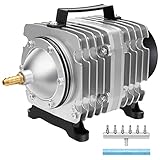
- HIGH PRESSURE, LARGE OUTPUT – This aquarium air pump delivers large output and high pressure of compressed air. Flow rate 600GPH, pressure 0.02Mpa, powered by a 18Watt electromagnetic motor.
- GREAT HEAT DISSIPATION - The housing of this air pump for aquariums is made of aluminum alloy with enlarged surface for the best heat dissipation. (Reminder – the air pump is highly recommended to be placed at a well-ventilated location. A cooling fan will help extend the life of the pump)
- EENRGY EFFICIENT, LONG LIFE – This air compressor is with lubricant free design. The high-quality cylinder and piston are made of wear-resistant materials to ensure the low consumption of power and long life.
- ACCESSORIES – Chrome coated metal air manifold. A 6-outlet manifold is provided for this pond aerator for easy access of oxygenation to anywhere you desire. The air output of each outlet is adjustable by simply turning the adjusting knob on the outlet.
- MULTIPLE APPLICATIONS – This commercial air pump is ideal for oxygenation of aquarium, pond, hydroponics, fish farm, and seafood restaurant, also great for compost tea brewing and air assist for laser cutting.
Correct the cause after the emergency
Rebalance stocking and feeding
- Count every fish and compare the total biomass with the aquarium’s filtration, swimming space and species needs.
- Remove or rehome excess fish instead of relying on additional pumps as a permanent workaround.
- Feed only what fish consume promptly and remove leftovers. Pause feeding during a confirmed oxygen event.
Restore maintenance without causing a second crisis
- Clear intake screens, airline tubing and impellers; confirm that the stated flow is actually reaching the tank.
- Remove decaying plant matter and vacuum accumulated organic debris in stages appropriate to the substrate and inhabitants.
- Rinse reusable biological media in removed aquarium water when maintenance is needed, rather than exposing it to chlorinated tap water.
Control temperature and plant-related risk
- Keep temperature in the species’ recommended range and increase observation during hot weather.
- Check oxygen before daybreak in heavily planted or algae-rich tanks.
- Remove dying masses of plants or algae and monitor closely after major trimming or die-off.
Review every chemical addition
Record treatments, water conditioners and other additives. If breathing worsened after a treatment, increase aeration as permitted by the label and contact an aquatic veterinarian or local extension service before repeating the dose.
Independent reader supportYour contribution helps us test, update, and keep practical guides available for everyone.Prevent low oxygen from recurring
- Run appropriately sized aeration and circulation continuously unless a species-specific husbandry plan says otherwise.
- Inspect air lines, stones, pump diaphragms, filter intakes and impellers on a schedule; replace clogged or failing parts before they stop.
- Keep a thermometer, ammonia and nitrite tests, and a DO kit or meter available for systems prone to swings.
- Observe fish at different times, especially before lights-on, after cloudy days, during heat, and after plant or algae die-off.
- Plan for power outages with a tested battery-powered aerator or other backup that can run continuously.
- Keep stocking, feeding and maintenance records so a gradual increase in demand is visible before fish show distress.
When comparing an air pump or circulation device, evaluate tank-volume rating, actual air or water output, continuous-duty capability, noise, reliability, backup-power compatibility, outlet and airline fit, and whether the resulting current suits the fish. Manufacturer ratings are not universal guarantees because tubing length, depth, clogged media and water temperature change performance.
Choosing a dissolved-oxygen test method
| Method | Strengths | Trade-offs |
|---|---|---|
| Electronic DO meter | Direct numerical readings and rapid repeat measurements during an emergency. | Requires calibration, probe care and an initial equipment investment; suitability depends on freshwater or marine use. |
| Chemical DO kit | No electronic probe and useful for occasional checks when instructions are followed precisely. | Requires reagents, timing and careful sample handling; ongoing reagent cost and resolution vary by kit. |
Record the reading, temperature, time, salinity if relevant, recent feeding, and whether aeration was running. A single daytime number can miss a pre-dawn crash. Compare readings from the same location and conditions to identify a pattern.
When fish are dying or do not recover
Keep aeration running, preserve the water-test results and write down recent treatments, deaths, temperature changes, filter failures and maintenance. Contact an aquatic veterinarian, qualified fish-health professional or local extension service promptly. Do not add multiple medications “just in case”; overlapping treatments can worsen oxygen demand or obscure the original diagnosis. If fish improve after aeration but ammonia or nitrite is elevated, continue testing and address the biological filtration problem rather than assuming oxygen was the only issue.
Best Value

- Ultra Quiet: Made of ABS thickening engineering plastics, super silent aquarium air pump. Soft rubber foot pads, further palliation for noise.
- Long Service Life: Manually adjustable air volume, won’t cause shakes and electric field fluctuation, much safer than electronic adjustment, lower failure rate.
- Aquarium Air Pump with 2 outlets, dual hose fish tank air pump, 3W air pump fit for fish tanks from 10 to 100 gallon.
- Unique Design: The air intake cotton is replaceable, it can filter the impurities in the air and extend the service life of the air pump, also come with 1 more replacement.
- Complete Accessories: Comes with everything you need, includes: Return Valve*2, Air Stone*2,Air Tube (2 x 4.9ft)*2, Suction Cup*2, Air Regulating Valve*2, T-Connector*1, Air Intake Cotton*1. Original quality, professional manufacturer.
Troubleshooting common scenarios
Gasping only before sunrise
Measure DO before lights-on, increase nighttime aeration and inspect plant or algae density. Check temperature and ammonia as well; a dawn-only pattern points toward overnight oxygen consumption but does not prove it.
Gasping after adding medication
Increase aeration immediately, verify the label’s oxygen instructions and test water. Seek professional advice before another dose, especially if formalin or another oxygen-demanding treatment is involved.
Gasping after a filter stops
Provide a bubbler first, then clear the intake and restore safe flow. Do not wash all biological media under untreated tap water, and monitor ammonia and nitrite during recovery.
Quick wins for a faster PC:
Repair Windows errors before they cause bigger problemsFix Now →Fix the driver behind crashes, sound loss and screen glitchesFind Drivers →Clear out junk files and repair common Windows errorsFree Scan →Gasping despite vigorous bubbles
Confirm that the pump is delivering air, the stone is not clogged and water is circulating throughout the tank. Test DO, temperature, ammonia and nitrite; persistent signs despite adequate oxygen indicate that toxicity, gill damage or disease may be involved.
Quick Recap
Product prices and availability are accurate as of the date/time indicated and are subject to change. Any price and availability information displayed on Amazon at the time of purchase will apply.





Leave a Reply