Quick wins for a faster PC:
Fix the driver behind crashes, sound loss and screen glitchesFind Drivers →Repair Windows errors before they cause bigger problemsFix Now →India has no clearly settled, dedicated national pet-custody framework for separating couples. A dispute such as the one involving Mahua Moitra, advocate Jai Anant Dehadrai and Henry, a Rottweiler, may therefore turn on evidence of acquisition, ownership, possession and day-to-day care, together with animal-welfare concerns and case-specific judicial reasoning.
As of August 13, 2026, the Delhi High Court proceedings remained active in the sources reviewed. A final operative order determining access or ownership was not located, so claims that the court awarded joint custody or permanently decided who owns Henry would go beyond the available record.
As an Amazon Associate I earn from qualifying purchases.
The short answer: India does not have a clearly settled, dedicated national law that tells a separating couple who gets a pet, how visitation should work, or how a court must divide shared care. In a dispute such as the one involving Mahua Moitra, advocate Jai Anant Dehadrai and Henry, a Rottweiler, the result may instead depend on ownership and possession evidence, caregiving history, animal-welfare concerns, the parties’ communications, and case-specific judicial reasoning.
What’s actually slowing this PC down?
Pick the symptom - the matching free tool is one click away.
As of August 13, 2026, the Delhi High Court proceedings over interim access to Henry remained part of an active litigation sequence in the sources reviewed. A May 14, 2026 order issued notice on Moitra’s request for access three times every ten days at a park in Neeti Bagh, South Delhi, and listed the matter for July 7. A July 9 report said the High Court was considering the issue. No final operative order was located in the searched official records, so it would be inaccurate to say that the court granted joint custody, awarded Henry to either party, or permanently resolved the dispute.
#1 Best Overall

- 【Support Multipe Microchip Formats】Universal microchip scanner supports EMID / ISO11784 / ISO11785 / FDX-B(15 digit microchips). Please note, the microchip reader CAN NOT read Avid chips, and the 9-digit ID can not be recognized. Only the 15-digit international standard protocol can be recognized. Please check the format of the microchip before purchasing.
- 【Easy To Operate & Fast Scan】Our pet microchip scanner is easy to operate, one button to read. Our microchip scanner adopt advanced RFID technology, responsive and fast scanning, it can better improve the efficiency of work. Please note, if no label is scanned, the device will automatically turn off after 180 seconds, or you can press and hold the button for 3 seconds to turn off the device.
- 【 Large Data Storage】Our pet microchip scanner can save 128 animal chips. It can be transferred to a computer or mobile phone via a USB cable connection. Our pet chip scanner also features a data-erase function, refer to the user manual for instructions.
- 【Rechargeable Battery】Our pet chip scanner supports USB charging, eliminating the need for frequent battery replacements, it can last for more than one year after being fully charged.
- 【Easy To Carry】Our scanners are lightweight and compact, making them easy to carry and ideal for both indoor and outdoor use. The package includes one scanner, a USB cable, and a user manual.
What happened in the Henry dispute?
Moitra and Dehadrai were former partners. Their public dispute in 2023 included competing claims concerning Henry. Reporting described allegations that Henry had been taken or withheld, along with counterclaims about who owned and cared for him. Those allegations must remain attributed to the parties or to the reporting. They are not established facts or a judicial finding unless a court determines them to be true.
The dispute later developed into litigation in different courts and at different procedural stages:
| Date | Reported development | What it does not establish |
|---|---|---|
| November 10, 2025 | A Saket court order reportedly refused Moitra’s request for interim custody of Henry for ten days each month. | It was an interim decision, not a final ruling on ownership. |
| February 2026 reporting | Reports described Moitra challenging that Saket court order. | The challenge itself did not mean that custody or access had been restored. |
| March 2026 | Indian Express reported that Dehadrai separately approached the High Court seeking rejection of Moitra’s trial-court suit for shared custody and a stay of the trial-court proceedings. | That application was a request for relief, not proof that the High Court accepted his position. |
| May 14, 2026 | A Delhi High Court order recorded Moitra’s application for interim access three times every ten days at a Neeti Bagh park, issued notice and renotified the matter for July 7. | Issuing notice and listing a matter does not equal an order granting access. |
| July 9, 2026 | A report said the High Court was considering the interim-access issue and had indicated that an appropriate order would follow. | The sources reviewed did not establish the contents of a later final operative order. |
The procedural distinction matters. Interim access, interim custody, a claim for shared custody and a final determination of ownership are not interchangeable. A court can address one temporary request without deciding the ultimate legal status of the animal.
The Tool Desk
Outbyte PC Repair FREEClear out junk files and repair common Windows errorsFree Scan →Outbyte Driver Updater FREEScan for outdated or missing drivers - takes under a minuteDriver Scan →Why pet custody is a legal grey area in India
Indian law contains animal-welfare protections, but the sources reviewed do not identify a comprehensive, settled national statutory regime prescribing how former partners must divide custody or visitation of a privately owned pet after separation.
The Prevention of Cruelty to Animals Act, 1960 is important context. Its purpose is directed at preventing unnecessary pain or suffering to animals. The Department of Animal Husbandry and Dairying lists the Act and related rules as part of India’s animal-welfare framework. But the Act should not be described as a complete pet-custody statute. It does not provide a detailed equivalent of a family-law schedule for a dog moving between two former partners.
That leaves a legal gap between the way people experience companion animals and the legal categories that may be available in a private dispute. A former couple may think in terms of emotional bonds, daily routines and parental roles. A court may instead have to examine questions such as:
- Who acquired or adopted the animal?
- What did the parties intend when the animal entered their household?
- Where did Henry primarily live?
- Who had possession when the dispute began?
- Who paid for food, veterinary treatment and other ordinary expenses?
- Who provided regular day-to-day care?
- What arrangements did the parties document or discuss?
- What outcome protects the animal from unnecessary harm while fitting the legal relief available in the case?
These are possible lines of evidence and reasoning, not a mandatory statutory checklist. Indian courts may use ordinary civil-law tools and case-specific reasoning, but there is no reviewed authority establishing that one universal test automatically controls every pet dispute.
Recommended Free Tools
Rank #2

- [Support Multiple Protocols] - Support ISO11784(85)/FDX-B/EMID 10/15 digit microchips.Microchips in other formats cannot be read. Please confirm whether your microchip is compatible before purchasing.(Does not read AVID microchip).
- [Improved Recognition Performance] - Faster recognition speed and larger recognition range than older scanners. Upgraded the sensitivity of the scanner. It can better improve the efficiency of work.
- [Battery Performance Improvement] - Use high-capacity built-in lithium battery. With more battery capacity and faster charging speed. Greatly improved recognition range and sensitivity. Improved work efficiency.
- [Built-in Hardware Has Veen Fully Upgraded] - It uses the latest technology scanning chip compared to older scanners. Now the energy consumption is greatly reduced and the performance is greatly improved.
- [Data storage] - Storage capacity is equal to 128 sets of data.USB upload to computer.
Pets are not treated like children in custody law
It is tempting to describe Henry’s case as a child-custody dispute involving a dog. That analogy can help explain the emotional stakes, but it is legally risky.
Reported Indian legal commentary has cautioned that child-custody principles do not simply transfer to pet disputes. Courts do not treat pets as children in the same legal sense, and writers should not say that the “best interests of the child” test automatically applies to Henry.
Animal welfare can still be morally and legally relevant. A court may care about continuity of care, living conditions, safety and the effect of a proposed arrangement on the animal. But those considerations operate within a different legal framework from child custody. The remedy may be shaped by ownership, possession, contractual arrangements, civil procedure and the specific evidence before the court.
What evidence may matter in a pet-ownership dispute?
There is no single document that necessarily decides ownership. A receipt may be important, but payment alone does not automatically determine the legal result. Likewise, a microchip, kennel record or veterinary file can be useful evidence without being conclusive.
| Evidence | What it may help show | Important limitation |
|---|---|---|
| Purchase, adoption or breeder documents | Who entered the transaction, what was agreed and how the animal was identified at the outset. | The document may not reflect later agreements, shared ownership or changes in possession. |
| Payment records | Who paid the purchase or adoption fee, food bills, veterinary invoices, grooming charges, boarding fees or insurance premiums. | Paying an expense does not automatically prove sole ownership; couples often share costs informally. |
| Veterinary and vaccination records | Who arranged appointments, made medical decisions and was recorded as the contact person. | A clinic record is generally a care and treatment record, not necessarily a final title document. |
| Microchip registration | Which contact details were associated with the animal and may assist identification or recovery. | Identification is not identical to legal ownership, and registration details may be outdated or incomplete. |
| Kennel or other registration records | How the animal was described and which person was recorded in an administrative system. | The evidentiary weight depends on the record and the court’s assessment of how it was created. |
| Messages and emails | What the parties said about ownership, expenses, residence, care, access or future arrangements. | Individual messages can be incomplete or ambiguous; preserve the surrounding conversation. |
| Dated photographs and videos | Where the animal lived, who routinely cared for it and the relationship each person had with the animal. | Photos show moments, not necessarily the full care arrangement or legal intention. |
| Daily-care evidence | Who fed, walked, trained, transported and supervised the animal, including during illness or travel. | Regular caregiving can support a claim but is not automatically the same as legal ownership. |
For a live dispute, keep original files where possible. Preserve invoices with dates, bank statements, adoption paperwork, vaccination histories, messages, photographs and a simple factual timeline. Avoid editing screenshots in a way that removes dates, names or surrounding context.
Microchips help identify pets—but do not settle every ownership question
A microchip can be valuable for identifying an animal and reconnecting it with contact information. It can also provide a dated administrative record that may be relevant to a dispute. But a chip does not, by itself, answer every legal question about ownership or shared care.
There is a practical limitation as well. Scanner readers have format and frequency limitations. A reader that cannot detect a particular chip does not prove that the animal has no chip. If a scan fails, a veterinarian, shelter or other qualified professional may be able to use a compatible reader or check the animal through other records. The safest legal description is that microchip information is one piece of identification and evidence, not an automatic title certificate.
Rank #3

- ❤ Supports Multiple Protocols – Compatible with ISO 11784/11785, FDX-B microchips for seamless reading with one-button operation. Does NOT support FDX-A or AVID chips. The 9-digit ID CANNOT be recognized. Only the 15-digit international standard protocol can be recognized.
- ❤ Efficient Data Management – Built-in storage holds up to 128 tags, eliminating redundant scanning and improving efficiency. The USB transfer feature allows seamless data upload to computers or mobile devices for backup, analysis, and sharing, making it ideal for pet owners, farms, and research institutions.
- ❤ Portable & Durable Design – Lightweight and easy to carry, suitable for both indoor and outdoor use. The robust casing provides strong impact resistance, ensuring stable performance in farms, field research, and rescue operations, even in harsh conditions.
- ❤ Built-in Rechargeable Battery – Eliminates the need for frequent battery replacements, with USB charging for convenience. Includes an auto-shutdown function after 180 seconds of inactivity or manual shutdown with a 3-second press.
- ❤ Support turn on/off the pet reader prompt sound. The pet reader is equipped with a speaker, when you scan successfully, the pet reader will "di" to indicate that the scan is successful. If your pet is afraid of the sound of the card reader, please check the instructions in the package and follow the instructions to turn off the sound.
Health records are useful evidence, not proof of title
A vaccination and health-record organizer can keep invoices, prescriptions, test results and immunisation dates together. That is useful when a pet changes homes, when a veterinarian needs a reliable history or when a person is assembling a chronology of care.
Do these 3 things before closing this tab:
1Fix the driver behind crashes, sound loss and screen glitches2Repair Windows errors before they cause bigger problems3Scan for outdated or missing drivers - takes under a minuteBut a blank record book—or even a completed health file—cannot independently prove who purchased or legally owns a pet. It is a recordkeeping aid. The value comes from the underlying documents, dates, payments, messages and care history that it helps organise.
Why these disputes become contentious
Pet disputes combine several conflicts that are easy to confuse:
- Emotional attachment: Each person may sincerely believe that the animal is part of their family and that separation from the animal would be harmful.
- Physical possession: The person who currently has the animal may control access to it, even though possession is not automatically proof of ownership.
- Financial contribution: One person may have paid the adoption fee while the other paid most veterinary or daily-care costs.
- Unrecorded intentions: Couples often make informal promises about where a pet will live without writing them down.
- Animal welfare: A change in residence, repeated transfers or conflict during handovers may affect the animal’s wellbeing.
- Different legal remedies: A request for temporary access can move through court separately from a claim seeking a final declaration or relief in the underlying suit.
Public arguments can also make the dispute harder to resolve. Allegations about taking, withholding or mistreating an animal should not be repeated as established facts without a judicial finding or reliable evidence. The responsible approach is to identify who made the claim, when it was reported and whether the court has ruled on it.
What someone in a current dispute can do
This is general information, not individual legal advice. Someone dealing with a live dispute in India should consult an Indian lawyer familiar with the relevant civil and animal-welfare issues. The following steps can reduce confusion while legal advice is being obtained.
- Put the animal’s immediate welfare first. Make sure Henry—or any other pet—has food, medication, veterinary attention and a safe environment. Do not use access to necessary treatment as leverage in a personal dispute.
- Preserve evidence. Gather purchase or adoption records, veterinary invoices, vaccination records, insurance documents, microchip details, messages, photographs, bank records and proof of ordinary expenses. Keep originals and make a dated index.
- Write a neutral timeline. Record when the pet was acquired, where it lived, who provided care, major medical events, moves and any written arrangements. Separate verifiable facts from allegations and personal conclusions.
- Propose a temporary written arrangement where safe. The arrangement could address residence, visits, transport, food, medication, veterinary decisions and emergency contact details. It should not be presented as a substitute for a court order or legal advice.
- Consider mediation. A negotiated plan may be less disruptive than repeated handovers or adversarial litigation, particularly when both people are capable of caring for the animal safely. Mediation is not appropriate for every situation, including cases involving threats, coercion or safety concerns.
- Follow existing court directions. Do not treat a notice, listing date or filed application as permission to ignore an order or take unilateral action. Ask counsel what a particular order permits.
- Avoid self-help that could escalate the dispute. Do not trespass, forcibly take the animal, interfere with veterinary records or make unsupported public accusations. Those actions can create additional legal and welfare problems.
How couples can prevent a pet-custody fight
The most practical lesson from the Henry dispute is preventive documentation. Couples and co-owners do not need to predict every possible disagreement, but they can record their intentions before the relationship or living arrangement changes.
A written pet co-ownership agreement might address:
Rank #4

- SUPPORT MULTIPLE PROTOCOLS--The handheld microchip scanner supports ISO 11784/11785, FDX-B, and ID64 RFID EMID. One button to read, easy to operate. NOTE: 1. Please confirm the frequency efficiency and agreement of your electronic tag before purchasing. 2. This reader DOES NOT support FDX-A protocol. 3. The scanner CAN NOT read AVID microchips.
- WIDER DATA READ RANGE--Features a 0-20cm reading range for extremely fast scanning. This animal tag scanner can save up to 256 tag information records. You can easily upload these stored data to your computer via the included USB cable for farm or clinic management.
- CLEAR OLED DISPLAY--The handheld pet scanner features a high-brightness OLED display screen, making it convenient for you to read animal ID information clearly even in the direct sunlight. Perfect for outdoor pet tracking and rescue.
- USB RECHARGEABLE BATTERY--Built-in lithium battery means no need to replace batteries. Easily charged through the USB interface. Features an intelligent power-saving mode: the device will shutdown automatically after 180 seconds of inactivity, or long-press the button for 3 seconds to turn off.
- PORTABLE & LIGHTWEIGHT--Product size only 6.61 x 3.46 x 0.59 inches and weighs just 90g. You can hold and operate it with just one hand. Portable and convenient to use. Widely used for little animal management, farm management, and veterinary inspection.
- the animal’s name, species, breed, distinguishing marks and microchip number, if any;
- who adopted or purchased the animal and whether the parties intend sole or shared ownership;
- the primary residence and what happens if one person relocates;
- how food, grooming, insurance, boarding and veterinary expenses will be divided;
- who can approve routine and emergency medical treatment;
- how decisions will be made if the animal develops a serious illness or disability;
- whether visits or alternating residence are intended, and how transport will work;
- what happens during holidays, travel, hospitalisation or work-related relocation;
- who keeps the animal if the relationship ends, and how the parties will review that plan;
- how disagreements will be handled, including whether the parties will attempt mediation before filing a case; and
- the date, signatures and any later amendments.
A written agreement cannot guarantee a particular result or replace local legal advice. Its usefulness depends on the wording, the parties’ conduct, the animal’s welfare and the law and procedure applicable to the dispute. A U.S.-oriented pet-custody template should not be assumed to be valid or enforceable in India simply because it uses terms such as “pet custody” or “pet-nup.” Anyone considering such an arrangement should ask an Indian lawyer to review it.
For broader, non-India-specific background, a pet-custody guide such as What Happens to Rover When the Marriage Is Over? discusses pet custody during divorce, cohabitation, medical rights and related pet-law questions. It is a general reference published for a different legal context, not a substitute for advice about Indian law.
Free tools Windows power users keep installed
One-click scans. No signup required.
What the Henry case does—and does not—show
The case is significant as a practical illustration, not because it establishes a new universal rule. It shows why a dispute over a companion animal can become a serious civil proceeding when the parties disagree about ownership, possession, care and access.
It does not, on the material reviewed, establish that:
- the Delhi High Court has awarded Henry joint custody;
- the court has ruled that Henry belongs to Moitra or Dehadrai;
- the person who paid the most automatically owns the dog;
- a microchip or kennel record conclusively determines title;
- child-custody law applies to pets in the same way it applies to children; or
- the Prevention of Cruelty to Animals Act provides a complete visitation scheme.
Because the procedural status is volatile, the Delhi High Court docket and any operative order should be checked immediately before publication or before relying on a later account of the case.
Sources and legal-status note
The account of the dispute and legal framework is based on the reviewed Scroll legal explainer; the May 14, 2026 Delhi High Court order reproduced by Indian Kanoon; Indian Express reporting from March 2026; February 2026 reporting on the Saket order and challenge; the July 9, 2026 report on interim access; the India Code text of the Prevention of Cruelty to Animals Act, 1960; and the Department of Animal Husbandry and Dairying’s acts-and-rules index. The sources reviewed did not yield a final operative order after the July 2026 hearing. This article should not be treated as legal advice.
Frequently Asked Questions
Did the Delhi High Court award Mahua Moitra joint custody of Henry?
No. The May 14, 2026 Delhi High Court order recorded Moitra’s request for interim access, issued notice and listed the matter for a later date. It did not, on the material reviewed, award shared custody or decide who owns Henry.
Best Value
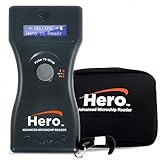
- UNIVERSAL MICROCHIP COMPATIBILITY: Reads all ISO microchips plus 9-, 10-, and 15-digit chips from any brand. Ideal for scanning horses, livestock, pets, and other animals in clinics, shelters, barns, or field settings.
- BLUETOOTH CONNECTIVITY FOR FAST, ACCURATE DATA TRANSFER: Easily sends scanned chip numbers to Bluetooth-enabled devices within a 25-foot range for quick syncing to computers, tablets, or shelter management software. Reduces manual data entry errors and speeds up check-in and intake processes—perfect for busy clinics or multi-pet facilities.
- BACKLIT LCD SCREEN WITH 15-MINUTE DISPLAY HOLD: Features a bright blue backlit LCD screen with bold white text displaying the full chip number on one line for easy reading—day or night. The 15-minute display hold gives ample time to record the scan without rushing, ideal for high-volume or field settings.
- RECHARGEABLE BATTERY WITH AUTO POWER-SAVE MODE: Includes a rechargeable 9V battery and charging unit for long-lasting performance. The auto shut-off function conserves power between uses—great for mobile vets, rescue teams, or animal control officers who need dependable scanning during long sessions.
- LIGHTWEIGHT, DURABLE DESIGN WITH PROTECTIVE CASE: This 7-inch handheld microchip scanner is compact, ergonomic, and easy to carry. Includes a protective carrying case to guard the reader during storage and transport. Built for dependable use in clinics, shelters, barns, or field settings.
Does a pet microchip prove ownership in India?
No. A microchip can help identify an animal and connect it with registration information, but identification is not automatically legal ownership. A failed scan also does not prove that an animal has no chip because scanners have format and frequency limitations.
Does India’s Prevention of Cruelty to Animals Act decide pet custody?
The Prevention of Cruelty to Animals Act, 1960 provides animal-welfare protections against unnecessary pain or suffering. It is not a comprehensive statute setting out pet custody, visitation or ownership rules after a couple separates.
Do child-custody rules apply to dogs in India?
Not automatically. Indian legal commentary reviewed for this case cautions that child-custody principles do not simply transfer to pets. Animal welfare may be relevant, but the legal analysis can also involve ownership, possession, caregiving, agreements and ordinary civil-law remedies.
What records should co-owners keep for a pet-ownership dispute?
Keep purchase or adoption documents, veterinary and vaccination records, payment receipts, insurance records, microchip details, dated photographs, messages about care and evidence of the animal’s ordinary residence and daily routine. These are possible evidence, not a guaranteed checklist or automatic proof of title.
Can a couple make a pet co-ownership agreement before separating?
They can record who acquired the animal, how expenses and veterinary decisions will be handled, where the pet will live, whether visits are intended and what happens if the relationship ends. An Indian lawyer should review any agreement because a foreign template may not be enforceable in India.
The Bottom Line
Bottom line: Henry’s dispute illustrates a gap in Indian law rather than creating a simple custody rule. Until a final, authoritative order is available, the careful position is that ownership, possession, caregiving, records, negotiated intentions and animal welfare may all matter—and no single payment, registration or microchip record automatically decides the result.
Quick Recap
Product prices and availability are accurate as of the date/time indicated and are subject to change. Any price and availability information displayed on Amazon at the time of purchase will apply.




